
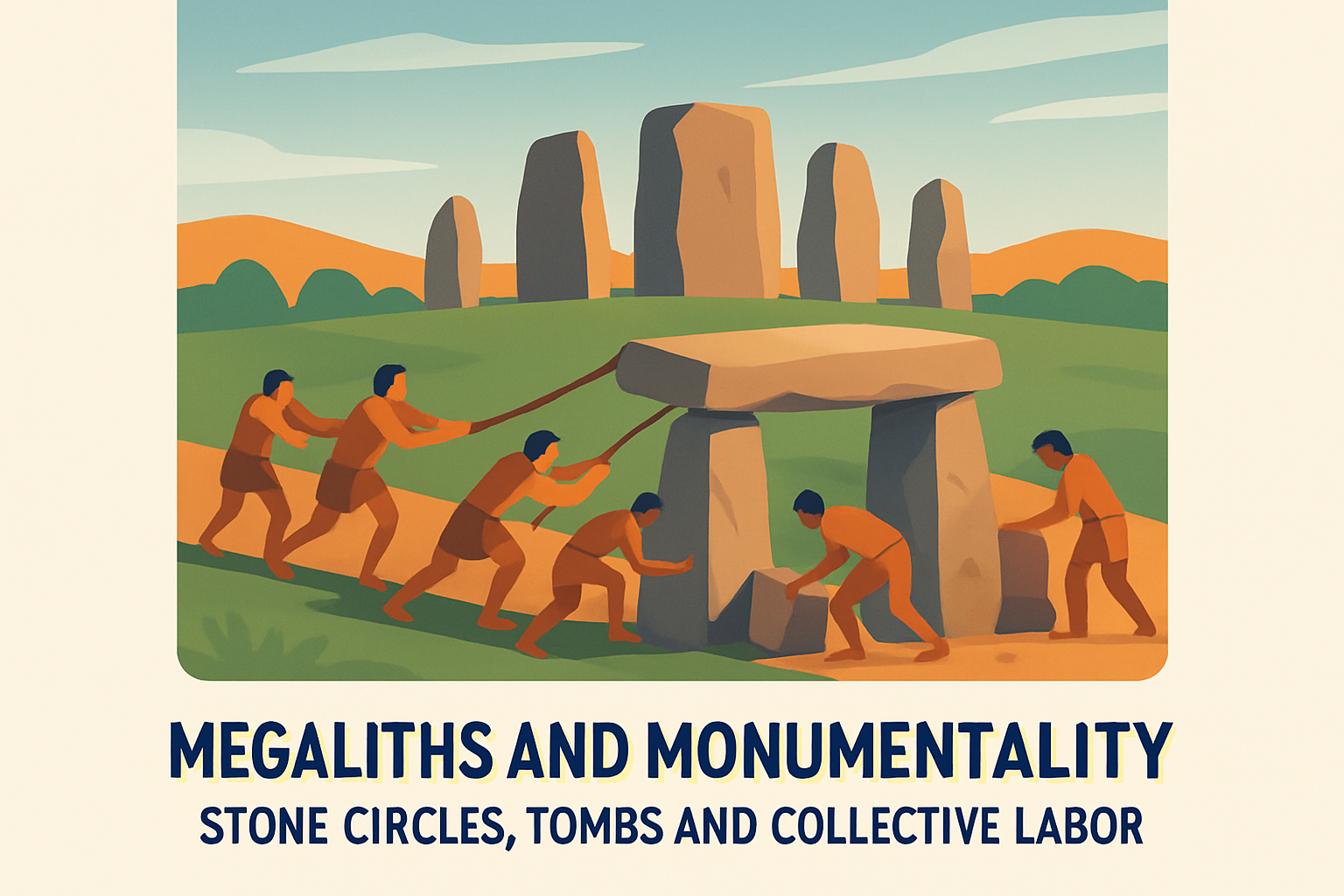
The fascinating world of megaliths gives us deep insights into ancient cultures and societies. From the mystic Stonehenge in England to the enigmatic dolmens scattered across Europe, megalithic structures are a testimony to the collective efforts undertaken by early communities in constructing monumental pieces that continue to attract attention to this day. In the simplest terms, megaliths are large stones used to construct a structure or monument without the use of mortar or concrete, often used in prehistoric times. Monumentality refers to the sense of grandeur and significance of these structures to the people who built them. Understanding megaliths and their monumentality matters because it allows us to witness the interconnectedness of ancient societies and their shared capacity for complex construction, societal organization, and spiritual or ceremonial practices. They represent a bridge between modernity and ancient times, offering valuable archaeological insights into human development, collective labor, and cultural expression.
The Significance of Stone Circles in Ancient Societies
Stone circles are perhaps the most iconic type of megalithic structure, often used for social, religious, or astronomical purposes. One prominent example is Stonehenge in England, a prehistoric marvel that consists of a ring of standing stones, each around 13 feet high, seven feet wide, and weighing approximately 25 tons. Built between 3000 BC and 2000 BC, Stonehenge is renowned for its unique alignment with the solstices, suggesting that it may have served an astronomical purpose.
Apart from their astronomical significance, stone circles were also significant community gathering sites. By examining the remains found at these sites, archaeologists have deduced that stone circles may have functioned as locations for communal rituals or feasts, reinforcing community ties and hierarchical roles within those ancient societies. The construction of such monumental sites necessitated collective labor, pointing towards a level of social organization that was crucial for gathering, organizing, and directing labor towards communal goals.
Megalithic Tombs: Final Resting Places and Symbolic Structures
Megalithic tombs, such as dolmens, passage graves, and chambered cairns, served as ancient burial sites designed to last for eternity. They provide critical insights into how ancient societies viewed death and the afterlife. These tombs were extremely labor-intensive undertakings, involving transporting massive stones over significant distances.
A well-known example is the Gavrinis Passage Tomb in France, dating back to around 3500 BC. This tomb comprises a series of large slabs arranged to create a passage and chamber covered by a mound. The carvings found inside are not just decorative but also have potential symbolic meanings indicative of the beliefs of the time. The efforts involved in constructing such significant tombs indicate that ancient societies valued their deceased, often burying them with offerings to suggest a belief in an afterlife. This collective construction effort speaks volumes about the societal values and the role of group labor in achieving communal objectives, such as honoring their dead.
Engineering Feats and Labor Organization in Prehistory
The construction of megalithic structures often required significant engineering prowess and social organization to coordinate and execute complex building processes. Considering this aspect reveals the remarkable achievements of prehistoric societies in terms of both ingenuity and communal cooperation. The organizing of labor for these large-scale projects involved coordinating manpower, resources, and developing methods or tools to facilitate transportation and erection of massive stones.
For instance, the experiment conducted by archaeologist Mike Parker Pearson suggested that the stones making up Stonehenge might have been moved using a system of wooden tracks laid down to roll the stones from distant quarries. Such innovations offer glimpses into the complexity and capability of prehistoric engineering and logistics. Moreover, the organization of such large-scale projects demanded command structures, planning, and the capacity to motivate a society to work toward a common goal, reflective of the sophistication and structure of these early communities.
Collective Spirituality: Ritual Spaces and Ceremonial Practices
Megaliths were not merely constructions but were deemed spaces of significant spiritual importance. The creation and continued use of such structures underscore the spiritual and ritualistic dimensions prevalent in ancient societies. Megaliths often served as foci for seasonal festivals, celestial observations, community gatherings, and rites of passage.
In Brittany, France, the Carnac stones include over 3,000 standing stones arranged in neat rows. Believed to have been erected around 3300 BC, these structures were possibly used as religious or ritualistic sites for worship and gathering. The maintenance of these sites and the rituals performed highlight the shared religious beliefs and practices that served to unite communities, much like communal religious practices in contemporary societies. The association of these structures with spiritual beliefs fostered a collective identity that was important for social coherence, further emphasizing the role of shared labor directed towards communal faith and tradition.
| Megalithic Structure | Location | Approximate Age (Years) |
|---|---|---|
| Stonehenge | England | 4,500 |
| Gavrinis Passage Tomb | France | 5,500 |
| Carnac Stones | France | 5,300 |
The Legacy and Modern Significance of Megaliths
The legacy of megaliths transcends mere historical curiosity. Today, megalithic sites continue to captivate our imaginations and attract visitors from around the world. They remind us of the human capacity for creativity, cooperative labor, and the quest for meaning beyond mere survival. Current archaeological studies benefit from technological advancements, allowing for more nuanced interpretations of these ancient sites, shedding light on prehistoric life, societal advancement, and human development.
For contemporary society, megaliths emphasize the enduring power of collective effort and shared purpose. They reinforce the notion that remarkable achievements often arise from collaboration and vision, lessons that remain relevant amid today’s complex global challenges. The appreciation and preservation of these ancient structures have paved the path for heritage tourism, fostering local economies while instilling a deeper public appreciation for cultural history and global heritage.
Conclusion: Embrace the Wisdom of the Past
In delving into the world of megaliths and monumentality, we uncover rich layers of human history, discovery, and progress. From stone circles and tombs to ritual spaces, these structures speak to the interconnectedness of early societies and their shared capacity for cooperation, planning, and spiritual expression. Understanding these monumental achievements offers us modern-day lessons about the power of community, the significance of shared cultural practices, and the impressive feats humans can achieve through collective endeavors.
In closing, let the fascination with megaliths inspire you to explore the past further. Consider visiting a local historical site or engaging with archaeological literature to appreciate the ancestral heritage that enriches our understanding of humanity’s journey. Embrace this historical wisdom and perhaps find ways to apply the lessons of collective labor and shared purpose in your own life, fostering a greater appreciation for community and cultural legacy.
Frequently Asked Questions
1. What are megaliths, and what purpose did they serve?
Megaliths are large stones used in the construction of various structures and monuments without the use of traditional binding materials like mortar or concrete. These incredible creations span diverse cultures across Europe, Asia, and Africa. Often built during the Neolithic and Bronze Age, megaliths served a range of purposes. Some, like stone circles, are thought to have served ritualistic or astronomical functions, possibly used for ceremonies or as calendars aligning with solstices and equinoxes. Tombs and dolmens were frequently used in funerary contexts, indicating a collective respect for the dead and possibly an ancestral veneration. These structures are not only architectural wonders considering the time period in which they were constructed but also cultural landmarks offering insights into the social and spiritual lives of ancient societies.
2. How were large megalithic monuments like Stonehenge constructed without modern technology?
The construction of megalithic monuments like Stonehenge, which has intrigued historians and archaeologists for centuries, is a testament to the ingenuity of ancient peoples. Constructing such large structures required immense cooperative effort, clever engineering, and thorough planning. Theories suggest that communities transported the massive stones over long distances using a combination of sledges, rollers, and human labor. Ropes and levers may have been used to lift and position these stones. Unlike modern solitary engineering feats, these projects relied heavily on collective labor and coordination among community members, demonstrating their ability to work together towards a common goal. The exact methods remain partly speculative, as there’s little direct evidence of tools or specific techniques used, which continues to marvel researchers eager to understand their precise building methodologies.
3. Why do megaliths often appear in the form of stone circles or tombs, and what significance do these shapes hold?
The recurring appearance of megaliths in the form of stone circles and tombs suggests a symbolic significance tied to either communal activities or cultural beliefs. Stone circles, such as those found in Avebury or at Stonehenge, may represent an early form of an astronomical calendar, with stones carefully aligned to mark important celestial events or seasons. They might have also served as spaces for ceremonious gatherings or social events, emphasizing community and shared activities. Meanwhile, tombs, often constructed as dolmens or passage graves, generally reflect mortuary practices, highlighting the importance of death and the afterlife in these ancient cultures. These structures could indicate a belief in an afterlife or the importance of ancestor worship. Their construction required collective labor and likely functioned as a means to strengthen social bonds within the communities by coming together for their construction and purpose.
4. How widespread are megalithic structures, and what do their distributions reveal about ancient societies?
Megalithic structures are widely distributed, with notable concentrations in Europe, such as in the British Isles, France, Spain, and Scandinavia, but also present in other parts of the world like parts of Africa and Asia. This widespread distribution highlights the universality of using large stones in constructing significant communal or spiritual monuments. The variations in styles and arrangements—from singular standing stones to complex stone circles and chambers—reflect diverse cultural backgrounds and possibly trading or communication networks that facilitated the spread of ideas and techniques. This distribution points towards shared human ingenuity and the importance of community in early societies. Despite cultural differences, these societies seemingly placed great emphasis on creating lasting monuments, indicating a global parallel in human experiences and expressions.
5. What’s the significance of collective labor in constructing megaliths, and what does it say about the societies that built them?
Collective labor was crucial in constructing megalithic monuments due to the sheer size and weight of the stones involved. These projects required the concerted effort of many community members, indicating a high level of social organization and cooperation. The process of gathering, transporting, and assembling these stones would have fostered strong community bonds and a sense of shared purpose. It suggests that these societies placed high importance on communal efforts and collaboration, which were essential to completing such monumental tasks. The fact that such laborious work was often directed toward spiritual or ceremonial structures implies that these communities were united by shared beliefs or cultural practices. Moreover, this collective endeavor might speak to the hierarchical nature of their societies, where leaders or spiritual guides mobilized and directed efforts towards constructing these awe-inspiring structures, reinforcing social cohesion and cultural identity.