
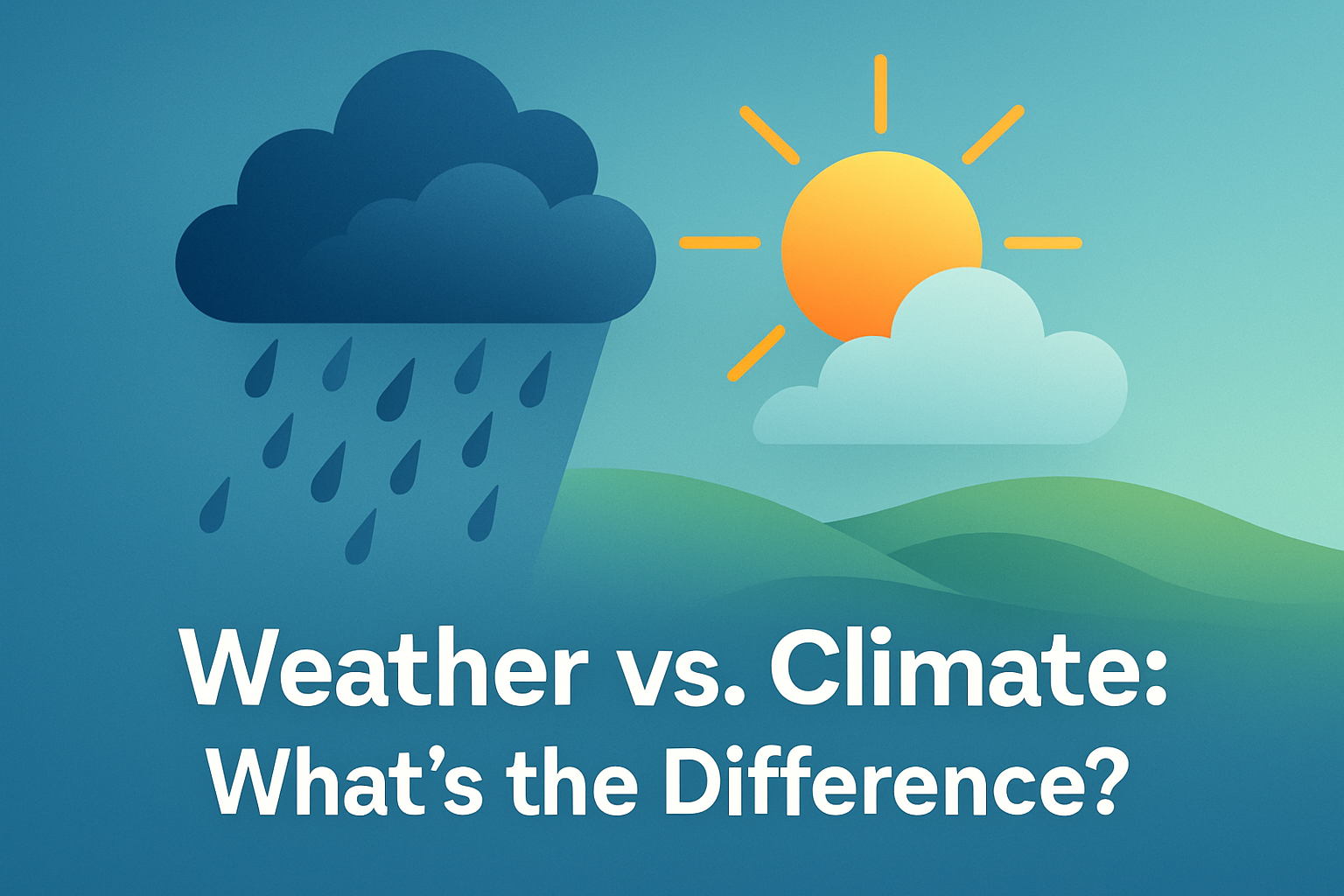
Weather and climate are two terms that are frequently used interchangeably, but they actually refer to very different concepts. Understanding the difference between weather and climate is crucial not only for scientific studies but also for making informed decisions in daily life and policy-making. Misunderstanding these terms can lead to confusion about environmental issues, the impact of global warming, and how to respond to natural disasters. This article will explore the definitions of weather and climate, explain their key differences, and underscore why this distinction matters to everyone.
Weather refers to the short-term atmospheric conditions in a specific place at a specific time. It includes variations such as temperature, humidity, precipitation, and wind speed observed on a day-to-day basis. On the other hand, climate is the average weather conditions in a region over a long period, typically 30 years or more. Through comprehending the dynamics of weather and climate, individuals and communities can better prepare for immediate weather changes while planning long-term strategies to address climate-related challenges. Let’s delve deeper into these concepts to clarify their differences and implications.
Understanding Weather: The Day-to-Day Atmosphere
Weather is what you experience as soon as you step outside your door. It includes the daily variations of temperature, humidity, rainfall, cloudiness, wind, and atmospheric pressure. These conditions can change rapidly within a matter of hours, making weather highly unpredictable and volatile. For instance, on any given day, you might wake up to bright sunshine, but by the afternoon, a storm could roll in, drastically altering your outdoor plans.
Consider the example of a city like San Francisco, known for its microclimates. During the summer, the city’s weather can fluctuate significantly from one neighborhood to another. While residents in the Richmond district might experience foggy and cool temperatures, those in the Mission District just a few miles away could enjoy warm and sunny skies. This everyday unpredictability characterizes the fundamental nature of weather.
Weather is influenced by numerous factors, including geographical location, time of year, and local topography. It plays a critical role in everyday life, affecting activities such as travel, agriculture, and even moods. Technological advancements such as radar and satellites have improved our ability to forecast weather, but it still remains only somewhat predictable due to its inherent variability.
Climate: The Long-Term Patterns
In contrast to weather, climate represents the average atmospheric conditions in a region over long periods, usually spanning decades. It’s the expected pattern of weather in an area, considering a wide range of variables over time. Climate encompasses typical weather characteristics such as the average high and low temperatures for a month or the usual amount of rainfall in a particular season.
The concept of climate is perhaps best illustrated by considering different climatic regions around the world. For example, tropical climates, such as those found in the Amazon rainforest, are characterized by high temperatures and heavy rainfall year-round. Meanwhile, arid climates like that of the Sahara Desert are marked by extremely low rainfall and high temperatures.
Climate is measured over extensive time frames and provides context for understanding broader environmental trends such as global warming and climate change. Scientists studying past climate data can identify patterns and make predictions about future climatic conditions, which are essential for planning in sectors such as agriculture, urban development, and disaster management.
Key Differences Between Weather and Climate
The primary distinction between weather and climate lies in the time span and variability of each. While weather can change from minute to minute, climate is more stable and evolves over long periods. Weather is what people experience every day, while climate is what they expect over weeks, months, and years based on historical data.
The differences can also be seen in how each affects decision-making. Weather forecasts are utilized for immediate planning, such as dressing appropriately for a day, deciding whether to carry an umbrella, or evaluating road conditions before a trip. Meanwhile, climate information is used for longer-term planning, such as determining suitable crop types for farming, designing infrastructure to withstand typical weather extremes, and setting policies to mitigate the impacts of climate change.
| Aspect | Weather | Climate |
|---|---|---|
| Time Frame | Short-term (hours to weeks) | Long-term (decades or more) |
| Predictability | Variable and often unpredictable | More predictable based on historical patterns |
| Impact on Daily Life | Immediate decisions | Long-term planning and policies |
The Importance of Distinguishing Weather and Climate
Understanding the difference between weather and climate is crucial for interpreting scientific reports, making informed decisions, and engaging in discussions about environmental issues. Misinterpretations can lead to flawed conclusions about phenomena such as climate change. For example, a cold spell in a region does not contradict global warming—it is simply an example of weather variability, whereas climate change analysis requires examining long-term trends across the globe.
On a regional level, distinguishing between weather and climate can guide suitable agricultural practices. Farmers depend on climatic patterns to determine which crops will thrive in their regions during specific seasons. In locations where climate change is altering traditional growing seasons, recognizing these shifts can help farmers adapt and maintain productivity.
Moreover, distinguishing between the two aids in understanding and responding to natural disasters. While weather events like hurricanes or heatwaves have immediate impacts requiring urgent response, climate data helps structure long-term resilience strategies against increased frequency or intensity of such events caused by climate change.
Weather and Climate in the Face of Climate Change
Climate change blurs the lines between weather and climate by impacting both directly and indirectly. Scientists have observed shifts in global climate patterns, with rising average temperatures, melting ice caps, and increasingly unstable weather patterns. These changes have a profound effect on local weather conditions, increasing the frequency and intensity of extreme weather events like wildfires, floods, and droughts.
California provides a real-world example of how climate change affects weather and climate dynamics. Over recent decades, the state has experienced increased temperatures and prolonged drought periods, exacerbating wildfire risks. This climatic shift creates a feedback loop where drier climates fuel more frequent and severe fires, contributing to changing weather patterns that complicate environmental and societal planning efforts.
Addressing climate change requires efforts on multiple fronts, from reducing greenhouse gas emissions to implementing adaptation and mitigation strategies. By understanding the intertwined nature of weather and climate, individuals, communities, and policymakers can make more informed choices to combat the effects of climate change and build more resilient infrastructures.
The Role of Technology in Weather and Climate Studies
Technological advancements have significantly improved our understanding and forecasting of both weather and climate. Weather prediction models have become increasingly accurate thanks to sophisticated satellites and computer algorithms that analyze vast datasets in real-time. These technologies allow meteorologists to offer precise forecasts and severe weather warnings, crucial for minimizing risks to life and property.
Similarly, technology plays a vital role in climate studies. Climate models simulate Earth’s climate system, taking into account variables such as greenhouse gas concentrations, solar radiation, and Earth’s surface albedo. These models provide scientists with insights into potential future climate scenarios, helping in planning for impacts and exploring mitigation strategies.
For instance, the use of high-performance computing allows researchers to model climate patterns and assess changes due to human activities. These insights can help policymakers make evidence-based decisions to enact measures that reduce carbon emissions and support sustainable development.
Conclusion: Embracing Awareness and Action
Understanding the difference between weather and climate is not merely an academic exercise; it’s a necessity for anyone looking to become more informed and proactive in addressing environmental challenges. By grasping these concepts, individuals can better interpret news reports, engage in informed discussions, and advocate for policy changes that support environmental sustainability.
The main takeaway is that while weather signifies short-term atmospheric conditions, climate represents long-term patterns. Recognizing this distinction is vital for setting realistic expectations and implementing effective strategies to cope with both immediate weather variations and long-term climate changes.
The call to action is simple but powerful: Stay informed, seek accurate data, and participate in initiatives that combat climate change. Adopt practices that reduce your carbon footprint and support policies focusing on environmental conservation. By doing so, you’ll contribute to creating a more resilient and sustainable future for generations to come.
In conclusion, while weather and climate operate on different timescales, both are integral to understanding the Earth’s environmental system. By distinguishing between the two, we gain a clearer perspective of our planet’s complexities and our role in nurturing its health.
Frequently Asked Questions
1. What is the main difference between weather and climate?
The main difference between weather and climate lies in the time frame they refer to. Weather describes the atmospheric conditions such as temperature, precipitation, humidity, wind speed, and visibility that we experience over a short period of time – from minutes to a few weeks. It’s the kind of thing you’d check before heading out for the day or planning a weekend trip. On the other hand, climate is defined by these same atmospheric conditions but averaged over a much longer period, typically 30 years or more. Climate gives us an understanding of the typical weather patterns in a region over a seasons and years, which helps us identify trends and variations in weather over decades.
2. Can you give an example of how weather and climate differ in everyday terms?
Absolutely! Let’s use a common scenario: imagine you’re planning a vacation. If you’re considering visiting California in July, you might look up the climate to know the usual weather patterns for that time of year. The climate would inform you that you can generally expect warm and dry conditions, as California tends to have hot, dry summers. But when you check the weather forecast a few days before your trip, you might notice an unusual cold front or a rare summer storm expected to pass through that week. While the climate gives you a general idea of what to expect over the summer, the weather forecast provides you the specifics for those particular days.
3. Why is it important to understand the difference between weather and climate?
Understanding the difference between weather and climate is vital not only in daily decision-making but also for larger socio-economic and environmental considerations. On a personal level, it helps you decide what to wear, when to travel, or how to plan outdoor activities. From a broader perspective, this distinction is crucial in areas like policymaking, urban planning, and agriculture. For instance, climate data helps city planners design infrastructure that can withstand typical weather patterns over years, like potential flooding scenarios, while farmers rely on climate information to understand which crops to plant and when. Moreover, when discussing issues such as global warming, knowing that it’s a shift in climate, not just daily weather changes, helps in grasping the full extent of its long-term impacts on the planet and influences policies aimed at addressing these concerns.
4. How do global warming and climate change relate to weather and climate?
Global warming and climate change are terms often connected with climate rather than weather. Global warming refers to a long-term increase in Earth’s average temperature, primarily due to human activities like burning fossil fuels and deforestation. Climate change encompasses global warming but includes other shifts in climate patterns, such as changes in precipitation or increased frequency of extreme weather events. While weather can be highly variable and influenced by these changes, climate change refers to the long-term alteration of temperature and typical weather patterns. This means that while a snowstorm or a hurricane is considered a weather event, the increasing frequency or intensity of such events over the years could be indicative of climate change.
5. How do meteorologists and climatologists use weather and climate predictions differently?
Meteorologists and climatologists, although both study atmospheric sciences, focus on different time scales and purposes. Meteorologists deal primarily with weather; they observe short-term atmospheric phenomena and use them to make predictions, known as weather forecasts. These forecasts can range from a few hours ahead to several days and rely heavily on current data inputs to predict specific weather conditions such as storms, temperature fluctuations, rain, or sunshine. Climatologists, however, study climate by examining long-term trends and patterns. Their work involves analyzing historical climate data to understand how our climate has evolved over decades or centuries, what factors influence these changes, and how they might continue to change in the future. Both meteorologists and climatologists utilize their predictions to inform the public and policymakers, but meteorologists focus on current conditions and short-term forecasts while climatologists address long-term changes and challenges.