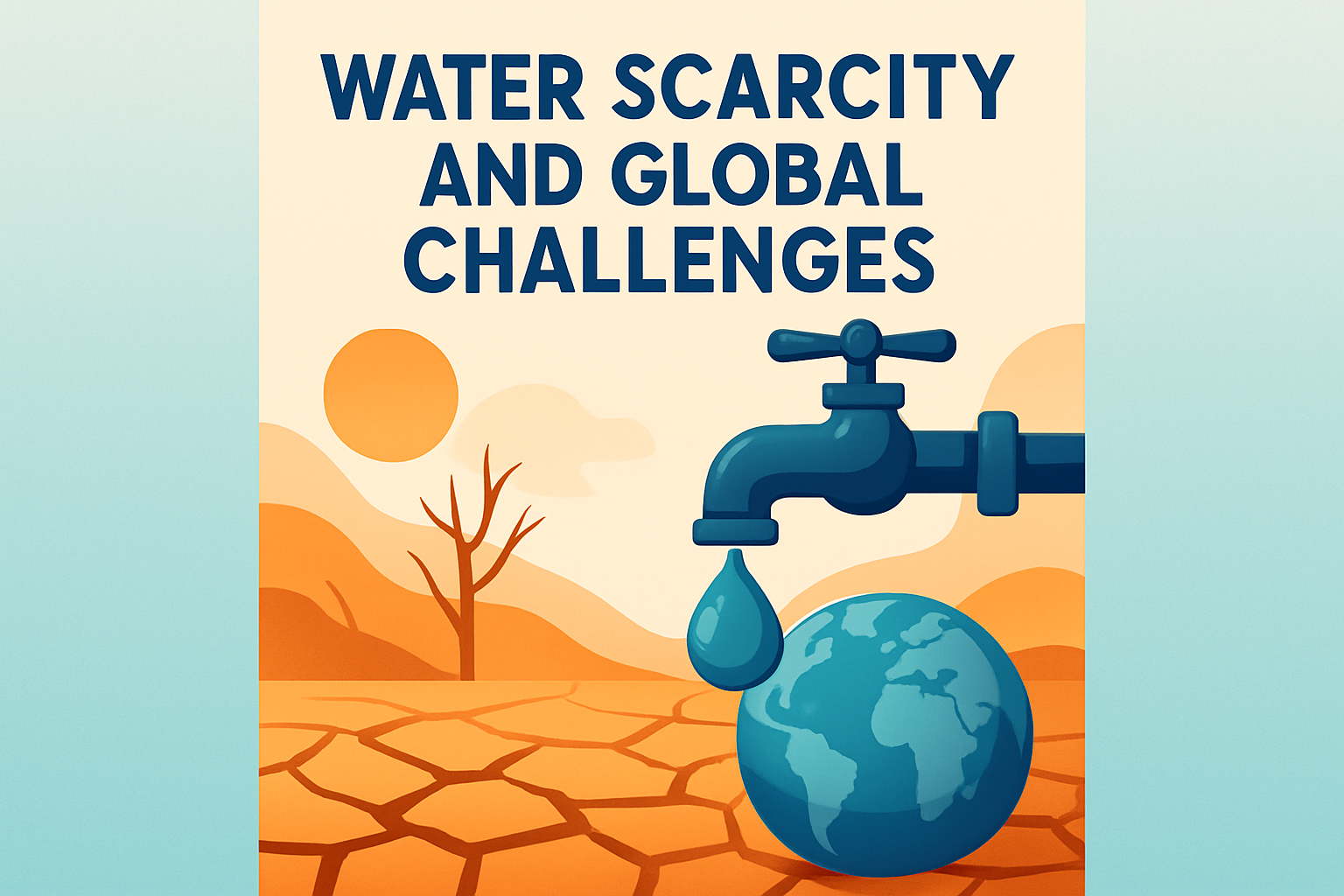
In the world of today, water scarcity is a pressing concern that affects millions globally. It strikes a delicate balance between the water available and the growing demand. “Water scarcity,” by definition, refers to the situation where the available potable, unpolluted water within a region is less than what the population demands. This concept is crucial because water is fundamental for survival, economic development, environmental equilibrium, and social stability. Without adequate water resources, societies are prone to confront crises that can extend from health problems to massive economic losses. Over the years, population growth, over-exploitation, pollution, and climate change have intensified the challenge of maintaining water supply in tandem with demand. Understanding the dynamics of water scarcity allows us to explore viable solutions to execute sustainable water management strategies worldwide. It’s not just an environmental issue but a multifaceted global challenge that requires immediate attention.
Population Growth and Increased Water Demand
One of the primary drivers of water scarcity is the exponential increase in the global population. The United Nations projects that the world population will reach around 9.7 billion by 2050. By default, a surge in population boosts demand for water in terms of personal consumption, agricultural requirements, and industrial usage. Consequently, this exacerbated demand places immense pressure on existing water resources. An exemplary case is India, which is home to around 18% of the world population but possesses only 4% of its water resources. Such a disproportionality indicates severe water stress in various regions of the country.
Climate Change and Its Impact on Water Resources
Climate change plays a decisive role in aggravating water scarcity. As global temperatures rise, precipitation patterns alter significantly, causing melting glaciers and severe droughts. Various regions face reduced water availability due to diminished river flows and shrinking snowpacks. For instance, the Colorado River in the United States has seen noteworthy declines in water levels attributed to climate fluctuations. This river is vital for supplying water to states like Arizona, California, and Nevada, and its depletion could impact millions. Such scenarios showcase how vulnerable our water sources are to climate variability.
Water Pollution Deteriorates Water Quality
Pollution is another critical factor contributing to water scarcity. Industrial activities, agricultural runoff, and improper waste disposal introduce toxins, heavy metals, and other pollutants into water bodies, making them unsuitable for human use. Rivers and lakes, once thriving ecosystems, now struggle with diminished biodiversity and poor-quality water. The Ganges River in India illustrates how sacred waters are being compromised by pollution. Despite various efforts and campaigns to clean it, pollution levels remain a significant hurdle for providing clean water to millions relying on it daily.
Unsustainable Agricultural Practices
Agriculture is the largest consumer of water globally, using about 70% of the available freshwater resources. While feeding a burgeoning population is a priority, unsustainable methods threaten water availability. Practices such as excessive irrigation, inefficient water usage, and over-reliance on water-intensive crops deplete resources quicker than they can replenish. In countries like Egypt, agriculture consumes around 80% of the water resources, leaving inadequate supplies for other uses. Adopting sustainable farming practices is essential to pivot towards a balance that conserves water.
The Impact of Water Scarcity on Societal and Economic Structures
Water scarcity influences various dimensions of society and the economy, adversely affecting health, education, and industrial growth. Health-wise, people rely on contaminated water sources, facing increased risks of waterborne diseases. Children spend hours fetching water daily, impacting their educational prospects and continuing the cycle of poverty. In regions like Sub-Saharan Africa, many communities experience this first-hand, as scarce water supplies force individuals, particularly women and children, to travel long distances to collect water. Economically, industries reliant on water, such as agriculture and manufacturing, endure productivity losses. An analysis conducted by the World Bank suggested that Middle East and North African regions could witness a GDP reduction between 6% and 14% due to water scarcity-related issues.
| Region | Projected GDP Loss Due to Water Scarcity |
|---|---|
| Middle East | Up to 14% |
| North Africa | Up to 6% |
Measures to Combat Water Scarcity
Various strategies can be employed to combat water scarcity effectively. First, implementing improved infrastructure for water storage, distribution, and management can help conserve water. Cities such as Singapore have adopted innovative water management technologies by reclaiming used water, capturing rainwater, and desalinating seawater. Education and public awareness campaigns encouraging water conservation are pivotal in modifying individual behaviors. Furthermore, leveraging technology for sustainable agriculture involves precision farming and the deployment of sensors to optimize water usage. Legislation that regulates water usage and pollution plays a crucial role. Encouraging community participation ensures holistic solutions that integrate traditional knowledge and new advancements.
Engaging in international cooperation can further address cross-boundary water issues efficiently, as water bodies often span multiple countries. This is exemplified by the Nile Basin Initiative, which brings together countries dependent on the Nile River to collaborate on equitable water resource management. Lastly, promoting the adoption of sustainable lifestyles, be it reducing consumption or endorsing sustainable products, contributes significantly to addressing water scarcity. When these combined efforts are tailored uniquely to the needs of communities, tangible improvements in water availability become attainable.
Conclusion: A Collective Effort Towards a Sustainable Future
Addressing water scarcity is not just the responsibility of any single entity; it is a collective effort requiring coordinated action among governments, industries, communities, and individuals. The path to sustainability is dependent on recognizing the gravity of water scarcity and implementing equitable, inclusive, and innovative solutions that prioritize water security. By reimagining our relationship with this essential resource, we stand to secure a future that not only meets human needs but preserves the ecological balance. The steps we take today will determine tomorrow’s resilience in confronting global water challenges.
To drive this change, start by evaluating your water usage and embracing conservation measures. Engage with community initiatives or advocate for policies that aim to preserve precious water resources. Our commitment to tackling water scarcity today paves the way for a sustainable and just world for future generations.
Frequently Asked Questions
1. What is water scarcity, and why is it considered a global challenge?
Water scarcity is the condition where the available potable and unpolluted water is insufficient to meet the demands of a region’s population. It’s a significant global challenge because water is a fundamental resource for human survival, economic development, environmental balance, and maintaining social stability. As the global population grows and consumption increases, the pressure on existing water resources intensifies. Additionally, factors like climate change, pollution, and inefficient water management contribute to the dwindling of available water, affecting millions globally in their daily lives and livelihoods.
2. How does climate change impact water scarcity?
Climate change dramatically influences water scarcity through several mechanisms. As global temperatures rise, patterns of precipitation are altered, with some areas experiencing decreased rainfall and others excessive rainfall. The former leads to droughts and reduced river flow, making freshwater less available. Melting glaciers, another consequence of global warming, further diminish the natural reservoirs that many populations depend on. Extreme weather events and erratic rainfall also complicate water storage and distribution, further exacerbating water scarcity. Additionally, higher temperatures increase evaporation rates, further depleting water sources and altering soil moisture levels, affecting agriculture and food security.
3. What are the social and economic impacts of water scarcity?
Water scarcity has profound social and economic repercussions. Socially, it disproportionately affects the most vulnerable populations, leading to health issues due to lack of clean drinking water and poor sanitation. It often results in conflict over water resources, displacing communities, and increasing poverty levels as people struggle to find alternatives. Economically, industries relying heavily on water, like agriculture, manufacturing, and energy production, face immense challenges. Water shortages lead to reduced crop yields, increased production costs, and limited industrial output, driving economic instability. In the broader sense, it hinders development efforts and can stall progress in reducing poverty and inequality, as communities are forced to divert resources to secure water access.
4. What solutions can help mitigate water scarcity?
To combat water scarcity, a multifaceted approach is necessary. Effective water management practices, like rainwater harvesting, efficient irrigation methods, and reducing industrial water consumption, play a crucial role. Advancements in technology, such as desalination and water recycling, offer innovative solutions to increase available water supply. Investments in infrastructure to reduce water loss through leaks in distribution systems are also essential. On a policy level, implementing regulations for sustainable water use and protecting water sources from pollution are critical tasks. Additionally, raising public awareness and promoting conservation can lead to significant reductions in water use and ensure more equitable distribution, mitigating the impacts of scarcity.
5. How does water scarcity affect environmental stability?
Environmental stability is intrinsically linked to water availability. Ecosystems rely on steady water supplies to maintain biodiversity and support plant and animal life. When water becomes scarce, it disrupts these ecosystems, leading to habitat degradation and loss of biodiversity. Rivers and lakes suffering from low water levels affect fish populations and other aquatic life, impacting entire food chains and diminishing ecosystem services. Additionally, the lack of water affects soil health, leading to desertification and erosion, further destroying natural habitats. Without suitable water resources, efforts to combat climate change, preserve biodiversity, and maintain ecological balance face significant hurdles, threatening the long-term health of our planet.