
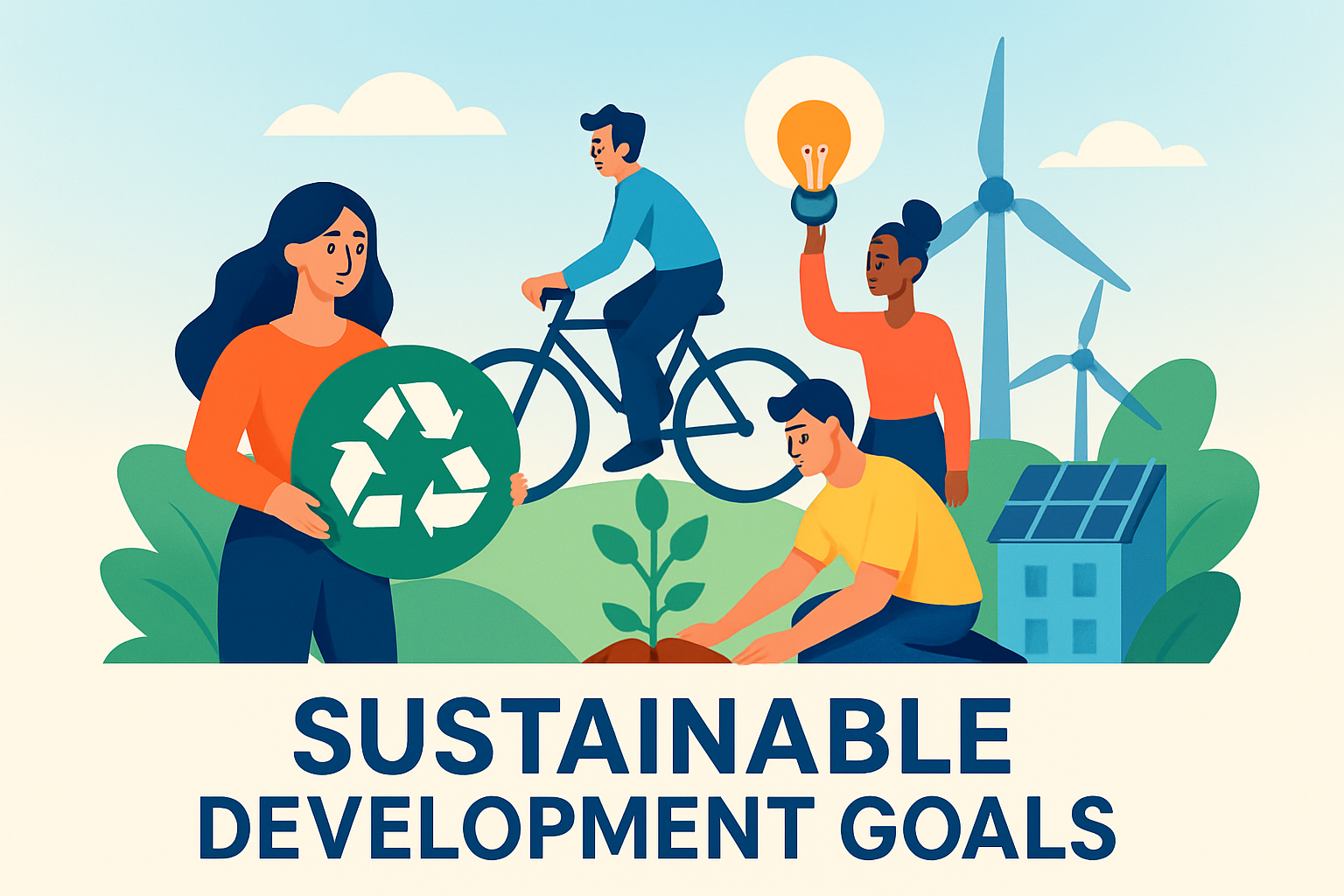
The Sustainable Development Goals (SDGs) are a collection of 17 interlinked global goals designed to be a “blueprint to achieve a better and more sustainable future for all”. Set in 2015 by the United Nations General Assembly, the SDGs are intended to be achieved by the year 2030. They address global challenges, including those related to poverty, inequality, climate change, environmental degradation, and justice. Understanding the SDGs is crucial because they represent a shared global vision, providing a cohesive framework for governments, businesses, and individuals to work towards impactful change. As the world becomes more interconnected, the relevance of the SDGs grows, with each goal interrelated and essential for the overall success of the initiative. These goals not only set the agenda for sustainable development but also serve as a guide to align efforts and measure progress.
The Essence of No Poverty – SDG 1
SDG 1 aims to eradicate poverty in all its forms everywhere by 2030. It is an ambitious goal that addresses both the symptoms and root causes of poverty. Poverty is more than the lack of income and resources; it is an overarching barrier that affects access to quality education, health services, and other necessary opportunities. A real-world example of tackling poverty comes from Brazil’s “Bolsa Família” program, which provides financial aid to poor families contingent on their children’s school attendance and vaccinations. The program helps break the cycle of poverty by addressing immediate needs and encouraging education and health improvements.
Zero Hunger – SDG 2: From Concept to Reality
SDG 2 focuses on ending hunger, achieving food security, improving nutrition, and promoting sustainable agriculture. Hunger is not merely a lack of food but also poor nutrition that affects survival, productivity, and overall quality of life. In India, the “National Food Security Act” has been instrumental in ensuring that eligible families receive subsidized grains. This policy aims to reduce malnutrition and deliver food to underserved populations. By advancing agricultural productivity through sustainable practices, countries work towards securing food supplies for future generations—another critical aspect of this goal.
Good Health and Well-being – SDG 3: Beyond the Basics
SDG 3’s goal is to ensure healthy lives and promote well-being for all ages. It addresses health as a right, focusing not just on eradicating diseases but also on universal access to healthcare services. Countries like Rwanda have invested in developing a community-based health insurance system aimed at providing every citizen with access to healthcare services. This model demonstrates the power of community investment in achieving health for all and highlights an approach that other nations can emulate.
Achieving Quality Education – SDG 4
Education is a cornerstone for sustainable development, making SDG 4 of paramount importance. This goal seeks to ensure inclusive and equitable quality education and promote lifelong learning opportunities. Finland’s education system exemplifies a successful model, renowned for focusing on equality and inclusiveness while consistently ranking high on international assessments. By investing in teacher training and maintaining gender equality, Finland demonstrates how an equitable education system can foster individual and societal development.
Gender Equality – SDG 5: Closing the Gap
Gender equality is more than a moral imperative; it’s critical to realizing the human rights and empowerment of all women and girls. SDG 5 aims to end gender-based discrimination and violence, ensuring participation and equal opportunities. Rwanda makes a compelling case, being the first country with a female majority in parliament. Legislations and reforms in Rwanda support women’s rights and participation, showcasing how institutional support can catalyze gender parity.
Clean Water and Sanitation – SDG 6: Hygienic Steps Forward
SDG 6 is dedicated to ensuring the availability and sustainable management of water and sanitation for all. This encompasses access to clean drinking water, sanitation services, and hygiene education, which are fundamental to human health. Singapore’s sustainable water management system is a role model, involving Rainwater Collection, Wastewater Management, and Water Reuse initiatives known as the ‘Four National Taps’. By harnessing technology in water management, Singapore sets a benchmark for efficient resource use and sustainability practices.
Sustainable Summation
The SDGs provide a comprehensive framework aspiring to transform the world into a more sustainable, equitable, and healthier place. By addressing each goal’s unique aspects, we acknowledge the SDGs’ intertwining nature, working for structural change that is inclusive and far-reaching. Addressing poverty, hunger, health, education, gender equality, and water management creates a strong foundation for thriving communities. The reader is encouraged to partake in sustainable actions, whether by supporting policies, donating to causes aligned with the SDGs, or spreading awareness about these goals’ importance. Let us all contribute to this global pursuit to leave a sustainable legacy for future generations.
Frequently Asked Questions
1. What are the Sustainable Development Goals (SDGs), and why were they created?
The Sustainable Development Goals (SDGs) are a set of 17 comprehensive and interconnected global objectives that aim to foster a better and more sustainable future for everyone around the world. These goals serve as a universal agenda to end poverty, protect the planet, and ensure prosperity and peace for all by 2030. The United Nations General Assembly established the SDGs in 2015 as a successor to the Millennium Development Goals (MDGs). The creation of the SDGs was driven by the recognition that development needs to be inclusive and sustainable in order to effectively address critical global challenges. These challenges include, but are not limited to, poverty, inequality, climate change, environmental destruction, and issues of peace and justice. By setting clear targets and deadlines, the SDGs represent a global call to action where every country, regardless of their economic status, is encouraged to adopt policies and practices that support a sustainable future. They emphasize the importance of collaboration among governments, businesses, and citizens to achieve collective success.
2. How are the SDGs different from the Millennium Development Goals (MDGs)?
While both the Sustainable Development Goals (SDGs) and the Millennium Development Goals (MDGs) are global initiatives aimed at improving the quality of life for people around the world, they have some key differences in terms of scope, approach, and focus areas. The MDGs, established in 2000, consisted of 8 goals focused primarily on addressing extreme poverty, hunger, education, gender equality, child and maternal health, disease, environmental sustainability, and global partnerships. They were primarily targeted at developing nations and provided a framework for international development efforts until 2015. On the other hand, the SDGs, launched in 2015, are far broader and more ambitious, comprising 17 goals with 169 targets that cover a wider range of economic, social, and environmental issues. They recognize the interconnectedness of these areas and call for integrated approaches to development. Unlike the MDGs, the SDGs are universal, meaning they apply to all countries, both developed and developing. This universality underscores the fact that sustainable development is a global challenge that requires contributions from every nation. Additionally, the SDGs place a strong emphasis on environmental sustainability, economic growth, and reducing inequality, promoting a holistic view of development.
3. What is the significance of including environmental goals in the SDGs?
The inclusion of environmental goals within the Sustainable Development Goals (SDGs) underscores the critical understanding that sustainable development cannot be achieved without addressing environmental challenges. Environmental health is foundational to achieving economic stability and social well-being. The SDGs include specific goals related to climate action, life on land, life below water, and clean water and sanitation, highlighting the need for a concerted effort to address ecological degradation and preserve natural resources. Environmental sustainability is essential because natural resources are finite, and ecosystems are under immense pressure from human activities such as deforestation, pollution, urban sprawl, and greenhouse gas emissions. By incorporating environmental goals, the SDGs promote the protection and restoration of ecosystems, the sustainable management of natural resources, and the mitigation and adaptation to climate change. These environmental goals also emphasize the need for responsible consumption and production, advancing clean technologies, and fostering sustainable cities and communities. The integration of these goals into the SDGs demonstrates the understanding that the well-being of the planet is directly linked to the well-being of its people. Protecting the environment not only preserves the earth for future generations but also supports the health, livelihoods, and resilience of current populations.
4. How can individuals contribute to achieving the SDGs?
Individuals play a crucial role in the success of the Sustainable Development Goals (SDGs), and there are numerous ways in which each person can contribute towards their achievement. The SDGs recognize that while governments and large organizations are vital players, sustainable development is ultimately a collective effort that requires the involvement of everyone, including ordinary citizens. One way individuals can contribute is by staying informed about the SDGs and spreading awareness within their communities. By understanding the goals and the challenges they address, individuals can become advocates for change and encourage others to take action. Moreover, individuals can incorporate sustainable practices into their daily lives. This might include reducing energy consumption by using energy-efficient appliances, supporting sustainable and local products, recycling and minimizing waste, conserving water, and advocating for sustainable practices at workplaces or within businesses they engage with. Another significant contribution is participating in community initiatives or volunteering for organizations that work towards achieving any of the SDGs. Whether it’s planting trees, supporting educational initiatives, or participating in beach clean-ups, every action counts. Lastly, individuals have the power to influence policymakers by voting for leaders who prioritize sustainable policies and by advocating for laws and regulations that advance environmental protection, social equality, and economic sustainability. By making informed consumer choices and empowering communities, individuals can significantly impact the global effort to meet the SDGs by 2030.
5. What are the challenges in achieving the SDGs by 2030?
While the Sustainable Development Goals (SDGs) set ambitious targets for a better global future, there are several challenges to achieving these goals by the 2030 deadline. One of the most significant challenges is the varied capacity of different countries to implement the necessary changes. Developed countries may have the resources and infrastructure to progress more rapidly towards these goals, whereas developing countries might struggle due to lack of funding, technology, and institutional support. Additionally, addressing deeper systemic issues such as poverty, inequality, and institutional inefficiencies requires not only policy changes but also societal shifts, which can be slow and complex. Political instability, corruption, and conflicts in various regions further complicate efforts to meet these goals, as they can undermine governance and the rule of law, stifling progress. Financial constraints pose another challenge. Achieving the SDGs will require unprecedented levels of investment from both public and private sectors. Engaging businesses and aligning financial flows with sustainable development remains crucial yet challenging, as there must be a transformation in how investments are evaluated and directed. Furthermore, the SDGs need to be adaptable to emerging global issues and crises, such as pandemics. The COVID-19 pandemic, for example, exposed and exacerbated vulnerabilities in healthcare systems, economies, and social structures worldwide, and led to setbacks in progress across various goals. Finally, climate change stands as a daunting hurdle as its impacts continue to escalate, affecting every aspect of development from agriculture to health, requiring urgent and coordinated global responses. To overcome these challenges, strong leadership, innovation, and partnerships across all levels of society are imperative, allowing for shared knowledge, resources, and a global commitment to the transformative change necessary to achieve the SDGs by 2030.