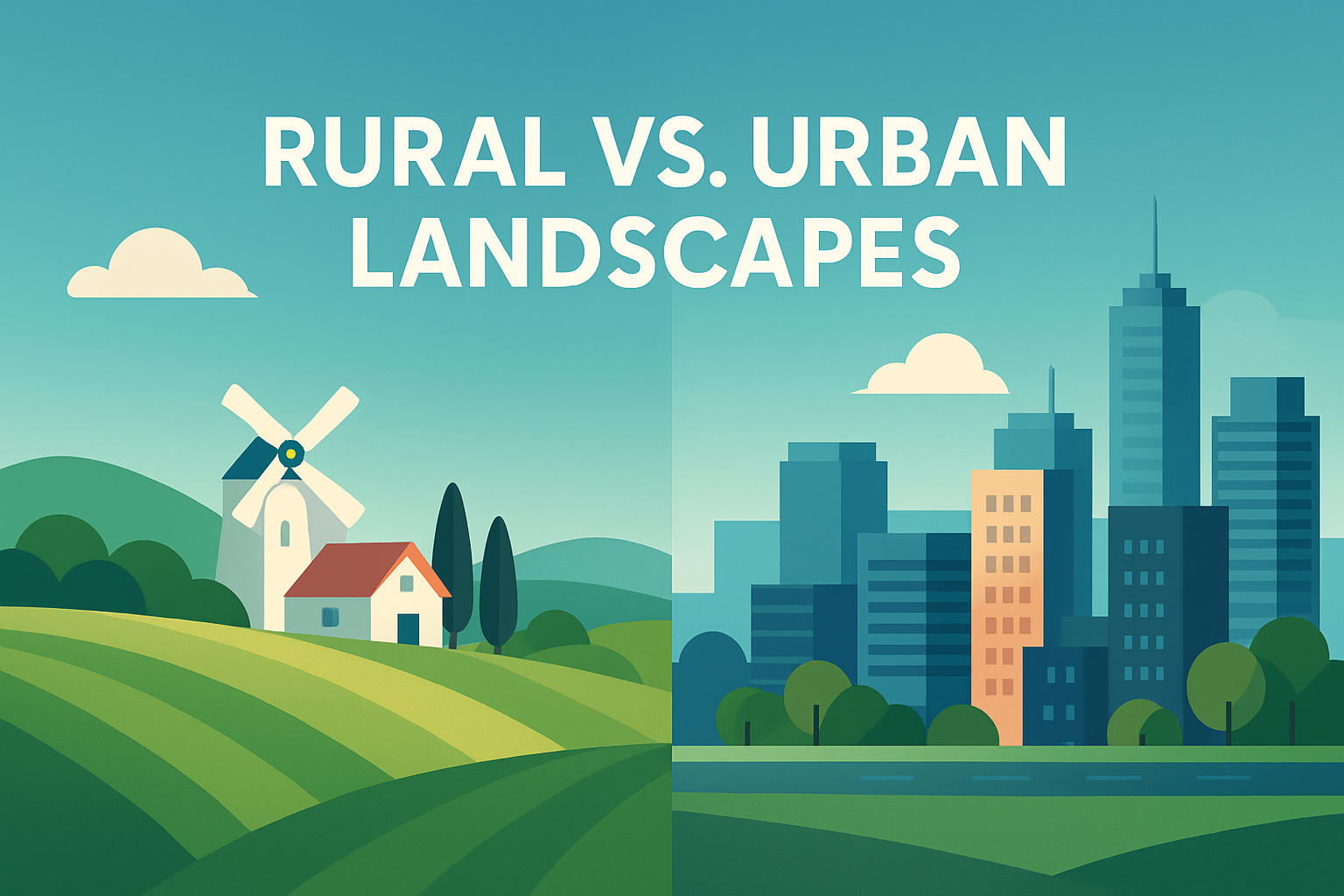
The world is a tapestry of diverse landscapes, each offering unique features and ways of life. When discussing landscapes, two dominant categories often come to mind: rural and urban. These landscapes are not just geographical distinctions but also represent different cultural, social, and economic elements. Understanding the differences between rural and urban landscapes is crucial, as it influences how people live, work, and interact with the environment.
The term “rural” is typically associated with regions located outside towns and cities, often characterized by open spaces, agricultural activities, and smaller populations. Conversely, “urban” relates to areas within or around cities and towns, known for their dense populations, developed infrastructure, and a more industrial and commercial focus. The contrast between these landscapes affects everything from lifestyle and employment opportunities to environmental concerns and societal interactions.
The significance of this topic cannot be overstated. By understanding the distinctiveness of rural and urban landscapes, individuals and policymakers can make informed decisions about urban planning, resource distribution, and sustainable development. Moreover, appreciating these differences can enhance community harmony and ensure that both landscapes receive the attention and care they require for balanced growth and development.
Economic Activities and Opportunities
One of the most pronounced differences between rural and urban landscapes lies in the economic activities and opportunities available in each area. Rural areas often depend heavily on agriculture, with farming, fishing, and forestry being predominant activities. These sectors are not only labor-intensive but also subject to the whims of nature, making them sometimes less stable than urban industries.
In contrast, urban areas are bustling hubs of economic activity, characterized by industries such as manufacturing, services, technology, and finance. With urban centers housing a diverse range of businesses, job opportunities in these areas are typically more varied. Moreover, urban areas are frequently associated with higher wages and better career advancement possibilities.
| Aspect | Rural | Urban |
|---|---|---|
| Primary Industries | Agriculture, Forestry | Manufacturing, Services |
| Job Diversity | Limited | Wide Range |
| Income Level | Generally Lower | Generally Higher |
An example can be seen in the Midwest farming communities in the United States, where agricultural work dominates, and job prospects are tied closely to the land. Contrast this with New York City where financial services, technology startups, and creative industries offer a multitude of career paths. The economic foundation of these areas significantly influences population growth, infrastructure development, and the availability of services.
Infrastructure and Development
The level of infrastructure and development is another key distinction between rural and urban landscapes. Urban areas typically boast advanced infrastructure, including extensive transportation networks, modern utilities, and comprehensive healthcare and educational facilities. The presence of such infrastructure drives the efficiency and productivity of urban environments, facilitating both economic growth and quality of life.
Conversely, rural areas often face challenges with infrastructure. Roads may be less developed, public transportation scarce, and access to services more limited. This can lead to increased isolation and reduced opportunities for rural residents. However, some rural areas have leveraged modern technology to bridge the gap, such as using the internet for remote education or telemedicine.
Take, for example, the city of Tokyo, Japan, which offers world-class transportation networks, including extensive subway systems and high-speed trains, enabling millions to move efficiently within the city. In contrast, a rural village in Bangladesh might struggle with unpaved roads and limited access to electricity, illustrating the stark differences in infrastructural development.
Social and Cultural Dynamics
The social and cultural dynamics within rural and urban landscapes also vary significantly. Rural communities often have a strong sense of community and tradition, with social interactions deeply rooted in local cultures and customs. These communities tend to be closely knit, with relationships forming over generations and shared experiences.
Urban areas, on the other hand, are characterized by cultural diversity, with residents often hailing from different backgrounds and ethnicities. This diversity fosters a rich tapestry of cultural experiences and social interactions. However, the rapid pace of urban life can lead to a sense of anonymity among residents, who may not have the same depth of social ties found in rural settings.
A real-world example is the rural town of Lagoa in the Azores, Portugal, where community events and traditional festivals are central to social life. Contrast this with the vibrant, multicultural neighborhoods of London, where international cuisine, music, and art coalesce, attracting people from around the globe. Both landscapes offer unique social and cultural advantages, shaped by their respective dynamics.
Environmental Considerations
Environmental considerations in rural and urban landscapes also warrant attention. Rural areas are often associated with natural beauty and biodiversity, with expansive fields, forests, and waterways providing habitat for a variety of species. This environment is conducive to outdoor recreation and a lifestyle closely connected to nature.
Urban environments, however, face challenges with pollution, waste management, and space constraints. The concentration of people and industry can lead to significant environmental pressures. Yet, urban areas are also at the forefront of innovative solutions, such as green building practices, public green spaces, and efficient public transportation that reduce environmental impact.
Consider the rural settings in the Swiss Alps, known for their pristine landscapes and outdoor activities like hiking and skiing. These areas support a thriving eco-tourism industry. In comparison, the urban sprawl of Los Angeles contends with air quality issues but is also a leader in urban greening projects and electric vehicle adoption, showcasing efforts to mitigate environmental impacts.
Challenges and Future Prospects
Both rural and urban landscapes face distinct challenges as they look towards the future. Rural areas often grapple with population decline, aging demographics, and limited access to modern amenities, which can hinder growth and development. Innovating to overcome these barriers is crucial for their sustainability.
Urban areas, meanwhile, confront issues of overpopulation, housing shortages, and infrastructure strain. Balancing growth with sustainability is a pressing concern, requiring smart urban planning and investment in infrastructure improvements.
One noteworthy example is the aging population in rural Japan, where many towns are experiencing a severe decline in younger residents. Initiatives to revitalize these areas include promoting remote work and tourism. In urban landscapes like San Francisco, skyrocketing housing costs and homelessness highlight the need for inclusive development strategies.
Conclusion and Call-to-Action
In summary, the divide between rural and urban landscapes encompasses various aspects of life, from economic opportunities and infrastructure to social dynamics and environmental issues. Understanding these differences is essential for fostering balanced development, promoting sustainability, and ensuring equitable resource distribution.
For individuals and policymakers alike, recognizing the unique challenges and advantages of each landscape can lead to improved decision-making, support sustainable practices, and enhance overall quality of life. Embracing the distinct qualities of rural and urban environments can lead to innovations that benefit society as a whole.
As a next step, consider how you can contribute to fostering better understanding and cooperation between rural and urban communities. Whether through supporting local initiatives, advocating for policy changes, or simply educating others about these landscapes, we all have a role to play in shaping a more equitable and sustainable future.
Frequently Asked Questions
1. What are the primary characteristics that distinguish rural landscapes from urban landscapes?
The main characteristics that differentiate rural landscapes from urban landscapes revolve around population density, infrastructure, and lifestyle. In rural areas, you typically encounter lower population density, making for wide-open spaces and more vacant land. The landscapes often consist of natural features such as fields, forests, and bodies of water. Rural communities might also engage significantly in agricultural practices, which shape the landscape with farmland and pastures.
On the contrary, urban landscapes are marked by higher population densities with towering buildings, residential areas, commercial establishments, and complex infrastructures like roads, railways, and power grids. The built environment dominates urban areas, leading to less exposure to natural landscapes. The lifestyle in urban places tends to be faster-paced, with more focus on industrial, service-oriented jobs and opportunities for socio-economic interactions.
2. How does the lifestyle differ between people living in rural and urban landscapes?
The lifestyle in rural areas is often more relaxed and tied closely to nature. People might engage in farming, forestry, and artisanal crafts, where self-sufficiency is a common theme. Community is usually tight-knit, with people supporting and relying on neighbors. The pace tends to be slower, with an emphasis on local traditions and cultural heritage.
Conversely, urban lifestyles are usually bustling with activity. Residents often work in diverse professions across sectors including technology, finance, education, and services. Urban life can be fast-paced with a vast array of conveniences and entertainment options like theaters, shopping malls, and restaurants. Social interactions happen in many contexts, from professional settings to casual social gatherings, making them often more varied than in rural areas.
3. What are the economic differences between rural and urban landscapes?
Economically, rural and urban landscapes offer different opportunities and challenges. Rural economies often depend heavily on agriculture, natural resources, and sometimes tourism. The economic activities might be seasonal and can be affected by environmental conditions such as weather changes. Job opportunities might be less varied, and infrastructure for connectivity and transport can be less developed.
Urban areas usually serve as economic hubs, attracting businesses and talent due to their developed infrastructure and myriad opportunities. They tend to have vibrant economies with diverse industries ranging from finance and tech to healthcare and entertainment. These varied sectors provide numerous job opportunities and the potential for higher income levels compared to rural areas. The increased economic activity in urban regions can often lead to a higher cost of living.
4. How does the education system differ between rural and urban landscapes?
Educational access and quality can differ significantly between rural and urban areas. In rural landscapes, schools might face challenges such as limited resources, fewer extracurricular options, and sometimes a scarcity of qualified teachers. These issues can affect the level of education students receive, contributing to disparities in educational outcomes.
Urban areas generally have more educational institutions including primary, secondary, and tertiary options. The availability of colleges and universities in urban settings can attract a higher concentration of qualified educators and provide students with a wide variety of courses and extracurricular activities. The infrastructure supporting education in urban regions often includes better access to technologies and learning materials, which can enhance the learning experience.
5. In terms of community and social interactions, how do they differ in rural vs. urban landscapes?
Community and social interactions in rural landscapes often revolve around smaller, close-knit groups. People in these areas tend to know their neighbors well, participate in community events, and support one another in times of need. The sense of community and belonging can be strong, with long-standing traditions and shared histories shaping social interactions.
In urban landscapes, the larger population size means that social interactions can be more varied and diverse. People may have ties to multiple social groups and experience a broader range of cultural influences. While the pace of life is faster, urban dwellers have more opportunities for interaction at events, in workplaces, and through social media. However, this multitude of interactions can sometimes lead to a sense of anonymity, with less emphasis on community coherence compared to rural life.