
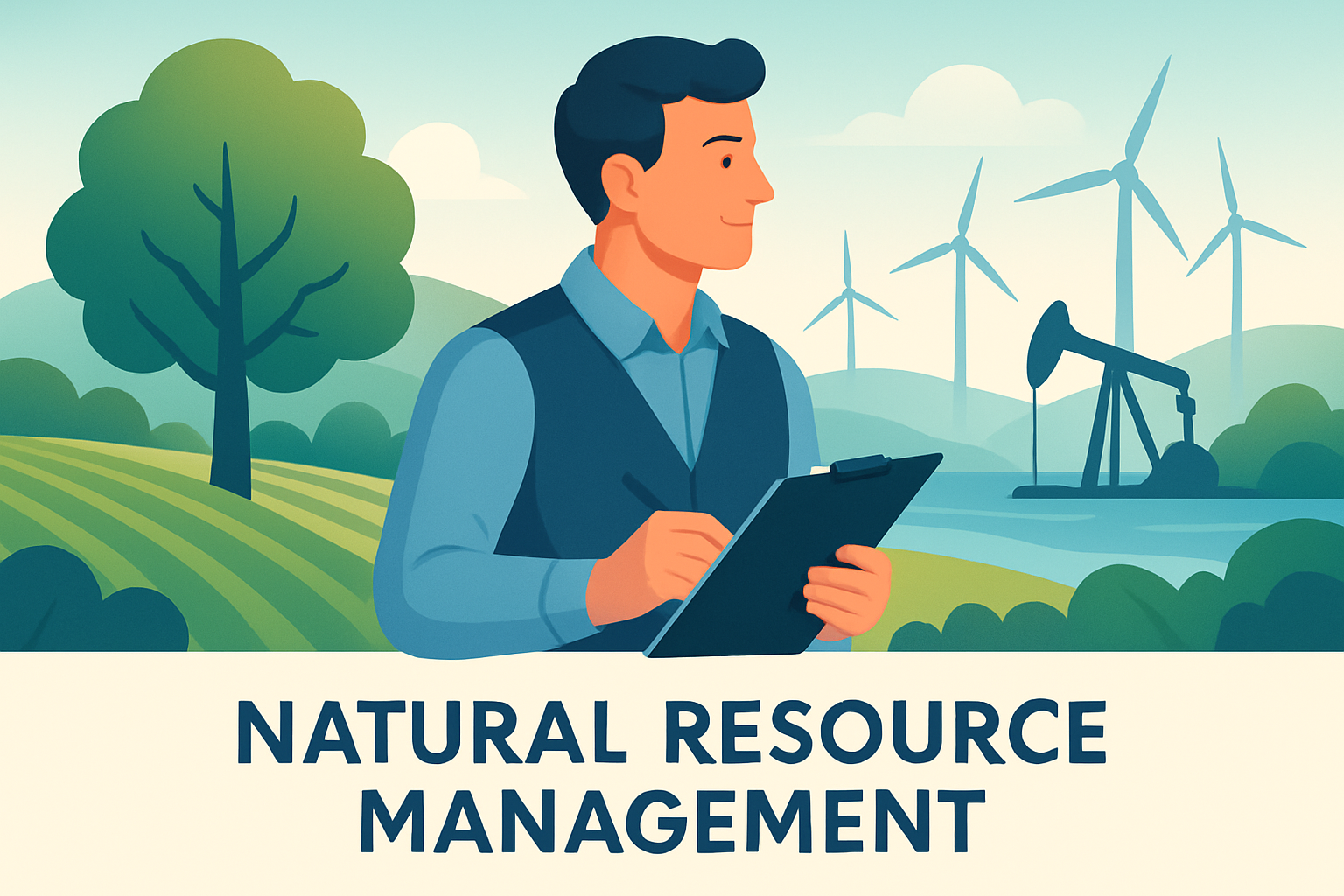
Natural resource management is a multifaceted field focusing on the effective and sustainable utilization of our planet’s resources. These resources include water, minerals, forestry, and wildlife, among others. The primary aim is to balance the socio-economic needs of current populations while safeguarding the environment for future generations. This discipline emphasizes the delicate interplay between human activity and natural ecosystems, aiming to minimize the adverse impacts of resource exploitation. Understanding and implementing natural resource management practices are crucial because they directly affect global sustainability, biodiversity conservation, economic development, and societal well-being.
As the global population continues to grow, the demand for natural resources escalates, leading to various environmental issues such as deforestation, water scarcity, and climate change. Natural resource management plays an essential role in mitigating these problems by promoting efficient resource use, reducing waste, and fostering the adoption of eco-friendly technologies. It involves a range of strategies, including regulatory policies, community-based management, and public-private partnerships, all of which aim to maintain ecological balance and ensure a better quality of life for all.
Water Resource Management
Water is a fundamental necessity for life on Earth, yet its scarcity is becoming a significant challenge worldwide. Water resource management involves the planning, development, and distribution of water resources to ensure sustainable supply and quality. This section highlights the importance of water conservation techniques and policies that balance consumption with conservation.
In the city of Cape Town, South Africa, a severe water crisis in 2018 led to the implementation of stringent water-saving measures. Residents were encouraged to limit water usage to 50 liters per person per day. The government’s multi-faceted approach included public awareness campaigns, water-saving technologies, and infrastructure improvements, ultimately averting the “Day Zero” scenario, when the city’s taps would run dry.
Effective water management not only prevents shortages but also ensures that ecosystems dependent on water resources remain healthy. Techniques such as rainwater harvesting, efficient irrigation systems, and wastewater recycling are critical in maintaining the balance between water usage and conservation.
Forest Resource Management
Forests are vital to the planet’s ecological health, providing habitats for wildlife, maintaining climate stability, and preventing soil erosion. Forest resource management focuses on sustaining forest ecosystems while meeting human demands for timber and non-timber products.
In Bolivia, community forest management has been a successful model, empowering local communities to manage and benefit from forest resources. This approach not only promotes sustainable practices but also helps in preserving traditional knowledge and cultural ties to the land. As a result, both the environment and local economies thrive, highlighting the effectiveness of community-based management strategies.
Sustainable forestry practices, such as selective logging and reforestation projects, aim to balance economic gain with environmental preservation. These strategies help mitigate deforestation and biodiversity loss, contributing to global carbon reduction goals.
Mineral Resource Management
Mineral resources, including metals and fossil fuels, are essential to industrial development and modern technology. However, their extraction often leads to environmental degradation. Mineral resource management seeks to maximize benefits while minimizing negative impacts on the environment.
One example is the use of closed-loop systems in mining, which recycle water and reduce waste. The Advanced Manufacturing Office within the U.S. Department of Energy has invested in technologies that improve mineral processing efficiency to decrease environmental footprints. Initiatives like this highlight the potential of technological innovation in achieving more sustainable extraction and use of mineral resources.
A structured approach to mineral resource management involves careful planning, community engagement, and the adoption of best practices throughout the extraction process. Strategies such as land rehabilitation, waste minimization, and pollution control are key components in reducing the ecological impact of mining activities.
Wildlife Resource Management
Wildlife plays a crucial role in maintaining ecological balance and supporting biodiversity. Wildlife resource management involves the conservation and regulation of wildlife populations to prevent extinction and maintain genetic diversity.
In the Yellowstone National Park, the reintroduction of wolves has been a successful wildlife management initiative. The presence of wolves has restored balance to the ecosystem, controlling overpopulated species such as elk and allowing vegetation to regenerate. This example demonstrates the importance of understanding ecological relationships and highlights the impact of well-thought-out wildlife management strategies.
Conservation programs, protected areas, and wildlife corridors are essential tools in safeguarding species from habitat loss and human interference. By fostering cohabitation and reducing conflicts between humans and wildlife, these strategies help ensure the survival of endangered species.
Community-Based Natural Resource Management
Community-based natural resource management (CBNRM) empowers local communities to actively participate in the stewardship of natural resources. This approach enhances conservation efforts by involving the people who are most affected by resource management decisions.
In Namibia, the CBNRM program has been a successful example of how local communities can manage wildlife resources while generating economic benefits. By forming conservancies, communities have established rights over wildlife use and tourism, creating an incentive to conserve wildlife. This approach has led to a resurgence of wildlife populations and improved livelihoods for locals.
CBNRM relies on a collaborative framework where government agencies, non-governmental organizations, and community members work together. It emphasizes the value of traditional knowledge and networks, leading to more sustainable and culturally relevant management strategies.
| Resource Type | Management Strategy | Real-World Example |
|---|---|---|
| Water | Conservation Techniques | Cape Town’s Water Crisis Management |
| Forests | Community Management | Bolivia’s Community Forest Management |
| Minerals | Closed-Loop Systems | Advanced Manufacturing Office Initiatives |
| Wildlife | Reintroduction Programs | Yellowstone’s Wolf Reintroduction |
| Community-Based | Local Stewardship | Namibia’s CBNRM Program |
Policy and Legislation in Natural Resource Management
Effective policy and legislation are crucial to the success of natural resource management. Regulatory frameworks guide the sustainable use of resources, ensuring that economic growth does not come at the expense of environmental health.
The European Union’s Common Fisheries Policy is an example of how regulations can be used to manage shared resources. This policy sets quotas to prevent overfishing, ensuring that fish stocks are maintained at sustainable levels. By doing so, it protects marine biodiversity and supports the long-term viability of the fishing industry.
Policies and legislation must be adaptable to changing environmental conditions and scientific insights. The integration of research and policy ensures that management practices are based on the latest evidence and technologies, promoting long-term sustainability.
The Role of Technology in Natural Resource Management
Technology plays an increasingly important role in natural resource management, providing innovative solutions to complex challenges. Remote sensing, geographic information systems (GIS), and data analytics are just a few examples of technologies that enhance resource planning and monitoring.
Drones are being used to monitor forest health, track wildlife movements, and assess mineral deposits with precision. Innovations like these increase efficiency and accuracy in data collection, leading to more informed decision-making.
By integrating technology, natural resource management becomes more adaptive and responsive. This aids in optimizing resource use, reducing waste, and predicting environmental changes, ultimately contributing to more effective and efficient management practices.
In conclusion, natural resource management is essential for the preservation and sustainable utilization of our planet’s resources. The key takeaway is the importance of balancing human needs with ecological preservation. Whether it’s managing water, forests, minerals, or wildlife, the principles of sustainability, community involvement, and technology integration play crucial roles.
For readers interested in contributing to sustainable practices, consider getting involved with local conservation efforts, advocating for policy changes, or adopting resource-efficient practices in daily life. By taking action today, we ensure a better tomorrow for both our planet and future generations.
The field of natural resource management fosters a collective sense of responsibility towards the environment, reminding us of the interconnectedness of all living things. Let us embrace these principles and work together to secure a sustainable future.
Frequently Asked Questions
1. What exactly is natural resource management, and why is it important?
Natural resource management is a comprehensive field dedicated to the responsible and sustainable use of the world’s natural resources. It involves careful planning, monitoring, and regulating the use of resources such as water, minerals, forestry, and wildlife. By focusing on sustainability, natural resource management aims to meet current human needs while preserving the environment for future generations.
Its importance cannot be overstated. With increasing human population and industrial activity, our environment faces unprecedented stress. Effective resource management strives to mitigate this pressure by balancing economic demands with ecological protection. This balance ensures that ecosystems remain intact and resources are available not just today, but for many generations to come.
Moreover, effective natural resource management helps reduce the adverse impacts of over-exploitation and environmental degradation. This field is about understanding the interconnectedness of Earth’s systems and human endeavors, promoting a harmonious relationship between human societies and the natural world. By protecting biodiversity, maintaining ecosystem services, and planning for sustainable development, natural resource management plays a crucial role in shaping a viable future for all species on Earth.
2. How does natural resource management address climate change?
Natural resource management addresses climate change in several critical ways, each focused on reducing greenhouse gas emissions, enhancing carbon sequestration, and promoting resilience to climate impacts. One of the primary functions of natural resource management is to protect and restore ecosystems that can absorb carbon dioxide from the atmosphere. Forest management practices such as afforestation, reforestation, and sustainable logging help maintain and expand forests, which act as carbon sinks and mitigate climate change impacts.
Furthermore, managing water resources effectively ensures that supplies do not become compromised during droughts, floods, or other climate-related events, safeguarding communities and ecosystems. Natural resource managers also work on better agricultural practices that reduce emissions, such as the implementation of agroecology or regenerative agriculture, which enhances soil health and carbon capture.
Additionally, protecting and sustainably managing ocean and coastal ecosystems like mangroves and coral reefs contributes to climate change adaptation by reducing the vulnerability of coastal communities to sea-level rise and extreme weather events. These strategies highlight the essential role natural resource management plays in both mitigating climate impacts and preparing societies to adapt to them.
3. What role does technology play in natural resource management?
Technology plays an increasingly vital role in natural resource management by providing innovative tools and solutions to monitor, assess, and sustain our natural resources. Advanced technologies like Geographic Information Systems (GIS) and remote sensing allow natural resource managers to collect and analyze data on resource distribution and health. These technologies produce detailed maps and models, enabling precise monitoring of changes over time, from deforestation and water usage to wildlife migrations and the spread of invasive species.
Another significant technological advancement is the development of decision support systems and predictive analytics. These tools help stakeholders make more informed decisions about resource extraction, land use planning, and conservation efforts by simulating various scenarios and outcomes based on current data. Moreover, technology facilitates the tracking and management of critical resources through sensor networks, drones, and satellite imaging.
Furthermore, digital platforms and apps engage the public and encourage participation in natural resource projects, fostering community-driven conservation efforts. These technologies not only enhance the efficiency and effectiveness of resource management practices but also support transparency and community involvement, key components of sustainable management.
4. What are some of the major challenges faced in natural resource management today?
Natural resource management faces a myriad of challenges today, driven by complex social, economic, and environmental pressures. One of the primary challenges is balancing the competing demands for resources amidst a growing population and industrialization. This situation often leads to over-exploitation that can deplete resources and degrade ecosystems beyond recovery.
Another significant challenge is the political and regulatory environment, which can impede effective management. Inconsistent policies, lack of enforcement, and insufficient funding often undermine conservation efforts and integrated resource planning initiatives. Climate change adds another layer of complexity, as it alters resource availability and affects ecosystem stability, requiring adaptive management strategies to be continuously developed and implemented.
Natural resource management also grapples with the challenge of incorporating traditional knowledge and addressing the needs and rights of Indigenous communities who have long managed and lived in harmony with their local environments. Ensuring equitable participation and benefit-sharing in management decisions is essential for promoting sustainable practices.
In addition to ecological and economic challenges, misinformation and lack of public awareness about the importance of resource management persist. Increasing education and fostering a shared understanding of sustainable practices are crucial for overcoming these hurdles and building collective commitment to stewardship of our natural resources.
5. How can individuals contribute to effective natural resource management?
Individuals play a crucial role in the sustainable management of natural resources. There are numerous ways people can contribute, both in their personal lives and within their communities. At home, individuals can focus on reducing their ecological footprint by practicing energy and water conservation, recycling, and reducing waste. Simple actions like turning off lights when not needed, fixing water leaks, and composting organic waste can collectively have a significant impact.
Furthermore, being an informed consumer is integral. This involves supporting companies and products that are committed to sustainable practices and sourcing. Choosing sustainably harvested wood products, buying local and organic foods, and reducing overall consumption helps decrease the demand for over-exploitation of natural resources.
Participation in local conservation initiatives and advocacy for sustainable policies strengthens community efforts towards effective resource management. Volunteering with local environmental organizations or participating in habitat restoration projects contributes to a healthier ecosystem.
Education is also a powerful tool. Individuals can raise awareness among peers and promote sustainable practices at schools, workplaces, and community groups. By sharing knowledge and inspiring others to act, you contribute to a broader culture of sustainability.
Ultimately, by cultivating a deep appreciation for our natural world and recognizing the role humans play in its care, individuals can be active participants in preserving the planet for future generations.