
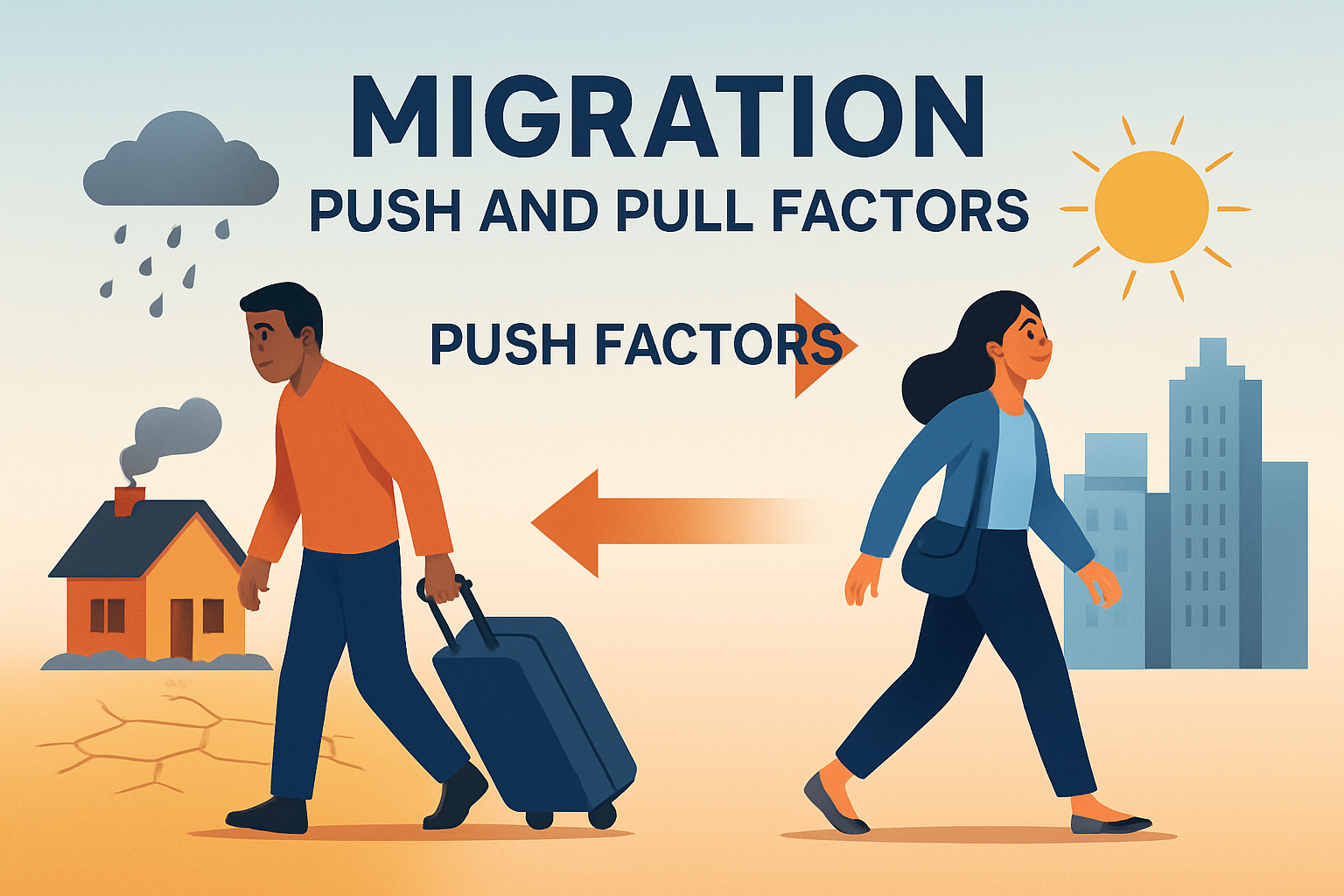
Migration has been a fundamental aspect of human history, impacting societies, economies, and cultures since time immemorial. Whether driven by necessity or opportunity, the movement of people across borders is a complex phenomenon shaped by various factors. Understanding why people migrate is crucial for policymakers, communities, and individuals alike. Migration can be broadly categorized into push and pull factors, which either compel individuals to leave their home country or attract them to a new one. These factors are often intertwined and influenced by political, social, economic, and environmental circumstances. This article aims to explore the intricacies of push and pull factors of migration, providing real-world examples and explanations to enhance our comprehension of this critical global issue.
Push Factors: The Forces Driving People Away
Push factors are the conditions that force individuals to leave their home countries. These factors are often negative and can include economic hardship, political instability, conflict, and environmental challenges.
Economic hardship is one of the most significant push factors. For instance, high unemployment rates, low wages, and poor working conditions can drive individuals to seek better opportunities elsewhere. A classic example is the migration from Latin America to the United States. Many individuals from countries like Mexico and El Salvador have migrated northwards in search of job opportunities and improved living standards due to economic difficulties back home. Economic push factors thus highlight the disparities in wealth and opportunity, prompting individuals to seek a better life beyond their national borders.
Political instability is another critical push factor. Individuals may feel compelled to leave their country due to oppressive regimes, lack of political freedom, or violence. The Syrian Civil War provides a stark example. The conflict, which began in 2011, led to massive displacement both internally and internationally. Millions fled the violence, seeking refuge in neighboring countries and beyond. Political push factors demonstrate how governance and security issues can lead to large-scale human displacement.
Environmental changes also play a role as push factors. Natural disasters, climate change effects, and resource depletion can make living conditions unsustainable. For example, rising sea levels and frequent cyclones in low-lying coastal areas like Bangladesh have forced many to relocate. These environmental challenges highlight the vulnerability of certain regions to climate-induced migration, underscoring the urgent need for adaptation and sustainable practices.
Pull Factors: The Attractions of New Horizons
Pull factors are the attractive conditions that draw individuals toward a new country. These factors are generally positive and include better economic opportunities, political stability, educational opportunities, and a higher standard of living.
Economic opportunities are perhaps the most potent pull factors. Many countries offer prosperous job markets, higher wages, and robust economies that attract migrants seeking to improve their financial prospects. The United States and Europe are classic examples where individuals from around the globe aspire to build better lives. For instance, the tech boom in Silicon Valley attracts thousands of skilled workers from countries like India, where opportunities in the tech sector may be more limited.
Political stability and safety are also significant pull factors. Countries with stable governments, functioning democracies, and strong adherence to the rule of law become attractive destinations for those fleeing political unrest. Canada, known for its inclusive policies and peaceful society, attracts many who are seeking safety and stability.
Educational opportunities often serve as crucial pull factors as well. Countries known for prestigious universities and research facilities draw students globally. The influx of foreign students to countries like the United Kingdom, the United States, and Australia exemplifies how educational opportunities can drive migration. These students often aspire to gain world-class education and may even choose to remain in the country post-graduation, contributing to the skilled workforce.
The Interplay of Push and Pull: A Case Study on Mexican Migration to the U.S.
To illustrate the interplay of push and pull factors, let’s examine the migration from Mexico to the United States. This long-standing migration stream demonstrates how push and pull factors can interconnect and affect migration flows.
In Mexico, push factors such as economic hardship and limited job opportunities drive individuals to seek better prospects. On the other side, the United States represents pull factors with its robust economy and the promise of higher wages. This dynamic underscores the interaction between adverse conditions in the home country and attractive conditions in the destination country. Additionally, familial ties and established communities in the U.S. act as further pull factors, easing the transition for new migrants.
| Push Factors in Mexico | Pull Factors in the U.S. |
|---|---|
| High unemployment rates | Abundant job opportunities |
| Violence and crime | Safety and law enforcement |
| Lower wages | Higher wages |
| Economic instability | Stable economy |
This case study exemplifies the complex interplay of push and pull factors, where individuals weigh the disadvantages of their home country against the benefits of the destination, ultimately deciding to migrate in pursuit of a better future.
Impact of Migration on Origin and Destination Countries
Migration, driven by various push and pull factors, significantly impacts both the origin and destination countries. Understanding these impacts can help countries adjust policies to maximize benefits and mitigate challenges.
For origin countries, migration can lead to a ‘brain drain,’ where skilled professionals leave in search of better opportunities, potentially stalling local development. However, remittances sent back home by migrants can boost the local economy, fund education, and improve living standards for families left behind. The Philippines, for instance, benefits from substantial remittances that support economic growth despite losing a significant number of skilled workers to countries like the United States and Canada.
Destination countries, conversely, can benefit economically from an influx of diverse talents and labor supply, enhancing innovation and filling labor gaps. However, these countries may face challenges like integration, social cohesion, and pressure on public services. Addressing these requires comprehensive immigration policies that promote inclusion and address the needs of both the local population and migrants. Germany’s approach to integrating Syrian refugees is an example of how policy can mitigate challenges and harness the advantages of migration.
Challenges and Solutions in Balancing Migration Factors
While migration driven by push and pull factors presents opportunities, it also poses challenges that require balanced solutions. Policymakers, international organizations, and communities need to work together to address these multifaceted issues.
- Enhancing Economic Opportunities: Strengthening economies in origin countries can be a long-term solution. Investing in education, job creation, and infrastructure can reduce the economic push factors driving migration.
- Improving Political Stability: Diplomatic efforts and international support can help stabilize regions affected by conflict and political unrest, reducing the need for individuals to flee their countries.
- Mitigating Environmental Impact: Global cooperation in combating climate change can address environmental push factors. Adaptation measures, sustainable practices, and disaster preparedness are critical in mitigating the effects of environmental challenges.
- Facilitating Safe and Legal Migration: Creating pathways for legal migration and ensuring protection for refugees can enhance the benefits of migration while minimizing risks associated with irregular movements.
Addressing these challenges requires collaborative approaches that recognize the rights and contributions of migrants while supporting sustainable development in both origin and destination countries.
Conclusion: Key Takeaways and Next Steps
Migrating individuals are often navigating a complex landscape of push and pull factors, making the decision to move a deeply personal yet globally impactful event. Understanding these factors allows for greater empathy and informed decision-making regarding immigration policies and integration strategies. Policymakers need to address the root causes of migration, such as economic disparity, political instability, and environmental degradation, while also fostering environments that respect and incorporate migrants’ contributions.
The primary takeaway is the importance of a balanced, humane approach to migration, emphasizing cooperation and support across borders. As global citizens, it is pivotal to engage with these issues, advocate for comprehensive policies, and support initiatives that empower individuals in their migration journeys. Embrace open conversations about migration in your community, support policies that improve conditions globally, and strive to understand diverse migrant experiences.
By recognizing the push and pull factors of migration, we are better equipped to face the challenges and opportunities of demographic shifts in our globalized world.
Frequently Asked Questions
1. What are push factors in migration, and why do they drive people to leave their home countries?
Push factors are conditions or circumstances that compel individuals to leave their home countries, often out of necessity rather than choice. These factors can be numerous and vary significantly depending on the political, economic, social, and environmental context of a region.
Political instability and conflict are major push factors. Wars, persecution (whether political, ethnic, or religious), and oppressive regimes can make living in one’s home country untenable. People often flee in search of safety and to escape violence or potential harm.
Economic hardship is another prevalent push factor. High unemployment rates, lack of economic opportunities, and widespread poverty can drive individuals and families to seek better prospects abroad. In some cases, agricultural collapse due to environmental degradation or natural disasters like droughts and floods can devastate home economies, pushing people towards migration as a survival strategy.
Social push factors include discrimination and lack of access to critical resources like healthcare and education. In some societies, traditional or systemic biases against certain groups can severely limit their freedoms and prospects, leading them to migrate to more inclusive environments.
Understanding these push factors helps to shed light on the challenges faced by migrants even before they make the often perilous journey to new lands. It highlights the urgent need for addressing the underlying issues at their roots to reduce forced migration.
2. What are pull factors, and how do they attract migrants to new countries?
Pull factors are the favorable conditions and opportunities that attract individuals to a particular destination country. These factors are often the opposite of push factors and present a more positive picture that promises better circumstances and opportunities.
One of the most compelling pull factors is the promise of economic opportunities. Countries with booming job markets, better wages, and robust economic infrastructures naturally attract migrants who are seeking to improve their living standards. The opportunity for upward mobility and financial stability is a significant motivator.
Political stability and personal freedoms also serve as strong pull factors. Nations with democratic governance, protection of human rights, and inclusive policies can attract those seeking safety and a voice in society’s governance. Such environments allow individuals to live without the fear of persecution and offer a sense of security.
Social aspects, such as access to quality healthcare and education, are also influential pull factors. Many migrate to give their children a chance at a better education or to access healthcare services that may not be available in their home countries. These elements significantly enhance the quality of life and future prospects for individuals and families.
Furthermore, cultural ties and family unification play a role as pull factors. Diaspora communities often serve as anchors, offering a sense of familiarity and support for newcomers adjusting to a new environment. Governments may also have policies favoring family reunification, which attracts more migrants.
Understanding pull factors is crucial as it underscores why certain countries become prominent destinations for migrants and highlights important attributes that contribute to their attractiveness.
3. How do environmental changes influence push and pull factors in migration?
Environmental changes are increasingly becoming significant push and pull factors in migration dynamics. Climate change, natural disasters, and environmental degradation can drastically alter living conditions in certain areas, prompting migration.
As a push factor, environmental degradation leads to the depletion of natural resources, such as fresh water and arable land, which are crucial for communities dependent on agriculture and natural resources for their livelihoods. When these resources become scarce or unusable due to desertification, deforestation, or pollution, people may have no choice but to migrate elsewhere in search of sustainable living conditions.
Natural disasters like hurricanes, floods, and earthquakes can also act as immediate push factors, forcing people to evacuate hazardous areas. In the aftermath of these events, if rebuilding is not feasible or aid is insufficient, displacement can become permanent.
On the flip side, certain environmental conditions can serve as pull factors. Countries with stable climates and effective disaster management systems appeal to migrants seeking refuge from environmental instability. Such regions may offer better opportunities for sustainable agriculture and a higher quality of life.
It’s important to recognize that environmental migration may not always follow traditional patterns and often requires coordinated international responses to address the unique challenges it presents. Solutions geared towards combating climate change and investing in resilient infrastructures in vulnerable regions can mitigate this type of migration.
4. In what ways do migration policies impact push and pull factors?
Migration policies implemented by countries play a significant role in influencing both push and pull factors. The focus on managing migratory flows can either ease or exacerbate migration pressures, depending on the policy frameworks in place.
Restrictive immigration policies might deter potential migrants, thus serving as a counterbalance to pull factors. These policies can include strict visa regulations, limited pathways to citizenship, and increased border security measures. While such barriers aim to manage the number of incoming migrants, they can also increase the risks associated with irregular migration routes.
Conversely, countries with open and supportive immigration policies create additional pull factors. Policies that favor skilled migration, family reunification, or refuge for asylum seekers make certain nations more attractive. By providing legal migration channels and integration support, these countries can harness the potential benefits of immigration, contributing to economic growth and cultural enrichment.
On the push side, international aid and foreign policy decisions can impact conditions in migrants’ home countries. Investments in development aid, democracy promotion, and conflict resolution can address root causes of forced migration, potentially reducing the push factors that drive people away.
Migration policies also reflect bilateral and multilateral agreements, showcasing the interconnected nature of global migration systems. A balanced approach in crafting these policies can enhance international cooperation and harmonize efforts to manage migration effectively.
5. How do cultural and social factors interplay with push and pull in shaping migration patterns?
Cultural and social factors significantly interact with push and pull influences, often providing personal and community-driven reasons for migration that extend beyond the economic and political realms.
Language and cultural ties can be strong pull factors, especially for migrants from countries that share historical connections or common languages with potential host nations. For instance, former colonial ties often leave linguistic and cultural footprints that persist, shaping migration flows from post-colonial countries to their former colonizers.
Religious and ethnic connections also play a significant role. Communities with shared religious or ethnic backgrounds may establish networks that facilitate migration by offering support systems and easing the integration process. This cultural familiarity can make the migration transition smoother and more attractive for newcomers.
Socially, the presence of established diaspora communities can strongly influence migration decisions. These communities create kinship networks that act as both safety nets and guides, assisting new migrants with navigating the complexities of their new environment. This effect on pull factors often encourages chain migration, where one individual’s successful migration leads to follow-up movements by family and acquaintances.
Simultaneously, social exclusion or discrimination in home countries can act as push factors, driving marginalized groups to seek acceptance and opportunity elsewhere. Capturing the nuances of these cultural and social drivers requires an appreciation of the deeply embedded human elements in migration processes, highlighting the need for sensitive policy approaches that respect cultural diversity and promote social inclusion.