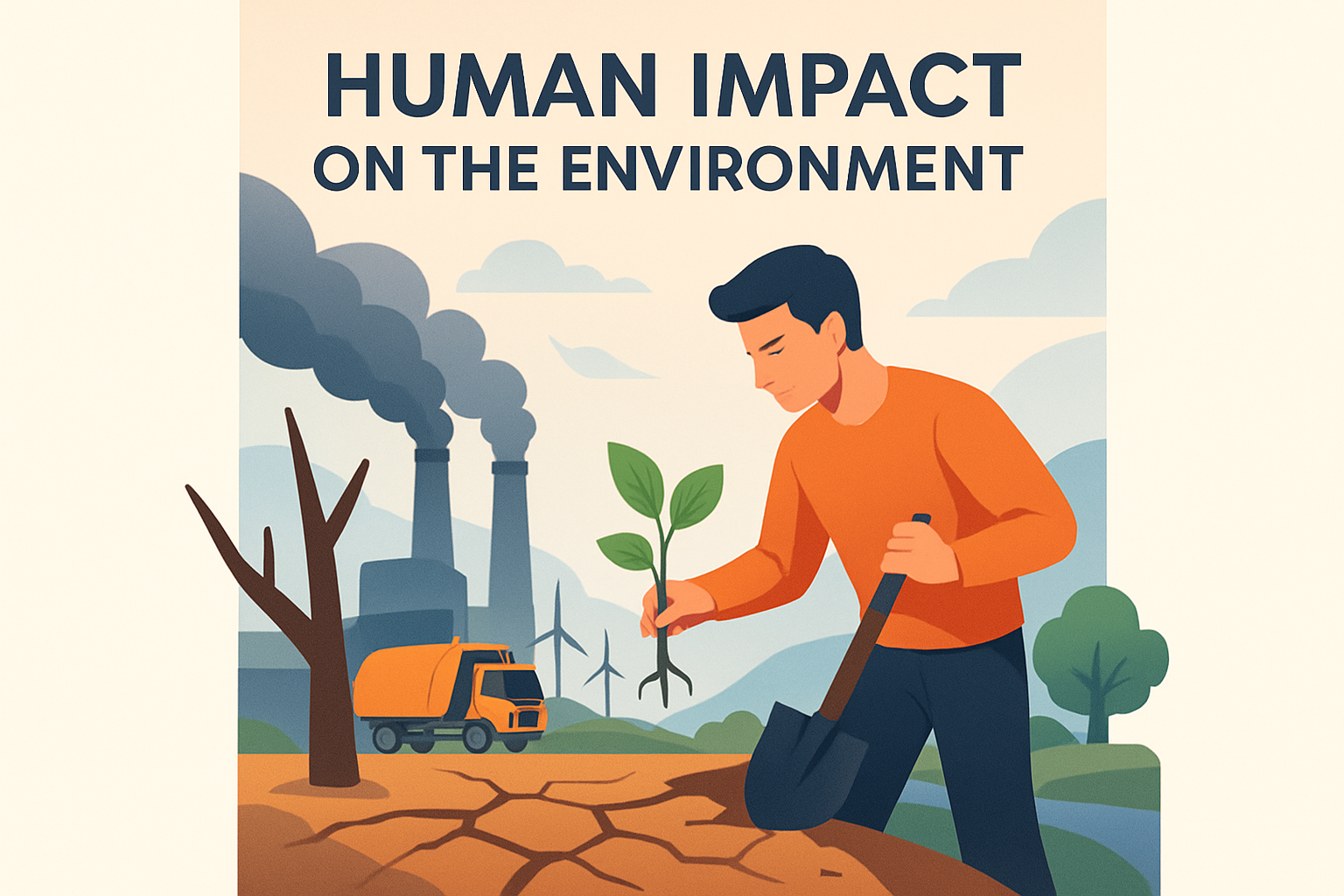
The planet Earth is a complex, interconnected system where human activities have direct and far-reaching effects on the environment. As our global population grows and becomes more technologically advanced, our impact on the Earth’s systems is more pronounced than ever. The term “human impact on the environment” encompasses all the ways human actions alter natural ecosystems, resources, and the climate. Understanding these impacts is crucial not only for ensuring the long-term health and sustainability of the planet but also for securing the future quality of life for all its inhabitants. In this article, we delve into the major areas where human activities have significantly affected the environment and discuss both the consequences and potential solutions to mitigate these impacts.
Deforestation and Land Use Change
Deforestation and land use change are among the most visible forms of human impact on the environment. As humans have expanded agricultural frontiers and urban areas, forests have been cleared at an alarming rate. According to the World Bank, between 1990 and 2016, the world lost roughly 1.3 million square kilometers of forest, an area larger than South Africa.
Forests play a critical role in carbon sequestration, biodiversity conservation, and water cycle regulation. The Amazon Rainforest, often referred to as the “lungs of the planet,” serves as a prime example of deforestation’s impact. With large swathes of this forest destroyed for agriculture and cattle ranching, there have been significant declines in biodiversity and increases in carbon emissions, contributing to climate change.
These changes not only affect local ecosystems but also have global climate implications, as deforestation accounts for roughly 10% of global greenhouse gas emissions. Efforts to combat deforestation, such as reforestation and sustainable forestry practices, are critical in reversing some of these effects and ensuring ecological balance.
Pollution: Air, Water, and Soil
Pollution is another pervasive environmental issue stemming from human activity. Industrial processes, vehicular emissions, and agricultural practices contribute significantly to air, water, and soil pollution. The release of pollutants like carbon monoxide, sulfur dioxide, and nitrogen oxides into the atmosphere leads to health problems in humans and wildlife, along with acid rain and climate change.
For example, Delhi, India, is frequently cited as having some of the worst air quality. Industrial emissions and vehicular pollutants have led to hazardous air conditions, prompting health advisories and governmental interventions to curb emissions and promote cleaner technologies.
Water pollution, on the other hand, often results from industrial discharges and agricultural runoff containing pesticides and fertilizers. These pollutants can devastate aquatic ecosystems and make water unsafe for human consumption. The infamous Cuyahoga River in Ohio, which famously caught fire because of industrial pollutants, serves as a historical reminder of industrial pollution’s direct impact on water sources.
Soil pollution, often a result of overuse of fertilizers and pesticides, degrades land quality, reducing agricultural productivity and harming organisms that rely on soil for habitat. Essential measures, such as improved waste management, reduction of single-use plastics, and the introduction of cleaner production methodologies, are essential to address these pollution issues.
Climate Change and Global Warming
Climate change, primarily driven by human activity, is perhaps the most pressing issue facing the global environment today. Burning of fossil fuels for energy, agriculture, and deforestation contributes to increased levels of greenhouse gases like carbon dioxide and methane in the atmosphere, leading to global warming.
The effects of climate change are visible worldwide in the form of more frequent and severe weather events, such as hurricanes, floods, and droughts. The polar ice caps are melting at unprecedented rates, causing sea level rise and threatening coastal communities. An example is the island nation of Kiribati, which is facing existential threats due to rising sea levels.
Climate models predict that if current trends continue, we could see temperature increases and catastrophic impacts on biodiversity, food security, and human health. Transitioning to sustainable energy sources, implementing carbon taxes, and enhancing international cooperation are necessary steps towards mitigating climate change.
| Impacts of Climate Change | Consequences |
|---|---|
| Temperature Rise | Heatwaves, wildfires, ecosystem disruptions |
| Melting Ice | Sea level rise, loss of habitat for polar species |
| Weather Extremes | Increased frequency of storms, droughts |
| Ocean Acidification | Threat to marine biodiversity |
Resource Depletion and Overconsumption
Another significant human impact on the environment is resource depletion, including overfishing, deforestation, and the exhaustion of minerals and fossil fuels. The growing consumer culture has increased demand for natural resources beyond sustainable levels.
Overfishing has led to the collapse of significant fish stocks, such as the Atlantic cod. Unsustainable practices like trawling disrupt oceanic ecosystems and threaten marine biodiversity. Similarly, the overexploitation of mineral resources can lead to habitat destruction and pollution.
To combat these issues, it is essential to promote sustainable consumption practices, increase recycling efforts, and explore alternative resources like renewable energy. Creating awareness about the impacts of overconsumption and policies that enforce sustainable usage of natural resources are vital steps in reversing resource depletion.
Loss of Biodiversity
Biodiversity loss is a critical issue closely tied to human activity. Habitat destruction, pollution, overfishing, and climate change contribute to the rapid decline of species. According to the World Wildlife Fund, populations of vertebrate species have dropped by approximately 68% since 1970.
The decline of pollinator populations, such as bees, illustrates the broader effects of biodiversity loss on food systems and agriculture. Since bees play a critical role in pollinating crops, their decline can lead to reduced yields and threaten food security globally.
Conservation efforts, creation of protected areas, and restoration projects are crucial to preserving biodiversity. Encouraging habitat restoration and making conscious choices to protect endangered species can help reverse the trends threatening global biodiversity.
Conclusion
Human impact on the environment is profound and varied, affecting everything from air quality and biodiversity to the stability of global climate systems. Recognizing these impacts is crucial for taking meaningful action to mitigate them. Through conscious efforts like sustainable resource management, pollution reduction, and climate change mitigation, we can help ensure a healthier planet for future generations.
The key takeaway for readers is the critical role humans play in shaping the environment. By making informed choices and advocating for sustainable policies, each person can contribute to protecting the Earth’s natural systems. We must all consider our environmental footprint and act towards a future where humanity and the environment coexist in harmony. It’s time to step forward and commit to sustainable practices, starting today. The health of the planet is in our hands.
Human impact on the environment can no longer be ignored, and it’s imperative to act swiftly to mitigate negative consequences. As individuals and communities, it’s essential to support and promote sustainable solutions, educations, and policies that will lead us towards a more sustainable and resilient future. Let’s embrace the challenge and become active stewards of the Earth, ensuring its vitality for generations to come.
,750]
Frequently Asked Questions
1. What are some major ways humans impact the environment?
The impact of human activities on the environment is wide-ranging and multifaceted, with both direct and indirect effects. Some of the major ways include deforestation, pollution (air, water, and soil), overfishing, urbanization, and climate change. Deforestation, for example, not only results in the loss of trees, which are crucial for absorbing carbon dioxide and providing oxygen, but it also destroys the habitats of countless plant and animal species, leading to loss of biodiversity. Pollution is another significant impact, where industrial activities, agricultural runoff, and improper waste management contribute to the contamination of our air, water, and soil, posing severe risks to both human health and ecosystems. Overfishing depletes ocean resources, disrupts marine food chains, and threatens the livelihoods of millions who depend on fishing for survival. Urbanization leads to the conversion of natural landscapes into cities and infrastructure, often resulting in habitat destruction, increased carbon emissions, and greater energy and natural resource consumption. Lastly, climate change, driven by greenhouse gas emissions from human activities like burning fossil fuels and deforestation, leads to global warming, melting ice caps, rising sea levels, and increasingly extreme weather events. Together, these impacts compromise the planet’s ability to support diverse life forms and regulate crucial systems, highlighting the need for greater sustainability efforts.
2. How does climate change exemplify human impact on the environment?
Climate change is one of the most profound and complex examples of human impact on the environment. Its roots can be traced back to the industrial revolution, where large-scale burning of fossil fuels (coal, oil, and natural gas) began significantly increasing the concentration of greenhouse gases in Earth’s atmosphere. Carbon dioxide (CO2) and methane (CH4) act like a blanket, trapping heat and leading to the phenomenon known as the greenhouse effect. As a result, global temperatures are rising, a trend commonly referred to as global warming. This warming leads to a cascade of environmental consequences, including the melting of polar ice caps and glaciers, resulting in rising sea levels, which threaten coastal cities and island nations. Additionally, climate change is causing more frequent and severe weather patterns, such as storms, droughts, and heatwaves, disrupting agriculture, water supplies, and natural ecosystems. Ecosystems are strained as species struggle to adapt to rapidly changing climates, leading to shifts in biodiversity and even extinction for those unable to cope. Importantly, climate change also amplifies other environmental issues, such as deforestation and excessive resource consumption, creating a feedback loop that further exacerbates its impacts. These interconnected effects of climate change demonstrate the extensive reach of human activities on our planet’s climate system.
3. How does deforestation affect the environment and human life?
Deforestation, the large-scale clearing of forests, has significant environmental and societal repercussions. Forests play a crucial role in the Earth’s ecosystem—they act as carbon sinks, absorbing CO2 from the atmosphere, and help to regulate weather patterns. When forests are cut down, whether for agriculture, logging, or urban development, this balance is disrupted. The immediate impact is the loss of biodiversity; forests are home to an estimated 80% of terrestrial animals and plants, and clearing them often leads to habitat loss and fragmentation, driving many species toward extinction. The absence of trees means there is less absorption of rainwater, which can lead to increased soil erosion and contribute to the loss of arable land, threatening agricultural productivity and food security. Moreover, the released carbon, as trees are cut and burned or decompose, contributes to an increase in greenhouse gases, further exacerbating climate change. The human implications of deforestation are also dire—local and indigenous communities who rely on forests for their livelihoods and cultural practices face displacement and loss of resources. Additionally, the long-term repercussions, such as altered rainfall patterns and increased global temperatures, affect human health, agriculture, and economies worldwide. This complex web of impacts from deforestation underlines the importance of sustainable forest management and reforestation efforts in protecting both the environment and human societies.
4. In what ways does pollution from human activities affect the environment?
Pollution is one of the most pervasive human impacts on the environment, manifesting in multiple forms and affecting the planet in numerous ways. Air pollution, primarily from burning fossil fuels, industrial emissions, and vehicular exhaust, releases harmful substances like sulfur dioxide, nitrogen oxides, and particulate matter, leading to respiratory and cardiovascular diseases in humans, as well as acid rain which harms plant life and aquatic ecosystems. Water pollution, often stemming from agricultural runoff, industrial discharge, and improper waste disposal, contaminates drinking water sources, harms aquatic life, and disrupts the balance of freshwater ecosystems. Polluted water bodies suffer from eutrophication, where excess nutrients lead to massive algae blooms, depleting oxygen and killing aquatic organisms. Soil pollution, caused by chemical spills, overuse of pesticides and fertilizers, and landfill leachate, can degrade soil quality, reducing agricultural productivity and leading to the bioaccumulation of harmful chemicals in the food chain. Additionally, plastic pollution has become a burgeoning crisis, with millions of tons entering our oceans annually, posing lethal threats to marine life through ingestion and entanglement, and ultimately affecting human health as microplastics work their way into the food chain. The omnipresent issue of pollution highlights the urgent need for better waste management practices, the adoption of cleaner technologies, and policies aimed at reducing emissions and chemical use to preserve environmental and human well-being.
5. How does urbanization contribute to environmental issues?
Urbanization refers to the increasing concentration of human populations into metropolitan areas, which poses several environmental challenges. As urban areas expand, they often encroach on natural landscapes, leading to habitat destruction and fragmentation, which in turn diminishes biodiversity. The burgeoning need for infrastructure in cities demands extensive resource extraction, contributing to deforestation, soil degradation, and the depletion of vital natural resources like water and minerals. Furthermore, urban areas generate high levels of air pollution from transportation and industrial activities, which contribute to climate change and pose health risks to residents through poor air quality. The heat island effect, where cities experience higher temperatures than their rural surroundings, arises from concrete, asphalt, and buildings absorbing and retaining heat, exacerbating energy demands for cooling and intensifying local climatic changes. Additionally, urban environments are major sources of waste, including solid waste, wastewater, and emissions, which, if improperly managed, lead to significant pollution issues that can spread beyond city limits. Urbanization can also strain water resources, as the demand for water in densely populated areas often outpaces the supply, leading to pollution, over-extraction, and conflicts over water rights. To mitigate these impacts, it is crucial to adopt sustainable urban planning practices that emphasize green spaces, efficient public transportation, renewable energy use, and sustainable resource management to foster urban development that is more in harmony with the environment.