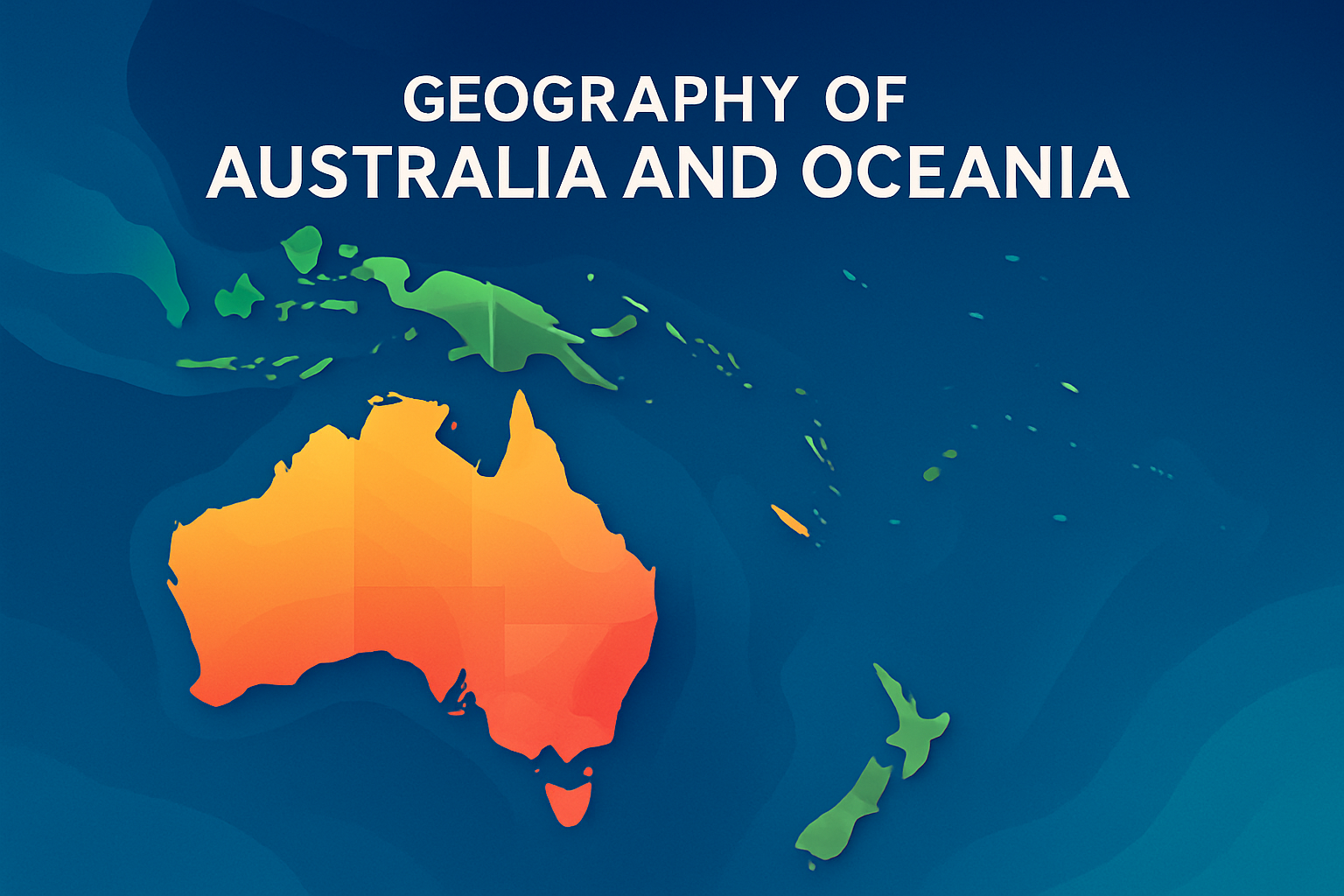
Australia and Oceania comprise a fascinating region of the world, distinguished by diverse ecological systems, unique climatic patterns, and varied topographical features. The geographical terrain of this region creates a wide array of habitats that support distinctive flora and fauna. Understanding the geography of Australia and Oceania is vital for grasping the environmental dynamics of this part of the world and its implications on climate, culture, and biodiversity.
In geographical terms, Australia and Oceania are often grouped together due to their location in the Southern Hemisphere and their isolation from other continents. While Australia itself is a vast landmass, Oceania encompasses numerous islands scattered across the Pacific Ocean. This region is an invaluable resource for scholars, environmentalists, and travelers alike due to its unique combination of landforms, ecosystems, and indigenous cultures. Whether examining the expansive outback of Australia or the volcanic islands of Polynesia, the geographic characteristics of this region have profound environmental and cultural implications. Recognizing these features allows us to appreciate the complexity and beauty of our planet and underline the importance of preserving its natural wonders.
The Landmass of Australia
Australia is the world’s sixth-largest country and the only nation that occupies an entire continent. Characterized by vast outback deserts, lush rainforests, and rugged mountain ranges, Australia’s geography is remarkably varied. The Great Dividing Range, stretching along the eastern side of Australia, is the third longest mountain range in the world. It significantly influences the climate by creating a barrier to the moisture-laden winds from the sea, which affects the precipitation pattern on either side.
One striking feature of Australia’s geography is its extensive desert regions, such as the Great Victoria Desert, the Gibson Desert, and the Simpson Desert. These arid zones cover approximately 18% of the country. Despite their inhospitable conditions, these deserts host a variety of wildlife, such as kangaroos and emus, which have adapted to the harsh climate.
Real-world example: Uluru, also known as Ayers Rock, is a prominent geological formation in the heart of Australia. As a UNESCO World Heritage Site, it is recognized for both its cultural significance to the indigenous Anangu people and its unique geological characteristics. This massive sandstone monolith is a testament to the ancient geological processes that shape Australia’s landscape.
Oceania: A Mosaic of Islands
Oceania is a region made up of thousands of islands, including Micronesia, Polynesia, and Melanesia, each with distinct cultural and environmental identities. Unlike the vast stretches of Australia, Oceania’s geography is predominantly maritime, with its islands formed by volcanic activity or coral formations.
In the Pacific, volcanic islands such as those in Hawaii, Samoa, and Tonga are part of the Pacific Ring of Fire, an area renowned for its active geological activity. These islands often have fertile soil and abundant marine life, supporting vibrant ecosystems and human settlements.
An important aspect of Oceania’s geography is the presence of coral atolls. These low-lying islands, like those found in the Marshall Islands, are formed from coral reefs that encircle a lagoon. While stunningly beautiful, these atolls are particularly vulnerable to rising sea levels, highlighting the importance of addressing climate change for the survival of these environments.
Real-world example: The Great Barrier Reef, located off the coast of Queensland, Australia, is the world’s largest coral reef system. Stretching over 2,300 kilometers, this ecological wonder supports an immense diversity of marine life and is imperative for scientific research, ecotourism, and understanding marine ecosystems.
Unique Climatic Patterns
The climatic diversity across Australia and Oceania is as varied as its geography. Australia’s climate ranges from tropical in the north, experiencing monsoon rains, to temperate zones in the south, which enjoy four distinct seasons. In contrast, much of Oceania has a tropical marine climate, with moderate temperatures year-round and high levels of humidity.
One of the most influential climate phenomena affecting the region is the El Niño-Southern Oscillation (ENSO). This periodic fluctuation in sea surface temperature and atmospheric pressure in the Pacific Ocean significantly impacts weather patterns across Australia and Oceania, often leading to droughts or increased rainfall.
Real-world example: In 2019, Australia experienced one of its worst bushfire seasons, fueled by an unprecedented heatwave and long-standing drought conditions. These fires devastated vast tracts of land and underscored the influence of climate variability and the need for adaptive environmental management strategies.
Indigenous Cultures and the Land
The indigenous peoples of Australia and Oceania have a deep connection to their lands, with rich traditions and cultural practices that are intrinsically linked to their geographic surroundings. Aboriginal Australians, for example, have lived on the continent for over 60,000 years, developing vast knowledge and resource management practices tailored to the diverse landscapes.
- Dreamtime stories: Oral traditions that explain the creation of the land and its features, shaping cultural identity.
- Resource management: Traditional burning techniques that promote new growth and mitigate large-scale fires.
- Art and Expression: Rock art sites throughout Australia, depicting cultural stories and ecological knowledge.
In Oceania, the islanders developed unique navigation skills, using stars and ocean currents to traverse vast distances of open ocean. These traditional methods illustrate a profound understanding of their environment, passed down through generations and still practiced today in places like the Federated States of Micronesia.
Real-world example: Vanuatu, an archipelago in the South Pacific, is renowned for its yam festivals, which are deeply tied to land productivity and clan identity. These festivals celebrate agricultural cycles and reinforce social cohesion through communal activities, highlighting the intricate link between geography, culture, and community well-being.
Impact of Geography on Biodiversity
The geographical features of Australia and Oceania heavily influence their biodiversity. Australia’s isolation as a continent has resulted in a high level of endemism, with species such as kangaroos, koalas, and the platypus all being unique to the continent. Similarly, the isolation of Pacific islands has led to the evolution of distinct species not found elsewhere, such as the kiwi bird in New Zealand.
The diverse ecosystems, including coral reefs, rainforests, and grasslands, require specific conservation efforts to preserve their unique biodiversity. As habitats are threatened by human activities and climate change, understanding the geography of the region becomes crucial for developing effective conservation strategies.
Real-world example: The Kakadu National Park in Australia’s Northern Territory is a UNESCO World Heritage site known for its rich biodiversity. Encompassing wetlands, rivers, and sandstone escarpments, it is home to over 280 bird species, 60 mammals, and 1,600 plant species. The park’s management underscores the importance of preserving natural landscapes through collaborative efforts with traditional Aboriginal owners.
Conclusion
The geography of Australia and Oceania is marked by extraordinary natural diversity, which significantly impacts the environment, culture, and biodiversity of the region. From the vast, arid outback of Australia to the varied island formations of Oceania, this geographic complexity forms a foundation for an array of ecosystems and cultural traditions that warrant appreciation and protection.
Understanding these geographical features provides valuable insight into how humans and nature coexist, emphasizing the importance of sustainable practices to preserve these fragile systems. The challenges posed by climate change and human influence highlight the need for global awareness and action to mitigate their impacts on this region’s geography and cultural heritage.
By acknowledging the unique characteristics of Australia and Oceania, we can contribute to preserving this remarkable part of the world for future generations to explore and cherish. Let’s take collective responsibility by raising awareness, supporting conservation efforts, and learning about the environmental and cultural significance of this region so that its geographic wonders continue to inspire us.
Frequently Asked Questions
1. What are the main geographical features of Australia?
Australia is characterized by a vast and diverse landscape. It is the world’s sixth-largest country by land area, but it is known for having one of the most unique geological structures. The central part of Australia is characterized by arid and semi-arid areas known as the Outback. This region is home to iconic features such as Uluru, a massive sandstone monolith, and the surrounding Kata Tjuta ranges. Meanwhile, the eastern part of Australia is known for the Great Dividing Range, a mountain range that runs parallel to the east coast and provides a diverse range of habitats, from rainforest to shrubland. Coastal areas, such as the Great Barrier Reef, stretch for over 2,300 kilometers, offering rich marine biodiversity and tropical ecosystems. The southern part of the country features fertile agricultural lands, while the western region is predominantly a plateau with mineral-rich Pilbara and Kimberley areas, famed for their prehistoric landscapes.
2. What makes Oceania distinct in terms of geography?
Oceania is a unique region that encompasses numerous islands scattered across the Pacific Ocean. It includes thousands of islands divided into three major groups: Melanesia, Micronesia, and Polynesia. The geographical diversity of Oceania is profound, from volcanic islands like Hawaii with towering mountains and lush landscapes, to the atolls of the Maldives which are flat and narrowly peep above sea level. Areas like New Zealand offer snow-capped mountains with long fjords and rolling hills. These geographical features play a significant role in influencing the climate, culture, and biodiversity of the region. The distinctiveness of Oceania’s geography is also evident in the Coral Sea islands and the Solomon Islands, which are predominantly low-lying and display unique ecosystems navigable by intricate networks of coral reefs and lagoons, supporting myriad aquatic and birdlife species.
3. How does Australia’s geography impact its climate?
Australia’s diverse geography heavily influences its climatic conditions. The vast size of Australia means it spans multiple climatic zones, from the tropical north to the temperate south. The northern part of Australia, where you’ll find regions like Darwin and Cairns, has a tropical climate with a distinctive wet and dry season. In contrast, Southern cities such as Melbourne and Sydney experience more temperate climates with four distinct seasons. The interior, known as the Outback, experiences arid and semi-arid conditions with extreme temperature variations between day and night, making it one of the driest parts of the continent. The western desert regions are also exceedingly dry, characterized by an arid climate with minimal rainfall. This variability in climate directly correlates with the geography, wherein mountain ranges, vast deserts, and coastal fronts all create different weather patterns across the continent.
4. How does the geography of Oceania affect its biodiversity?
The rich geographical diversity of Oceania plays a crucial role in supporting an exceptional level of biodiversity. Many of the islands within this region are relatively isolated, fostering conditions that lead to a high degree of endemism—species that are found nowhere else on Earth. For instance, the lush rainforests of Papua New Guinea house numerous endemic plant and animal species, while New Zealand’s fossil-rich lands have unique flora and fauna including flightless birds like the kiwi. The vast Pacific region also comprises extensive marine ecosystems like the Coral Triangle, renowned for its richness in marine biodiversity including the famed coral reefs. The varying altitudes, from volcanic highlands to oceanic depths, form diverse habitats which are critical for maintaining the ecological richness of the area. This geographical isolation, combined with the various environmental conditions, fosters a wide range of life forms adapting to niche environments.
5. How does the topography of Australia and Oceania influence human activity?
The topography of Australia and Oceania has significantly influenced human settlement patterns and economic activities. In Australia, most of the population resides in urban areas situated along the eastern coast, where fertile soils and temperate climates offer better living conditions. This concentration of population is evident in cities like Sydney and Brisbane, which lie in regions with favorable weather patterns. Conversely, the harsh arid interior has low population density due to its challenging living conditions. Economic activities are also influenced by the geography, such as agriculture flourishing in the fertile southeast and mineral extraction thriving in the resource-rich regions of Western Australia. In Oceania, the topography creates challenges and opportunities. For example, in the island nations of the Pacific, geographical locations often dictate economic activities like fishing and tourism, where proximity to the oceanic splendor attracts visitors, while agriculture focuses on crops that adapt to tropical climates. Topography also influences cultural aspects, with diverse landscapes fostering varied indigenous cultural practices across islands—each with their individual geographical identity. The geographical constraints and opportunities drive inventive adaptation strategies among the peoples of Oceania, who have thrived in these vibrant yet challenging environments over millennia.