
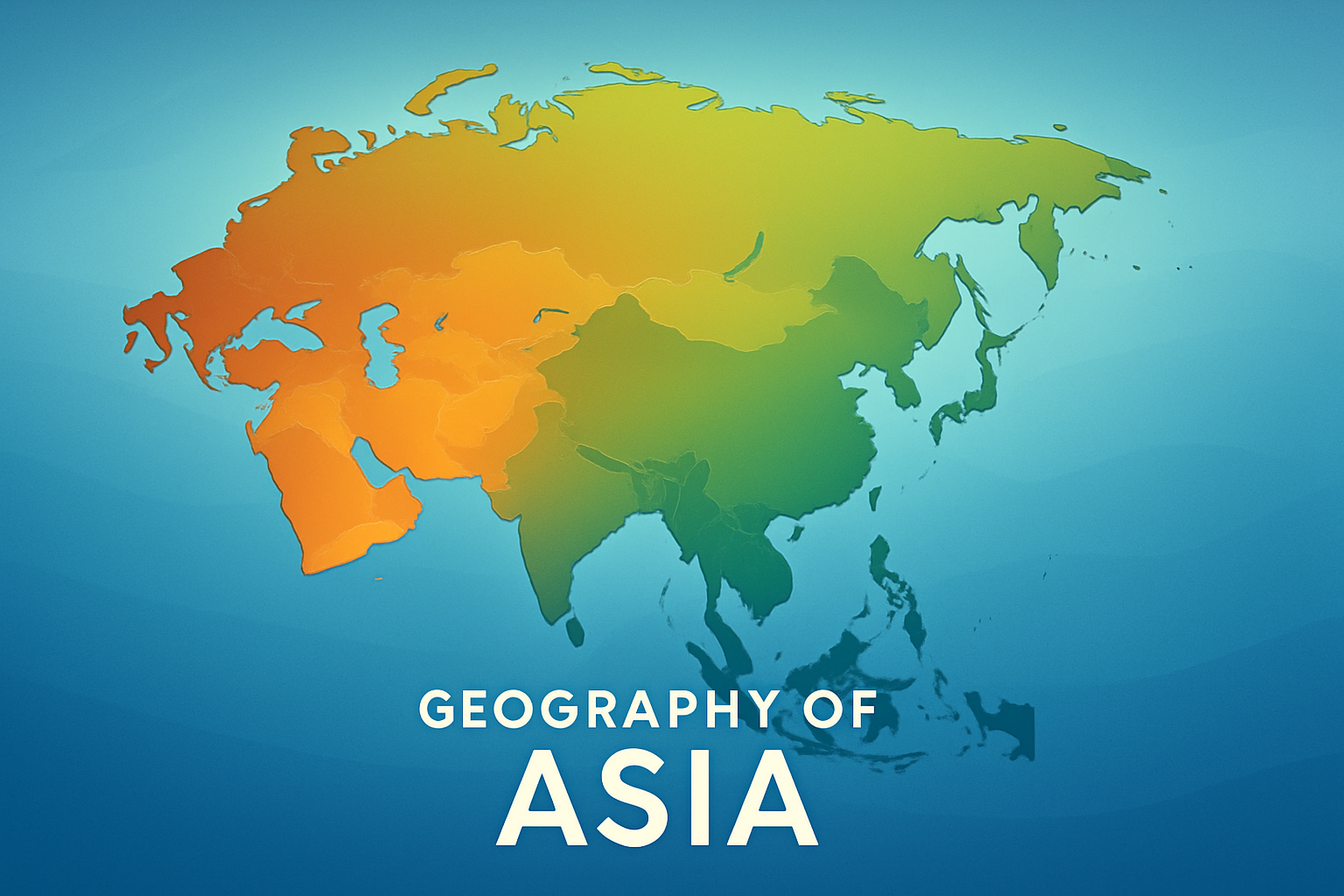
Asia, the largest continent on Earth, is a land of incredible diversity, from vast deserts and towering mountains to sprawling river systems and dense forests. It is a continent that not only holds a prominent geographic position but also plays a critical role in the world’s cultural, political, and economic landscape. Understanding the geography of Asia is essential for comprehending the dynamics of global affairs, environmental issues, and cultural histories. As we delve into the various geographical elements of Asia, we will discover its significance and the interconnectedness of its many regions.
Asia’s geography is characterized by its vast land area, diverse climates, and myriad ecosystems. The continent is home to several geographical extremes, which include the highest point on Earth, Mount Everest, and the lowest point, the Dead Sea’s shore. It is also the most populous continent, teeming with cultures and civilizations that have shaped human history. This backdrop of stunning natural wonders and significant human development makes Asia both fascinating and complex, making the study of its geography a vital endeavor.
Mountains and Plateaus
Asia is home to some of the world’s most significant mountain ranges and plateaus. These include the Himalayas, which host the highest peaks on the planet, including Mount Everest. The Himalayas not only provide breathtaking natural scenery but also significantly impact the climate and weather patterns across the continent. They act as a natural barrier to cold winds from the north, creating distinct climatic zones on either side. The vast Tibetan Plateau, situated to the north of the Himalayas, is often referred to as the “Roof of the World” due to its high elevation and extensive geographical features.
Real-world Example: The Himalayas are crucial for providing fresh water to millions of people in Asia. The range is the source of some of the major river systems such as the Ganges, Indus, Brahmaputra, and Yangtze, which serve as lifelines for India, China, Pakistan, Nepal, Bhutan, and Bangladesh.
The mountains and plateaus of Asia hold abundant natural resources, including minerals and forests. Their geographic formation offers insights into tectonic activity and the history of Earth’s surface changes over millions of years.
Rivers and Water Systems
Asia’s river systems are among the longest and most important in the world. Rivers such as the Yangtze, Yellow, Ganges, Indus, and Mekong are vital to agriculture, providing irrigation to millions of hectares of farmland. They supply water for drinking and industrial use and are central to cultural and religious practices. These rivers have been the cradle of some of the world’s earliest civilizations and continue to be crucial to the modern economy and society in Asia.
- The Yangtze River – The longest river in Asia, which flows through China, is pivotal to transportation, agriculture, and hydroelectric power.
- The Ganges River – Revered in Hinduism, this river is central to religious activities in India and Bangladesh.
- The Mekong River – Running through six countries, this river supports a diverse range of ecosystems and is crucial for fishing and rice farming.
These water systems face significant environmental challenges, such as pollution and the impacts of climate change, which threaten the livelihoods of millions. Efforts to maintain and restore the ecological health of these rivers are essential for sustainable development.
Deserts and Semi-Arid Areas
Asia’s deserts, such as the Arabian Desert, Gobi Desert, and the Thar Desert, define the unique geography that presents both challenges and opportunities. Deserts occupy a large portion of the continent, characterized by arid conditions and extreme temperatures. Despite this, they are not devoid of life; they host specialized ecosystems and have been inhabited by nomadic tribes for centuries.
Real-world Example: The Gobi Desert, straddling northern China and southern Mongolia, is a cold desert that experiences harsh winters and scorching summers. It is known for its role in the Silk Road historical trade routes, connecting East and West, and for its unique wildlife, such as snow leopards and Bactrian camels.
Efforts to combat desertification and manage scarce water resources in these regions are ongoing. Adaptations to these harsh landscapes have led to innovations in sustainable agriculture and renewable energy, such as solar farms, proving the resilience and ingenuity of human societies.
Forests and Biodiversity
Asia boasts some of the most diverse and vast forested regions, ranging from the tropical rainforests of Southeast Asia to the temperate forests of China and Japan. These forests are crucial for maintaining ecological balance and supporting immense biodiversity. They are home to countless plant and animal species, some of which are endemic and endangered, such as the orangutan, Bengal tiger, and Asian elephant.
Forests provide resources for millions of people, from timber and non-timber products to ecosystem services like carbon sequestration and water purification. They play a pivotal role in the cultural and spiritual lives of many indigenous communities.
Real-world Example: The Sundarbans mangrove forest, located in India and Bangladesh, is the largest in the world. It is a UNESCO World Heritage Site and acts as a natural barrier against coastal storms, while also serving as vital habitat for the Bengal tiger.
The preservation and sustainable management of Asia’s forests are essential for combating climate change and ensuring a balance between development and conservation. International collaboration and policies aim to protect these natural reserves.
Islands and Archipelagos
Asia’s geographic landscape includes several island nations and archipelagos, such as Japan, the Philippines, Indonesia, and the Maldives. These islands are often volcanic, featuring lush landscapes and rich marine biodiversity. They attract millions of tourists every year and are integral to economic activities like fishing and agriculture.
Real-world Example: Indonesia, consisting of over 17,000 islands, is the largest archipelago in the world. It is located on the Pacific Ring of Fire, which makes it prone to volcanic eruptions and earthquakes. Nonetheless, its islands are rich in culture and biodiversity, with rainforests harboring species like orangutans and diverse marine life including the famous coral reefs.
Island nations face particular challenges from climate change, such as rising sea levels and increased cyclone activity, which threaten their very existence. Their unique cultural heritage and natural beauty underscore the importance of addressing global environmental issues cooperatively.
Conclusion
The geography of Asia is a tapestry of extremes and diversity. This complexity is reflected in its mountains, rivers, deserts, forests, and islands, each contributing uniquely to the continent’s identity. Understanding Asia’s geography enables us to appreciate its rich natural heritage and the challenges it presents, from resource management to adapting to environmental changes. It highlights Asia’s role in shaping the world’s ecological and cultural landscapes.
For readers interested in exploring Asia’s geography further, a deep dive into specific regions can offer profound insights into local cultures and ecosystems. Whether it’s the towering Himalayas or the vibrant ecosystems of Southeast Asian rainforests, Asia’s geography provides lessons in resilience, adaptation, and the interconnectedness of human and natural systems. We invite you to delve deeper into these geographic marvels and consider steps towards preserving this rich terrain for future generations.
Frequently Asked Questions
1. What makes Asia unique in terms of its geographical diversity?
Asia is truly unparalleled when it comes to geographical diversity. It spans an immense area, stretching from the Arctic Circle in the north to the equator in the south, and from the vast deserts in the west to the lush jungles in the east. This range in latitude results in a wide array of climates, from the icy tundra of Siberia to the tropical rainforests of Indonesia. Among its numerous natural wonders, Asia is home to the highest point on Earth, Mount Everest, towering at 8,848 meters above sea level, and the lowest point, the Dead Sea, which is over 400 meters below sea level. These features are coupled with impressive river systems like the Yangtze and Ganges, which are major lifelines for billions of people, supporting rich biodiversity and fertile lands. Furthermore, Asia’s physical landscape is a tapestry of tectonic activity that has given rise to some of the planet’s most dramatic mountainous regions and active volcanoes.
2. How do the major rivers in Asia influence the lives of the people and the ecosystem?
The rivers of Asia are pivotal to the continent, exerting profound influences on both human populations and the natural ecosystem. For instance, the Yangtze River in China, which is the third longest river in the world, acts as a crucial waterway for transportation and trade and provides water for millions of people. Its basin is also rich in biodiversity, supporting countless species of fish and plant life. Similarly, the Ganges in India is not only spiritually significant to millions of Hindus but is also a vital source of irrigation and agriculture, sustaining the livelihood of many farmers. However, these rivers are not just economic and cultural lifelines – they also play essential environmental roles, carrying nutrients that replenish soils and supporting complex ecosystems that include a wide variety of wildlife. The health of these river systems is critical, yet they are increasingly threatened by pollution, overuse, and climate change, making sustainable management a significant regional priority.
3. Why is Asia considered a pivotal continent in global affairs?
Asia’s pivotal role in global affairs derives from its immense size, substantial population, and dynamic economies. Hosting over half of the world’s population, the continent is a melting pot of cultures, languages, and religions, which contribute to its global cultural influence. Economically, Asia is home to some of the world’s largest and fastest-growing economies, including China, Japan, and India, all of which have substantial impacts on international markets. Politically, the region holds significant importance due to ongoing geopolitical interests, particularly with strategic military locations and emerging superpowers. Additionally, Asia’s vast natural resources, from oil and gas reserves in the Middle East to rich mineral deposits in the Himalayas, make it a critical region for global resource supply. As a result, understanding Asia’s geography is crucial not only for regional players but also for those interested in international business, politics, and environmental policy.
4. What environmental challenges does Asia face, and how does its geography play a role?
Asia confronts numerous environmental challenges, many of which are intrinsically linked to its diverse geography. For example, the rapid industrialization and urbanization occurring across the continent have led to significant air and water pollution issues, particularly in large cities like Beijing and New Delhi. Additionally, deforestation in tropical and subtropical regions threatens biodiversity and contributes to climate change. Asia’s geographical features also make it particularly susceptible to natural disasters such as earthquakes, tsunamis, and typhoons, with the Pacific Ring of Fire being an area of significant seismic activity. Climate change poses another severe threat, with rising temperatures affecting weather patterns and glacial melting in the Himalayas threatening water supplies. Addressing these challenges requires a comprehensive understanding of Asia’s geographical context and cooperation across borders to implement sustainable practices and disaster preparedness strategies.
5. How does Asia’s cultural diversity relate to its geographical landscape?
Asia’s breathtaking cultural diversity is deeply intertwined with its geographical landscape. The continent is home to some of the world’s oldest civilizations, each of which has adapted uniquely to its specific environment. For instance, the mountainous regions of Nepal and Bhutan have nurtured distinct cultures that are vastly different from the vast steppe cultures of Mongolia. The fertile plains of the Indus and Ganges have supported dense populations for millennia, contributing to the flourishing of rich cultural traditions and religions. The geographical barriers, such as mountain ranges, deserts, and vast distances, have historically helped foster a multitude of distinct language families and ethnic groups, each with its cultural practices and beliefs. Additionally, Asia’s coastlines have historically served as hubs of trade and cultural exchange, further enriching its cultural tapestry. Thus, the interplay between geography and culture in Asia is a fascinating study of how landscapes shape human history and cultural evolution.