
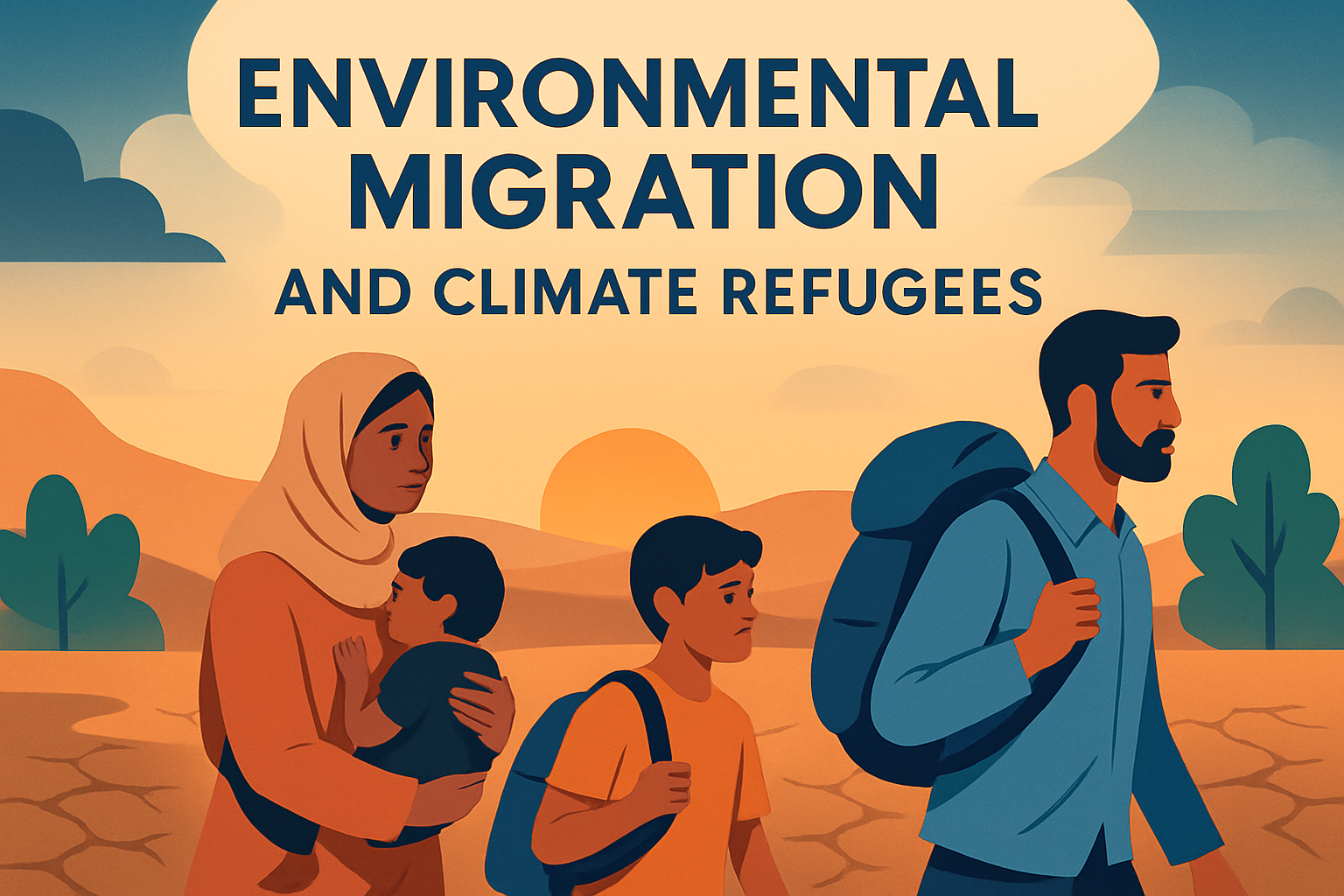
Environmental migration has become one of the most pressing challenges of the 21st century. As our planet grapples with the consequences of climate change, millions of people are being forced to leave their homes in search of safer living conditions. This movement has given rise to the term “climate refugees,” referring to individuals and communities displaced due to environmental factors linked to climate change.
The concept of climate refugees is gaining traction as studies highlight how rising sea levels, extreme weather events, desertification, and other environmental stressors are making certain regions uninhabitable. These migrations are not just a humanitarian issue but also have far-reaching implications on global politics, economy, and social structures.
This article delves into the intricate relationship between environmental change and human mobility, shedding light on why this issue is urgent and requires immediate attention. By exploring real-world examples, we aim to provide a comprehensive understanding of the phenomenon and propose coherent solutions to address the challenges posed by climate-induced migration.
Understanding Environmental Migration
Environmental migration is a complex interplay between environmental factors and human displacement. This form of migration can be temporary or permanent, internal or cross-border, depending on the intensity and nature of the environmental challenge.
For instance, in Bangladesh, the mighty Brahmaputra and Ganges rivers frequently overflow due to heavy monsoon rains exacerbated by climate change. The subsequent flooding displaces millions of residents annually, compelling them to relocate to urban centers or even neighboring countries.
The impact of climate change is evident in these patterns. Riverbank erosion, salinization of coastal areas, and the loss of arable land are direct results of changing climate conditions. As sea levels continue to rise, it is estimated that by 2050, over 17% of Bangladesh’s landmass could be submerged, forcing more than 20 million people to migrate.
From a global perspective, the World Bank estimates that climate change could displace over 216 million people by 2050 across several regions, highlighting the urgent need for innovative solutions and international cooperation.
Sea-Level Rise and Coastal Communities
One of the most prominent effects of climate change is the melting of polar ice caps, leading to a rise in global sea levels. This phenomenon threatens low-lying coastal communities, particularly island nations, which face the prospect of partial or complete submersion.
Take the Maldives, for example, a nation comprising over 1,000 islands, with an average elevation of merely 1.5 meters above sea level. The country is at the forefront of climate change impacts, facing grim predictions that most of its islands could become uninhabitable by the end of the century if global temperatures continue to rise.
The Maldivian government is exploring options such as land reclamation and constructing floating islands as a means of survival. However, these solutions are highly resource-intensive and might not be sustainable in the long run.
- Maldives: Exploring land reclamation, potential floating islands.
- Marshall Islands: Community-led relocation and adaptation plans.
- Kiribati: “Migration with Dignity” initiative to Australia and New Zealand.
Despite these efforts, many island nations face an existential threat that calls for comprehensive international dialogue and support.
Drought and Desertification
While coastal regions battle rising waters, arid and semi-arid lands are facing the opposite challenge: drought and desertification. As temperatures soar and precipitation patterns shift, soil fertility diminishes, and water resources dwindle.
The African Sahel region is a poignant illustration of this crisis. Countries in this belt, such as Burkina Faso, Mali, and Niger, are witnessing worsening drought conditions. As agriculture remains a primary livelihood in these areas, the loss of viable farmland pushes communities to move toward cities or across borders in search of survival opportunities.
| Country | Primary Climate Challenge | Impact on Population |
|---|---|---|
| Boule | Drought and soil degradation | Mass migration to urban areas |
| Mali | Desertification | Movement to coastal regions |
| Niger | Water scarcity | Cross-border migration |
The socio-economic ramifications of drought-induced migration span the globe, from increased urban poverty to border tensions, necessitating robust policy frameworks to manage these transitions effectively.
Natural Disasters and Sudden Migration
Not all environmental migrations are gradual. Sudden-onset disasters, such as hurricanes, tsunamis, and wildfires, can lead to immediate, large-scale displacement.
In 2010, Haiti experienced a catastrophic earthquake that displaced over 1.5 million people. While primarily geological, the earthquake’s aftermath was compounded by environmental degradation, deforestation, and poor urban planning. These factors made it difficult for communities to recover, forcing many to migrate indefinitely.
Across the globe, countries like the Philippines battle with recurring typhoons. In 2013, Typhoon Haiyan displaced over 4 million Filipinos, highlighting the urgent need for effective disaster risk reduction (DRR) strategies.
While humanitarian aid provides temporary relief, long-term resilience requires integrating DRR into national development plans, encouraging community-based approaches to adapt and rebuild stronger infrastructures.
International Response and Policy Frameworks
The global recognition of climate refugees is imperative for crafting cohesive policies that address their needs and rights. However, current international refugee conventions do not recognize environmental migrants as refugees, leaving them in a legal limbo.
Nevertheless, several regional and international initiatives aim to fill this void. The United Nations has initiated dialogues on climate migration to foster cooperation and support affected communities.
Regional collaborations, like the African Union’s Climate Change Strategy and the Caribbean Community Climate Change Centre, emphasize a collective approach to manage and anticipate environmental migrations. Yet, these frameworks require substantial financial and technical backing to be effective.
Despite policy strides, the global community must work toward integrating climate migration into broader agendas, such as the Sustainable Development Goals, ensuring that solutions are inclusive, equitable, and sustainable.
Conclusion and Path Forward
The phenomenon of environmental migration and climate refugees underscores an urgent challenge that is reshaping our world. As we have explored, the implications reach beyond humanitarian concerns, affecting global stability, economy, and security. Understanding that these migrations stem from systemic environmental changes, driven by climate change, is crucial.
The examples we’ve discussed highlight a spectrum of scenarios — from rising seas forcing entire island nations to rethink their existence, to drought-stricken interiors pushing millions towards a bleak urban future. The complexity of these migrations requires multifaceted responses that address immediate needs and long-term prevention and adaptation strategies.
For individuals, organizations, and governments, the call to action is clear. Stakeholders need to prioritize climate resilience and adaptation in their policies. Advocacy for international recognition of climate refugees, coupled with sustainable development efforts, will forge a path forward. Initiating conversations within communities about climate impacts, supporting policymakers in crafting informed, forward-thinking legislation, and engaging in responsible environmental stewardship practices are critical steps for every global citizen.
As we move towards an uncertain future, only through collective effort and decisive action can we hope to mitigate the adverse effects of climate-induced migration. The challenge is formidable, yet with shared resolve, solutions that honor human dignity and ecological balance are within our reach.
Frequently Asked Questions
1. What is environmental migration, and how is it connected to climate change?
Environmental migration refers to the movement of people due to alterations in their natural environment, such as changes in climate conditions, natural disasters, or ecological degradation. The concept is intrinsically linked to climate change, which is one of the primary drivers of such migration. As climate change intensifies, it leads to more frequent and severe weather events, such as hurricanes, floods, and droughts, which can devastate communities, destroy homes, and render areas uninhabitable. Consequently, millions of individuals are compelled to relocate, either temporarily or permanently, in search of safer environments, reliable food sources, and sustainable livelihoods. These movements can happen internally, within a country, or across national borders, further complicating the political and social dynamics involved in managing these migrations.
2. Who are considered climate refugees, and what distinguishes them from other types of refugees?
Climate refugees are individuals and communities who are displaced due to adverse environmental conditions brought about by climate change. Unlike traditional refugees, whose displacement is usually attributed to political conflict, persecution, or violence, climate refugees are primarily forced to move because their habitats have become unlivable due to environmental factors like rising sea levels, desertification, or catastrophic weather events. Despite the urgent nature of their plight, the term “climate refugee” is yet to be officially recognized under international law, which means they may lack the specific legal protection and assistance that political refugees receive under the 1951 Refugee Convention. As a result, advocacy for recognizing climate refugees and ensuring they receive appropriate support and rights is a critical aspect of the climate change discourse.
3. How do rising sea levels contribute to environmental migration?
Rising sea levels are a direct consequence of climate change, primarily driven by the melting of polar ice caps and glaciers, as well as the thermal expansion of seawater as it warms. This phenomenon poses a grave threat to coastal communities worldwide. As sea levels rise, they can lead to the submersion of low-lying areas, increased frequency and severity of coastal flooding, and erosion of shorelines. Such changes threaten homes, infrastructure, freshwater resources, and local economies, forcing people to move away from affected areas. This is particularly alarming for small island nations and densely populated coastal regions, where relocation may not be straightforward due to limited land and resources. In some cases, entire nations are at risk of becoming uninhabitable, prompting discussions around international responsibility and support for those displaced by rising seas.
4. What are the socio-economic impacts of environmental migration on both the displaced populations and host communities?
Environmental migration has profound socio-economic implications for both individuals forced to relocate and the communities receiving them. For displaced populations, the challenges are multifaceted. They often face loss of livelihoods, social networks, and access to basic services. Adjustment to new environments can be difficult, especially when language, cultural differences, or lack of resources impede integration. For host communities, the sudden influx of migrants can strain existing resources, infrastructure, and social services, potentially leading to tensions over employment opportunities, housing, and public services like education and healthcare. However, with appropriate planning and support, environmental migration can also present opportunities for economic revitalization and cultural enrichment in host areas. Global cooperation, such as equitable resource distribution, investment in adaptation strategies, and capacity building, is essential in mitigating these impacts and achieving positive outcomes for both migrants and host societies.
5. What steps can be taken to address the challenges faced by climate refugees?
Tackling the challenges confronting climate refugees requires a multifaceted approach involving policy, legal, and practical measures. First, there needs to be an international consensus on the definition and recognition of climate refugees to extend legal protection and aid. Countries can work together through international frameworks to create agreements that recognize climate-induced displacement and establish protocols for providing assistance and resettlement options. Investments in climate adaptation and disaster risk reduction can mitigate the impacts of climate change, helping communities build resilience and reduce the need for migration. Additionally, supporting research and data collection on climate migration patterns can inform better decision-making and resource allocation. On a local level, community-based adaptation strategies, such as sustainable land-use planning and infrastructure development, are crucial. Engaging migrants in dialogues and planning processes ensures that their voices are heard and needs are met, promoting successful integration and mutual benefits for receiving communities. Collaboration across sectors—governmental, non-governmental, and private—combined with public awareness campaigns, can foster a more empathetic and proactive global response to the growing challenge of climate-induced displacement.