
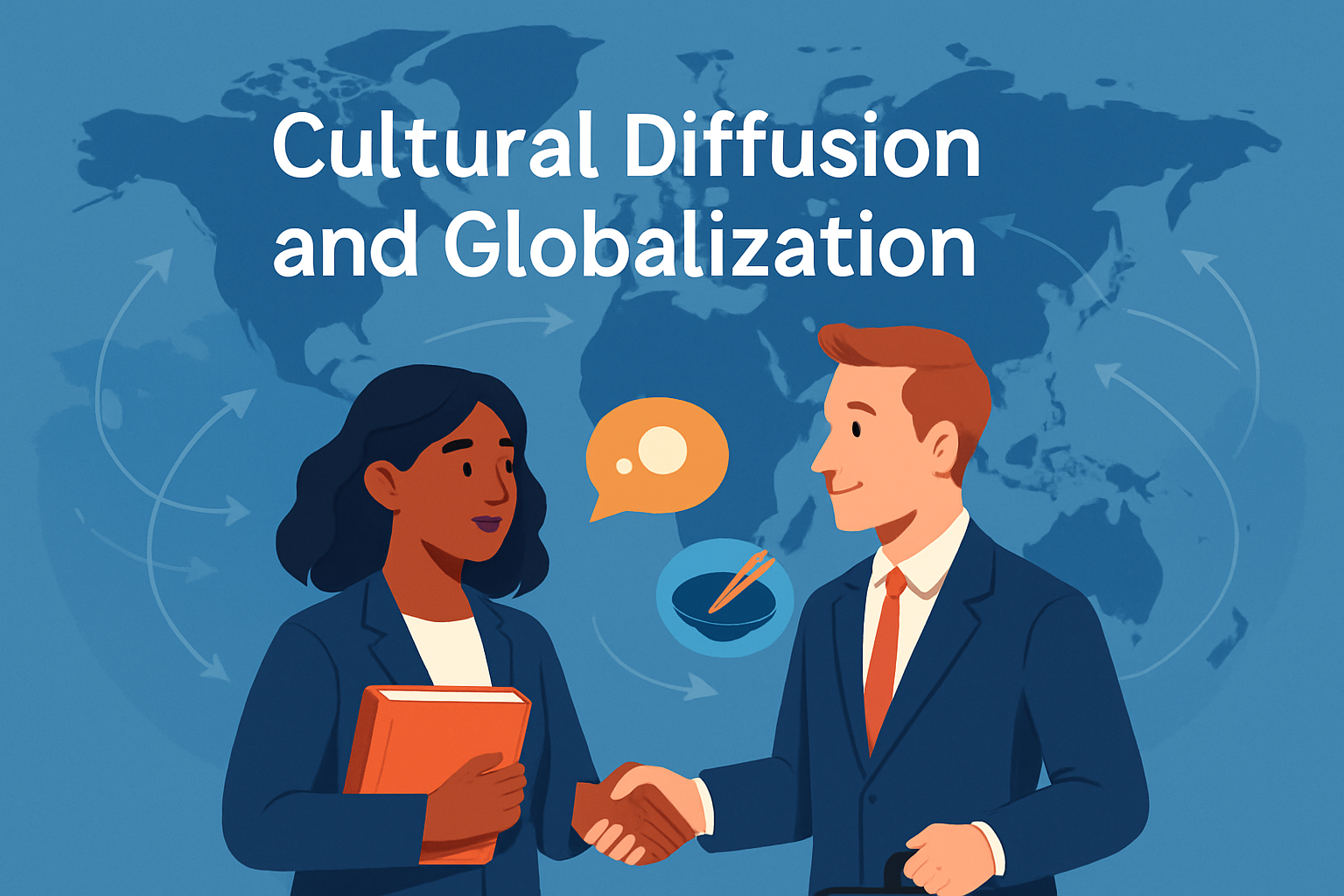
In the rapidly interconnected world of the 21st century, understanding the phenomena of cultural diffusion and globalization is more critical than ever. Cultural diffusion refers to the spread of cultural beliefs and social activities from one group or civilization to another. Meanwhile, globalization is the process by which businesses, technologies, or philosophies develop international influence or start operating on a global scale. Together, these phenomena shape our daily lives, influence global relationships, and contribute to the relentless march towards a more homogenized world.
The importance of studying cultural diffusion and globalization cannot be overstated. Whether it’s the food we eat, the clothes we wear, or the technology we use, our daily choices are influenced by a vast web of interconnected cultures and economies. By examining these processes, we can better understand the origins of cultural practices, identify the forces driving cultural change, and recognize the impact of globalization on societies. Furthermore, acknowledging the benefits such as shared knowledge and economic growth, alongside the challenges of cultural homogenization and economic disparity, enables us to navigate this complex global landscape with greater insight.
Historical Perspectives on Cultural Diffusion
Cultural diffusion has been an integral part of human history. It can be traced back to ancient civilizations where exchanges between different cultures often occurred through trade, conquests, and migrations. One classical example is the Silk Road, an ancient trade route that linked China with the Mediterranean. Through this network, not only goods like silk and spices were traded, but also ideas, religions, and technologies were exchanged. This cross-cultural interaction led to significant developments in various regions, showcasing the transformative power of cultural diffusion.
The Silk Road illustrates how interactions across vast distances can foster exchange and integration of cultural elements. For example, Buddhism spread from India to China via traders and missionaries along this route, leaving a lasting religious and cultural impact on the Chinese civilization. Similarly, technological innovations, such as papermaking and gunpowder, found their way from East Asia to Europe, drastically altering European societies over time.
The Role of Media and Technology in Cultural Diffusion
In contemporary society, media and technology have become vital conduits for cultural diffusion. The internet, social media platforms, and digital technology facilitate instantaneous communication and access to information from across the globe. This technological advancement has led to the rapid spread of cultural products, such as music, fashion, and even language, thereby accelerating the process of cultural diffusion.
The phenomenon of K-pop offers a pertinent example of technology-driven cultural diffusion. Originating in South Korea, K-pop has gained international popularity through platforms like YouTube and social media. With its catchy tunes, high production values, and synchronized choreography, K-pop has captured the hearts of millions worldwide. The viral spread of songs like “Gangnam Style” by Psy is a testament to how technology has enabled cultural elements to transcend geographic and linguistic barriers, influencing global music trends.
Economic Globalization and Its Cultural Impacts
Economic globalization refers to the increasing interdependence of world economies due to the growth of international trade, investment, and capital flow. This economic integration has profound cultural implications, as it often leads to the spread of cultural products and consumerism. Large multinational corporations, such as McDonald’s and Coca-Cola, have become symbols of cultural globalization, with their products available in almost every corner of the globe.
The proliferation of fast-food chains exemplifies how economic globalization can shape cultural practices and lifestyles. McDonald’s, originally an American company, has become a ubiquitous presence worldwide. However, in venturing into diverse cultural landscapes, these fast-food giants often adapt their menus to cater to local tastes. For instance, McDonald’s in India offers a range of vegetarian options to accommodate dietary preferences, demonstrating a fusion of global and local culinary practices.
The Socio-Cultural Challenges of Globalization
While globalization offers numerous benefits, it also poses socio-cultural challenges. One such challenge is cultural homogenization, where local cultures may be overshadowed by dominant global cultures. The dominance of Western culture, especially American culture, in media, entertainment, and fashion illustrates this trend. As a result, traditional cultural practices and languages may face erosion, threatening cultural diversity.
The case of indigenous languages provides insight into this issue. With the widespread use of English as a global lingua franca, many indigenous languages are at risk of extinction. As younger generations adopt mainstream languages for better educational and employment opportunities, the cultural heritage encoded in indigenous languages is being lost. This loss impacts not only linguistic diversity but also the cultural knowledge and traditions that these languages preserve.
Preserving Cultural Identity Amidst Globalization
Despite the pressures of globalization, there are efforts to preserve cultural identities and promote cultural diversity. Various governments and non-governmental organizations (NGOs) are working to protect and revitalize endangered cultures and languages. Cultural festivals, language preservation programs, and heritage sites serve as mechanisms to celebrate and maintain unique cultural identities.
- Language Revitalization: Countries like New Zealand have successfully revitalized indigenous languages such as Maori through educational programs and media representation.
- Cultural Heritage Preservation: The UNESCO World Heritage Sites program highlights and protects cultural landmarks and practices worldwide.
- Festivals and Cultural Events: Events like the Diwali festival in India or the Carnival in Brazil showcase cultural traditions and attract international attention.
These initiatives help foster cultural pride and global awareness, allowing societies to engage with globalization while retaining their unique cultural identities. Moreover, they highlight the resilience and adaptability of cultures in an ever-changing global landscape.
The Future of Cultural Diffusion and Globalization
As we look to the future, the landscape of cultural diffusion and globalization will continue to evolve. Technological advancements such as artificial intelligence and virtual reality could further facilitate cultural exchange, allowing for more immersive cultural experiences. However, addressing the challenges posed by cultural homogenization and economic inequality will require concerted efforts from governments, businesses, and civil society.
A potential benefit of future globalization lies in the possibility of fostering greater mutual understanding and cooperation among cultures. By embracing cultural diversity and promoting cross-cultural dialogue, societies can leverage the best of global and local practices to address common global challenges such as climate change, poverty, and health pandemics.
Conclusion
In summary, the intricate processes of cultural diffusion and globalization have far-reaching implications on cultures and societies worldwide. From the historical trade routes of the Silk Road to the contemporary spread of global media and technology, cultural diffusion has been a constant force shaping human interactions. Meanwhile, economic globalization has intertwined economies and cultures, leading to both opportunities and challenges.
Understanding and navigating the complexities of these phenomena are crucial for preserving cultural identities while embracing the benefits of an interconnected world. As individuals and communities, we can contribute to this dynamic balancing act by celebrating cultural diversity, supporting local traditions, and engaging in cross-cultural dialogues.
As we progress into an increasingly globalized future, the call to action is clear: embrace the shared history and cultural exchanges of humanity while fostering mutual respect and understanding. In doing so, we can create a world where cultural richness and diversity thrive alongside global interconnectedness, benefitting society as a whole.
Frequently Asked Questions
1. What is cultural diffusion and how does it occur?
Cultural diffusion is a fascinating and dynamic process that involves the spread of cultural beliefs, practices, languages, and products from one community or civilization to another. This process can occur in numerous ways, either through direct contact between cultures, such as trade, migration, or war, or through more subtle means like media and technology. For example, consider how elements of pop culture like music, fashion, or cuisine have transcended borders. Japanese sushi is now a global delicacy, hip-hop culture thrives beyond its American origins, and the Indian festival of Diwali is widely celebrated in many Western countries.
The mechanisms of cultural diffusion can be voluntary or involuntary. Voluntary diffusion often results from curiosity and a desire for novelty, like people adopting yoga practices or learning a new language. In contrast, involuntary diffusion might result from historical events such as colonization, where one culture imposes its practices on another. Urbanization and the internet have made cultural exchange even more dynamic, allowing people to share and adopt cultural traits across great distances instantaneously. This flow of cultural ideas and practices enriches societies, fostering greater understanding and collaboration worldwide.
2. How does globalization facilitate cultural diffusion?
Globalization plays a pivotal role in accelerating cultural diffusion, acting as both a catalyst and a conduit for the interchange of cultural traits. Through globalization, cultures are exposed to new ideas, technologies, and products, often reshaping them in the process. The interconnectedness facilitated by globalization allows cultures that were once considered remote to be easily accessible and understood by a global audience.
Technology, especially the internet, has been a powerhouse in this facilitation. Social media platforms, streaming services, and global online marketplaces enable people to access and share cross-cultural content rapidly. For instance, K-pop bands like BTS have garnered an incredible following outside Korea thanks to platforms like YouTube and Twitter. Similarly, streaming services like Netflix offer a variety of international films and series, making them accessible to audiences around the globe and promoting cultural appreciation and curiosity.
Moreover, globalization has made travel more accessible, prompting face-to-face cultural exchanges and broadening people’s horizons. The global economy also incentivizes businesses to adapt and merge cultural elements. Fast-food giants often localize their menus to appeal to regional tastes, creating a melange of global and local that reflects the dynamic nature of cultural exchanges. While some critics argue that this may lead to cultural homogenization, it’s also a testament to the resilience and adaptability of cultures in maintaining distinct identities while embracing new influences.
3. What impact does cultural diffusion have on local cultures?
Cultural diffusion can have a profound impact on local cultures, often resulting in both enrichment and challenges. On the one hand, the introduction of new cultural elements can introduce diversity, foster innovation, and stimulate economic growth by inspiring new products, ideas, and collaborations. For example, fusion cuisines have become increasingly popular, drawing together global flavors and culinary techniques. This blending not only creates unique dining experiences but also bridges cultural gaps.
On the other hand, cultural diffusion can pose challenges to preserving traditional cultures. When a dominant culture absorbs or overshadows a less influential one, there’s a risk of cultural erosion, where unique local practices and languages might be forgotten or adapt drastically. This raises concerns about cultural identity and the need to preserve cultural heritage while adapting to new influences. Therefore, it is essential for communities to strike a balance, fostering intercultural dialogue and mutual respect to ensure that their cultural identity remains intact amidst a constantly changing global landscape.
Additionally, local cultures may face issues like cultural appropriation, where cultural elements are borrowed without understanding or respect for their original meaning and context. For instance, indigenous symbols or traditional attire used casually in the fashion industry can raise ethical concerns. It’s crucial for individuals and enterprises to engage with other cultures thoughtfully and respectfully, acknowledging and honoring the origins and significance of cultural expressions they adopt.
4. How do cultural diffusion and globalization impact global communication?
The interplay of cultural diffusion and globalization significantly enhances global communication, breaking down language barriers and fostering greater understanding and cooperation among people from diverse backgrounds. As cultures interact, they create a shared vocabulary and set of references that facilitate communication. For instance, English has emerged as a global lingua franca, heavily influenced by linguistic contributions from various cultures, enabling people across the globe to share ideas and engage in dialogue more effectively.
Technological advancements driven by globalization also revolutionize communication, enabling instantaneous interaction regardless of geographical boundaries. Social media and instant messaging platforms allow people to form global networks, share experiences, and partake in international conversations that transcend cultural and national lines. This digital interconnectivity has contributed to a more informed and educated global populace, empowering them to participate actively in addressing global challenges.
The fusion of cultures through cultural diffusion often enriches communication by introducing new expressions, idioms, and language constructs. This cross-pollination of ideas and languages deepens our understanding of each other and helps dismantle stereotypes, fostering empathy and intercultural competence. However, it’s also essential to recognize and respect the nuances of cross-cultural communication, as what is deemed polite or normal in one culture might be interpreted differently in another. This awareness is crucial in maintaining effective and respectful global interactions.
5. Can cultural diffusion and globalization lead to cultural homogenization?
One of the prominent debates surrounding cultural diffusion and globalization is the potential for cultural homogenization, where distinct cultural identities may blur into a singular global culture. This phenomenon is often illustrated by the global proliferation of Western cultural products, such as Hollywood films, fast-food chains, and fashion brands, which can overshadow local cultures and encourage uniform consumption patterns.
Nonetheless, the story isn’t solely about homogenization. While certain aspects of global culture may become widespread, cultures are inherently adaptable and resilient. Globalization provides a platform for cultural exchange and hybridization, resulting in a rich tapestry of cultural phenomena that blends global influences with local traditions. This process, called “glocalization,” manifests in various forms, such as local adaptations of global products and the creation of fusion genres in music or art.
It’s also important to recognize that cultural diffusion doesn’t imply a one-way flow from major powers to smaller communities. Communities actively reinterpret and adapt incoming cultural elements, reshaping them in a way that aligns with their values and traditions. For example, reggae music, which originated in Jamaica, has influenced artists globally, leading to world music genres that incorporate reggae elements into diverse cultural contexts.
Efforts to nurture and celebrate cultural diversity, through measures like cultural heritage preservation, intercultural education, and inclusive policymaking, are crucial in ensuring that globalization enriches rather than diminishes the world’s cultural diversity. By encouraging cross-cultural respect and appreciation, we can create a global community that values uniqueness and fosters cultural coexistence.