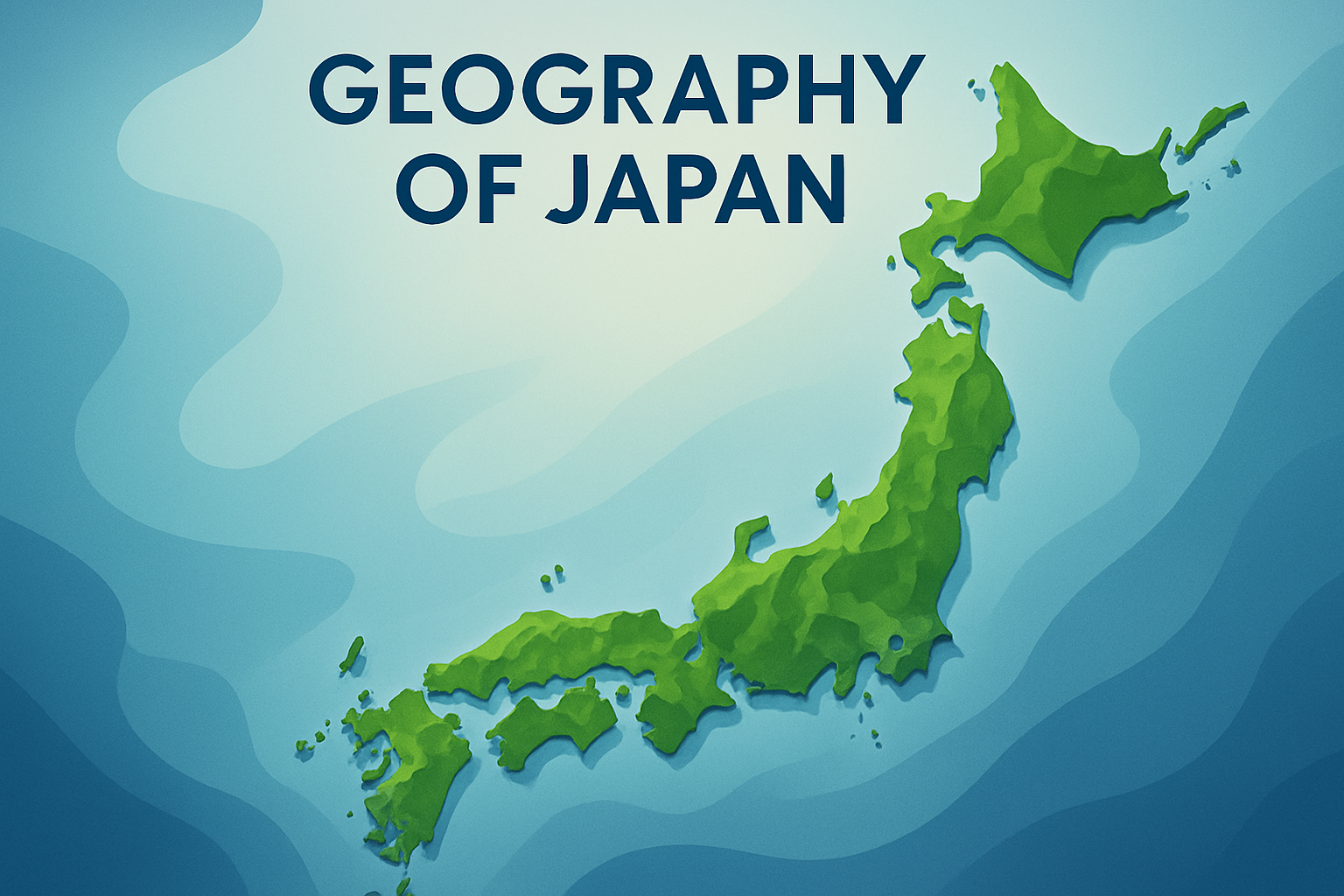
Introduction to the Geography of Japan
Japan, an archipelago situated in East Asia, is a land of diverse terrains and climates that significantly shape its culture, economy, and lifestyle. Comprising four main islands—Honshu, Hokkaido, Kyushu, and Shikoku—along with numerous smaller islands, Japan is characterized by its mountainous landscapes and limited arable land. Understanding the geography of Japan is crucial for comprehending its historical development, economic strategies, and environmental challenges. This article will explore various aspects of Japan’s geography, highlighting their real-world implications and relevance.
The geography of Japan presents a unique blend of natural beauty and geographic hurdles. The country lies along the Pacific Ring of Fire, a highly tectonic zone that accounts for significant seismic and volcanic activity. Additionally, the varied climate across the islands, ranging from humid subtropical in the south to humid continental in the north, affects everything from agricultural practices to cultural traditions. These factors combined make Japan’s geography a key element in shaping the nation’s identity and strategic decisions. The significance of Japan’s geography extends beyond its borders, influencing international trade, tourism, and global environmental policies.
The Role of Mountains in Japan
Mountains dominate approximately 73% of Japan’s land area, making them a defining feature of the country’s geography. The Japanese Alps, running through the center of Honshu, splits the island and creates distinct climatic zones. These highlands not only provide breathtaking scenery but also present challenges and opportunities for the population.
One of the most notable mountains in Japan is Mount Fuji, an iconic symbol of cultural significance and natural beauty. As an active stratovolcano, it attracts tourists and pilgrims every year, contributing to the local economy. However, the country’s mountainous terrain poses challenges for development and agriculture, leading to innovative solutions such as terraced farming, which maximizes arable land in hilly regions.
Historically, mountains have acted as natural barriers, influencing settlement patterns and political boundaries. They have also played a role in Japan’s isolationist policies in the past. Even in contemporary times, mountain ranges affect climatic conditions, leading to heavy snowfall in areas like Nagano, which hosted the Winter Olympics in 1998.
Japan’s Rivers and Lakes
Japan’s geography includes numerous rivers and lakes that are essential for agriculture, transportation, and tourism. The Shinano River, the longest in Japan, and the Tone River are both vital for irrigation, supporting rice paddies and other crops crucial to Japanese cuisine. These waterways also play a role in hydroelectric power generation, which is critical for the country’s energy needs.
Lakes in Japan, such as Lake Biwa and Lake Kasumigaura, provide freshwater resources and recreational opportunities. Lake Biwa, the largest freshwater lake, supports diverse ecosystems and offers various water activities and tourism attractions. These water bodies are culturally significant and often feature in local folklore and traditions.
Rivers and lakes have had their share of challenges, including pollution and ecological disruption. Intense industrialization during the 20th century led to water quality degradation, but recent efforts by the government and environmental organizations have been focusing on restoration and preservation. This highlights the ongoing balance between economic development and environmental sustainability in Japan’s approach to managing its natural resources.
Coastal Areas and Islands
With over 29,000 kilometers of coastline, Japan’s coastal areas are crucial for its economic activities, including fishing, trade, and tourism. The country’s Exclusive Economic Zone (EEZ) is one of the largest globally, providing vast maritime resources and territorial waters rich in marine biodiversity.
Coastal cities like Yokohama and Kobe serve as major ports facilitating international trade, thus playing a pivotal role in Japan’s position as a global economic powerhouse. The fishing industry is also an integral part of the coastal economy, with species such as tuna and mackerel being key exports.
| Coastal Features | Economic Importance | Threats |
|---|---|---|
| Ports (Yokohama, Kobe) | Facilitates international trade | Rising sea levels, pollution |
| Fishing Areas | Supports seafood industry | Overfishing, climate change |
| Tourism Beaches | Boosts local economies | Coastal erosion, littering |
Japan’s coastal areas face several contemporary issues, primarily due to climate change. Rising sea levels threaten low-lying areas, while typhoons and tsunamis pose continuous risks to coastal populations. Initiatives such as sea walls and early warning systems are part of Japan’s disaster management strategies, showcasing its resilience and innovation in addressing natural disasters.
Climate and Seasons
Japan’s climate is as diverse as its topography, experiencing four distinct seasons that influence lifestyle, culture, and economic activities. The Japanese cherish their seasons, which are reflected in cultural practices and cuisine. Spring, marked by the blooming of cherry blossoms (sakura), is a time of celebration, while autumn is admired for its vibrant foliage.
The country’s climate varies significantly from north to south. Hokkaido, the northernmost island, has cold winters with heavy snowfall, making it a popular destination for winter sports. Conversely, Okinawa, located in the southernmost part, enjoys a subtropical climate with mild winters and hot summers, attracting beachgoers and marine enthusiasts.
Japan’s monsoon season, characterized by heavy rains, impacts agriculture and infrastructure. For example, the tsunami that occurred after the 2011 Great East Japan Earthquake devastated coastal areas, highlighting the vulnerability of Japan’s climate-sensitive regions. As a result, climate adaptation has become a crucial focus in policy-making, balancing economic growth with environmental protection.
Impact on Japanese Culture and Economy
The geography of Japan not only dictates its physical landscape but also influences cultural and economic practices. The limited arable land has led to efficient farming techniques and a focus on high-quality produce, like the cultivation of wasabi in mountainous streams.
Moreover, the emphasis on harmony with nature is evident in traditional architecture and gardening, where the natural environment is integrated into design. The tea ceremony and the practice of shintoism also reflect the deep respect for natural elements.
Economically, Japan has adapted to its geographic constraints by becoming a leader in technology and manufacturing, leveraging its port cities for trade. The automotive and electronics industries, centered around cities like Tokyo and Osaka, demonstrate how Japan overcomes its natural limitations with innovation.
- Agricultural Innovation: Terraced farming in mountainous regions
- Architectural Practices: Integrating with natural landscapes
- Economic Centers: Technology and manufacturing in port cities
Despite the challenges, Japan’s adaptability in response to its geographic limitations is admirable. It serves as a model for balancing economic development with cultural preservation and environmental stewardship.
Key Takeaways
Japan offers a remarkable case study of how geography can shape a nation’s development and identity. The mountainous terrain, significant coastal zones, and varied climates not only present challenges but also opportunities that Japan has leveraged throughout its history. From efficient agricultural practices to innovative architecture and economic resilience, Japan exemplifies how a nation can thrive despite natural limitations.
Understanding Japan’s geography provides essential insights into its cultural practices, economic strategies, and environmental policies. It becomes evident that Japan’s success is largely due to its ability to adapt and integrate with its environment, fostering both growth and sustainability.
For those interested in geographic studies or planning travel to Japan, grasping these elements of its physical landscape will enhance your appreciation and understanding of the country. Visiting the Japanese Alps, witnessing the cherry blossoms, or exploring traditional fishing villages will be enriched by an awareness of the geographical factors at play.
In conclusion, take a moment to explore the diverse facets of Japan’s geography, reflecting on their influence on both past and present. Consider how the lessons learned from Japan’s adaptive strategies can be applied to other regions facing similar challenges.
Frequently Asked Questions
1. What are the main geographical features of Japan?
Japan is an archipelago located in East Asia, consisting of four primary islands: Honshu, Hokkaido, Kyushu, and Shikoku. Additionally, there are numerous smaller islands that contribute to Japan’s geographical diversity. The country’s landscape is renowned for its mountainous regions, which cover about 73% of the land. The Japanese Alps dominate the central region of Honshu, offering breathtaking scenery and opportunities for winter sports. Apart from the mountains, Japan has coastal plains that are densely populated and are where most agricultural activities take place. The limited arable land, which makes up only about 13% of the country’s total area, significantly impacts agricultural practices and necessitates efficient land use.
Interestingly, Japan’s geographical location along the Pacific Ring of Fire leads to seismic and volcanic activity, resulting in over 100 active volcanoes. This active geology is a stark reminder of nature’s forces but also contributes to Japan’s famous hot springs, which are prominent cultural and tourist attractions. The diverse climate across the islands, ranging from the frigid winters of Hokkaido to the subtropical warmth of Okinawa, further shapes the life and biodiversity throughout the nation.
2. How does Japan’s geography influence its climate and seasons?
The distinct geography of Japan exerts a significant influence over its climate, resulting in notable regional and seasonal variations. The Japanese archipelago stretches over several latitudes, which contributes to this climatic diversity. Hokkaido, the northernmost island, experiences long, severe winters with heavy snowfall and short, mild summers. In contrast, the southern islands of Kyushu and Shikoku enjoy a milder and more temperate climate with warm, humid summers and mild winters. Okinawa, in the southwesternmost part, is characterized by a subtropical climate, leading to warm temperatures year-round.
Japan experiences four distinct seasons, providing a rich tapestry of natural beauty throughout the year. In spring, the iconic cherry blossoms bloom, attracting locals and tourists to hanami (flower viewing) festivals. Summers are known for intense humidity and frequent typhoons that bring heavy rains and winds, particularly impacting the southern regions. Autumn is marked by vibrant foliage that garners admiration and inspires traditional art and poetry. Winters, particularly in the north and mountainous areas, are ideal for skiing and other snow-related activities. This diverse climate not only enhances the natural landscapes but also affects agricultural cycles and cultural traditions.
3. How has Japan’s geography influenced its economy and development?
Japan’s geographical features have played a pivotal role in shaping its economy and development trajectory. Given the limited amount of arable land, Japan has historically focused on maximizing agricultural output through advanced farming techniques and high levels of mechanization. The lack of natural resources, such as fossil fuels and metals, has pushed Japan to invest heavily in technological innovation and manufacturing. This scarcity prompted the country to establish itself as a global leader in industries such as automobile manufacturing, electronics, and robotics, where technological expertise can compensate for resource deficiencies.
Moreover, being an island nation, Japan has leveraged its strategic location along key maritime routes to become a hub for international trade. The expansive coastlines provide numerous ports that facilitate the import and export of goods, cementing Japan’s status as a key global economy. The historical emphasis on education and efficient use of resources has allowed Japan to maintain a competitive edge despite geographical constraints. Moreover, Japan’s reliance on technology has brought about the development of sustainable practices and renewable energy sources, further influencing its economic landscape.
4. How does Japan’s geography affect its culture and lifestyle?
The geography of Japan deeply influences its culture and lifestyle, as the natural surroundings are integrated into Japanese traditions, beliefs, and daily life. The mountainous terrain and dense forests offer a spiritual allure, reflected in the reverence for nature seen in practices such as Shintoism, which regards natural features as sacred. The beauty of the changing seasons is celebrated through various festivals and ceremonies, such as cherry blossom viewings in spring and harvest festivals in autumn.
Furthermore, geographical isolation historically led to the development of a distinct culture with unique art forms, such as ikebana (flower arranging) and tea ceremonies, which emphasize simplicity and attention to detail. The scarcity of arable land caused by the mountainous terrain necessitates compact living spaces, influencing architectural styles that utilize minimalism to optimize space, practicality, and aesthetics. The proximity to the sea also shapes culinary traditions, with seafood playing a central role in Japanese cuisine. Cultural practices are designed to coexist harmoniously with the natural environment, highlighting the cultural emphasis on balance and sustainability.
5. What are the challenges and opportunities associated with Japan’s geography?
Japan’s geography presents a unique set of challenges and opportunities that influence its trajectory for future growth and resilience. The geographical position along the Pacific Ring of Fire poses natural hazards such as earthquakes, tsunamis, and volcanic eruptions. Measures have been implemented to mitigate these risks, including advanced earthquake-resistant infrastructure, early warning systems, and comprehensive disaster preparedness programs. The landscape constraints and limited land area create challenges in managing urban development and agricultural sustainability, prompting innovation in urban planning and resource management.
On the other hand, Japan’s geographical setting also offers opportunities. The abundance of mountainous terrain provides opportunities for tourism, with regions known for skiing, hiking, hot springs, and cultural experiences drawing international visitors. Additionally, the surrounding seas offer vast resources for the fishing industry, which is integral to the nation’s food supply. Moreover, the geographic diversity and climatic variability foster a rich biodiversity, supporting eco-tourism and conservation efforts. In leveraging these opportunities, Japan continues to balance modernization with cultural heritage and environmental stewardship, ensuring a sustainable and prosperous future.