
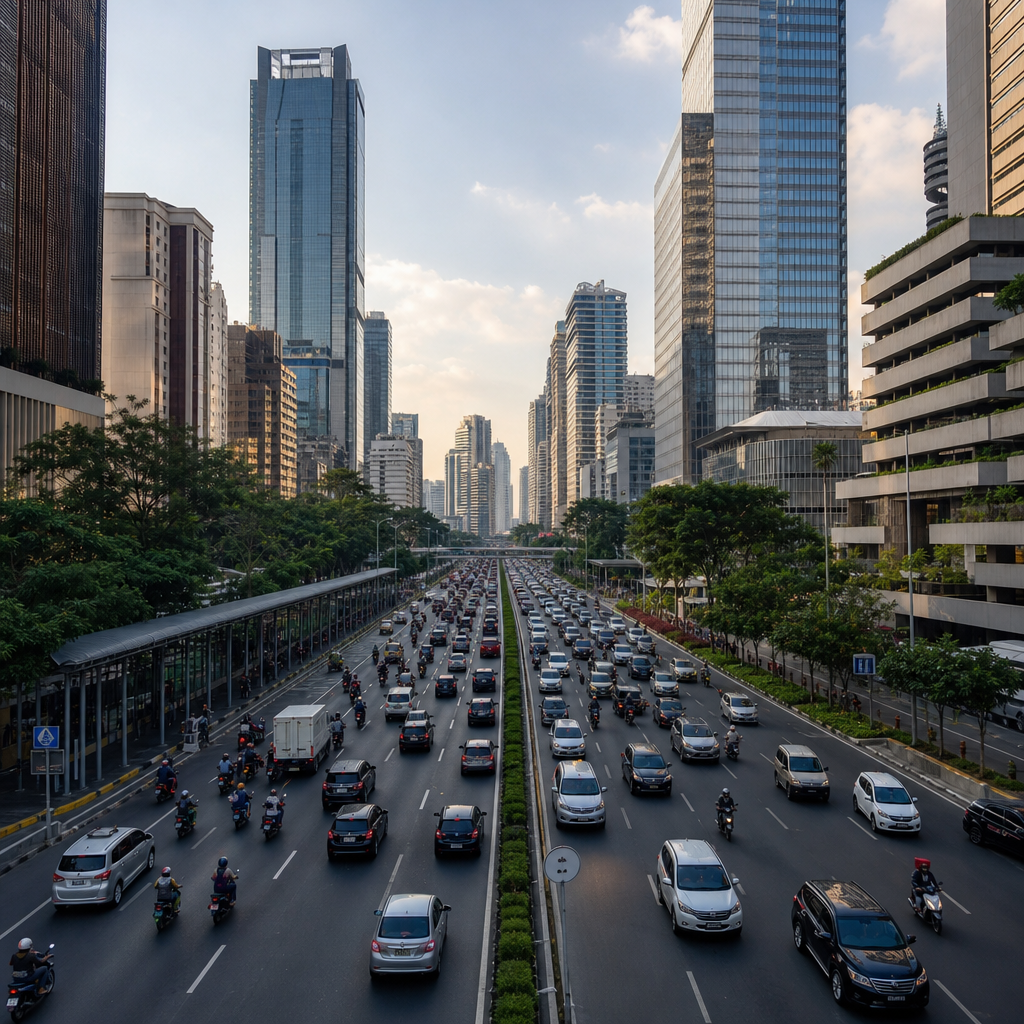
Urbanization and agglomeration economies shape how modern regions grow, compete, and distribute opportunity. Urbanization is the long-term shift of population and economic activity from rural areas toward towns and cities. Agglomeration economies are the productivity gains that firms, workers, and institutions obtain when they locate near one another. I have seen this pattern repeatedly in city-level economic analysis: a dense labor market shortens hiring time, a nearby supplier base cuts transaction costs, and proximity to universities speeds the spread of ideas. These effects are not abstract. They influence wages, rents, transport systems, public budgets, innovation rates, and the geography of inequality.
The subject matters because most global output is now generated in urban areas, and most future population growth will also occur there. Economists typically distinguish three related concepts. Localization economies arise when firms from the same industry cluster together, as in film production in Los Angeles or finance in London. Urbanization economies arise from the scale and diversity of a large city itself, where firms benefit from broad markets, varied services, and cross-industry knowledge spillovers. Agglomeration economies is the umbrella term covering both effects. Understanding those distinctions helps explain why some places specialize deeply while others thrive on diversity and constant recombination.
This hub article brings together the core ideas, mechanisms, measurement tools, policy debates, and practical implications of urbanization and agglomeration economies. It explains why cities tend to raise productivity, why benefits are unevenly shared, and why congestion, housing shortages, and pollution can offset urban gains. It also connects classical economic theories with modern evidence from labor economics, regional science, urban planning, transport analysis, and development studies. For readers exploring economics more broadly, this topic acts as a bridge between growth theory, public finance, geography, infrastructure, real estate, innovation, and social policy.
At the center of the topic is a simple question: why do people and firms continue to cluster despite high land prices and crowding? The answer is that proximity creates value. Alfred Marshall described three classic forces more than a century ago: pooled labor markets, specialized suppliers, and knowledge spillovers. Those ideas still frame current research. Today, economists add network effects, matching efficiency, consumer variety, venture capital ecosystems, logistics reliability, and institutional thickening. A large city does not merely host more activity; it changes the productivity of that activity through repeated interaction at short distance.
How Agglomeration Economies Work in Practice
Agglomeration economies operate through several clear channels. First, thick labor markets improve matching. A software firm in a large metro area can hire developers with a niche skill set faster than a similar firm in a smaller city. Workers also benefit because more employers reduce the risk of unemployment and make career moves easier. Second, supplier specialization increases efficiency. Manufacturers in clustered regions can source inputs, maintenance, legal support, design services, and logistics from nearby firms that understand industry standards. Third, ideas move faster when people meet frequently, switch employers, attend conferences, and collaborate informally.
These mechanisms reinforce one another. In practice, I have found that firms rarely choose a city for one reason alone. A biotech company may value research hospitals, patent attorneys, lab equipment vendors, and a talent pipeline from universities simultaneously. A fashion cluster needs designers, photographers, small-batch manufacturers, showrooms, marketers, and media outlets. The city becomes an ecosystem rather than a single market. That is why moving one anchor institution, such as a university campus or a port terminal, can reshape entire neighborhood economies through multiplier effects and new business formation.
Economists often estimate agglomeration benefits by measuring how wages or productivity change with employment density. A common finding in the literature is that doubling city size or effective density raises productivity by a modest but meaningful percentage, often in the mid-single digits, though estimates differ by industry and method. Service sectors with knowledge intensity, such as finance, technology, and professional services, usually show stronger gains than routine manufacturing. The reason is straightforward: sectors that rely on rapid information exchange and specialized human capital benefit most from face-to-face contact and deep urban networks.
Urbanization, Specialization, and Economic Structure
Urbanization changes the sectoral composition of an economy. Early urban growth is often tied to manufacturing, trade, and basic administration. As income rises, cities usually become more service-oriented, with strong expansion in finance, education, health care, information technology, and cultural industries. Some cities specialize heavily, while others diversify. Specialized cities can achieve strong productivity through localization economies. Detroit during the early automobile era is a classic example. Diverse cities, by contrast, often generate resilience and innovation because ideas from different fields combine in unexpected ways, a feature Jane Jacobs emphasized in her writing on cities.
The balance between specialization and diversity matters for long-term growth. Industry concentration can attract investment quickly because firms know exactly where relevant talent and suppliers are located. Yet concentrated regions can also become vulnerable to sectoral shocks, regulatory changes, or technological disruption. Diverse metropolitan economies usually adjust better because employment losses in one sector can be partly offset by growth in another. This is one reason large urban regions such as New York, Tokyo, and Paris have remained globally important across multiple economic eras, even as their industrial composition changed dramatically.
Urban hierarchies also emerge through these processes. Smaller cities may serve as logistics hubs, university towns, tourism centers, or regional administrative capitals. Mid-sized cities often compete on lower costs combined with strong amenities and targeted clusters. Megacities command global headquarters functions, deep capital markets, elite universities, and international connectivity. None of these positions is automatic. Institutional quality, infrastructure, education systems, housing supply, zoning rules, and transport access all influence whether urbanization creates broad productivity gains or simply pushes up rents without improving economic dynamism.
| Urban pattern | Main advantage | Common risk | Example |
|---|---|---|---|
| Industry specialization | Deep supplier networks and expert labor pools | Exposure to one sector’s downturn | Semiconductors in Hsinchu |
| Economic diversity | Cross-industry innovation and resilience | Higher coordination and land costs | New York City |
| Port-centered growth | Trade access and logistics efficiency | Environmental pressure and land competition | Singapore |
| Administrative capital | Stable public employment and services | Dependence on government spending | Brasilia |
Benefits for Productivity, Innovation, and Households
The strongest argument for urban concentration is productivity. Dense cities reduce search costs in labor and product markets, improve access to clients, and support investments that would be uneconomic in dispersed settlements. Public transit, fiber networks, convention centers, airports, advanced hospitals, and cultural institutions all become more viable when many users share fixed costs. Firms in large cities often learn faster because competitors and collaborators are physically close. Patent citations, startup formation, and venture funding tend to cluster spatially for this reason. Silicon Valley remains the standard case of repeated knowledge spillovers converted into commercial growth.
Households also gain from urbanization, although gains vary by income and location. Cities typically offer higher wages, more educational options, better health services, broader retail choice, and greater access to public amenities. Young workers often benefit most because thick labor markets support experimentation and career progression. Migrants from rural regions may accept lower initial living standards in exchange for higher expected lifetime earnings. Urban consumption advantages matter too. A household may tolerate a smaller dwelling if proximity to jobs, entertainment, schools, and specialized health care improves overall welfare. Economists call these tradeoffs compensating differentials.
Innovation thrives in dense settings because tacit knowledge is difficult to transmit remotely. Documents can be emailed, but judgment, trust, and problem framing often develop through repeated personal contact. In my experience working with local development strategies, this becomes visible in sectors where prototypes, compliance issues, or client-specific customization matter. Engineers, designers, regulators, and customers solve problems faster when they can meet quickly. Universities and hospitals are especially important because they anchor skilled labor, research partnerships, and startup pipelines. Urbanization therefore supports not just larger economies, but more adaptive and inventive ones.
Costs, Diseconomies, and Uneven Outcomes
Agglomeration is powerful, but it is not costless. Economists refer to the negative side as agglomeration diseconomies. Congestion raises travel time and freight delays. Housing shortages increase rents and can price out essential workers. Pollution, noise, and heat island effects reduce quality of life and impose health costs. Public services may become strained if population growth outpaces investment. These pressures can erode the very productivity advantages that made a city attractive in the first place. When commuting becomes unpredictable and office or industrial space too expensive, firms begin considering secondary cities or suburban nodes.
The distribution of gains is another central issue. Productive cities can still generate deep inequality. Landowners often capture a large share of urban success through rising property values. High-skilled workers may see wages rise faster than lower-skilled workers, especially in knowledge clusters with strong superstar effects. Informal settlements in rapidly urbanizing developing countries reveal a similar pattern in harsher form: people move for opportunity, yet infrastructure, sanitation, and legal housing supply lag behind. The city remains economically attractive, but the social cost of exclusion becomes severe and politically destabilizing.
There are also governance tradeoffs. Restrictive zoning may protect neighborhood character but worsen housing scarcity. Highway expansion can relieve some bottlenecks yet induce additional traffic. Transit investment can widen access to jobs, but only if land use rules allow enough housing and commercial density near stations. Tax incentives to attract firms may succeed in the short term while producing weak spillovers if workforce development and supplier linkages are missing. Effective urban policy therefore requires coordination across transport, land use, utilities, environmental regulation, education, and municipal finance rather than isolated interventions.
Measuring Urbanization and Agglomeration Economies
Measurement is harder than the core idea suggests. City boundaries are often administrative rather than economic, so researchers increasingly use metropolitan areas, commuting zones, or travel-time-based measures. Density can be calculated as jobs per square kilometer, residents per hectare, or employment accessible within a given commute. Productivity can be proxied by wages, value added per worker, firm output, patenting, or startup survival. Each measure captures part of the story and introduces biases. High wages, for example, may reflect both higher productivity and higher living costs, so interpretation requires care.
Causality is the main challenge. Productive firms may choose dense cities, making cities look beneficial even if density itself is not the cause. To address that problem, researchers use longitudinal data, natural experiments, instrumental variables, and transport shocks. New rail links, port expansions, or historical infrastructure patterns can reveal how changes in access affect present outcomes. Spatial economists also use gravity models and market potential measures to estimate how distance shapes trade, commuting, and interaction. The best studies do not ask whether density matters in general; they ask which type of density, for whom, and under what institutional conditions.
For practitioners, a balanced dashboard works better than a single metric. Useful indicators include employment density, median commute time, housing vacancy rates, commercial rent growth, patent intensity, business formation, transit accessibility, school attainment, and emissions exposure. Geographic information systems, census microdata, mobile location data, and firm registries have made city analysis far more precise than it was two decades ago. Still, interpretation should remain disciplined. A rising skyline can signal success, speculation, or both. Sound analysis links observed urban change to labor markets, infrastructure capacity, and the underlying economics of proximity.
Policy Lessons for Growing and Mature Cities
Good policy aims to preserve the benefits of proximity while limiting diseconomies. In fast-growing cities, the most urgent tasks are usually infrastructure expansion, legal housing supply, serviced land, and basic municipal capacity. Water, sanitation, power reliability, and bus networks often matter more than prestige projects. In mature high-income cities, the focus shifts toward transit integration, affordability, decarbonization, and productivity-enhancing redevelopment. Allowing more homes near jobs and transit is one of the clearest ways to support agglomeration benefits without forcing households into long commutes that waste time and reduce labor market access.
Human capital policy is equally important. Cities do not gain automatically from density; they gain when workers can match with firms and upgrade skills over time. Apprenticeships, community colleges, research universities, and adult training systems help convert urban scale into real productivity. So do institutions that support entrepreneurship, such as incubators, permitting reform, seed finance, and procurement pathways for smaller firms. Regional coordination matters because labor and housing markets cross municipal borders. Fragmented governance often leads to duplicated infrastructure, fiscal competition, and exclusionary zoning that weakens the wider metropolitan economy.
The most successful urban strategies are realistic about tradeoffs. Some industries truly benefit from central business districts; others function better in suburban campuses, industrial corridors, or logistics zones near ports and airports. Remote and hybrid work have changed office demand, but they have not eliminated agglomeration. Instead, they have increased the premium on high-value interactions and amenity-rich places. Leaders should therefore think in networks rather than simple downtown-versus-suburb terms. A productive region connects universities, housing, freight infrastructure, employment centers, and public space so that proximity remains useful, affordable, and broadly shared.
Urbanization and agglomeration economies explain why cities remain central to economic development, innovation, and social mobility. When people, firms, infrastructure, and institutions cluster effectively, productivity rises through better matching, specialized supply chains, shared assets, and faster learning. Those gains are real and measurable, which is why dense metropolitan regions continue to attract investment despite high costs. At the same time, urban success can create congestion, inequality, housing scarcity, and environmental stress. The right question is not whether cities should grow, but how they can grow while preserving access, efficiency, and livability.
For economics readers, this topic serves as a hub because it connects many fields at once. Labor economics helps explain wage premiums and matching. Public finance clarifies how infrastructure and local taxation shape growth. Development economics shows why rural-to-urban migration persists even when urban services lag. Environmental economics examines pollution, land use, and carbon impacts. Innovation studies reveal how knowledge spillovers and institutional density produce new firms and technologies. Looking at urbanization through these linked lenses makes the subject far richer than a simple story about crowding or skyline expansion.
The core takeaway is practical: proximity is productive, but only when supported by housing, transport, governance, and human capital. Cities prosper when they reduce friction, widen opportunity, and let households and firms benefit from one another’s presence. If you are exploring economics as a broader discipline, use this article as your starting point for related topics such as regional growth, infrastructure, housing markets, migration, productivity, and innovation policy. Follow those connections, and the logic of urban economies becomes much clearer.
Frequently Asked Questions
What is the difference between urbanization and agglomeration economies?
Urbanization and agglomeration economies are closely related, but they are not the same thing. Urbanization refers to the long-run movement of people, jobs, investment, and economic activity into towns and cities. It is a broad structural process that changes where people live, how land is used, how infrastructure is built, and how regional economies evolve over time. Agglomeration economies, by contrast, describe the specific productivity advantages that arise when firms, workers, suppliers, service providers, and institutions cluster near one another. In practical terms, urbanization explains why cities expand, while agglomeration economies help explain why dense urban areas often become more productive, innovative, and competitive than more dispersed locations.
The distinction matters because a city can grow in population without capturing the full benefits of agglomeration. If housing is too expensive, transportation systems are congested, or land-use rules prevent firms and workers from locating efficiently, the city may urbanize without generating strong productivity gains. On the other hand, when density supports better job matching, faster knowledge exchange, deeper supplier networks, and more specialized services, agglomeration economies can turn urban growth into higher wages, stronger firm performance, and greater regional output. In policy and economic analysis, it is useful to think of urbanization as the quantity of growth and agglomeration as the quality of proximity.
Why do firms and workers become more productive in large, dense cities?
Firms and workers often become more productive in dense urban environments because proximity lowers the friction involved in doing business and finding opportunity. A large city creates a thick labor market, which means employers can fill positions faster and workers can find jobs that better match their skills. That improved matching raises efficiency on both sides. Employers spend less time searching for talent, and workers are more likely to move into roles where they can contribute at a higher level. This is one of the clearest mechanisms behind agglomeration economies, especially in industries that depend on specialized knowledge, technical expertise, or flexible staffing.
Dense cities also support deeper supplier and customer networks. When many related firms operate close together, businesses can source inputs more quickly, compare vendors more easily, and adapt faster when market conditions change. Nearby business services such as legal support, finance, logistics, design, and information technology further reduce transaction costs. At the same time, ideas move more easily through face-to-face meetings, informal conversations, job mobility, and professional networks. This circulation of knowledge can accelerate innovation and help firms learn from one another, even when they are competitors. In addition, shared infrastructure such as transit, broadband, ports, universities, and research institutions amplifies these advantages by connecting people and organizations more efficiently. The result is not just bigger cities, but often more dynamic economic ecosystems.
What are the main benefits of agglomeration economies for regional growth and competitiveness?
The main benefits of agglomeration economies are higher productivity, stronger innovation, greater specialization, and improved regional resilience. When firms cluster together, they gain access to a wider pool of skilled labor, specialized suppliers, and complementary services. That concentration allows businesses to operate more efficiently, respond faster to customer needs, and scale more easily. Regions with strong agglomeration effects often attract additional investment because they offer a business environment where companies can plug into existing networks rather than building every relationship from scratch. This creates a cumulative process in which success attracts more firms, more talent, and more capital.
From a competitiveness standpoint, agglomeration helps regions develop industry depth. A city or metro area with a concentration of advanced manufacturing, finance, life sciences, technology, or creative services can build a reputation that attracts both domestic and international activity. Specialization does not just increase output; it often improves quality, speeds innovation, and raises the sophistication of the local economy. These places may also recover more quickly from shocks if they have diversified clusters and adaptable labor markets. However, the gains are rarely automatic. Regions compete not only on size, but on whether they can maintain the conditions that make proximity valuable, including mobility, housing access, institutional quality, and workforce development. In that sense, agglomeration economies are a major source of competitive advantage, but they depend on sound urban and regional management.
Do agglomeration economies have downsides or limits?
Yes, agglomeration economies can produce substantial benefits, but they also have real limits and costs. As cities grow denser and more economically successful, they often face congestion, rising land prices, housing shortages, longer commute times, pollution, and pressure on infrastructure and public services. These are sometimes described as diseconomies of agglomeration because the costs of concentration begin to offset the productivity gains of proximity. For example, a business may benefit from being near clients and talent, but if office rents become too high or workers cannot afford to live nearby, the advantage weakens. Likewise, a city may attract skilled workers, but if transportation networks become unreliable, the effective size of the labor market shrinks even when the population continues to rise.
There are also social and spatial consequences. The benefits of urban growth are not always distributed evenly across neighborhoods, industries, or income groups. High-productivity urban centers can generate wage gains for some workers while pricing others out of housing or pushing opportunity farther from lower-income communities. Smaller regions may struggle to compete if talent and capital are drawn disproportionately into major metropolitan hubs. In addition, excessive dependence on a narrow cluster can create vulnerability if a dominant industry declines. The broader lesson is that agglomeration is powerful, but not self-correcting. Its gains are maximized when cities invest in housing supply, transportation, public space, utilities, education, and inclusive access to opportunity so that density remains productive rather than becoming burdensome.
How can policymakers strengthen agglomeration economies while making urbanization more inclusive?
Policymakers can strengthen agglomeration economies by focusing on the foundations that make proximity work well. That includes efficient transportation systems, reliable infrastructure, flexible but well-managed land use, and a strong pipeline of skilled workers. Public transit and well-connected road, freight, and digital networks expand the effective reach of the labor market and reduce the time cost of matching workers, firms, and suppliers. Zoning and permitting reforms can help housing and commercial space respond to demand, which is essential if successful urban economies are to remain accessible rather than becoming prohibitively expensive. Investments in education, vocational training, universities, and research partnerships also matter because agglomeration is strongest when dense places are not just crowded, but highly capable.
To make urbanization more inclusive, policy must pay attention to who gains access to these urban advantages. Affordable housing, transit-oriented development, neighborhood connectivity, and targeted workforce programs can help residents from different income levels participate in city growth. Support for small businesses, entrepreneurship, and commercial corridors can spread benefits beyond a narrow set of large firms or central districts. Local governments can also coordinate regional planning so that growth does not simply intensify inequality between core cities, inner suburbs, and peripheral communities. The most effective approach is to treat urbanization not as an end in itself, but as a process to be shaped. When cities align infrastructure, housing, labor market policy, and economic development strategy, they can preserve the productivity benefits of agglomeration while improving access to jobs, services, and long-term opportunity.