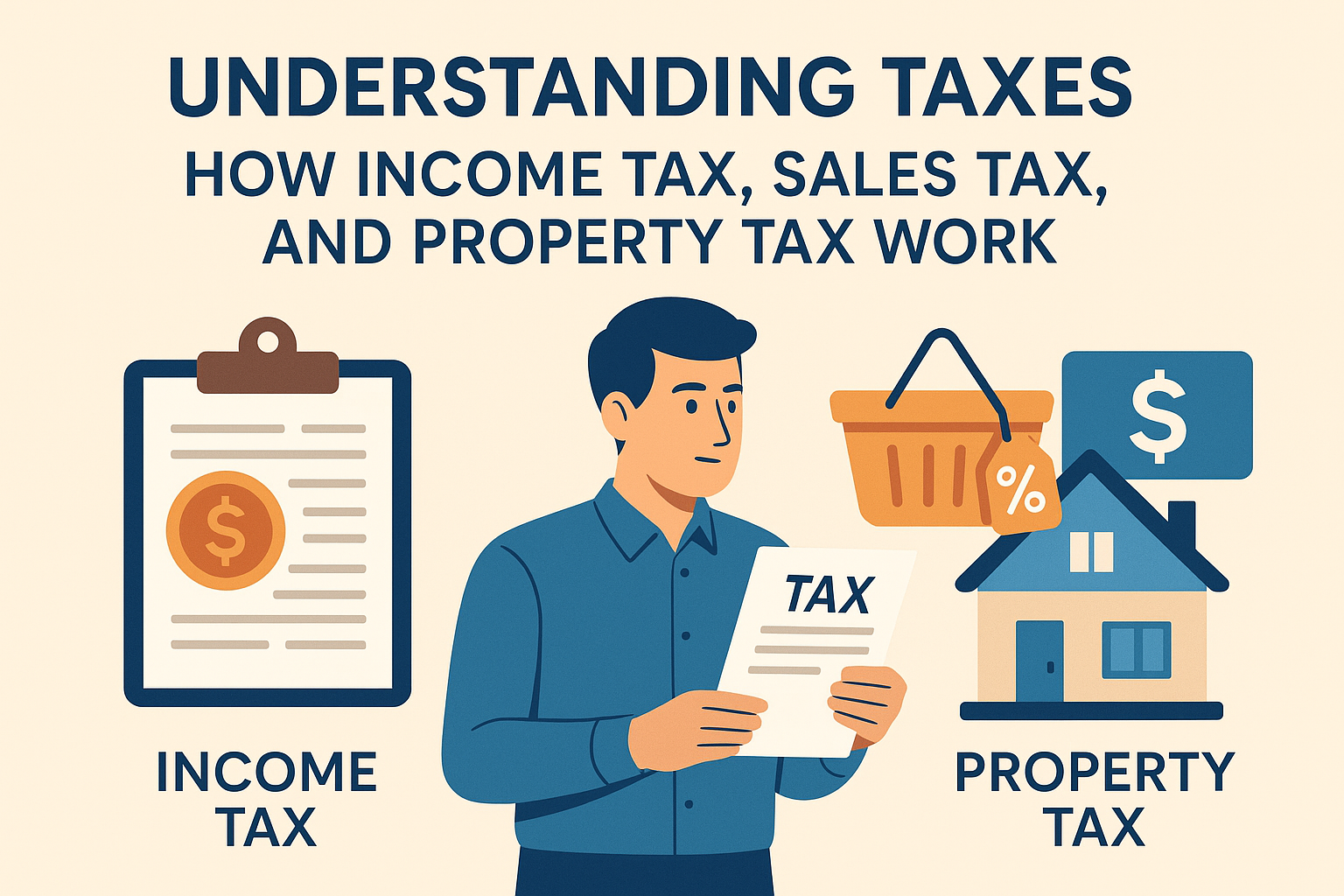
Taxes are an integral part of our economic system and play a significant role in shaping our societies. They fund essential public services, infrastructure, and government operations, ensuring the smooth functioning of a nation. Understanding how taxes work is crucial for every individual and business, as it affects our daily lives and financial planning.
Three primary forms of taxation in most economies include income tax, sales tax, and property tax. Each tax type serves a unique purpose, is calculated differently, and impacts taxpayers in various ways. Understanding the nuances of each can empower citizens to make informed financial decisions and contribute to public discourse on fiscal policies. This article delves into the intricacies of income tax, sales tax, and property tax, elucidating the fundamentals and real-world implications of each.
Income Tax: Understanding Its Role and Impact
Income tax is a direct tax imposed on the financial income generated by individuals or entities within the jurisdiction of the government. It is one of the primary sources of government revenue and contributes significantly to national budgets. The responsibility of paying income tax lies with both individuals and corporations, though the rules and rates can vary based on income brackets, filing status, and deductions.
Typically, income tax is calculated using a progressive tax structure, meaning that the rate of tax increases as the income level rises. For instance, in many countries, taxpayers are divided into brackets based on their annual income, with higher earners paying a higher percentage of their income in taxes. This system aims to ensure equity, with those who can afford to pay more contributing more to public funds.
Consider the example of John, a software engineer with an annual income of $85,000. In a tax system with progressive brackets, his income might fall into multiple brackets. He might pay 10% on the first $10,000, 15% on the next $20,000, and 25% on the remaining amount. Understanding how these brackets work can help taxpayers like John optimize tax liabilities through deductions and credits, thus impacting their net income.
Sales Tax: A Closer Look at Its Mechanism and Effects
Sales tax is an indirect tax imposed at the point of sale on the purchase of goods and services. Collected by retailers and passed on to the government, sales tax is generally a fixed percentage of the sale price, making it a consumption-based tax rather than income-based. Because it applies to transaction values rather than income levels, sales tax affects all consumers who engage in commercial transactions.
The rate of sales tax can differ significantly from one jurisdiction to another, and sometimes even within regions of the same country. Certain essential goods, such as groceries or medicines, are often exempt from this tax to lessen the financial burden on consumers for basic needs.
Take, for instance, the case of Sarah, who lives in a state where the sales tax rate is 7%. When she purchases a new laptop for $1,000, the sales tax she pays will total $70. Understanding the nuances of sales tax is crucial for consumers and businesses alike, as it impacts both pricing strategies and budget planning.
Property Tax: Deciphering Its Calculation and Significance
Property tax is a levy imposed on property owners based on the assessed value of their real estate holdings, including land and buildings. Generally managed by local or municipal governments, property tax contributes primarily to funding local services such as schools, road maintenance, and public safety.
Property tax calculations generally involve assessing the market value of a property, applying a tax rate set by the government, and factoring in any exemptions or credits available to the property owner. The exact rate and rules can vary widely depending on location and local laws.
| Tax Type | Example | Purpose |
|---|---|---|
| Income Tax | John’s $85,000 income | Funds national programs and services |
| Sales Tax | Sarah’s $70 on a laptop | Supports state and local initiatives |
| Property Tax | Annual levy on a home | Finances local services and infrastructure |
Consider the example of Alex, who owns a home with an assessed value of $300,000 in a locale where the property tax rate is 1.5%. Each year, Alex would owe $4,500 in property taxes. Understanding these obligations and potential exemptions is essential for budget planning and financial forecasting in household management.
Conclusion: Grasping the Big Picture of Taxation
An in-depth understanding of how income tax, sales tax, and property tax operate is invaluable for anyone looking to navigate the financial landscape effectively. Income tax demands attention due to its significant influence on personal and business finances, while sales tax impacts daily transactions, altering consumer and retail dynamics. Meanwhile, property tax directly affects real estate investment decisions and local funding.
By comprehensively grasping these tax mechanisms, individuals and businesses can better manage their economic responsibilities and opportunities, leading to smarter financial planning and strategic resource allocations. Moreover, such knowledge fosters informed participation in debates on fiscal policies and reforms, benefiting both personal financial health and community welfare.
As a next step, dive deeper into your specific local and national tax policies to align your financial strategies accordingly. Stay informed, seek expert advice when necessary, and ensure compliance while optimizing your financial benefits. Remember, understanding taxes is not just about meeting obligations but about empowering yourself through knowledge.
Encouragement: Start today! Review your current tax strategies, identify areas for optimization, and take charge of your financial future with confidence and clarity.
Frequently Asked Questions
1. What is income tax, and how is it calculated?
Income tax is a levy imposed by the government on individuals and entities based on their earnings or profits. Essentially, it’s a portion of your income that you pay to the government to fund public services and government operations. The calculation of income tax is typically based on a tiered structure where different portions of your income are taxed at varying rates, known as tax brackets. This progressive system aims to ensure that those with higher earnings contribute a larger share. For instance, if you earn more money, you’re likely to pay a higher percentage of that income in taxes compared to someone with a lower income.
To calculate your income tax, begin by determining your taxable income, which is your total income after subtracting allowable deductions and exemptions. Then, refer to the tax brackets set by your government for the current fiscal year. For example, the first portion of your income might be taxed at 10%, the next portion at 20%, and so on. After applying these rates to the corresponding portions of your income, you’ll sum them up to find your total tax owed. Additionally, tax credits can directly reduce your tax liability, potentially lowering your final bill. Staying informed on current laws and using tools like tax software or consulting tax professionals can offer more personalized guidance.
2. How does sales tax work and why do we pay it?
Sales tax is a consumption tax imposed by the government on the sale of goods and services. Each time you make a purchase, a percentage of the sale, dictated by the sales tax rate, is added to the final price you pay. Retailers are responsible for collecting this tax from consumers at the point of sale and later remitting it to the government. The rate varies significantly depending on the state or local jurisdiction, and not all items may be taxable. In some places, essential goods like groceries and medicine might be exempted from sales tax to reduce the financial burden on consumers.
The primary purpose of sales tax is to generate revenue for state and local governments. These funds are crucial for public services like education, transportation infrastructure, emergency services, and more. Since sales tax is based on consumption, it can be considered somewhat regressive; individuals with lower incomes spend a higher percentage of their income on taxed goods than wealthier individuals. To address these concerns, some governments implement graduated tax rates or offer rebates to lower-income families, aiming for a more equitable system.
3. What is property tax, and how does it impact homeowners?
Property tax is an annual levy on real estate, including land and the structures on it. It’s typically calculated as a percentage of the property’s assessed value. Local governments, such as municipalities or counties, set the property tax rates and collect the revenues, which generally fund local services and infrastructure, including schools, roads, libraries, and public safety operations.
The impact on homeowners can be substantial, as property taxes represent an ongoing cost of ownership. Assessment values are determined periodically by government assessors, who estimate the market value of the property. During reassessment, property owners may see their taxes fluctuate based on changes in the real estate market or improvements they make to their properties. It is important for homeowners to be aware of their local property tax assessments and rates, to effectively budget for these obligations. In some regions, programs exist to offer tax relief or exemptions for certain individuals, such as seniors, veterans, or people with disabilities, which can alleviate some of the financial burdens.
4. How can understanding taxes benefit individuals and businesses?
Understanding how taxes work is tremendously beneficial for both individuals and businesses, as it directly influences financial planning and decision-making. For individuals, a clear grasp on tax obligations helps in budgeting, maximizing deductions and credits, and potentially reducing overall tax liabilities. Knowledge of income brackets can also assist in financial planning, guiding strategies such as retirement savings or investment decisions that take advantage of tax-deferral accounts which could lower taxable income.
For businesses, tax understanding is crucial for financial management, as it affects profitability, cash flow, and strategic planning. Businesses need to be aware of various tax obligations, from payroll taxes to corporate taxes, to maintain compliance and avoid legal penalties. Additionally, understanding the tax implications of business investments, expenses, and structure (e.g., sole proprietorship vs. corporation) can lead to more tax-efficient decisions, optimizing growth and returns. Staying informed about tax changes and leveraging professional advice when necessary is important for both personal and business financial health.
5. What strategies can be used to minimize tax liabilities legally?
There are several strategies individuals and businesses can employ to minimize their tax liabilities legally, often referred to as tax planning. At the individual level, maximizing contributions to tax-advantaged accounts, such as IRAs or 401(k)s, can reduce taxable income. Utilizing available tax deductions and credits, like education credits or deductions for mortgage interest, further decreases taxes owed. Tax planning might also involve timing the recognition of income and expenses, to take advantage of lower tax rates or tax changes.
For businesses, effective tax planning includes thorough documentation of all expenses, ensuring they’re deductible where applicable. Companies may also benefit from tax incentives and credits offered for specific activities, like research and development. Structuring the business in a tax-efficient manner, such as forming a pass-through entity where income is taxed at individual rates instead of corporate rates, can also lead to significant savings. It’s important to note that tax laws can be complex and subject to change, so ongoing consultation with tax professionals is recommended to develop and implement sound tax strategies tailored to specific circumstances.