
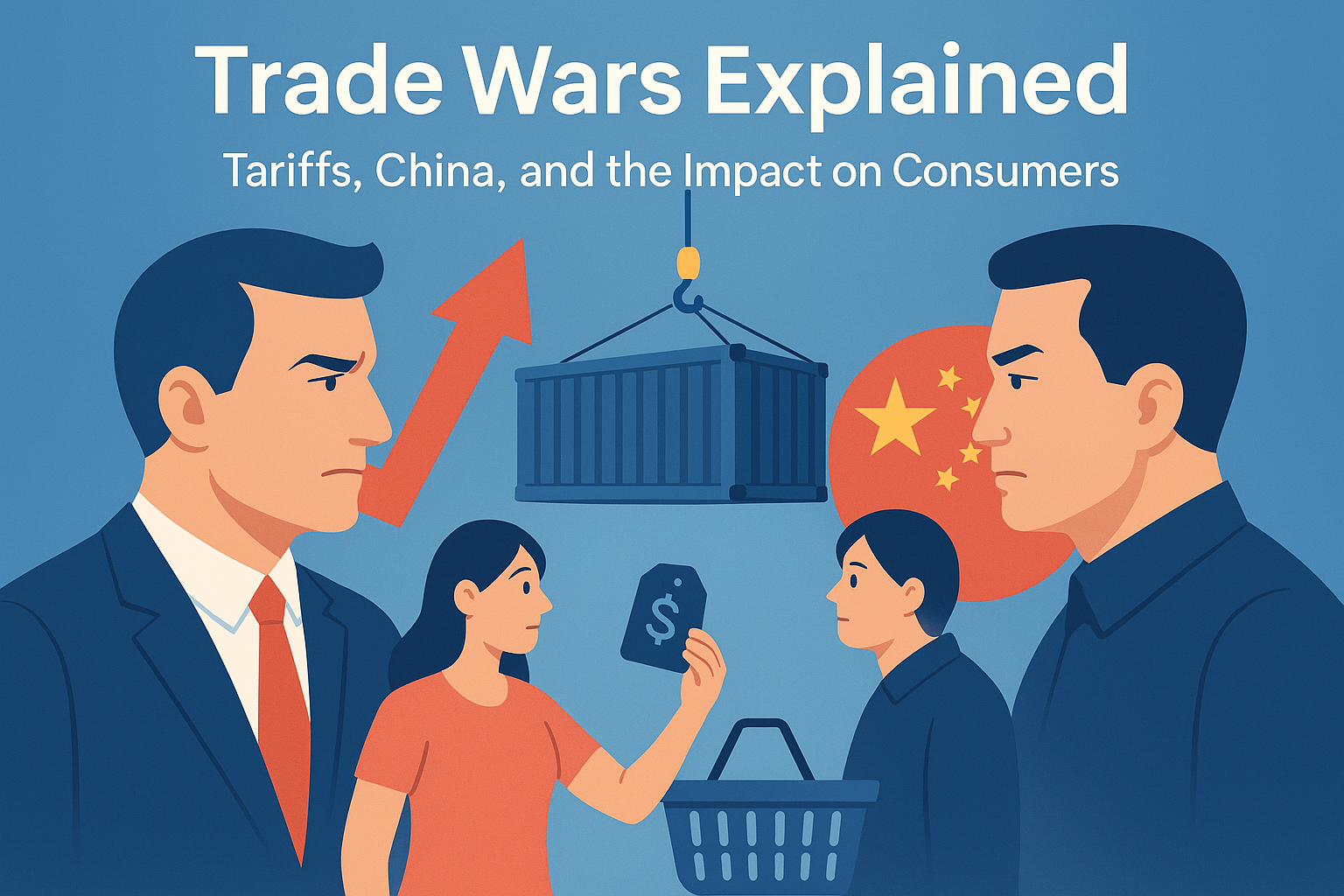
Trade wars involve a complex interplay of national interests, economic strategies, and global market dynamics. At the heart of these conflicts are tariffs, which are essentially taxes imposed on imported goods. Specifically, the trade tensions between the United States and China have caught global attention due to the sheer size and influence of these two economies. A trade war can significantly alter the economic landscape, impacting not just the countries involved but consumers worldwide. Understanding the finer details of trade wars, particularly focusing on tariffs and their repercussions, is essential. This topic holds substantial relevance since global trade not only supports national economies but also touches the daily life of every consumer. For consumers, the ripple effects often mean changes in price, availability, and quality of products. With this background in mind, let us delve into the intricate world of trade wars, dissecting the roles played by tariffs and examining the specific case of China’s trade tensions with the United States.
Understanding Tariffs: The Basics and Their Purpose
Tariffs are fundamental tools used by governments to control foreign trade. Essentially, a tariff is a tax placed on imported goods, designed to protect domestic industries by making foreign products more expensive and less attractive compared to local products. While the primary goal of tariffs is protectionism, they also serve as a source of revenue for governments. In the current globalized economy, tariffs influence decisions about where to produce goods, how much to produce, and at what price to sell them.
For instance, if the U.S. imposes a tariff on steel imports, the cost for companies that rely on steel from abroad would rise. This, in turn, could lead American companies to source their materials from domestic suppliers. Ideally, this practice should boost local industries, create jobs, and increase economic self-reliance. However, tariffs can also lead to retaliatory measures, impacting global trade relations.
The Trade War Between the United States and China
The trade conflict between the United States and China serves as a prime example of how tariffs can escalate into a full-blown trade war. This conflict began in earnest in 2018, when the U.S. administration felt that China’s trade practices were unfair, including allegations of intellectual property theft and forced technology transfers. In response, the U.S. imposed tariffs on billions of dollars’ worth of Chinese goods, leading China to retaliate with tariffs of its own.
These tariffs impacted a wide range of goods, from agricultural products like soybeans to electronics such as smartphones. The agricultural sector in particular faced significant challenges, as China was one of the largest importers of U.S. soybeans. With Chinese tariffs in place, American farmers found themselves struggling to compete, leading to excess supply and falling prices. This scenario underscores how interconnected global economies are and the widespread impact trade wars can have beyond just the countries involved.
| Key Aspect | Impact on U.S. | Impact on China |
|---|---|---|
| Consumer Goods | Higher Prices | Reduced Market Access |
| Agriculture | Falling Prices | Higher Import Costs |
| Technology | Increased Costs | Slower Growth |
How Tariffs Affect Consumers
The impact of tariffs on consumers is multifaceted and often complex. When a country imposes tariffs on imports, the most direct effect is on the price of those imported goods, which tends to increase. For consumers, this means that everyday products—from groceries to cars—can become more expensive. Higher prices lead to decreased purchasing power, impacting household budgets and potentially changing spending habits.
For example, consider the implications for U.S. consumers during their trade spat with China. Many consumer electronics, like smartphones and laptops, are manufactured in China and imported into the U.S. With tariffs in play, the cost of these goods rose, leading consumers to either absorb the higher costs or delay purchases. This indirectly influences demand and further exacerbates the economic slowdown.
The Domino Effect on Global Supply Chains
Tariffs can also disrupt global supply chains, leading to inefficiencies and increased costs along the production and distribution pipeline. The interconnected nature of today’s global economy means that parts and components often cross borders multiple times before reaching the final consumer. Tariffs at any point in this chain can cascade down the supply line, increasing costs and potentially impacting the quality and availability of the final product.
A pertinent example is the automotive industry, where parts are sourced globally, but tariffs on specific components can influence the entire production process. This ripple effect can lead to delays, encourage a search for alternative suppliers, and overall, increase operating expenses. Such changes not only affect manufacturers but trickle down to the consumers, who face higher costs and fewer choices.
Real World Repercussions: The Case of European Union Tariffs
While the focus is often on the U.S.-China scenario, it’s important to note that trade wars aren’t isolated events. Consider the European Union’s response to U.S. steel and aluminum tariffs. In retaliation, the EU imposed tariffs on iconic American products like motorcycles and whiskey. This tit-for-tat approach illustrates how protectionist policies can quickly spiral, affecting markets far removed from the original conflict.
For the motorcycle industry, particularly companies like Harley Davidson, these tariffs resulted in significant revenue losses. With costs rising, companies faced difficult decisions, ranging from increasing prices to shifting production abroad to remain competitive. Thus, trade wars can force companies into strategic realignments, impacting workers, stakeholders, and ultimately, consumers worldwide.
Analyzing the Long-term Economic Impacts
While the immediate effects of trade wars are often visible, such as price hikes and supply chain disruptions, the long-term economic impacts are more subtle and manifold. Economists warn that protracted trade wars can lead to decreased global economic growth, as countries become more insular and less willing to engage in free trade.
Moreover, uncertainty in trade policies can dampen business investments, as companies are hesitant to commit resources in such a volatile environment. This uncertainty can also affect consumer confidence, creating a cycle of reduced spending, investment, and economic growth. Over time, such a climate could lead to job losses and decreased productivity, painting a less optimistic picture for future economic prosperity.
Conclusion: Navigating the Complex World of Trade Wars
The intricate web of tariffs and trade wars leaves a lasting impact on global economies and individual consumers. Key takeaways include the understanding that while tariffs may provide short-term protection for domestic industries, they can also lead to retaliation and global economic imbalances. For consumers, the consequences manifest in higher prices and reduced product availability.
As we navigate through these trade dynamics, it is crucial to remain informed and adaptive. For businesses and consumers alike, understanding the influence of trade policies on everyday life aids in making savvy economic decisions. By staying vigilant and advocating for fair trade practices, consumers can better navigate the shifting tides of international trade.
Ultimately, trade wars are a reminder of how deeply intertwined global economies are and the extent of the ripple effect that policies have beyond mere national borders. As the landscape evolves, continuing dialogue and cooperation between nations offer the most promising path forward. By encouraging open markets and reducing barriers, economies can thrive, benefiting industries and consumers alike in the ever-expanding global marketplace.
Frequently Asked Questions
1. What exactly is a trade war and why do they happen?
A trade war occurs when countries impose tariffs or other trade barriers on each other in response to certain economic disagreements. Essentially, it’s a back-and-forth dispute where countries use tariffs as a weapon to achieve their economic goals. These disputes often arise from disagreements over trade practices, such as accusations of unfair subsidies, intellectual property theft, or trade imbalances. For instance, the trade tensions between the United States and China have been largely driven by the U.S. concern over China’s trade practices, as well as issues related to technology transfer and national security. Trade wars are about more than just tariffs, though—they can involve any kind of economic sanction intended to restrict the flow of goods and services between trading partners. They happen because countries want to protect their own industries and jobs, attempt to open foreign markets to fairer competition, or exert geopolitical influence. The drama at the heart of a trade war often boils down to one simple principle: each country wants what it perceives as a ‘fair deal’ in international trade.
2. How do tariffs work in a trade war, and who pays for them?
Tariffs are taxes imposed on imported goods. When a government sets a tariff, the cost of importing a product from abroad increases, making imported goods more expensive compared to local products. The idea is to encourage consumers to buy domestic products instead, bolstering local industries. However, in practice, the costs are often passed on to consumers in the form of higher prices. So, while tariffs are technically paid by the importing companies, they usually get passed on to the consumer in the form of higher retail prices. For example, in the U.S.-China trade war, if the U.S. places a tariff on Chinese-produced electronics, those devices become more expensive for American consumers. The ultimate cost is borne by consumers who are looking to buy the affected products. And even though tariffs aim to protect domestic industries, they can backfire by increasing prices across the board, reducing consumer choice, and potentially leading to inflationary pressures.
3. How has the trade war between the U.S. and China affected global markets?
The trade war between the U.S. and China has had widespread implications on global markets, causing volatility and uncertainty. As two of the largest economies in the world, the United States and China play a significant role in global trade, so tensions between them send ripples across international markets. When these economic giants engage in a trade war, it creates uncertainty in global supply chains, leading to volatility in stock markets around the world. Companies that operate internationally may face disruptions as tariffs influence their supply networks, leading to shifts in sourcing and production strategies. Moreover, this trade war has caused other countries to reconsider and reevaluate their own trade policies and relationships. Emerging markets can also be caught in the crossfire, often forced to choose sides or adapt quickly to new trade realities. Additionally, global economic growth can be stunted due to the broader impacts on trade, investment, and consumer spending. Ultimately, the effects of a trade war extend beyond the immediate economic impacts to reshaping the long-term trade architecture and international relationships.
4. What impact does a trade war have on consumers?
A trade war can have several negative impacts on consumers, the most direct being higher prices on a range of goods. As tariffs on imports increase, the extra costs are typically transferred to the consumer, making everyday products and necessities more expensive. This effect ranges from electronics and automotive parts to clothing and food items, essentially any imported product subject to tariffs. Furthermore, consumers may experience reduced product choices. Companies might seek to manage their increased costs by limiting their product offerings to simplify supply chains. Beyond tangible goods, services might also be impacted as the increased cost of goods affects broader inflation trends, leading to higher living costs overall. The uncertainty caused by a trade war can also lead to lower consumer confidence as concerns over economic stability grow, which in turn can reduce consumer spending and slow economic growth. Moreover, prolonged trade tensions can affect employment as companies might cut costs by reducing their workforce or halting job creation, further impacting consumer well-being. In short, while the strategic goals of a trade war focus on protecting domestic industries, the immediate consequences often endanger consumer welfare through increased costs, fewer choices, and economic uncertainty.
5. Can trade wars be resolved, and if so, how?
Yes, trade wars can be resolved, though the process can be complex and politically sensitive. Resolution often involves negotiations between the affected countries to reach an agreement that addresses the underlying issues that triggered the trade war. This often requires compromises and a willingness to adjust policies or practices perceived as unfair or damaging by the other party. Diplomatic channels and international trade organizations, such as the World Trade Organization (WTO), can play a pivotal role in mediating disputes and providing a framework for resolution. Bilateral talks are crucial, where each side comes to the table with proposals and demands, aiming for a mutually beneficial agreement. However, achieving resolution requires significant political will and good faith to uphold any agreed-upon terms. Countries might negotiate tariff reductions, establish quotas, or agree on new standards that ensure fair competition in the international market. Furthermore, resolving trade wars can lead to longer-term relationships that align with global trade norms, fostering cooperation and stability in the international economic system. The end of a trade war can mark a new chapter in economic relations, but it requires persistence, dialogue, and often a shift from short-term gains to long-term benefits.