
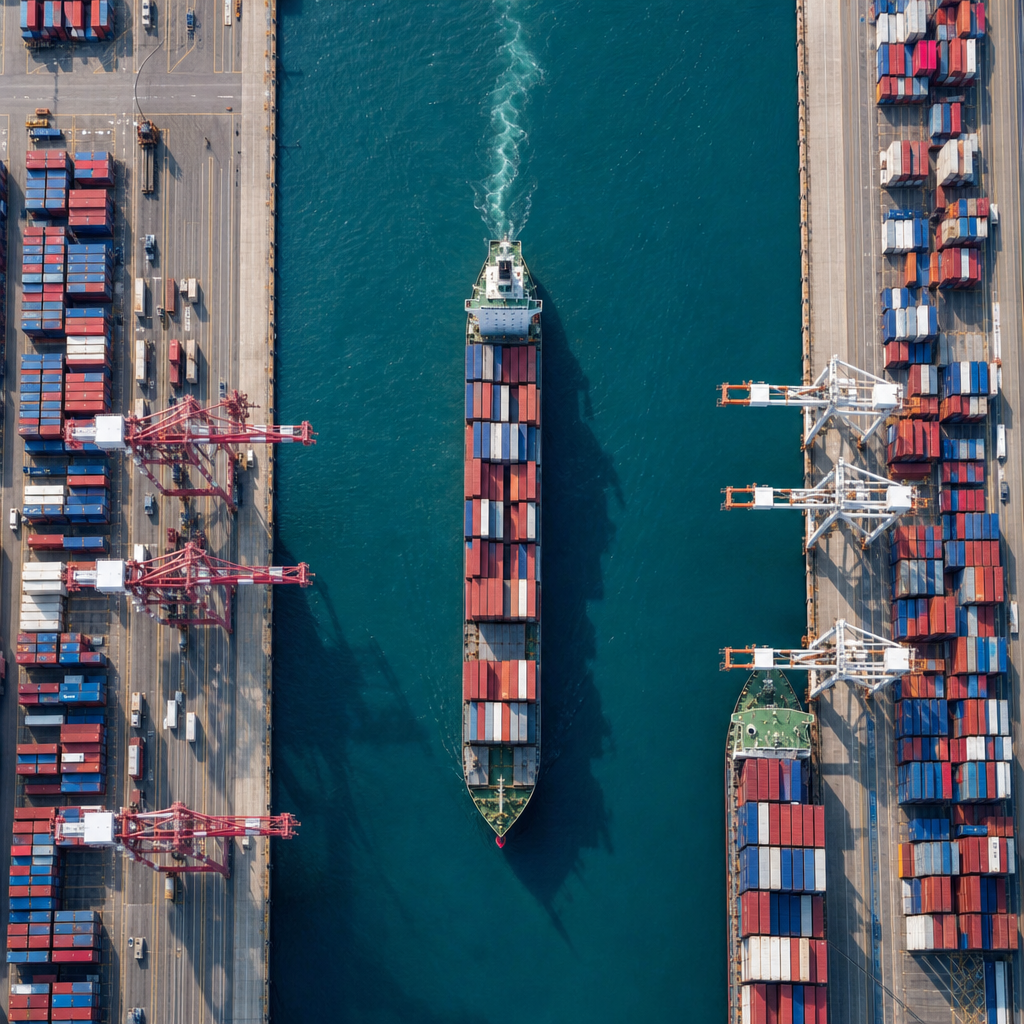
Trade creation and trade diversion are the two core effects economists use to judge whether a customs union improves welfare or merely reshuffles commerce. A customs union is an agreement in which member countries remove tariffs and quotas on internal trade while applying a common external tariff to nonmembers. In practice, I have found that many readers understand the political appeal of regional integration but miss the economic test: does the union shift production toward lower-cost suppliers, or does it push imports away from more efficient outsiders toward higher-cost insiders? That distinction matters because customs unions influence prices, firm behavior, tax revenue, supply chains, industrial strategy, and long-run growth.
The classic framework comes from Jacob Viner, whose analysis still anchors modern debate. Trade creation occurs when high-cost domestic production is replaced by lower-cost imports from a partner after tariff removal. Consumers pay less, firms gain cheaper inputs, and resources move toward more productive uses. Trade diversion occurs when imports switch from a lower-cost nonmember to a higher-cost member because the common external tariff makes the outsider artificially expensive. In that case, the union may expand internal trade volumes while reducing overall efficiency. Policymakers, businesses, and investors need to separate these effects because headline trade growth alone does not prove that integration is beneficial.
This topic matters beyond textbooks. The European Union, the Southern African Customs Union, the Eurasian Economic Union, and Mercosur all show that the welfare outcome of a customs union depends on pre-union tariffs, transport costs, market size, rules of origin alternatives, and how easily labor and capital adjust. It also matters for smaller economies deciding whether to join a regional bloc, for manufacturers choosing sourcing strategies, and for governments weighing tariff revenue against consumer welfare. This article serves as a hub for the wider economics “Misc” area by linking trade theory to public finance, competition, development, institutions, and political economy in one practical explanation.
What Trade Creation Means in Practice
Trade creation is the welfare-improving side of a customs union. It happens when tariff removal allows member countries to buy from the lowest-cost producer within the union instead of relying on inefficient domestic output. Suppose Country A produces steel at $700 per ton, Country B at $620, and the world price from Country C is $600. If A had a tariff that kept B out and encouraged domestic steel, joining a customs union with B can replace A’s expensive domestic production with cheaper steel from B. Consumers and downstream industries such as construction and autos benefit immediately through lower input costs.
The key economic gain is not simply more trade; it is better allocation of resources. Labor, land, capital, and managerial attention shift away from sectors protected only by tariffs and toward activities where the country has stronger productivity. In my work reviewing regional trade agreements, the strongest cases for trade creation usually appear in intermediate goods, where even small tariff cuts improve competitiveness across entire supply chains. A bakery buying cheaper flour, a factory sourcing less expensive machine parts, or a hospital importing lower-cost medical gloves all experience cost reductions that can spread through the economy as lower prices or higher investment.
Trade creation can also deepen competition. When domestic firms face efficient partner imports, weak producers either improve or exit. That process is painful in the short term but healthy in the long run if labor markets and retraining systems function reasonably well. Economists often evaluate this using consumer surplus, producer surplus, and changes in tariff revenue. If price falls are large and efficiency gains outweigh lost tariff income, the customs union raises welfare. Dynamic effects can strengthen this result further: larger markets support scale economies, firms invest in modern equipment, and knowledge spillovers become easier across integrated regions.
What Trade Diversion Means in Practice
Trade diversion is the welfare-reducing risk built into every customs union. It occurs when tariff preferences lead a member to import from a less efficient partner instead of a more efficient nonmember. Using the earlier example, if Country A can buy steel from world supplier C at $600 but a common external tariff raises C’s price to $680, then A may switch to partner B at $620. Trade with B increases, and officials may celebrate stronger regional commerce, yet the economy is no longer buying from the lowest-cost source. Consumers pay more than necessary, and the tariff wall distorts sourcing decisions.
This is why economists never judge a customs union by internal trade growth alone. I have seen policy briefs cite rising intraregional exports as proof of success without asking whether those exports displaced competitive global suppliers. If they did, apparent integration can conceal efficiency losses. The problem is especially serious when external tariffs are high, when member countries produce similar goods at middling cost, or when political goals protect specific industries. Trade diversion can also reduce tariff revenue unevenly. Imports from partners become duty free, while imports from outsiders fall, shrinking customs receipts that some developing states rely on heavily.
The welfare effect is nuanced because diverted trade may still bring some indirect gains, such as supply security, regional investment, or bargaining leverage. But those gains must be weighed against the core cost: resources are not flowing to the most efficient producers. In practical terms, trade diversion tends to raise prices relative to the best available world alternative, limit consumer choice, and lock firms into regional supply chains that survive because of policy preference rather than productivity. That is why customs unions work best when external tariffs are moderate and members are already near the global efficiency frontier in at least some sectors.
How Economists Measure the Difference
To distinguish trade creation from trade diversion, economists compare pre-union and post-union prices, quantities, tariff rates, and sourcing patterns. The basic question is direct: after integration, did imports replace expensive domestic production, or did they replace cheaper nonmember imports? Partial equilibrium models often examine one market at a time, while computable general equilibrium models trace economy-wide effects across households, firms, and government accounts. Institutions such as the World Bank, the OECD, and the WTO commonly use these tools because customs unions affect not only trade volumes but also wages, public revenue, and sectoral output.
A practical evaluation starts with delivered prices, not just factory-gate costs. Transport, insurance, customs procedures, standards compliance, exchange rates, and port handling all matter. I have seen analysts misclassify trade diversion because they compared nominal producer prices while ignoring that an outside supplier faced long shipping times or costly border inspections. If a partner’s delivered price is genuinely lower after removing tariffs, the trade shift may be efficient even if the outsider’s factory price remains cheaper. Good analysis also tracks elasticities. If consumers respond strongly to lower prices, trade creation can generate larger welfare gains than static calculations initially suggest.
| Indicator | Trade Creation Signal | Trade Diversion Signal |
|---|---|---|
| Import source change | Partner imports replace costly domestic output | Partner imports replace cheaper nonmember imports |
| Consumer prices | Fall toward lowest available delivered cost | Remain above world-best alternative |
| Resource allocation | Moves toward more productive sectors | Shifts due to tariff preference, not efficiency |
| Tariff revenue effect | May fall, but offset by efficiency gains | Falls while sourcing becomes less efficient |
| Long-run competitiveness | Improves through scale and competition | Can weaken through protected regional dependence |
Modern empirical work goes further by using customs data at the product level, often classified under the Harmonized System. Researchers can examine unit values, trade shares, and preference margins before and after tariff changes. Event studies help isolate the customs union effect from currency swings or commodity cycles. Gravity models then estimate whether trade patterns changed more than would be expected from economic size and distance alone. The strongest conclusions usually combine methods: descriptive data to show what changed, structural modeling to explain why, and sector case studies to reveal how firms actually altered sourcing, pricing, and investment behavior.
Real-World Examples from Major Customs Unions
The European Union is the most studied case because its integration went well beyond tariffs into standards, competition policy, and labor mobility. In many manufacturing sectors, especially autos, chemicals, and machinery, tariff removal and market enlargement generated substantial trade creation. Firms reorganized production across borders, specializing in components and final assembly where they were most efficient. Consumers benefited from lower prices and greater variety. Yet even in Europe, some agricultural arrangements and external protection episodes have been criticized for diverting trade away from efficient global suppliers, showing that successful integration still contains pockets of distortion.
Mercosur illustrates a more mixed record. The bloc expanded intraregional trade, particularly in autos and industrial goods between Brazil and Argentina. Some of that reflected real efficiency gains through larger markets and coordinated production. However, periods of relatively high external tariffs and non-tariff barriers also encouraged diversion from outside suppliers. When member economies are volatile, with exchange-rate swings and recurring industrial policy interventions, it becomes harder to tell whether observed trade flows reflect competitiveness or protection. That is why sector-by-sector analysis matters far more than broad political claims about integration success.
The Southern African Customs Union offers another useful lesson. For smaller members such as Lesotho, Eswatini, and Namibia, a customs union with South Africa provides reliable access to a much larger market and a revenue-sharing mechanism that can be fiscally significant. That arrangement may create trade by lowering costs and reducing border frictions. At the same time, dependence on imports from the dominant member can limit diversification if common external tariffs make alternative sourcing less attractive. In other words, customs unions can simultaneously support market access and entrench asymmetry, which is why development economists pay close attention to bargaining power inside regional blocs.
What Determines Whether a Customs Union Helps or Hurts
Several conditions influence whether trade creation outweighs trade diversion. First, the lower the pre-union tariffs among members and the lower the common external tariff against outsiders, the smaller the distortion risk. High external protection is the classic recipe for diversion. Second, economies with complementary comparative advantages usually perform better than economies producing the same goods at similar, uncompetitive cost levels. Third, transport and border efficiency matter. A customs union on paper will not generate much trade creation if roads, ports, and customs systems remain slow and expensive.
Market size is another major factor. Larger integrated markets support economies of scale, which can turn initially modest static gains into larger dynamic ones. I have seen this most clearly in sectors with high fixed costs, such as pharmaceuticals packaging, food processing, and auto components, where firms invest only when they can serve a broad regional customer base. Policy credibility matters too. If governments frequently impose safeguards, local-content rules, licensing delays, or foreign-exchange controls, firms will not restructure production around the union, and the expected efficiency gains will not materialize.
Distribution also matters. A customs union can raise total welfare while still hurting specific regions, workers, or public budgets. Lost tariff revenue may strain governments that rely on border taxes, especially in low-income economies with weak domestic tax systems. Workers in previously protected industries may face layoffs, and adjustment can be slow without retraining, credit access, and labor mobility. The best-designed unions therefore pair tariff integration with competition policy, infrastructure investment, trade facilitation, and fiscal reforms. When those complements are missing, even a theoretically promising customs union can underperform in practice.
Why This Concept Anchors Broader Economics Debates
Trade creation versus trade diversion is not an isolated trade-policy topic; it is a gateway concept across economics. It connects microeconomics through price effects and welfare triangles, macroeconomics through balance-of-payments adjustments and growth, public finance through tariff revenue, industrial organization through market structure, and development economics through structural transformation. For a “Misc” economics hub, this matters because many apparently separate debates are really variations on the same question: are policies moving resources toward higher productivity or merely protecting favored producers?
The concept also informs discussions about free trade areas, rules of origin, common markets, and even modern supply-chain resilience policies. When governments subsidize regional sourcing in the name of security or strategic autonomy, the same analytical test applies. If the policy creates efficient specialization, it can strengthen resilience without excessive cost. If it diverts trade from better suppliers and props up high-cost production indefinitely, consumers and taxpayers bear the burden. Understanding this distinction helps readers interpret headlines about reshoring, friend-shoring, trade blocs, sanctions, and industrial policy with sharper economic discipline.
The main lesson is simple: a customs union is beneficial when it lowers real economic costs, not merely when it increases trade among members. Trade creation delivers that benefit by replacing inefficient domestic output with cheaper partner supply and by encouraging competition, scale, and productivity. Trade diversion does the opposite by steering commerce away from the most efficient global source because of tariff preferences. To evaluate any customs union, look beyond political rhetoric and export totals. Ask where the good was sourced before, where it is sourced now, what happened to prices, and whether the new pattern reflects efficiency or protection.
For policymakers, the practical implication is clear. Keep external tariffs moderate, remove internal frictions fully, invest in customs administration and transport, and support workers and firms through adjustment. For businesses, map sourcing decisions against delivered cost rather than preference margins alone. For students and readers using this page as an economics hub, treat trade creation and trade diversion as a lens that links trade theory to fiscal policy, competition, development, and institutions. Use that lens in the rest of your economics reading, and you will make better sense of how regional integration actually shapes prosperity.
Frequently Asked Questions
What is the difference between trade creation and trade diversion in a customs union?
Trade creation and trade diversion are the two classic ways economists evaluate whether a customs union improves economic welfare. Trade creation happens when, after member countries remove tariffs and other internal barriers, buyers switch from higher-cost domestic producers to lower-cost producers located in partner countries. In that case, production moves toward a more efficient source, consumers usually pay lower prices, and overall welfare tends to rise. This is the outcome supporters of regional integration usually hope for.
Trade diversion, by contrast, occurs when a customs union causes imports to shift away from the world’s lowest-cost supplier simply because that supplier is outside the union and now faces the common external tariff. Instead of buying from the most efficient global producer, member countries buy from a higher-cost producer inside the union because the tariff makes the outside good relatively more expensive. In that case, trade may expand within the bloc, but the shift reflects policy preference rather than genuine efficiency. The result can be lower tariff revenue, distorted sourcing decisions, and weaker welfare gains than the headline increase in intra-union trade might suggest.
In simple terms, trade creation is about replacing expensive production with cheaper production, while trade diversion is about replacing cheaper outside suppliers with more expensive insiders. That is why economists do not judge a customs union by the volume of trade alone. The key question is whether the union redirects production toward lower-cost suppliers or merely reshuffles commerce because of preferential tariff treatment.
Why do economists consider trade creation beneficial but view trade diversion more cautiously?
Economists generally see trade creation as beneficial because it increases allocative efficiency. When tariffs inside the customs union are removed, consumers and firms can buy from the lowest-cost producer within the bloc rather than being forced toward less efficient domestic sources. That tends to lower prices, expand consumer choice, improve the use of resources, and encourage specialization according to comparative advantage. In many cases, businesses also gain access to larger regional markets, which can support economies of scale, stronger competition, and productivity improvements over time.
Trade diversion is treated more cautiously because it can make trade patterns look more active without actually improving efficiency. If a member country stops importing from the lowest-cost world producer and starts importing from a more expensive producer inside the customs union, then part of the apparent integration gain is artificial. Consumers may still see some price changes, but the economy is not necessarily sourcing from the most efficient supplier globally. In addition, governments may lose tariff revenue previously collected on nonmember imports, and that loss can matter when judging the net welfare effect.
That said, economists do not assume every case of trade diversion is disastrous. Real-world outcomes depend on magnitudes. If trade creation is large and diversion is limited, the customs union may still raise welfare overall. Also, dynamic benefits such as investment, supply-chain integration, regulatory harmonization, and greater competition can offset some static losses. The cautious view exists because trade diversion reminds us that regional integration is not automatically welfare-improving. The real test is whether the union moves the economy closer to efficient global sourcing or farther away from it.
How does a common external tariff influence trade diversion in a customs union?
A common external tariff is one of the defining features of a customs union, and it plays a central role in determining whether trade diversion occurs. Member countries agree to eliminate tariffs among themselves while applying the same tariff schedule to imports from nonmembers. This prevents goods from entering through the lowest-tariff member and then circulating freely across the bloc, but it also changes the relative prices faced by consumers and firms inside the union.
If the common external tariff is high enough, a nonmember producer that is actually the lowest-cost supplier in the world can become less competitive inside the customs union after tariffs are applied. A member-country producer with higher underlying production costs may then win the sale simply because its goods circulate tariff-free within the union. That is the classic mechanism of trade diversion: policy-induced preference for insiders over more efficient outsiders. The higher and broader the external tariff, the more likely it is that sourcing decisions will be shaped by tariff walls rather than true cost efficiency.
On the other hand, if the common external tariff is relatively low, the risk of severe trade diversion is reduced. Efficient nonmember suppliers may still remain competitive even after the tariff is applied, and the customs union can capture more of the gains from internal liberalization without excessively distorting outside trade. This is why the design of the external tariff matters so much. A customs union with low external protection is more likely to promote efficient integration, while one with a highly protective external tariff is more likely to redirect commerce in a way that favors internal producers at the expense of global efficiency.
Can a customs union produce both trade creation and trade diversion at the same time?
Yes, and in practice that is often exactly what happens. Customs unions are rarely pure cases of one effect or the other. In some sectors, the removal of internal tariffs allows buyers to switch from inefficient domestic production to lower-cost partner-country imports, creating clear efficiency gains. In other sectors, the common external tariff may push buyers away from cheaper nonmember suppliers toward more expensive firms inside the union, producing diversion. The overall welfare impact depends on the balance between these two forces, not on the presence of only one.
For example, imagine a member country that had protected a high-cost domestic industry before joining the customs union. Once internal barriers are removed, consumers may begin importing that product from a more efficient partner country instead of buying the costly domestic version. That is trade creation. At the same time, for a different product, the same country may stop importing from the lowest-cost global supplier outside the union because the common external tariff makes that product more expensive than a higher-cost internal alternative. That is trade diversion. Both effects can coexist across products, industries, or even stages of a supply chain.
This is why serious evaluation of customs unions requires more than slogans about “more regional trade.” Analysts look at price changes, sourcing patterns, tariff revenue effects, production costs, and consumer welfare across sectors. A rise in trade among member states does not by itself prove success. The more important question is whether the new trade reflects efficiency-enhancing substitution or preferential reshuffling. In most real-world cases, the answer is mixed, and careful measurement is necessary to determine the net effect on welfare.
How can policymakers tell whether a customs union is likely to improve welfare overall?
Policymakers start by asking the central economic question: will the customs union shift production and purchases toward lower-cost suppliers, or will it mainly protect higher-cost insiders from more efficient outside competition? To answer that, they need to compare pre-union and post-union sourcing patterns, price levels, tariff rates, and production costs. If internal liberalization displaces expensive domestic output and leads consumers and firms to buy from more efficient regional producers, that points toward trade creation and stronger welfare gains.
They also need to assess the structure of the common external tariff. A highly protective external tariff increases the risk of trade diversion by giving member-country producers an artificial advantage over efficient nonmembers. Policymakers should therefore look closely at whether outside suppliers remain competitive after the tariff is applied. If the union’s external barrier is modest and internal partners are genuinely efficient, the customs union is more likely to improve welfare. If the external barrier is high and partner-country production is not globally cost-competitive, the union may simply reroute trade rather than create real efficiency gains.
Beyond these static effects, policymakers should consider dynamic outcomes as well. A customs union may attract investment, deepen regional supply chains, improve infrastructure coordination, and increase competitive pressure on firms to innovate. Those benefits can be significant over time, but they do not erase the need for the basic test. The most durable welfare improvements come when regional integration is outward-looking rather than protectionist: low barriers inside the union, reasonable barriers outside it, and a trade pattern that moves production toward the most efficient suppliers available. That is the standard by which economists judge whether a customs union truly works.