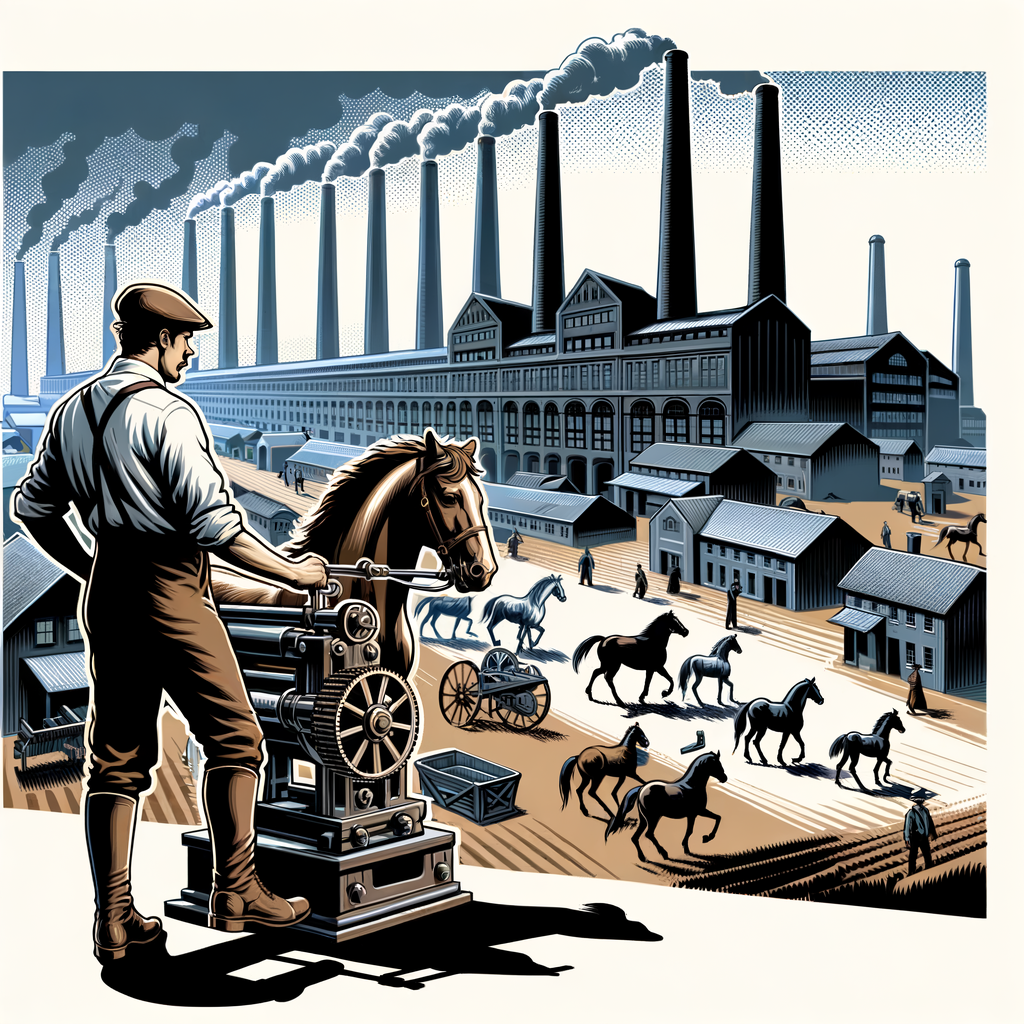
The Second Industrial Revolution, spanning from the late 19th century into the early 20th century, marked a pivotal era of transformation in the landscape of global industry and economy. Unlike its predecessor, which was characterized by the mechanization of textile production and the advent of steam power, the Second Industrial Revolution was defined by the rapid advancement of technology and its profound impact on production processes. This period witnessed significant developments in steel manufacturing, the expansive use of electricity, and the birth of mass production techniques, which would forever change the nature of work and set the stage for the modern industrialized world. By exploring the technological innovations and societal shifts of this era, we can better appreciate its crucial role in shaping the contemporary industrial economy. This era was not just about technological progress, but rather a confluence of scientific discoveries, technological advancements, and a growing understanding of production efficiency that redefined industries. The spotlight of this period was undoubtedly captured by the innovations in steel production, which gave birth to sprawling cities with towering skyscrapers and expansive rail networks that interconnected regions. At the same time, the remarkable proliferation of electricity revolutionized the manner in which industries operated, powering machinery and illuminating factories. Yet, perhaps the most defining feature was the rise of mass production — a methodology that reshaped manufacturing, introducing unprecedented levels of productivity and scaling of goods production, which paved the way for modern consumerism.
Technological Innovations: Steel, Electricity, and Beyond
During the Second Industrial Revolution, technological innovations were at the forefront of change, fundamentally altering various sectors. The steel industry underwent dramatic transformation with the advent of the Bessemer process. Developed by Henry Bessemer during the 1850s, this technique allowed for the cheap and efficient production of steel by blowing air through molten iron to remove impurities. This innovation revolutionized industries reliant on metal, such as construction, transportation, and machinery manufacturing. Steel became the backbone of infrastructure, facilitating the construction of railways, bridges, and skyscrapers that symbolized urban development.
Simultaneously, the spread of electricity redefined productivity and efficiency in industrial settings. Thomas Edison’s invention of the incandescent light bulb in the 1870s and Nikola Tesla’s advancements in the field of alternating current systems changed the dynamics of power use in factories and homes alike. Electricity’s ubiquitous nature encouraged the rise of electrical machinery, further enhancing manufacturing capabilities. Factories operated longer hours, production lines became more efficient, and urban areas transformed into hubs of continuous activity, courtesy of bright electric lights. This not only improved economic productivity but also enhanced the quality of life in various metropolitan areas by offering more consistent and reliable energy sources.
Beyond the realms of steel and electricity, technological advances in chemical processes, such as the development of synthetic dyes, and the perfection of petroleum refining techniques added layers of complexity to this era’s industrial capabilities. This spurred growth in sectors such as pharmaceuticals, textiles, and automotive industries, further emphasizing the diverse scope of the Second Industrial Revolution.
The Principles of Mass Production
At the heart of the Second Industrial Revolution was the principle of mass production, revolutionizing how goods were manufactured and distributed. Central to this concept was the implementation of assembly line techniques, popularized by Henry Ford in the early 20th century. By standardizing parts and workflow, the assembly line allowed for continuous production, minimizing human exertion and maximizing output. This innovation led to the dramatic decrease in the cost of production, making goods affordable for the masses. Ford’s Model T automobile became the quintessential example of mass production’s success, as it transformed cars from luxury items into accessible commodities for the average consumer.
The influence of Frederick Taylor’s scientific management principles also cannot be understated. Taylor advocated for systematic study and optimization of labor tasks to improve productivity. Through time and motion studies, management could identify inefficiencies and reorganize work processes, increasing both the speed and output quality. Taylorism became a foundational strategy for enterprises looking to harness mass production methodologies effectively, promoting worker specialization and minimized wasted effort.
The rise of large-scale manufacturing under these systems led to complex supply chains and distribution networks. Businesses started understanding the importance of economies of scale, realizing that cost advantages were attainable through scale and efficiency. This period saw the birth of vertically integrated companies, where firms controlled each stage of production and distribution, reducing dependency and increasing economic resilience.
Impact on Labor and Society
The ramifications of the Second Industrial Revolution extended beyond mere technological advancements, deeply influencing labor dynamics and societal structures. The demand for unskilled factory labor skyrocketed as mass production required sizable workforces to operate machinery. However, this shift also resulted in labor exploitation characterized by long hours, low wages, and unsafe working conditions. The disparity between the working class and industrial magnates widened, inciting labor unrest and the formation of unions as workers sought to safeguard their rights and livelihoods.
Women and children found themselves swept into the labor force in increasing numbers, a necessity prompted by the insatiable demand for factory workers. While this heralded a degree of economic independence for women, it also subjected them to the same harsh conditions faced by their male counterparts. Gender and age became focal points in the labor movement, demanding legal reforms to protect the most vulnerable workers.
Urbanization was another significant societal shift during this era. Cities expanded rapidly as people migrated from rural areas in search of industrial employment. The burgeoning urban populations necessitated advancements in public amenities and infrastructure, such as public transportation, sanitation, and housing. Despite these improvements, overpopulation led to overcrowding and health concerns that required ongoing municipal attention.
The rise of mass production and consumer goods also altered social behaviors, marking the inception of modern consumer culture. As goods became more affordable, consumerism surged, enabling people to possess items that were previously considered luxuries. The variety and availability of products fed desires for new material comforts, influencing trends and lifestyle choices.
Economic Growth and Global Influence
The Second Industrial Revolution’s contributions to economic expansion were palpable, propelling industrialized nations to the forefront of global commerce. Countries that were quick to adopt and integrate mass production techniques witnessed unparalleled economic growth. The United States and Germany emerged as leading industrial forces, challenging Britain’s long-standing dominance. Their investment in technological improvements and infrastructure fostered competitive export markets that reshaped international trade dynamics.
Globalization accelerated as industrial nations sought raw materials and new markets beyond their borders. The scramble for resources and territories marked the height of imperialism, fundamentally driven by the demands of burgeoning industries. Colonial endeavors were justified as a means to fuel industrial engines back home, introducing economic and geopolitical complexities that would influence international relations for decades.
The interplay of economic growth and technological advancement underpinned national policies, shaping industrial strategies and labor regulations to sustain competitive advantages. Governments increasingly involved themselves in economic planning, recognizing the strategic benefits of nurturing domestic industries and encouraging technological innovations.
Conclusion: Lasting Legacies of the Second Industrial Revolution
The Second Industrial Revolution left an indelible legacy on modern society, establishing the framework for continuous industrial growth and technological progress. This era introduced mass production — a pivotal shift that continues to define manufacturing paradigms today. The technological innovations that characterized this period laid the groundwork for contemporary advancements, proving instrumental in transitioning towards an economy driven by knowledge and technology.
The socio-economic transformations of the Second Industrial Revolution also underscore the ongoing dialogue on labor rights, economic inequality, and the interplay between industrial growth and societal welfare. The emergence of consumer culture during this period reverberates in present-day economies, which are significantly influenced by consumer demand and market dynamics.
While the challenges faced by workers during the industrial upheaval prompted reforms that gradually improved working conditions and established labor rights, the inherent issues of industrial exploitation continue to manifest in varying forms across global supply chains. The lessons imparted by the Second Industrial Revolution remain relevant as contemporary societies grapple with technological disruptions brought about by advancements in automation, artificial intelligence, and digitalization.
The rise of industries during this period fundamentally reshaped global trade patterns, paving the way for economic globalization that characterizes today’s interconnected world. As we reflect on the Second Industrial Revolution, we gain insights into how innovations and adaptiveness drive change and evolution within societies, highlighting the fundamental human quest for progress that ignites technological revolutions and spurs societal development.
Frequently Asked Questions
1. What were the key technological advancements during the Second Industrial Revolution?
The Second Industrial Revolution was a fascinating period of immense technological progress that laid the groundwork for modern industry. Among the most notable advancements was the widespread adoption of electricity, which replaced steam power and transformed factories across the globe. The use of electric power not only increased production efficiency but also enabled the operation of machinery that previous energy sources couldn’t support. This revolution also saw the development of the internal combustion engine, which paved the way for the automobile industry and revolutionized transportation and logistics.
In addition to electricity and engines, the era was marked by significant strides in steel production, notably with the Bessemer and open-hearth processes. These innovations made steel cheaper to produce and more durable, which in turn revolutionized construction and manufacturing. The telegraph and the telephone emerged as transformative communication technologies, drastically shrinking the time it took to send and receive information, thus linking markets and consumers across great distances.
Lastly, the chemical industry exploded with new processes and products, including the synthesis of dyes and the development of new materials like plastics, which opened new avenues for industrial applications. Collectively, these advancements fundamentally altered the nature of work, production, and everyday life, setting the stage for modern industrial society.
2. How did mass production techniques change manufacturing during the Second Industrial Revolution?
Mass production was perhaps one of the most revolutionary changes during the Second Industrial Revolution, forever altering how goods were manufactured. Henry Ford’s adoption of the assembly line in automobile production exemplifies this shift. The assembly line drastically reduced the time required to build a product by having workers focus on specific tasks rather than assembling whole products. This specialization not only increased productivity but also lowered production costs, making products more accessible to the general populace.
Of course, the implications were far-reaching. Standardization and uniformity became the norm, as mass production required interchangeable parts to maintain efficiency. Industries expanded rapidly, fueling urbanization as workers flocked to manufacturing hubs in search of employment. The new techniques influenced everything from the production of household goods to machinery, clothing, and beyond. Overall, mass production changed the face of the economy, contributing to a consumer society where goods were widely available at lower prices.
3. What impact did the Second Industrial Revolution have on workers and labor conditions?
The shift to mass production and advanced industries led to significant changes for workers. On one hand, employment opportunities surged as factories required large numbers of operatives to meet the demands of increased production. However, this period wasn’t without its challenges for the workforce. The mechanization of production often meant arduous, repetitive tasks for workers. The strict discipline required on the factory floor didn’t allow for the skilled craftsmanship that characterized previous work.
Labor conditions were typically harsh; long hours, low wages, and unsafe work environments were common. This challenging situation catalyzed the growth of labor unions and movements, as workers sought to improve their conditions extensively. Strikes and labor actions became more frequent and sometimes violent, prompting calls for reforms that eventually led to regulations and improvements in labor rights, such as the establishment of the eight-hour workday and safety standards. Despite the struggles, the Second Industrial Revolution was a critical period in the history of labor rights, laying the groundwork for future advancements.
4. How did the Second Industrial Revolution accelerate global economic changes?
The Second Industrial Revolution had sweeping implications for the global economy, fundamentally altering international trade and economic relationships. The reduction in production costs and advancements in transportation — with the expansion of the railway network and the emergence of the steamship — enabled goods to be shipped globally at unprecedented scales and speeds. This efficiency helped establish international markets and interconnected economies more closely than ever before.
Countries experienced increased interdependence; raw materials from one continent were transported and transformed into manufactured goods in another, illustrating the global supply chain’s early formation. Such changes facilitated global economic growth but also intensified competitive dynamics. Economic powerhouses such as the United States and Germany emerged as significant industrial leaders, challenging Britain’s dominance from the First Industrial Revolution.
Additionally, the economic boom fueled by the revolution played a significant role in expanding the capitalist economic framework. New business models and corporations came to dominate the industrial landscape, fostering rapid wealth generation and technological innovation. While this growth was largely positive, it occasionally exacerbated economic disparities, triggering debates about economic control and regulation that persist today.
5. What role did advancements in communication play during the Second Industrial Revolution?
Advancements in communication were crucial during the Second Industrial Revolution, fundamentally transforming how individuals and businesses interacted and operated. The telegraph and telephone, for example, shattered previous delays in communication, allowing messages to cross continents and oceans in minutes, rather than weeks. This instantaneity promoted efficient business operations and enabled real-time strategizing and decision-making across various sectors.
These communication technologies were critical in expanding the reach of businesses, as firms could coordinate production, distribution, and sales more effectively than ever before. Beyond business, the societal implications were significant too. Faster communication knitted together disparately located communities, slowly building a modern interconnected society.
These tools also had political ramifications, facilitating faster, broader dissemination of information to the public, affecting governance and politics by enabling better-informed citizenries and fostering more robust democratic institutions. In essence, advancements in communication during the Second Industrial Revolution played an indispensable role in shaping the modern world, both economically and socially, setting the foundation for today’s digital communication networks.