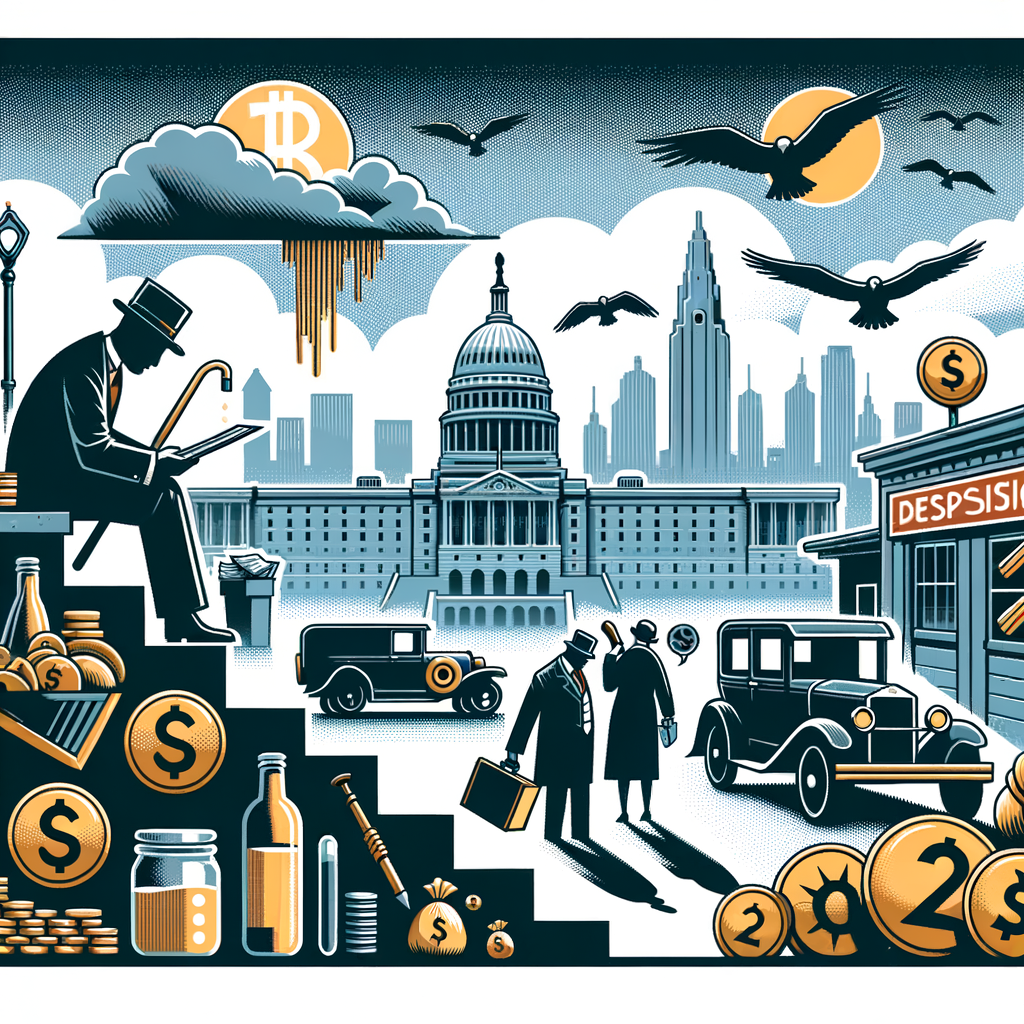
The Great Depression stands as one of the darkest periods in economic history, deeply affecting millions globally. Its onset in the late 1920s triggered a cascade of economic failures, resulting in widespread despair and hardship throughout the 1930s. While history has provided countless examples of economic downturns over the centuries, the Great Depression’s scale and depth render it significantly exceptional. This tumultuous period reshaped societal norms and economic policies, leaving an indelible mark on national and global economic practices. By understanding its origins, repercussions, and lessons, we can glean insights central to averting similar crises in the future. Central to this understanding is the exploration of interconnected factors, such as the rampant speculation of the 1920s, financial missteps, and the prevailing economic policies, which collectively contributed to its onset. Simultaneously, examining the social and economic fallout reveals the depth of its impact, evident in soaring unemployment rates and the resultant societal changes. The significance of the Great Depression lies not only in its immediate effects but also in the timeless lessons it imparts. Only by dissecting these aspects can we appreciate the full scope of this historical epoch and leverage its lessons for the economic challenges of tomorrow.
Causes of the Great Depression
The Great Depression did not emerge overnight; instead, it was the culmination of several intricate factors that festered over time. One of the most cited precursors was the speculative bubble in the stock market during the 1920s. During what could be termed the ‘Roaring Twenties,’ rapid industrial growth and innovations led to an explosive surge in the stock market. Many individuals, buoyed by optimism, invested heavily, often through borrowed money. This frenzy created an unsustainable bubble, eventually bursting in October 1929, leading to the catastrophic stock market crash that is often pinpointed as the Depression’s starting signal.
Moreover, the monetary policies of the era also played a significant role. The Federal Reserve, tasked with maintaining economic stability, implemented tight monetary policies that inadvertently strained the banking system. As banks were pressed to recall loans, businesses and individuals, unable to repay, began to default, further exacerbating the situation. Additionally, the gold standard, a monetary system where a country’s currency value is directly linked to gold, restricted economic flexibility. As nations struggled to maintain gold reserves, they were unable to adapt their monetary policies effectively in response to the downturn.
International economic conditions compounded matters. In the aftermath of World War I, European countries were burdened with debt and economic recovery efforts. The United States, having loaned substantial sums to these countries, found itself in a precarious position as European economies weakened. The global interconnectivity meant that as American consumer demand fell, it rippled across borders, escalating the worldwide economic slump. Protectionist trade policies, like the Smoot-Hawley Tariff Act, which raised duties on hundreds of imported goods, further restricted international trade, leading to retaliatory tariffs from other countries and a severe decline in global trade volumes.
Furthermore, structural weaknesses within the U.S. economy also contributed. Industrial production outpaced consumer demand, resulting in overproduction and eventual layoffs. The agricultural sector, not sharing in the prosperity of the 1920s, was also severely impacted, as falling prices left farmers unable to repay debts, leading to widespread farm foreclosures. These intertwined factors created a perfect storm, laying the foundation for the economic disaster that was to unfold.
Effects of the Great Depression
The Great Depression’s immediate impact was the sharp rise in unemployment rates, skyrocketing to about 25% in the United States by 1933. This dismal figure translates to approximately 15 million unemployed individuals, many of whom faced dire poverty. Breadlines and soup kitchens became ubiquitous symbols of this period, evidencing the immense hardship faced by countless families. Many had to rely on charitable organizations and relief efforts for basic sustenance.
Bank failures were another grim reality. In the early 1930s, thousands of banks, unable to meet the demands of panicked depositors withdrawing their savings, collapsed. This banking crisis led to significant losses in personal savings, further crippling consumer confidence and spending. As banks held substantial personal savings and investments, their collapse resulted in a depletion of financial resources for investment and consumption, intensifying the economic downturn.
Beyond economic implications, the Depression orchestrated profound social transformations. The prolonged period of economic hardship necessitated shifts in societal norms and roles. With financial constraints ruling daily life, many families saw shifts in traditional gender roles; women often sought employment or took on other roles traditionally held by men. Simultaneously, children contributed to family income by working in any capacity available, a stark departure from prior societal expectations.
The environmental catastrophe known as the Dust Bowl further magnified the Depression’s effects. Over-plowing and drought conditions in the Great Plains led to enormous dust storms, rendering once-fertile farming lands barren. This crisis pushed thousands of farming families westward in search of better opportunities, adding to the already strained social landscape.
On a global scale, the Depression sowed seeds of political unrest. Economic hardships and unemployment fostered environments ripe for radical political solutions. In Europe, for example, the economic devastation and political instability contributed to the rise of extremist political movements. In Germany, the economic struggles of the Depression era were instrumental in Adolf Hitler’s ascension to power, leading to sweeping political changes that eventually culminated in World War II.
Lessons from the Great Depression
The enduring legacy of the Great Depression lies in the valuable lessons it provided, guiding future economic policies and interventions. The introduction of the New Deal by President Franklin D. Roosevelt marked a pivotal moment in redefining government’s role in economic recovery and welfare. This expansive array of programs was designed to provide relief, recovery, and reform and included initiatives like the Civilian Conservation Corps and the Public Works Administration, which collectively focused on infrastructure projects and providing employment opportunities.
From a policy perspective, the Depression underlined the importance of regulatory oversight in financial markets. The Securities Act of 1933 and the Securities Exchange Act of 1934 emerged as instrumental frameworks to govern market practices and ensure transparency, aiming to prevent the speculative excesses that contributed to the Depression’s onset. These legislations laid the groundwork for the establishment of the Securities and Exchange Commission, a cornerstone entity responsible for overseeing and regulating the financial markets, thus safeguarding public interests.
Moreover, the banking sector was transformed by the Glass-Steagall Act, which introduced key banking reforms. These measures included the separation of commercial and investment banking and the introduction of the Federal Deposit Insurance Corporation (FDIC). The latter offered guarantees on bank deposits, designed to restore public confidence in the banking system and prevent bank runs. These regulatory frameworks became vital in stabilizing the financial system and establishing enduring principles for financial market operations.
On a broader scale, the Depression emphasized the importance of international economic cooperation. The interconnected nature of the global economy was highlighted as domestic policies often had far-reaching global impacts. This reality paved the way for international institutions like the International Monetary Fund and the World Bank, which emerged after World War II to foster global economic stability and cooperation.
The lessons drawn from the Great Depression continue to inform contemporary economic thought and policy-making. In the wake of the 2008 financial crisis, comparisons were drawn to the Great Depression, guiding responses that emphasized coordinated monetary and fiscal policy interventions, underscoring the critical need for proactive and unified responses to safeguard global economic stability.
Conclusion
The Great Depression remains etched in the annals of history as a defining moment that shaped economic thought, policy, and societal resilience. By carefully analyzing its causes, from speculative excesses and flawed policies to global economic conditions, we understand the intricate dynamics that precipitated such a profound economic collapse. The extensive effects, particularly evident in massive unemployment, social upheaval, and the global implications, underscore the severe repercussions of economic mismanagement and market failures.
Despite its many challenges, the Great Depression provided essential lessons that shaped modern economic policy and governance frameworks. The legacy of this period is evident in the regulatory safeguards and institutional frameworks designed to prevent similar economic disasters. By studying these past failures and responses, contemporary society is better equipped to navigate the complexities of today’s global economy.
Ultimately, the Great Depression serves as a powerful reminder of the importance of economic stability, the interconnectedness of global economies, and the capacity for policy innovation in times of crisis. By respecting the lessons it imparts, we can foster a resilient economic future, ensuring the prosperity of generations to come.
Frequently Asked Questions
1. What were the primary causes of the Great Depression?
The Great Depression was a complex financial disaster and cannot be chalked up to a single cause. Instead, it was the result of multiple interrelated factors. First, the stock market crash of 1929 served as a dramatic and immediate trigger. The roaring 1920s had seen excessive speculation and exuberant investment in stocks, many on credit, leading to an unsustainable market bubble. When it burst, it wiped out a huge amount of wealth. However, this was only the turning point, not the root cause.
Another pivotal factor was bank failures. During the 1930s, thousands of banks collapsed due to bad debts and panicked withdrawal rushes, which further stymied economic activity by wiping out savings and limiting credit availability. This led to a severe contraction in spending and investment.
Additionally, poor monetary policy played a significant role. The Federal Reserve failed to increase the money supply to counteract deflationary forces, thus restricting economic recovery. On the global stage, economic policies such as the Smoot-Hawley Tariff in the United States contributed to the situation by reducing international trade and causing retaliatory tariffs from other countries.
Lastly, structural weaknesses in the global economy, including over-reliance on the gold standard which limited currency flexibility, contributed to the depth and longevity of the economic downturn. In essence, it was a perfect storm of economic missteps and vulnerabilities that led to The Great Depression.
2. How did the Great Depression affect everyday people’s lives?
The effects of the Great Depression were profoundly felt on a day-to-day level. With unemployment soaring to 25% in the United States at its peak, many families faced severe financial hardship. Those who kept their jobs often faced significant pay cuts or worked fewer hours, while many others turned to informal employment or precarious jobs to make ends meet. As a result, standards of living plummeted.
People were forced to make drastic changes in their lifestyles to cope with the immense economic pressure. Many families had to tighten their budgets significantly, forgoing luxuries and even basic needs. For example, food riots broke out in some areas as desperate populations demanded relief. Housing also became an issue, with countless individuals and families losing their homes due to foreclosure or being unable to pay rent; this homelessness often led to the establishment of makeshift shantytowns, derisively nicknamed “Hoovervilles,” after President Herbert Hoover.
The depression also had a deep psychological impact. The stress and stigma associated with unemployment and poverty affected individuals’ mental health, leading to increased rates of depression and suicide. The social fabric of communities was strained as traditional norms were challenged by economic necessity.
Despite this, the hardship also fostered a remarkable sense of resilience and community spirit in many areas, with people coming together to help one another through challenging times, sharing resources, and supporting each other through private charity and mutual aid.
3. What were the global ramifications of the Great Depression?
The Great Depression was not confined to the United States; it had a profound impact globally. In Europe, countries were already struggling with debt from World War I and the economic strain worsened their situations, leading to a dramatic increase in political instability. High unemployment and economic distress contributed to the rise of extremist movements, including the ascension of Adolf Hitler in Germany.
Around the world, international trade saw a dramatic decrease as nations turned inward, focusing on domestic markets and protectionism. This resulted in a global ripple effect where economies were further destabilized. Many countries imposed tariffs, which negated much-needed free trade and mutual economic reinforcement.
In Asia, the economic downturn affected exports significantly, especially in countries dependent on exporting raw materials. This resulted in economic stagnation and increased nationalism and militarization as responses to economic pressure. In countries across Latin America, reliance on the export of primary commodities led to economic contractions when demand plummeted, sparking political unrest.
Overall, the Great Depression led to a long-lasting international economic recalibration, influencing future policy decisions and international economic frameworks. It underscored the interdependence of world economies and the need for cooperative economic policies rather than isolationist approaches.
4. What lessons can be learned from the Great Depression to prevent future economic crises?
One critical lesson from the Great Depression is the importance of sound economic policy during downturns. Governments now understand the need for decisive intervention to stabilize financial markets and manage economic cycles, as opposed to the minimalist approach taken during the early 1930s. This has led to the development of fiscal and monetary policy tools used to combat economic contractions, including deficit spending and monetary stimulus.
Financial regulation is another significant lesson. The collapse of banks in the 1930s illustrated the need for federal regulation and insurance, leading to the establishment of safeguards like the Federal Deposit Insurance Corporation (FDIC) in the U.S., which protects savers against bank failures. This also calls for prudent oversight of investment practices to prevent speculative bubbles like the one precipitating the stock market crash.
The era also taught the value of social safety nets. Programs like Social Security, devised in response to the era’s hardships, underscore the necessity for social security systems to provide financial support during times of unemployment or economic distress.
On an international scale, the Great Depression highlighted the danger of protectionism. The global economy today is interconnected enough that isolationist policies can have widespread, adverse effects. Therefore, encouraging free trade and cooperation among nations to ensure economic stability has become a common theme in post-depression economic policy.
Finally, the need for transparent and responsive government communication is paramount. During the depression, misinformation and lack of transparency exacerbated economic fears. Today, timely and clear communication helps prevent panic and bolsters economic confidence.
5. How did the Great Depression change economic policy in the United States?
The Great Depression led to significant changes in U.S. economic policy. One of the most important was the departure from the gold standard, allowing for more flexible and responsive national monetary policy. This was essential in preventing deflation and stimulating economic recovery.
Perhaps the most enduring legacy of the Great Depression in the U.S. was the New Deal, a series of domestic programs enacted under President Franklin D. Roosevelt. These were designed to bring about immediate economic relief and reforms to avert future depressions. Key New Deal reforms, such as the establishment of the Social Security system, sought to provide a financial safety net for the elderly and unemployed.
Laws were also enacted to improve the regulation of financial markets and banks, including the Securities Act of 1933 and the Glass-Steagall Act, to restore confidence in the banking system and prevent reckless financial practices. Regulation was intended to create transparency and accountability, thereby protecting consumers and investors.
The Federal Reserve’s role evolved as well. The institution gained a stronger mandate to manage economic stability by adjusting interest rates and controlling the money supply, utilizing tools such as open market operations.
Moreover, labor laws from the New Deal era strengthened workers’ rights and helped form labor unions, leading to improved working conditions and wages. This was pivotal in addressing the imbalance of power between employers and workers, contributing to a more equitable economic environment.
These changes collectively helped to forge a more resilient economic structure in the United States, institutionalizing the practice of governmental intervention in times of economic crisis, and laying the foundation for subsequent policies that balance market economies with societal welfare.