
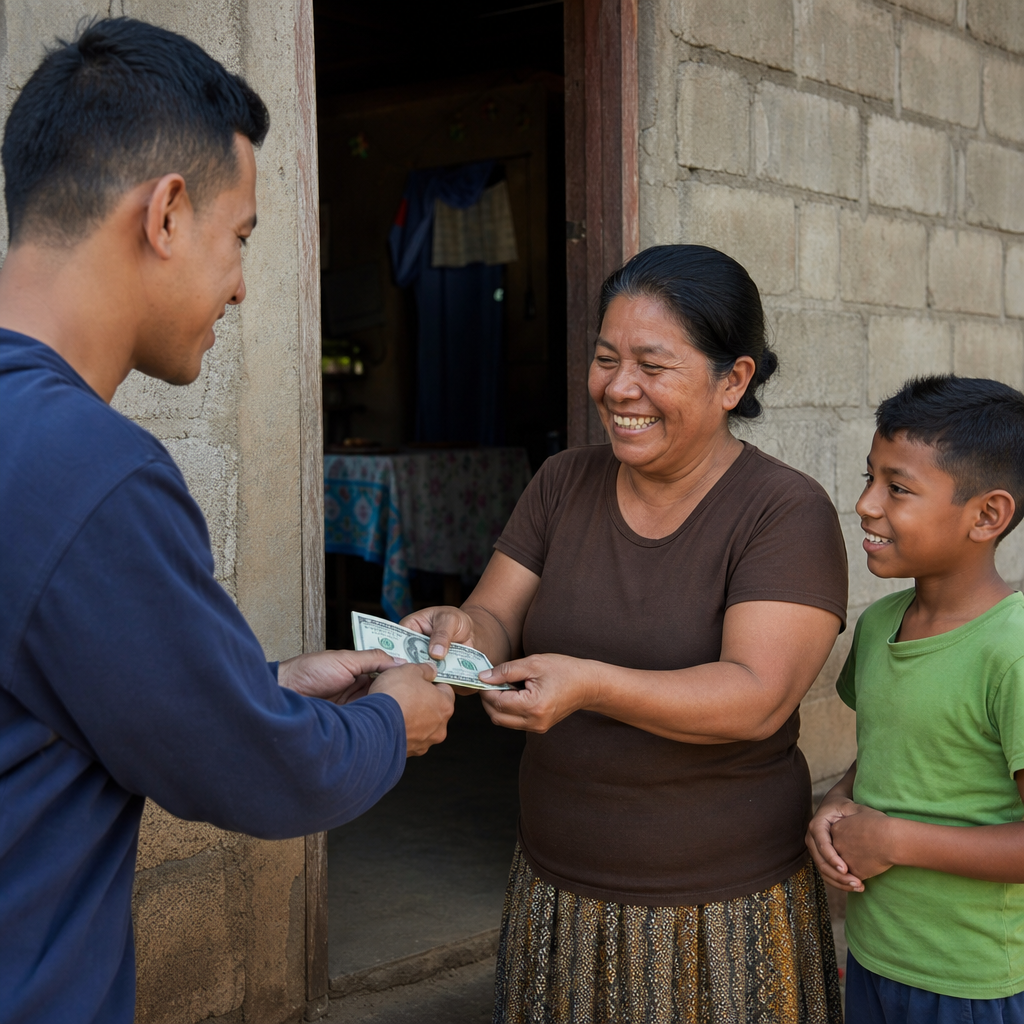
Remittances and development are tightly linked because money sent home by migrant workers often reaches families faster, more directly, and more predictably than many other financial flows. A remittance is a cross-border transfer, usually from a worker living abroad to relatives in the country of origin, while development refers to the broader process of improving incomes, health, education, infrastructure, resilience, and opportunity. I have worked on content and research around household finance and migration trends, and one pattern appears consistently across countries: when formal jobs are scarce and public systems are uneven, remittances become a practical lifeline. They pay for food, rent, school fees, medicine, farm inputs, debt service, and emergencies. In many lower and middle income countries, they also support local businesses, stabilize foreign exchange earnings, and cushion national economies during downturns. The World Bank has repeatedly shown that remittance inflows to low and middle income countries exceed official development assistance and, in some cases, rival foreign direct investment. That matters because these flows are not abstract capital movements; they are household-level decisions made every month by millions of workers. Understanding how remittances shape development requires looking beyond headline totals to the mechanics of migration, transfer costs, exchange rates, gender roles, financial inclusion, and public policy. This hub article explains how remittances work, why they matter, where the benefits are strongest, and where limits and risks must be taken seriously.
How remittances work in practice
Most remittances begin with labor migration driven by wage gaps, labor demand, conflict, climate stress, or limited opportunity at home. A nurse in the United Kingdom sends money to parents in Ghana; a construction worker in the Gulf supports a household in Nepal; a software engineer in Canada transfers funds to siblings in India. The channel can be a bank transfer, a money transfer operator such as Western Union or MoneyGram, a mobile wallet, a fintech app, a postal service, or an informal network. In practice, speed, trust, exchange rate transparency, identification requirements, and payout convenience determine which channel migrants use. Formal systems create records and can connect recipients to savings accounts and other services, but informal systems may remain popular where paperwork is burdensome or financial infrastructure is weak. Transaction costs are central. The United Nations Sustainable Development Goals include a target of reducing remittance costs to less than 3 percent, yet some corridors, especially to fragile or small states, still cost much more. A ten dollar fee on a two hundred dollar transfer is not a minor inconvenience; it is lost grocery money. Regulation must therefore balance anti-money-laundering controls with practical access, particularly for low income workers who may have incomplete documentation.
Why remittances matter for households
At the household level, remittances primarily smooth consumption. Families receiving regular transfers can buy food consistently, keep children in school, maintain housing, and avoid distress sales of land or livestock after a shock. In my review of household finance cases across South Asia, East Africa, and Latin America, the most immediate effect was not sudden wealth but reduced volatility. That distinction is important. Development is often blocked less by low average income than by unstable income. A family with erratic cash flow delays medical treatment, borrows at high interest, and pulls children from school at the worst possible time. Remittances reduce that instability. They can also improve bargaining power within households, especially when women control receipt and spending. Studies in countries such as the Philippines and Mexico have linked remittance income to improved educational attainment, better nutrition, and higher spending on health. However, outcomes depend on who migrates, who receives funds, and how regular the transfers are. If migration separates caregivers from children for long periods, the social cost can offset part of the economic gain. Remittance income also does not automatically create productive investment. Many families use it rationally for daily needs because survival comes before entrepreneurship. That should not be misread as failure; it reflects real household priorities under constraint.
Macroeconomic effects on growth, stability, and external balances
Nationally, remittances affect far more than household budgets. They bring foreign currency into the economy, support consumption, and can improve the current account. For countries such as El Salvador, Lebanon, Nepal, and Tajikistan, remittances have represented significant shares of gross domestic product for years. Those inflows can stabilize economies during recessions or after disasters because migrants often send more money when families face hardship. Economists describe this as a countercyclical tendency, and it distinguishes remittances from some private capital flows that retreat during uncertainty. Governments and central banks value that stability because foreign exchange reserves, import capacity, and banking system liquidity are often under pressure in developing economies. Yet there are tradeoffs. Large remittance inflows can appreciate the real exchange rate, making some export sectors less competitive, a pattern sometimes compared to Dutch disease. They can also create dependence if policymakers treat private transfers as a substitute for public investment, labor market reform, or social protection. Consumption-led growth supported by remittances may lift retail trade, housing, and services without generating enough high productivity employment. The macroeconomic benefit is therefore real but conditional. Countries gain most when remittance inflows are paired with sound monetary policy, credible financial institutions, and investment channels that turn household income into broader development gains.
Financial inclusion, digital transfers, and cost reduction
One of the clearest development opportunities lies in reducing transfer costs and connecting remittances to formal finance. When recipients collect funds through banks, credit unions, or regulated mobile wallets, they are more likely to save, build transaction histories, and access insurance or credit later. Digital systems have improved this process. Services like Wise, WorldRemit, Remitly, and mobile money networks in East Africa have increased fee transparency and cut delivery times. In Kenya, the rise of M-Pesa changed expectations around domestic and cross-border payments by making small transfers easier and more accessible. During the pandemic, digital remittance channels became especially important because lockdowns disrupted cash-based services. Policy matters here. Exclusive partnerships between national post offices and single money transfer operators can reduce competition and keep prices high. Weak interoperability between banks and mobile wallets can also create friction. A practical development strategy focuses on competition policy, know-your-customer rules that are proportionate to risk, and consumer protection around fees and exchange rates. The table below highlights the development implications of common remittance channels.
| Channel | Main advantage | Main limitation | Development implication |
|---|---|---|---|
| Bank transfer | Security and account linkage | Can be slow or paperwork-heavy | Supports savings and formal financial inclusion |
| Money transfer operator | Wide cash pickup network | Fees may be high in some corridors | Useful where banking access is weak |
| Mobile wallet | Fast, convenient, low-value friendly | Interoperability and cash-out limits | Expands access in rural and underserved areas |
| Informal network | Flexible and familiar | Little transparency or legal protection | Shows unmet demand for accessible formal services |
From consumption to investment and local enterprise
Remittances are often criticized for funding consumption rather than investment, but that argument is too narrow. Consumption itself can be developmental when it improves nutrition, health, and school attendance. Still, the long term question is whether remittance income can finance productive assets. In some settings it does. Households use transfers to buy irrigation pumps, fertilizer, sewing machines, delivery motorcycles, market stalls, or livestock. In parts of rural Mexico and Guatemala, remittances have helped families upgrade homes and small businesses, generating local demand for builders, transport providers, and merchants. Diaspora savings can also support hometown associations, community infrastructure, and small enterprise finance. Yet productive use is not automatic. Many recipients face missing markets: no safe savings product, no affordable credit, weak land rights, unreliable electricity, and thin local demand. Under those conditions, even motivated households struggle to invest. Better policy asks what complementary institutions are missing. Matching grant programs, diaspora bonds, warehouse receipt systems for farmers, and microinsurance can improve the payoff from remittance-funded investment. So can financial literacy programs, provided they are practical rather than moralizing. Families generally understand money well; what they often lack is a viable investment environment. The development lesson is straightforward: remittances can seed growth, but institutions determine whether those seeds take root.
Social impacts, gender dynamics, and inequality
The social effects of remittances are complex and deserve careful treatment. Migration can empower households by diversifying income sources, but it can also create emotional strain, care gaps, and changed power relations. In several migration corridors, women manage remittance budgets while men work abroad, increasing women’s financial authority. In other cases, women migrate as domestic workers or nurses and send money home, reversing older assumptions about male breadwinners. These shifts can support development by raising spending on children’s health and education, yet they may come with serious costs, including family separation and vulnerability to labor exploitation abroad. Remittances can also widen inequality inside communities. Families with a migrant member often gain faster than those without migration networks, passports, education, or enough assets to finance travel. Villages may see improved homes beside persistent deprivation. Housing booms funded by remittances can raise land and rental prices for nonrecipient households. There is also a generational effect: younger people may prioritize migration over local skill formation if returns to working abroad remain much higher. None of this negates the value of remittances, but it shows why they are not a full development strategy. Inclusive development requires labor protections, education systems, childcare, local job creation, and migration governance that reduces abuse while preserving mobility opportunities.
Policy choices that make remittances more developmental
Good policy does not try to control how families spend remittances; it improves the ecosystem around those flows. First, lower costs through competition, transparent pricing, and modern payment rails. Second, expand legal identity and account access so migrants and recipients can use formal channels without excessive friction. Third, protect migrant workers through enforceable contracts, fair recruitment standards, and bilateral labor agreements. Recruitment debt is a major hidden drain on remittance capacity, especially in temporary labor migration to the Gulf and parts of Asia. Fourth, strengthen data. Central banks need accurate reporting by corridor and channel to assess balance of payments effects and identify pricing problems. Fifth, create voluntary savings and investment products tailored to diaspora communities, including local currency bonds, mortgage instruments, or infrastructure funds with clear governance. Sixth, coordinate remittances with broader development planning. If roads, power, internet access, and agricultural extension are weak, remittance income will remain largely defensive. I have seen the difference that simple institutional changes make: digitized recipient onboarding, better exchange rate disclosure, and rural mobile cash-out agents can shift a corridor from expensive and opaque to affordable and reliable within a few years. The best policies respect remittances as private money while removing barriers that prevent families from getting full value from it.
Remittances and development cannot be separated in many parts of the world because migrant workers finance both daily survival and long term opportunity back home. The evidence is clear: remittances reduce income volatility, support education and health spending, bring in foreign exchange, and can strengthen resilience during crises. They are often more stable than other external flows, and they reach households directly. Just as clear are the limits. Remittances cannot replace decent domestic jobs, strong public services, or competent economic management. They may widen inequality, expose families to separation, and lose value through high fees or poor exchange rates. The most useful way to think about remittances is as a powerful household-driven development tool that works best when public policy lowers costs, protects workers, expands financial access, and creates productive local opportunities. For an economics hub covering this broad subtopic, that is the central insight tying the miscellaneous issues together: migration, payments, labor markets, gender, banking, and macroeconomic stability all meet inside the remittance story. If you are building out this topic cluster, the next step is simple: map the key corridors, costs, and policy barriers in the country or region you want to understand, then follow the money from sender to household to local economy.
Frequently Asked Questions
What are remittances, and why are they so important for development?
Remittances are cross-border money transfers sent by people working or living abroad to family members or other loved ones in their home country. In practice, they are often used to pay for daily essentials such as food, rent, school fees, transport, utility bills, medicine, and emergency expenses. What makes remittances especially important for development is that they usually go straight to households, with relatively little delay, and are often more stable than other external financial flows during difficult economic periods.
From a development perspective, remittances matter because they improve a family’s ability to meet immediate needs while also creating opportunities for longer-term progress. A household that can reliably cover basic consumption is often better positioned to keep children in school, seek medical care earlier, invest in safer housing, or build a small savings cushion. These are not abstract benefits. They affect nutrition, attendance in education, resilience to shocks, and the ability to plan for the future.
At a broader level, remittances can support local development by increasing spending in village and urban economies, strengthening demand for goods and services, and helping families avoid distress strategies such as taking on high-cost debt or selling productive assets. While remittances alone do not solve structural development challenges such as weak institutions, limited jobs, or underfunded public services, they often play a critical role in improving household welfare and reducing vulnerability. That is why they are widely seen as one of the most direct links between migration and development.
How do remittances help families beyond basic household spending?
Although remittances are frequently associated with day-to-day expenses, their impact often goes much further. Once essential needs are covered, many households use remittance income to make decisions that can improve their long-term economic position. This may include paying school and university fees, purchasing books or digital devices, financing vocational training, or covering transportation costs that allow family members to access better education and work opportunities.
Health is another major area. Remittances can help families afford preventive care, treatment, maternal health services, medication, and transport to clinics or hospitals. In many communities, the difference between delayed care and timely care comes down to whether a household has cash available at the right moment. Because remittances are often sent regularly or in response to emergencies, they can function as a practical financial safety net when illness, crop failure, job loss, or natural disasters occur.
Some families also use remittances for asset-building and upward mobility. They may improve their home, invest in livestock or farm inputs, open a small shop, buy equipment, or save toward land or business activity. Not every remittance-funded investment turns into sustained income growth, and outcomes depend on the local economy, infrastructure, and access to markets. Still, remittances can create room for better choices by easing liquidity constraints. In simple terms, they give households the flexibility to think beyond survival and toward stability, resilience, and opportunity.
Are remittances more reliable or effective than foreign aid or other financial flows?
Remittances are different from foreign aid, foreign direct investment, and portfolio flows, and in many cases they are more predictable at the household level. Aid is usually routed through governments, institutions, or programs and is designed to address broader public goals. Investment flows are often driven by market conditions and commercial returns. Remittances, by contrast, are personal transfers rooted in family relationships and obligations. Because of that, they often continue even when economies are under stress, and in some crises they may even increase as migrants send more money home to support relatives.
That said, it would be too simplistic to say remittances are “better” than aid or investment in every sense. Remittances are excellent at reaching households directly and quickly, but they are not a substitute for public goods such as roads, schools, sanitation systems, energy networks, and healthcare infrastructure. A family can use remittances to pay for treatment, but remittances alone cannot build a functioning national health system. Likewise, they can fund school attendance, but they do not replace the need for trained teachers and quality institutions.
The most accurate view is that remittances are highly effective for private household welfare and shock absorption, while aid and public investment remain necessary for wider structural transformation. Development tends to be strongest when these sources work in complementary ways. Lower transfer costs, better financial access, strong local institutions, and sound public policy can all improve the developmental impact of remittances without expecting them to do everything on their own.
What are the main challenges or downsides associated with remittances?
Despite their benefits, remittances come with important challenges. One of the biggest is cost. In many migration corridors, sending money can still be expensive, especially for low-income workers making frequent small transfers. Fees, exchange-rate margins, and limited competition among transfer providers can reduce the amount that families actually receive. For households relying on these funds for essential expenses, even small percentage losses matter.
Another issue is dependency and uneven access. Some households receive regular support from relatives abroad, while others do not have a migrant family member and may be left behind relative to neighbors. Within recipient households, remittance income can reduce financial pressure, but it can also create vulnerability if the migrant loses a job, faces legal uncertainty, becomes ill, or encounters restrictions in the host country. In addition, communities can become heavily reliant on migration-linked income rather than local job creation, especially where domestic economic opportunities are weak.
There are also social and developmental trade-offs. Migration can separate families for long periods, with emotional costs for children, spouses, and older relatives. On the economic side, remittances do not automatically translate into productive investment. Families may use them mainly for consumption, which can still be developmentally valuable, but may not generate lasting income growth on its own. In some contexts, large inflows can contribute to local inflation in housing or land prices. The key point is that remittances are powerful, but not magical. Their impact depends on the surrounding financial system, labor market, public services, and the realities faced by migrant workers themselves.
How can countries and financial institutions increase the development impact of remittances?
The first and most practical step is reducing the cost and friction of sending money. When transfer fees fall, exchange rates become more transparent, and payment systems become faster and more accessible, recipient households keep more of what migrant workers earn. Expanding competition among money transfer operators, supporting digital payment infrastructure, and improving cross-border interoperability can make a major difference, especially for rural and low-income users.
Financial inclusion is equally important. If recipients can receive remittances into secure, affordable accounts or mobile wallets, they are more likely to build savings, manage risk, and access other financial services over time. That can include microinsurance, credit with responsible terms, bill payment tools, and savings products tailored to irregular income patterns. Financial literacy also matters, not in a simplistic way, but as part of helping households make informed choices about budgeting, emergency preparedness, education spending, and investment.
Governments and development institutions can go further by improving the broader environment in which remittances are used. Strong consumer protection, reliable identification systems, rural connectivity, and transparent regulation all support safer transfers. Public investment in healthcare, education, transport, and local enterprise ecosystems helps households turn remittance income into stronger long-term outcomes. The most effective policy approach is not to treat remittances merely as private cash transfers, but to recognize them as part of a wider development system. When low-cost transfer channels, inclusive finance, and quality public services come together, remittances are far more likely to support durable improvements in well-being and opportunity.