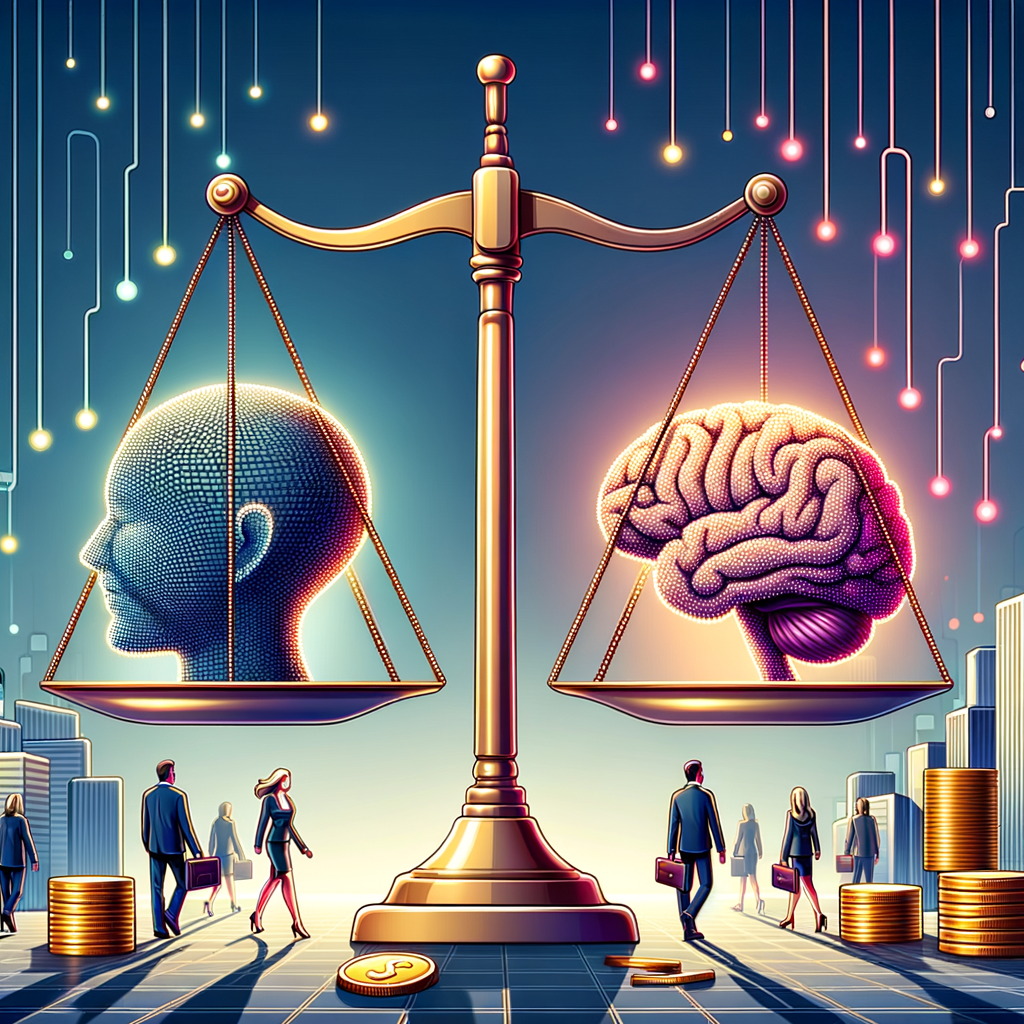
In the complex and dynamic world of economics, the behaviors of individuals and organizations can be broadly categorized into rational and irrational actions. Decisions made based on logic, analysis, and well-defined objectives fall under rational behavior, which aligns with the fundamental assumptions often used in economic models. Contrastingly, irrational behavior encompasses decisions that deviate from logical reasoning, often influenced by emotions, cognitive biases, or misinformation. Understanding the distinction between these two types of behavior is critical for economists and policymakers aiming to predict market trends, design policies, and address economic challenges effectively. The exploration of rational versus irrational behavior not only uncovers the intricacies of human decision-making but also the implications these behaviors have on economic outcomes and efficiency. In this article, we will delve into the definitions, causes, and impacts of rational and irrational behavior in economics, and discuss how these behaviors manifest in different economic scenarios.
Economists have long been intrigued by the decision-making processes of individuals and firms. Traditional economic theories are based on the assumption that individuals act rationally, seeking to maximize their utility through logical and informed choices. However, real-world observations often reveal patterns that contradict this assumption. People sometimes make choices that are inconsistent, impulsive, or influenced by biases that defy logical analysis. This discrepancy has led to the development of behavioral economics, a field that combines insights from psychology to better understand human behavior in economic contexts. By examining the roles of both rational and irrational behavior, we can gain a more comprehensive understanding of how economic systems operate and how different factors influence individual and collective decisions.
Understanding Rational Behavior
Rational behavior in economics is predicated on the principle that individuals and organizations make decisions that provide them with the greatest benefit or satisfaction, considering all available information and potential outcomes. This behavior is guided by a cost-benefit analysis, where the costs of a decision are weighed against the benefits. Rational actors are assumed to be self-interested, consistently preferring options that maximize their utility or profits. This assumption forms the backbone of many classical economic theories, including the law of supply and demand, which posits that individuals respond predictably to changes in prices.
For example, consider an investor who evaluates various investment options based on risk, return, and market conditions. A rational investor will choose the option that offers the highest expected return for a given level of risk, ensuring their wealth is optimized over time. Similarly, a consumer deciding between two products will select the one that maximizes their satisfaction relative to its price. In both cases, the decision-making process involves logical assessment and optimization, a hallmark of rational behavior.
The rational behavior model assumes that decision-makers possess complete information and the cognitive ability to process this information accurately. This assumption often simplifies the analysis of economic models but may not fully capture real-life complexities. Nevertheless, understanding rational behavior is crucial as it provides a baseline against which deviations can be measured and understood.
Exploring Irrational Behavior
Irrational behavior, on the other hand, involves decision-making processes that do not logically align with the goal of maximizing utility or profit. This type of behavior is influenced by various factors that lead individuals to make choices that seem suboptimal or inconsistent with their self-interest. Key influencers of irrational behavior include emotions, cognitive biases, and social influences.
Cognitive biases are systematic errors in thinking that affect decision-making. They can cause individuals to overestimate their abilities, focus disproportionately on certain information, or cling to pre-existing beliefs despite contrary evidence. For example, the anchoring bias can lead investors to base their decisions heavily on initial information without adapting to new data. The availability heuristic might cause individuals to assess the probability of events based on how easily examples come to mind, leading to skewed risk perceptions.
Emotions also play a vital role in shaping irrational behavior. Fear, greed, and overconfidence can lead to decisions that deviate from rationality. For instance, during a stock market bubble, investors might irrationally continue to buy overvalued stocks because of the fear of missing out, despite underlying fundamentals suggesting an impending correction. This herd behavior can significantly impact market dynamics, driving prices away from intrinsic values.
Social factors contribute to irrational behavior as well. Peer pressure, social norms, and cultural influences can prompt individuals to make decisions that align more with the expectations of others than with their own rational judgment. Understanding these behaviors helps economists to better predict real-world economic phenomena that traditional models based on rationality may overlook.
The Impact of Rational and Irrational Behavior in Economics
The implications of rational and irrational behavior in economics are profound, shaping individual outcomes and systemic trends. Rational behavior tends to stabilize markets and promote efficient allocation of resources. Investors buying low and selling high, or consumers opting for cost-effective solutions, exemplify how rationality can drive economic efficiency.
However, irrational behavior can lead to inefficiencies and market anomalies. Bubbles and crashes in financial markets, often driven by irrational exuberance or panic, can result in significant economic disruptions. Behavioral economics has documented how irrational behavior can cause deviations from expected utility maximization, leading to outcomes like the endowment effect, where individuals irrationally value ownership, preventing efficient market transactions.
Underestimating or misjudging risk due to cognitive biases can lead to inadequate savings, poor investment choices, and financial instability. Policymakers must consider these behaviors when designing regulations and interventions to protect consumers and ensure financial stability. Furthermore, marketing strategies often exploit irrational behavior, encouraging consumers to make impulsive or suboptimal purchasing decisions, affecting consumer welfare and market dynamics.
Rationality and Policy Making
Understanding the interplay between rational and irrational behavior is critical for policymakers. Policies based solely on rational behavior assumptions may fail to address real-world issues effectively. Behavioral insights can enhance policy-making by incorporating an understanding of human psychology into economic models and interventions.
For example, acknowledging that individuals may not adequately save for retirement due to present bias—a tendency to prioritize immediate gratifications over future benefits—can lead to the design of policies that encourage savings through default enrollment in pension plans. Similarly, insights into loss aversion can inform tax policies that guide consumer behavior through strategic framing effects.
Regulations also need to account for irrational behavior to prevent exploitation by companies of vulnerable consumers who might make decisions contrary to their best interests, such as excessive borrowing due to underestimating future repayment difficulties. Incorporating behavioral insights helps create more robust policies that can effectively address economic challenges and improve overall social welfare.
Conclusion
In conclusion, both rational and irrational behaviors play critical roles in economics, influencing individual decisions and broader economic trends. Understanding these behaviors is vital for comprehending real-world economic phenomena, crafting effective policies, and improving economic models. Traditionally, economics has relied heavily on the assumption of rational behavior, but incorporating insights from psychology through behavioral economics allows us to better capture the complexity of human decision-making.
The dichotomy of rational vs irrational behavior emphasizes the need for a balanced approach in economic analysis and policy-making. Recognizing the limitations of rational models and the prevalence of biases, emotions, and social influences in economic decisions enables the development of strategies that accommodate the diversity of human behavior. Policymakers, economists, and business leaders must remain cognizant of these dynamics to foster more efficient, equitable, and resilient economic systems.
By bridging the gap between rational models and behavioral realities, economics can evolve into a more inclusive discipline, better equipped to tackle modern challenges. As research continues to shed light on the underpinnings of decision-making, the integration of rational and irrational perspectives will increasingly inform the creation of policies and business strategies that align with human behavior, ultimately enhancing economic outcomes. Understanding and addressing both sides of the behavioral spectrum is not just an academic exercise but a necessary endeavor for sustainable economic development in an ever-changing world.
Frequently Asked Questions
1. What is the difference between rational and irrational behavior in economics?
In economics, rational behavior is often defined as decision-making that is guided by logical reasoning, careful analysis, and well-considered objectives. It aligns with economic models that assume individuals and organizations will act in their best interest to maximize utility or profit. For example, a rational consumer will weigh the pros and cons of a purchase, considering price, quality, and need before making a decision.
Conversely, irrational behavior involves actions that deviate from this logical framework, often due to emotions, cognitive biases, or misinformation. Such behavior might include impulse buying, investing in a stock based purely on hype, or simply making decisions that aren’t consistent with one’s financial interests. This type of behavior challenges conventional economic models and illustrates that human behavior can be more complex than traditional economics suggests.
2. Why do traditional economic models assume rational behavior?
Traditional economic models assume rational behavior primarily because it provides a simplified framework for predicting human behavior. By assuming that all agents act rationally, economists can create models that predict outcomes in markets, set policies, and understand broader economic phenomena. Rational behavior is easier to model mathematically, which is critical for theoretical consistency and the application of these models in real-world scenarios.
Moreover, rationality is a cornerstone of utility theory, which posits that individuals aim to maximize their happiness or satisfaction given their resources. This assumption creates a foundation for numerous economic principles, including the laws of supply and demand, market equilibrium, and the efficient allocation of resources. However, the simplification is not without its critics, and there have been numerous adaptations and new models that consider the impact of irrational behavior.
3. Can you give examples of irrational behavior in economics?
Irrational behavior in economics can manifest in various ways. A classic example is the stock market bubble, where investors drive up stock prices based on fervor rather than fundamentals, only to suffer losses when the bubble bursts. Another example is consumer reactions to changes in price; sometimes, consumers might overreact to a small price increase by boycotting a product even if they still need it, leading to reduced utility.
Predatory lending or borrowing is another common instance of irrational behavior. Borrowers might take out loans with unfavorable terms due to lack of information or understanding, or because of short-term pressures, neglecting the long-term financial burden. Additionally, the anchoring effect, where individuals rely too heavily on an initial piece of information when making decisions, is a cognitive bias leading to irrational behavior often seen in negotiations or pricing strategies.
4. How do cognitive biases influence irrational behavior?
Cognitive biases are systematic patterns of deviation from norm or rationality in judgment, and they play a significant role in shaping irrational behavior. These biases result from the brain’s attempts to simplify information processing, but they can lead to faulty reasoning and suboptimal decisions.
For example, the confirmation bias can cause people to focus on information that supports their existing beliefs while ignoring contrary evidence, leading to stubborn adherence to incorrect assumptions. Similarly, the loss aversion bias explains why people have a stronger reaction to losses than gains, which can lead to overly cautious financial decisions or selling investments prematurely during market downturns.
Another impacting bias is the bandwagon effect, where individuals do something because others are doing it, often without full consideration of the rationale behind their actions. This herd mentality can fuel speculative bubbles or panic selling, illustrating how cognitive biases play into economic behaviors that are irrational and unpredictable.
5. How do economists address irrationality in economic models?
Recognizing the limitations of traditional models that assume rationality, economists have developed various approaches to incorporate irrationality into economic theories. One significant development is behavioral economics, which integrates insights from psychology to understand how real-world individuals make decisions.
Behavioral economics considers factors like emotions, social influences, and cognitive biases to explain phenomena that traditional economics cannot. It explores concepts like bounded rationality, where individuals make decisions based on limited information and cognitive limitations rather than optimal outcomes. Prospect theory, another key area, examines how people perceive gains and losses, challenging the notion that they always act to maximize utility.
By integrating these elements, economists can create more realistic models that reflect actual human behavior. These models help policymakers design better interventions, such as nudges, to guide people towards more beneficial economic decisions without restricting freedom of choice. This approach underscores the ongoing evolution of economic science as it seeks to account for the complexities of human nature.