
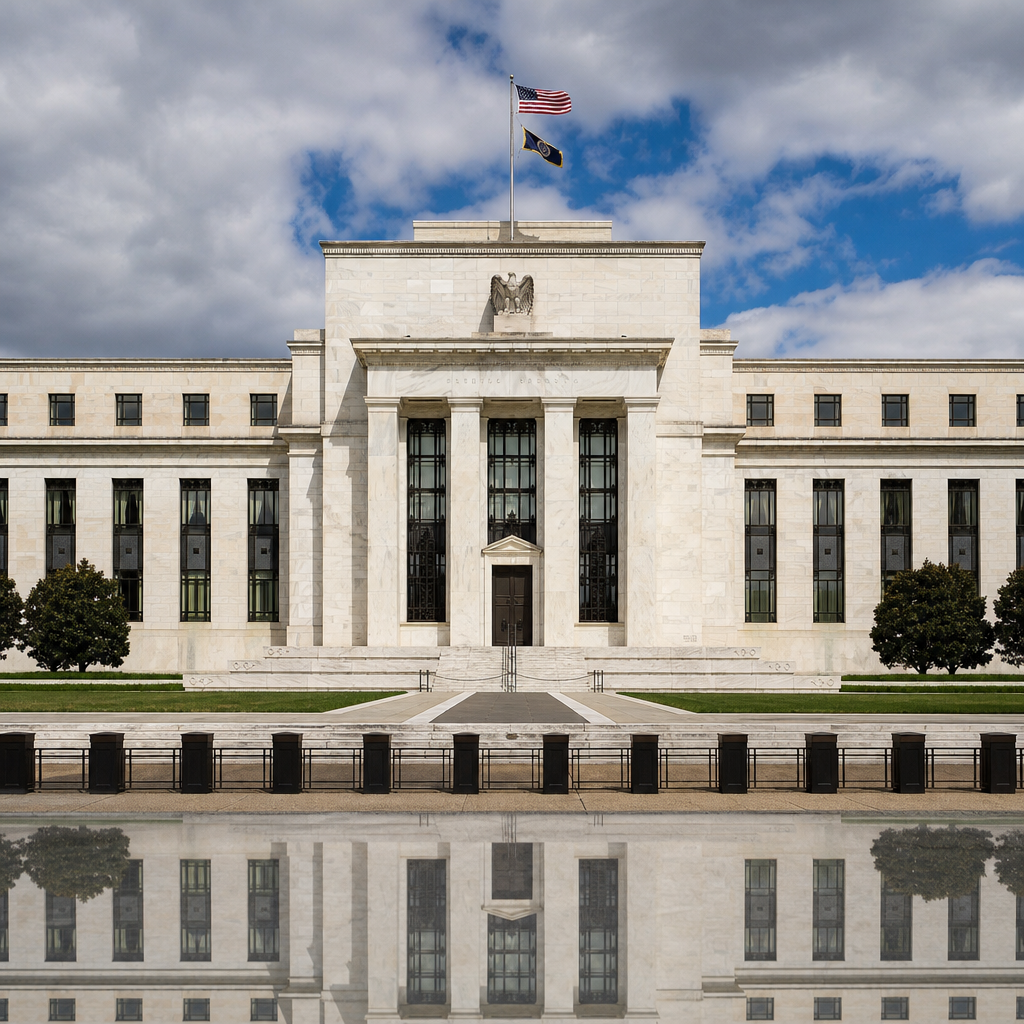
Quantitative tightening is the process by which a central bank shrinks its balance sheet after a period of asset purchases, making it the operational reverse of quantitative easing. In practice, that means the central bank stops reinvesting maturing bonds, actively sells securities, or uses other tools to remove liquidity from the financial system. I have worked with market commentary and central bank statements through multiple tightening cycles, and the same confusion appears every time: people assume quantitative tightening is simply higher interest rates under a different name. It is not. Policy rates change the price of money, while quantitative tightening changes the quantity and composition of reserves, government bonds, and risk-bearing assets across the financial system.
The distinction matters because modern monetary policy works through several channels at once. When central banks such as the Federal Reserve, the Bank of England, and the European Central Bank bought large volumes of government bonds during and after crises, they compressed term premiums, lowered long-dated yields, and encouraged investors to move into riskier assets. That balance-sheet expansion became known as quantitative easing. Quantitative tightening, often shortened to QT, attempts to unwind part of that accommodation. It affects government financing conditions, bank reserves, mortgage markets, exchange rates, equity valuations, and investor behavior. It also interacts with banking regulation, fiscal deficits, and global capital flows, so its effects reach far beyond bond traders.
For an economics hub article, QT sits at the intersection of monetary policy, inflation control, financial stability, sovereign debt markets, and recession risk. It also connects naturally to related subjects such as central bank independence, yield curves, liquidity, inflation expectations, bank lending, and the transmission mechanism of monetary policy. Understanding QT helps readers interpret why bond yields move even when the policy rate is unchanged, why reserves can fall while broad money behaves differently, and why markets sometimes react more to a balance-sheet runoff pace than to a quarter-point rate increase. In short, quantitative tightening is a technical term with practical consequences for borrowers, investors, and anyone trying to understand the wider economics landscape.
What Quantitative Tightening Means in Practice
Quantitative tightening reduces the size of a central bank balance sheet. The most common method is passive runoff: when bonds held by the central bank mature, the proceeds are not fully reinvested. If a central bank owns $100 billion of Treasury securities and $10 billion mature this month, it may allow all or part of that amount to roll off. The government then refinances that debt with private investors instead of the central bank. Bank reserves decline as settlement occurs, and the private sector must absorb more duration risk. An alternative method is active sales, where the central bank sells bonds outright into the market. Active sales usually create stronger signaling effects and can move yields more abruptly.
QT does not automatically mean money supply collapses. That is one of the most important clarifications for non-specialists. Central bank reserves are a specific liability of the central bank, mostly held by commercial banks. Broad money measures, such as M2 in the United States, include deposits held by households and firms. Reserves can decline because of balance-sheet runoff while banks continue making loans, deposit levels shift, or money market funds move cash into reverse repo facilities. The plumbing matters. During the Federal Reserve’s post-2022 runoff, the interaction among reserves, the overnight reverse repurchase facility, Treasury bill issuance, and money market fund demand became central to understanding whether liquidity was actually becoming scarce.
Another practical point is that QT works slowly and unevenly. Rate hikes are immediate and highly visible. QT is often capped by monthly runoff limits, and its impact depends on maturity schedules, market depth, and how investors reprice term risk. That is why economists often describe QT as tightening in the background. It is quieter than a press conference announcing a policy rate increase, but it can still materially influence financial conditions over time.
How Quantitative Tightening Differs From Quantitative Easing
Quantitative easing expands a central bank balance sheet through large-scale asset purchases, usually government bonds and sometimes mortgage-backed securities or corporate bonds. The central bank creates reserves to pay for those assets. The intended effects include lower long-term yields, improved market functioning during stress, easier credit conditions, and support for inflation and employment when policy rates are near zero. After the global financial crisis and again during the pandemic, QE became a core emergency tool because conventional rate cuts alone were insufficient.
QT reverses those mechanics, but not always symmetrically. When the central bank bought assets during QE, it acted as a major price-insensitive buyer. That compressed yields and reduced market free float. During QT, it steps back or becomes a seller, increasing the amount of duration and convexity risk the private sector must hold. Yet the reversal is imperfect because markets, regulations, fiscal conditions, and investor balance sheets are different in the tightening phase. A pension fund facing rising liabilities does not respond the same way as a bank flush with reserves during crisis recovery. That is why the practical effects of QT can diverge from a simple mirror image of QE.
In market language, QE usually pushes investors outward along the risk spectrum, while QT can pull them back toward safer assets by raising yields on government debt and reducing excess liquidity. Mortgage spreads, corporate credit spreads, and equity valuations can all be affected. During periods when inflation is high, QT also reinforces a central bank’s anti-inflation stance by showing that accommodation is being withdrawn not only through rates but also through the balance sheet.
Why Central Banks Use QT
Central banks use quantitative tightening for three main reasons: to remove extraordinary crisis-era accommodation, to reduce excess reserves and balance-sheet distortions, and to support the broader effort to bring inflation back toward target. If QE was introduced because the economy needed emergency support or because market functioning broke down, maintaining a swollen balance sheet forever can create side effects. It can blur the line between emergency intervention and normal policy, distort price discovery in government bond markets, and expose the central bank to political criticism over remittances and unrealized losses.
There is also an operational reason. Large balance sheets leave central banks more entangled with fiscal issuance patterns and market microstructure. By shrinking holdings over time, policymakers aim to return to a more normal operating framework, even if “normal” now means a floor system with ample reserves rather than the pre-2008 scarce-reserves corridor system. The Federal Reserve has explicitly discussed reaching an ample-reserves regime, not the minimum possible reserve level. That distinction matters because QT is not designed to drain reserves until they are scarce enough to destabilize overnight funding markets.
Inflation control remains the most visible motive when consumer prices are running above target. QT alone is rarely sufficient to tame inflation, but it can complement policy rate increases by tightening financial conditions at the long end of the curve. In countries where fiscal deficits are large, this interaction becomes especially important because the private market must absorb both new government issuance and the central bank’s reduced reinvestment.
Transmission Channels, Market Effects, and Economic Tradeoffs
QT affects the economy through several channels: reserve drainage, term premium normalization, portfolio rebalancing reversal, expectations, and financial conditions. Reserve drainage matters for short-term funding markets and bank liquidity management. Term premium effects matter for long-term government bond yields. Portfolio effects matter because investors who once competed with the central bank for safe assets must now hold more bonds, potentially reducing appetite for equities and lower-rated credit. Expectations matter because balance-sheet policy signals persistence: a central bank that keeps shrinking its holdings is communicating that accommodation is still being withdrawn.
| Channel | How QT Works | Likely Market Effect |
|---|---|---|
| Bank reserves | Maturing assets are not fully reinvested | Lower system liquidity, tighter funding conditions |
| Bond supply | Private investors absorb more government debt | Higher term premium, upward pressure on yields |
| Portfolio balance | Less central bank demand for safe assets | Reduced support for equities and credit |
| Policy signaling | Balance-sheet runoff confirms restrictive stance | Stronger expectations of prolonged tightening |
The tradeoffs are real. A well-telegraphed runoff can help normalize markets without major disruption. An aggressive pace can strain Treasury market liquidity, widen bid-ask spreads, and amplify volatility. In my experience reviewing market reactions, the most fragile moments occur when QT coincides with rapid rate hikes, rising deficit financing, and uncertainty about the neutral rate. Then investors are forced to reprice duration, inflation, and recession risk at the same time. That combination can tighten conditions more than policymakers intended.
Historical Examples: Federal Reserve, Bank of England, and ECB
The Federal Reserve’s 2017 to 2019 QT episode remains the best-known case study. After years of post-crisis QE, the Fed began reducing Treasury and agency mortgage-backed security holdings through capped runoff. Initially, markets absorbed the change smoothly. But by September 2019, stresses in the repo market revealed that reserves had fallen closer to scarcity than policymakers expected. Overnight funding rates spiked, and the Fed had to intervene with repo operations and later resume balance-sheet growth through bill purchases. The lesson was clear: ample reserves are not the same as limitless reserves, and estimating the minimum comfortable level is difficult in real time.
The post-2022 episode differed because inflation, not weak growth, was the dominant problem. The Fed combined rapid policy rate hikes with faster QT caps, while the Bank of England also pursued gilt sales and runoff. In the United Kingdom, liability-driven investment stress in 2022 showed how quickly a seemingly technical shift in gilt yields could expose leverage in pension strategies. Although that episode was triggered by fiscal news rather than QT alone, it reinforced a broader truth: balance-sheet reduction happens inside a financial system shaped by regulation, leverage, and collateral needs.
The European Central Bank has moved more cautiously because the euro area contains multiple sovereign bond markets with different credit risks and fragmentation concerns. Allowing balance-sheet contraction while preserving transmission across member states is more complex than in a single-sovereign system. That is why the ECB’s approach has involved careful sequencing, targeted reinvestment decisions, and backstop tools designed to limit unjustified spread widening.
Risks, Limits, and What Readers Should Watch Next
The biggest risks in quantitative tightening are liquidity accidents, overtightening, and policy confusion. Liquidity accidents occur when reserve balances fall below what banks, money market participants, and payment systems need for comfortable operation. Overtightening occurs when QT and rate hikes combine with weak credit creation, falling asset prices, and restrictive fiscal conditions to push the economy harder than intended. Policy confusion occurs when markets cannot tell whether the central bank will prioritize inflation, market functioning, or government debt stability during stress. Clear communication reduces this risk, but it never removes it.
Readers following QT should watch several indicators. Start with the central bank balance sheet itself and the monthly runoff caps. Then track bank reserve balances, repo market rates, Treasury auction demand, term premium estimates, and yield curve behavior. Credit spreads, mortgage rates, and volatility indexes help show whether balance-sheet tightening is feeding into broader financial conditions. Inflation data and labor market resilience matter too, because central banks are more likely to continue QT when growth is stable and inflation remains above target. If unemployment rises sharply or funding markets seize, QT can slow, pause, or reverse.
Quantitative tightening is the reverse of quantitative easing, but it is not a simple rewind button. It changes the supply of safe assets the market must absorb, reduces central bank support for long-term bond prices, and tests how much liquidity the financial system really needs. For anyone building a stronger understanding of economics, QT is a core concept because it links monetary theory to real market outcomes. Follow central bank statements, compare them with balance-sheet data, and connect QT to inflation, rates, credit, and liquidity. That habit will make every future policy decision easier to interpret.
Frequently Asked Questions
What is quantitative tightening, and why is it called the reverse of quantitative easing?
Quantitative tightening, or QT, is the process by which a central bank reduces the size of its balance sheet after expanding it during a period of quantitative easing, or QE. Under QE, the central bank buys government bonds, mortgage-backed securities, or other financial assets to inject liquidity into the financial system, lower longer-term interest rates, and support credit conditions. QT moves in the opposite operational direction. Instead of adding reserves and expanding holdings, the central bank allows assets to mature without replacing them, sells securities outright, or uses related tools to drain liquidity from the system.
It is called the reverse of QE because the mechanics are mirror images. During QE, the central bank creates reserves to purchase assets, which increases bank liquidity and tends to push down yields. During QT, those assets roll off or are sold, reserves decline, and the private market has to absorb more government or mortgage debt without the same degree of central bank support. That said, QT is not simply QE played backward at the same speed or with the same market effect. Financial conditions, investor expectations, Treasury issuance, bank reserve demand, and broader economic conditions all influence how QT actually transmits through markets and the economy.
How does quantitative tightening work in practice?
In practice, QT usually starts with the central bank slowing or stopping the reinvestment of proceeds from maturing securities. For example, if a bond held by the central bank matures, the government repays the principal. Under QE-style balance sheet maintenance, the central bank would often take that cash and buy a new security, keeping the balance sheet stable. Under QT, it does not fully reinvest, so its asset holdings gradually decline. This passive runoff is the most common form of tightening because it is easier to communicate and typically less disruptive than aggressive asset sales.
Some central banks may also sell assets directly, although outright sales tend to have a stronger signaling effect and can create more market sensitivity. The exact structure often includes monthly caps, meaning only a certain amount of maturing securities is allowed to roll off each month. If maturities exceed the cap, the remainder may still be reinvested. This approach gives policymakers more control over the pace of liquidity withdrawal and helps markets adjust more smoothly.
The important point is that QT is operational, not just rhetorical. It changes the composition and size of the central bank’s balance sheet and reduces the stock of reserves in the banking system. That can influence money market rates, bond yields, risk appetite, and financial conditions more broadly, even if the central bank does not change its policy rate at the same meeting.
What is the difference between quantitative tightening and raising interest rates?
Raising interest rates and quantitative tightening are both forms of monetary tightening, but they work through different channels. A rate hike changes the short-term policy rate, which directly influences borrowing costs across the economy. It affects loans, savings rates, corporate financing, consumer credit, and expectations for future monetary policy. QT, by contrast, changes the size of the central bank’s balance sheet and reduces liquidity in the financial system. Its influence is more indirect and often shows up through term premiums, bond market supply and demand, and shifts in broader financial conditions.
Think of rate hikes as the central bank adjusting the price of money, while QT adjusts the quantity of central bank liquidity and the degree of market support. The two tools can reinforce each other. A central bank may raise rates to cool inflation and run QT at the same time to remove the extraordinary accommodation created during earlier asset purchase programs. However, they are not interchangeable. A small balance sheet runoff does not necessarily have the same economic effect as a large rate increase, and estimating the exact equivalence is notoriously difficult.
This is one reason QT often causes confusion. People hear that the central bank is tightening and assume all tightening works the same way. It does not. Rate policy is more visible and easier to model in conventional terms. QT is more mechanical, more balance-sheet-driven, and more dependent on market plumbing, reserve levels, and investor demand for safe assets.
How does quantitative tightening affect markets, inflation, and the broader economy?
QT can affect markets by reducing excess liquidity, increasing the amount of bonds that private investors must hold, and potentially putting upward pressure on longer-term yields. When the central bank is no longer a large, price-insensitive buyer of government debt or mortgage-backed securities, markets may demand higher yields to absorb that supply. That can spill into mortgage rates, corporate borrowing costs, equity valuations, and general risk sentiment.
For inflation, QT is usually intended to support a broader anti-inflation policy stance rather than act as a standalone cure. By making financial conditions somewhat tighter, it can help moderate demand over time. But QT works with lags, and its effects are less immediate and less predictable than changes in the policy rate. Inflation outcomes depend on many forces, including wage growth, supply constraints, fiscal policy, energy prices, and global demand, so QT should be understood as one component of the overall policy mix.
For the broader economy, the impact depends heavily on pace and context. A gradual, well-telegraphed QT program may be absorbed with limited disruption, especially if bank reserves remain ample and markets are functioning normally. A faster or poorly communicated program can create funding stress, volatility in bond markets, or a sharper tightening in credit conditions than policymakers intended. That is why central banks often emphasize that balance sheet runoff will be predictable and, if needed, adjustable. QT is designed to remove accommodation, but officials generally want to avoid turning a normalization process into a liquidity shock.
Does quantitative tightening always mean the economy is in trouble or that a recession is coming?
No. QT does not automatically signal that a recession is imminent, nor does it always mean the economy is in trouble. In many cases, QT begins because the central bank believes emergency-era support is no longer appropriate. After a crisis or a major slowdown, QE may have been used to stabilize markets and stimulate activity. Once inflation rises, growth recovers, or labor markets strengthen, policymakers may decide it is time to normalize the balance sheet. In that sense, QT can reflect confidence that extraordinary support is no longer needed.
That said, QT can raise recession concerns because it withdraws liquidity at a time when other tightening measures, especially higher interest rates, may already be slowing demand. Markets watch QT closely because it can amplify the restrictive stance of policy, particularly if growth is already weakening or if financial conditions are fragile. The risk is not that QT guarantees recession, but that it can contribute to a cumulative tightening effect if policymakers move too far or too fast.
The best way to interpret QT is as part of a broader policy framework rather than as an isolated warning sign. Investors and readers should look at the pace of runoff, the level of policy rates, inflation trends, labor market data, credit conditions, and the tone of central bank communication. QT matters, but its meaning depends on the setting. In a strong economy, it may be a normalization tool. In a weakening economy, it can become a source of concern if it is not calibrated carefully.