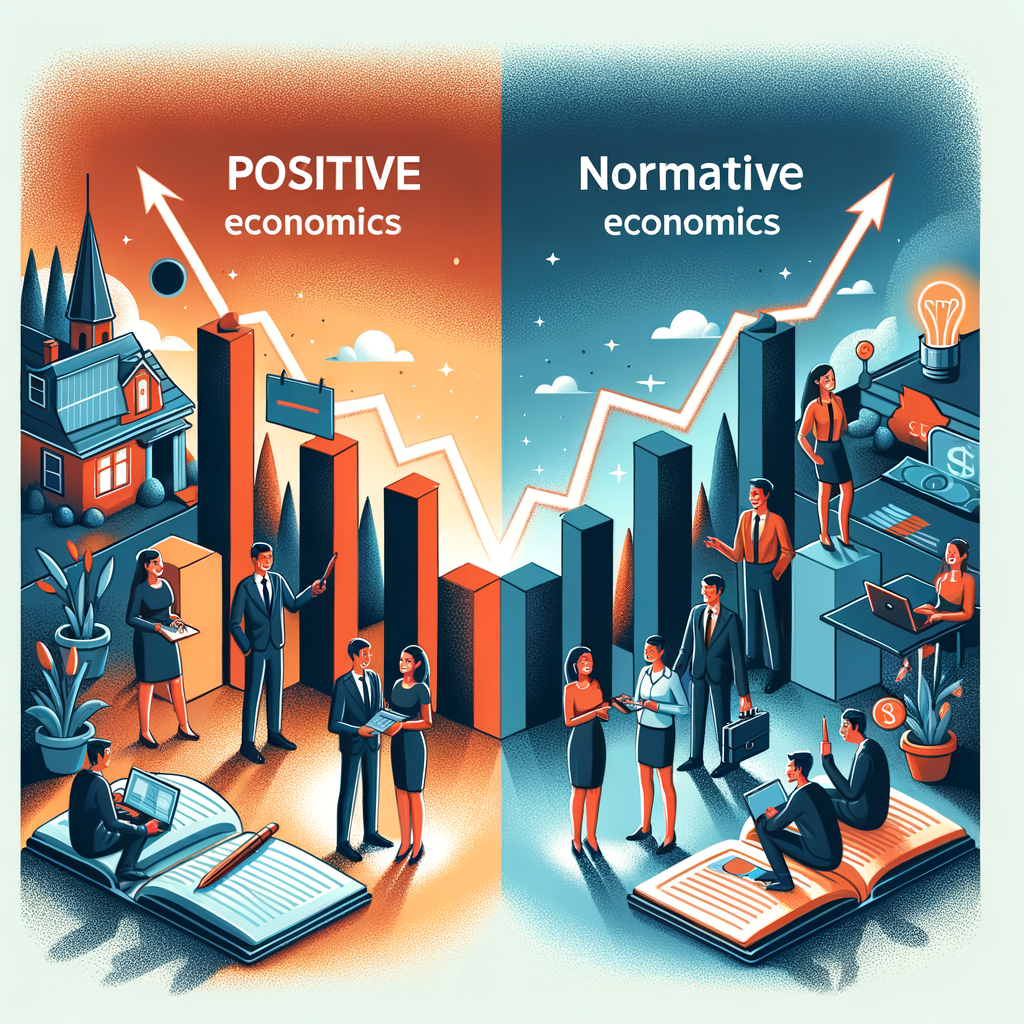
Economics, as an intricate field, encapsulates numerous facets, each serving distinct purposes in the analysis of human behavior concerning resource allocation. Two fundamental branches that constitute the core of economics are positive and normative economics. While intertwined and sometimes overlapping, these branches have stark differences in their focus, application, and underlying philosophies. Positive economics is often seen as the objective side of economic analysis. It focuses on describing, explaining, and predicting economic phenomena without making value judgments regarding outcomes. Conversely, normative economics delves into the realm of opinion and values, offering perspectives on how the economy should work, often prescribing solutions based on ideological beliefs or societal goals. Understanding these differences is critical for policymakers, economists, and anyone interested in the nuances of economic theory. This article explores the key differences between positive and normative economics, shedding light on how each branch serves a unique role in the study and application of economic principles. By distinguishing these different approaches, we can better appreciate how each contributes to the broader discipline of economics.
Understanding Positive Economics
Positive economics is grounded in observation and empirical data. It relies heavily on facts and incorporates quantitative models to describe economic conditions as they currently are. Through this lens, positive economics attempts to practice the economy as objectively as possible, striving for neutral insights free from evaluative judgment. Objective in nature, this branch of economics addresses questions like “What is happening?” or “What will happen if a specific policy is implemented?” Such inquiries are crucial for forming predictions based on empirical data and for establishing a foundation upon which scientific investigation can proceed.
In practice, positive economics employs a myriad of quantitative tools, such as statistics, econometrics, and economic modeling, to analyze factual relationships and test theories. This rigorous scientific approach helps confirm or refute hypotheses and refine economic theories. An example would be determining the impact of a minimum wage increase on employment rates. By observing past instances and using statistical models, economists can provide projections based on positive economics.
The essence of positive economics lies in its ability to separate itself from normative assertions. It aims to focus purely on what can be observed and quantified, making it indispensable in policy assessment and economic forecasting. These methods allow for thorough testing of economic policies and make economic predictions more reliable. The main objective is to create statements that can be tested for validity—if an economic statement cannot be tested or validated with empirical research, it strays from being purely positive.
This branch of economics dramatically influences the formulation of economic policies, structuring them around factual data and concurrently enhancing the clarity and transparency of public discourse on economic issues. Positive economics, therefore, serves as a crucial foundation upon which normative economics can build prescriptive theories.
The Nature of Normative Economics
Normative economics diverges sharply from its positive counterpart by focusing on value judgments and opinions. It is concerned with what ought to be rather than what is. This branch deals with questions of economic fairness, moral philosophy, and societal priorities, posing inquiries like “What should the goals of economic policy be?” or “Is income inequality acceptable?” Unlike positive economics, which tries to maintain a fact-based approach, normative economics embraces subjectivity, often drawing from ethical theories and political ideologies to inform its arguments.
This subjective nature means that conclusions derived from normative economics vary significantly depending on the value systems of individuals or societies. For instance, economic debates about wealth redistribution, environmental regulations, or social welfare spending are steeped in normative economics due to the inherently subjective nature of what individuals or policymakers “should” prioritize.
In forming economic policies, normative economics plays a role in shaping decisions that align with collective values and societal goals. It informs citizens and policymakers by providing a platform for discussion on how resources should be distributed and what measures should be prioritized to achieve a just economy. Additionally, normative economics is crucial in helping societies negotiate trade-offs between various policy outcomes, such as growth versus equality or efficiency versus equity.
The formulation of normative statements often includes terms like “ought,” “should,” or “better,” indicating the prescriptive nature of this field. For example, a normative statement might suggest that “The government should provide universal healthcare to ensure equality and economic security.” This statement reflects a value judgment that is open to debate and grounded in a specific belief about societal priorities.
Key Differences Between Positive and Normative Economics
While both positive and normative economics are essential in the field of economic study, they differ fundamentally in several ways. Firstly, positive economics is descriptive and fact-based, focusing on explaining economic phenomena as they are, while normative economics is prescriptive, making judgments about what economic policies ought to be pursued. This distinction is crucial for understanding the underlying motivations and outcomes each branch aims to achieve.
Moreover, positive economics relies heavily on empirical evidence and observational data, using statistical and mathematical models to make testable claims. This approach helps in formulating hypotheses that can be objectively tested and confirmed. In contrast, normative economics hinges on subjective judgments and incorporates normative theories, which are often ideologically driven and not testable in the same scientific manner. This divergence in methodology underscores the comprehensiveness of economics as a science, encompassing both objective and subjective analyses.
Another critical difference lies in their respective roles in policy-making. Positive economics provides the foundation for understanding economic realities and predicting the outcomes of implementing specific policies. It enables policymakers to foresee the potential consequences of actions taken and helps in designing strategies that can achieve desired outcomes. By contrast, normative economics guides policymakers by advocating for the societal and ethical objectives that policies should aim to attain, aligning economic measures with broader societal values.
This leads to another distinction: the certainty of claims. Positive economic analysis often provides clear, quantifiable conclusions based on data-driven research. In contrast, normative economics presents arguments that are more ambiguous and debatable, as they reflect personal or societal standards rather than statistical validation. For instance, while positive economics might identify the correlation between tax rates and economic growth, normative economics would debate the fairness or appropriateness of different tax policies based on societal beliefs.
Despite these differences, it is crucial to acknowledge that positive and normative economics intersect and influence each other considerably. Positive analyses often underpin normative arguments by providing the factual basis for policy recommendations. In the same way, normative concerns inform the focus of positive economic research by highlighting areas of human welfare that ought to be studied and improved upon.
Applications and Importance
Both positive and normative economics play pivotal roles across various sectors and decision-making processes. In the realm of public policy, positive economics informs government decisions by assessing economic conditions and potential policy effects. For instance, through positive analysis, experts can examine the consequences of interest rate changes on inflation and employment, providing insights that guide monetary policy decisions.
Similarly, businesses and market participants depend on positive economic insights to guide strategic planning and investment decisions. Understanding economic cycles, price mechanisms, and consumer behavior through positive analysis enables entities to make informed decisions and anticipate future trends.
Normative economics, on the other hand, shapes legislative debates and societal discussions. Through its focus on values and ideals, normative economics drives conversations about equal opportunity, social welfare, and sustainable economic growth. This is particularly evident in policy discussions around climate change and environmental sustainability, where normative economics argues for the importance of long-term ecological health over immediate economic gains.
In education, the distinction between positive and normative economics serves as a fundamental teaching tool, helping students differentiate between analytical rigor and philosophical inquiry. By understanding these differences, learners grasp the importance of empirical evidence alongside the role values play in shaping human choices and societal outcomes.
Challenges and Criticisms
The differing objectives and methodologies of positive and normative economics also attract specific challenges and criticisms. Positive economics is sometimes criticized for its perceived detachment from human values and ethical considerations. By focusing strictly on data without considering moral implications, critics argue it may perpetuate harmful practices if they are economically viable.
On the other hand, normative economics faces scrutiny for its inherent subjectivity and potential bias. Since normative economics is based on opinion and value judgment, it can polarize debates and create divisiveness, particularly when differing ideological beliefs challenge consensus-building and compromise.
These criticisms underscore the need for a balanced approach in economics, embracing the strengths of both positive and normative analyses to facilitate more comprehensive and effective policymaking. By integrating empirical data with ethical considerations, economists and decision-makers can pursue policies that are both scientifically sound and socially equitable.
Conclusion
In conclusion, positive and normative economics represent distinct but interrelated branches. Positive economics offers the empirical foundation necessary for understanding and explaining economic phenomena, focused on delivering objective, data-driven insights. In contrast, normative economics brings ethical values and societal goals into consideration, offering prescriptive advice on economic policies aligned with collective beliefs. Recognizing the differences between these branches enhances our comprehension of their respective roles, enabling better analysis of economic issues and more informed decision-making.
A nuanced understanding of both positive and normative economics allows for the pursuit of policies that are not only effective but also aligned with societal values and aspirations. While positive economics equips us with the tools for empirical analysis and prediction, normative economics reminds us of the importance of integrating human values into economic policies. Together, they form an integral part of economic thought, making the discipline richer and more responsive to the complexities of the real world.
Frequently Asked Questions
What is the main difference between positive and normative economics?
At its core, positive economics focuses on objective analysis. It’s about what is or what has been occurring in the economy. This branch of economics describes phenomena, relationships, and functions as they are, without judgment. For example, it studies data such as unemployment rates to explain trends and predict future economic events. It involves the formulation and testing of hypotheses and relies heavily on factual data and empirical evidence. Normative economics, on the other hand, deals with what ought to be. It’s inherently subjective and is based on value judgments and opinions. This branch recommends economic policies based on personal beliefs about the ‘best’ economic outcomes. For instance, a normative question could be whether the government should implement higher taxes on the wealthy to reduce inequality, reflecting individual or societal values.
How do positive and normative economics interact with policy-making?
Policy-making is where positive and normative economics frequently intersect. Positive economics lays the groundwork by providing data-driven insights and analysis of the current economic landscape. Policymakers often rely on these insights to understand the implications of their decisions. Normative economics then steps in to interpret this data through the lens of preferred goals and societal values, which can include objectives like equity, growth, or sustainability. Therefore, while positive economics helps stakeholders comprehend the impact of existing or proposed policies, normative economics moulds their direction by infusing consideration regarding what those policies should aim to achieve.
Can you give examples of statements that distinguish between positive and normative economics?
Sure! Positive economic statements are those that can be tested against data and can either be proved or disproved. For example, “A rise in taxes will reduce disposable income” is a positive economic statement because it can be validated through economic modeling and data analysis. Normative economic statements, conversely, express value-based opinions and cannot be verified solely by examining facts. For instance, “The government should raise taxes on the wealthy to reduce income inequality” is a normative statement because it is based on a moral judgment about social equity rather than empirical evidence alone.
Why is it important to distinguish between positive and normative economics?
Understanding the distinction between positive and normative economics is crucial for clear communication and effective policy formulation. Positive economics provides a foundation of facts necessary for informed decision-making, promoting a comprehensive understanding of how economies operate. On the other hand, normative economics offers a framework through which these decisions are evaluated based on ethical considerations and societal values. Recognizing the differences helps prevent biases from clouding objective analysis and ensures that policies are debated and implemented with a balanced approach that acknowledges both empirical data and ethical implications. This separation also maintains objectivity in academic and professional discussions by clarifying when arguments are based on facts and when they are influenced by personal or cultural values.
How can understanding economic theories benefit everyday decision-making?
Knowledge of economic theories, including the distinctions between positive and normative economics, is invaluable to everyday decision-making. Positive economics equips individuals with the skills to analyze economic trends and forecast financial outcomes, facilitating more informed personal and business decisions. For instance, a broad understanding of economic indicators such as inflation rates can help individuals make better choices regarding investments or saving plans. Normative economics can influence personal decision-making by incorporating ethical considerations into economic choices, be it supporting fair-trade products or making charitable donations based on one’s ethical values. Overall, grasping these economic concepts enhances critical thinking, encouraging a nuanced approach to personal and societal issues that combine both rational analysis and ethical consideration.