
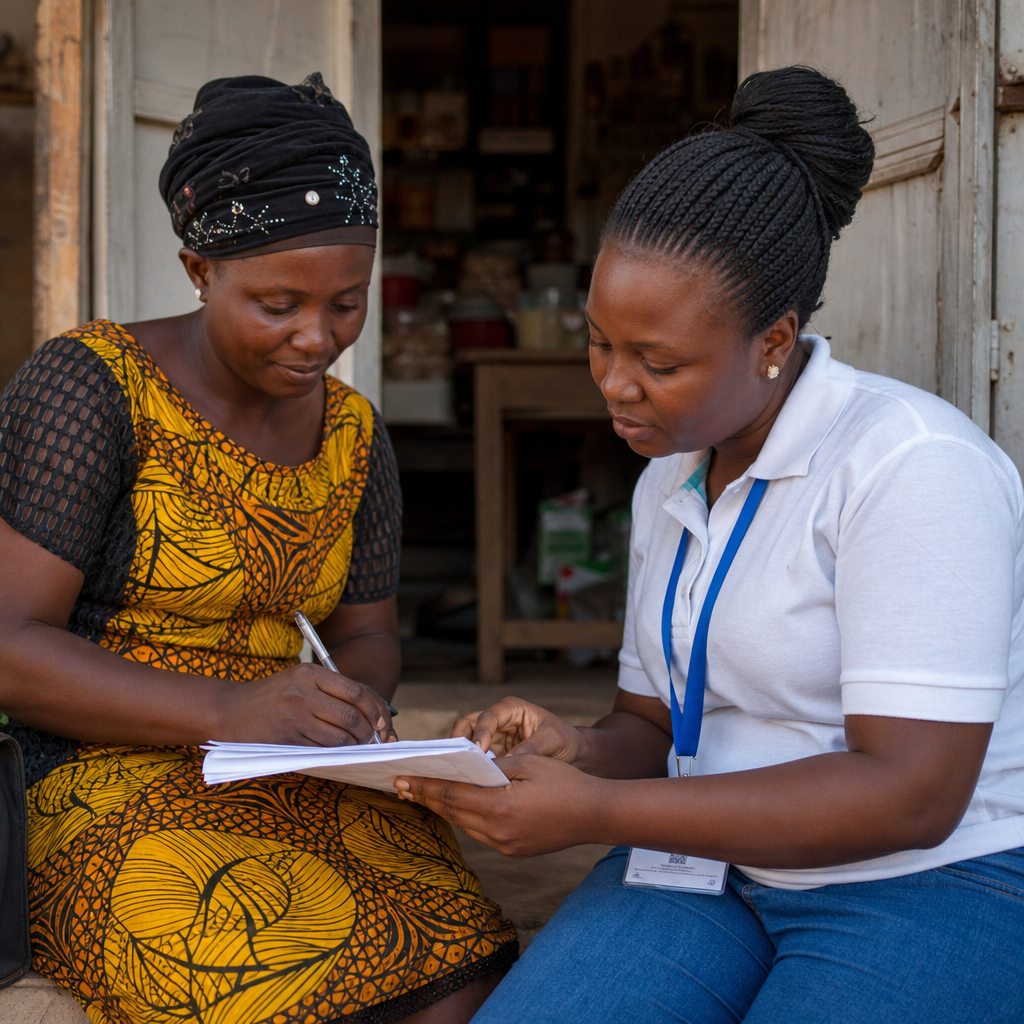
Microinsurance in development economics refers to low-premium, low-coverage insurance designed for people with irregular incomes, limited savings, and high exposure to risk. In practice, it sits at the intersection of finance, poverty reduction, public policy, and local market design. I have worked on financial inclusion projects where households could manage everyday expenses but were pushed into crisis by one failed harvest, one hospitalization, or one funeral. In those settings, microinsurance was not a niche product. It was a tool for smoothing consumption, protecting assets, and reducing the need for damaging coping strategies such as selling livestock, removing children from school, or taking expensive emergency loans.
In development economics, risk matters because poverty is not only a shortage of income; it is also a condition of vulnerability. Households in low-income and lower-middle-income countries often face overlapping shocks: weather volatility, crop disease, unemployment, illness, disability, price spikes, and death of a breadwinner. When formal safety nets are weak and credit markets are thin, a single event can erase years of progress. That is why economists study microinsurance alongside microcredit, savings groups, social protection, and mobile money. The central question is straightforward: can well-designed insurance improve welfare, resilience, and long-term investment for people typically excluded from conventional insurance markets?
The answer is nuanced. Microinsurance can increase financial security, support entrepreneurship, and encourage households to adopt higher-return activities because downside risk is partly covered. Yet enrollment, renewals, claims trust, and product understanding remain persistent obstacles. Demand is often lower than policymakers expect, even when premiums are subsidized. The reason is not simple irrationality. It includes basis risk, low liquidity, weak claims experience, limited insurance literacy, cultural norms around mutual aid, and distrust of providers. Successful programs recognize these frictions and design around them with careful distribution, transparent contracts, reliable claims administration, and products matched to specific risks.
As a hub within economics, this article covers the core forms of microinsurance, how markets are structured, what evidence says about impact, where products fail, and which policy choices shape outcomes. It also connects microinsurance to broader development themes including agriculture, health systems, gender, climate adaptation, digitization, and regulation. Understanding these links is essential because microinsurance is never just about premiums and payouts. It is about how poor households manage uncertainty, how institutions price and transfer risk, and how development strategy moves from short-term relief toward durable resilience.
What Microinsurance Covers and Why Product Design Matters
Microinsurance products are usually grouped by the underlying risk they cover. Health microinsurance pays for outpatient care, hospitalization, medicines, or defined procedures. Life and funeral insurance provides lump-sum support after death, often to cover burial costs and income disruption. Agricultural microinsurance protects against crop failure, livestock mortality, drought, flood, or excessive rainfall. Property microinsurance covers homes, market stalls, tools, or inventory against fire, theft, and disaster. Credit-life insurance repays a borrower’s loan if death or disability occurs, and personal accident policies pay fixed benefits after injury.
Design choices determine whether these products are useful. Indemnity insurance pays after measured loss, but claims verification can be expensive in remote areas. Index insurance pays when an objective indicator, such as rainfall at a weather station or satellite vegetation data, crosses a threshold. That lowers administration costs and reduces moral hazard, but it creates basis risk, meaning a farmer can suffer a loss without receiving payment if the index does not trigger. In fieldwork discussions, basis risk came up repeatedly as the fastest way to destroy trust. A product can be actuarially elegant and still fail if households feel it does not respond when they actually need help.
Good microinsurance design starts with a clear risk event, a payment structure that is easy to explain, and exclusions kept to an absolute minimum. Waiting periods, deductibles, co-pays, and benefit caps can protect viability, but they must be understandable. Timing matters as much as pricing. Agricultural premiums collected right after harvest are easier to pay than premiums due during the lean season. Health coverage linked to local clinics works better when provider networks are real, not nominal. The strongest products solve a specific problem in a way households can verify.
How Delivery Models Work in Low-Income Markets
Microinsurance rarely succeeds through a single institution acting alone. Most programs use partnerships among insurers, reinsurers, mobile network operators, cooperatives, microfinance institutions, governments, and nongovernmental organizations. The insurer underwrites risk, while a trusted local channel handles enrollment, premium collection, and customer education. In many markets, mobile money has become the most effective payment rail because it supports small, frequent premium payments and fast claims disbursement. Kenya’s mobile ecosystem showed early how digital rails can reduce transaction costs enough to make small-value insurance operationally feasible.
Distribution strategy is decisive because insurance is intangible. People cannot inspect it before purchase, so trust in the intermediary matters. Community-based organizations can explain products in local language and answer questions, but they may lack technical capacity. Microfinance institutions offer access to established borrower groups, yet compulsory bundling can create resentment if clients view insurance as a loan fee rather than protection. Public-private models can scale faster, especially for agriculture and health, but they depend on administrative quality and clear subsidy rules. No channel is universally best. The right model depends on the risk type, claims process, and customer relationship.
| Model | Typical Use | Strength | Main Limitation |
|---|---|---|---|
| Community-based scheme | Health, funeral | High local trust | Weak risk pooling and management capacity |
| Microfinance-linked insurance | Credit-life, health | Fast access to existing clients | Clients may not understand voluntary versus bundled cover |
| Mobile-based insurance | Life, health, crop | Low collection and payout costs | Low engagement without strong customer support |
| Government-supported program | Crop, health, disaster | Scale and subsidy capacity | Political interference and delayed payments |
Reinsurance is another essential part of market structure. Local insurers cannot carry concentrated catastrophe risk on their own, especially drought or flood exposure across entire regions. Reinsurers and, in some cases, disaster risk pools help diversify these losses. Without that back-end capacity, a product may sell for several seasons and then collapse after one severe event. Development economics treats this as a market-building issue, not just a firm-level problem. Sustainable microinsurance requires robust capital, data, and supervision behind the retail promise.
What the Evidence Says About Poverty, Investment, and Resilience
Microinsurance can improve welfare, but effects vary by product and context. The strongest logic appears in agriculture. When farmers are protected against severe downside losses, they may shift from low-risk, low-return crops toward improved seeds, fertilizer, or cash crops. Several studies in India and parts of Africa found that insurance access increased willingness to invest, though take-up was often modest. This distinction matters. Impact among enrollees can be meaningful even when market penetration remains low. Economists therefore evaluate both intensive effects on users and extensive effects across the target population.
Health microinsurance aims to reduce catastrophic out-of-pocket spending, which the World Health Organization and World Bank have long tracked as a major driver of impoverishment. In practice, financial protection depends on benefit depth, provider quality, and exclusions. A card that covers inpatient care but not diagnostics or medicines may leave families with most costs unchanged. Where schemes are integrated with functioning clinics and cashless treatment, the effect is stronger: earlier care seeking, fewer distress sales, and lower reliance on informal borrowing. Where service delivery is weak, insurance can raise expectations without delivering protection.
Life and funeral insurance often show high revealed value because the insured event is clear and socially significant. Funeral costs can be financially destabilizing, especially where burial obligations are immediate and communal norms are strong. Small fixed-benefit products therefore perform a real economic function. They are not merely ceremonial finance. They help households avoid liquidating productive assets at the worst possible time. Similarly, livestock insurance in pastoral areas can preserve herds, which are both income sources and stores of wealth.
Still, microinsurance is not a stand-alone anti-poverty solution. It works best when paired with savings, extension services, primary healthcare, accurate identification systems, and reliable payments infrastructure. In my experience, households value insurance more when they already have a mental model of formal finance through savings groups or mobile wallets. Insurance then becomes one layer in a broader resilience portfolio rather than an isolated product sold through a short campaign.
Why Demand Is Often Low Even When Risks Are High
One of the most consistent findings in development economics is the demand puzzle. People who are highly exposed to risk do not automatically buy insurance, even at low prices. Affordability is part of the story, but not the whole story. Premiums compete with immediate needs, and poor households often discount future benefits heavily because present liquidity is scarce. Yet low take-up also reflects product mismatch. If households worry mainly about moderate but frequent shocks, a policy covering only rare disasters may not feel worthwhile.
Trust is equally important. Many first-generation products suffered from poor communication, slow claims, or complicated exclusions. After one bad experience, word spreads quickly. Behavioral factors matter too. Insurance protects against uncertain future losses, while cash in hand solves today’s visible problem. Probability is hard to judge without repeated positive claims examples. That is why demonstrations, peer explanations, and transparent payout histories can matter as much as premium levels. Randomized evaluations have shown that framing, timing, and liquidity support can significantly influence purchase decisions.
Basis risk deserves special emphasis in agricultural insurance. If a farmer sees crops fail but receives no payout because rainfall at the reference station remained above the trigger, the technical explanation will not repair confidence. Advances in remote sensing, area-yield measurement, and blended indices have improved performance, but no index fully eliminates mismatch. The practical lesson is blunt: if precision is limited, communication must be excellent, and products should target systemic shocks where index methods are most defensible.
Regulation, Subsidies, and the Role of the State
Regulation determines whether microinsurance grows responsibly or becomes a source of consumer harm. Supervisors need proportionate rules that allow simple products and low-cost distribution while preserving solvency, fair treatment, and claims discipline. The International Association of Insurance Supervisors has provided guidance on inclusive insurance, emphasizing proportional regulation, market conduct, and accessible complaints systems. These are not abstract principles. In thin markets, one abusive product can set back trust for years.
Subsidies are often justified, especially for agriculture and health, because private pricing alone may be unaffordable and because insured resilience generates social benefits. The challenge is designing subsidies that expand access without distorting incentives or locking systems into permanent inefficiency. Smart subsidies are transparent, targeted, and linked to public goals such as climate adaptation or food security. India’s crop insurance experience illustrates both promise and difficulty: very large scale is possible, but data quality, claim timing, and state-level administration strongly affect outcomes.
The state also matters as data provider, reinsurer of last resort, and builder of enabling infrastructure. Weather stations, land records, civil registration, digital identity, interoperable payments, and health provider accreditation all improve insurance feasibility. In disaster-prone settings, sovereign risk financing and social protection systems should connect with microinsurance rather than operate in isolation. When households, insurers, and governments each cover different layers of risk, the overall system is more resilient and fiscally coherent.
Where Microinsurance Fits in the Future of Development Economics
Microinsurance is becoming more relevant as climate change increases weather volatility, urbanization changes employment patterns, and digital platforms reshape service delivery. The future is not simply more policies sold to more people. It is better integration of insurance with prevention, adaptation, and public systems. For farmers, that means linking coverage to advisory services, drought-tolerant seeds, and satellite-based monitoring. For health, it means combining financial protection with stronger primary care and provider accountability. For informal workers, it means products that reflect fluctuating incomes instead of assuming stable monthly payrolls.
Emerging tools can help. Parametric disaster cover enables faster payout after cyclones or floods. Mobile claims submission reduces paperwork. Alternative data can improve underwriting where formal records are sparse. But technology does not fix weak fundamentals. If contracts are unclear, indices are poorly calibrated, or customer support is absent, digital delivery only scales dissatisfaction faster. The durable gains come from disciplined product design, trusted distribution, sound regulation, and honest evaluation of what insurance can and cannot do.
For the economics hub, the main takeaway is simple. Microinsurance matters because development is shaped by risk as much as by income. Well-designed coverage can protect consumption, preserve assets, and support productive investment, especially when paired with savings, healthcare, extension, and social protection. Poorly designed coverage can waste scarce money and undermine trust. If you are mapping the wider economics of poverty reduction, labor markets, agriculture, climate adaptation, or financial inclusion, keep microinsurance on the agenda and examine it product by product, not as a single generic solution.
Frequently Asked Questions
What is microinsurance in development economics, and why does it matter?
Microinsurance is a form of insurance built for people who face serious financial risks but have limited and often irregular income. It usually involves low premiums, modest coverage amounts, simplified enrollment, and products tailored to risks that are common in low-income settings, such as crop failure, illness, accidental death, livestock loss, property damage, or funeral expenses. In development economics, microinsurance matters because poverty is not only about low income; it is also about vulnerability. A household may be getting by under normal conditions, yet one shock can erase years of progress. A failed harvest, a medical emergency, or the death of a breadwinner can force families to sell productive assets, pull children out of school, take on expensive debt, or reduce food consumption.
That is where microinsurance becomes economically important. It can help households absorb shocks without falling deeper into poverty. From a development perspective, this has implications beyond the individual policyholder. When families are less exposed to catastrophic losses, they may be more willing to invest in higher-yield crops, small enterprises, education, or preventive healthcare. In that sense, microinsurance can support resilience, reduce harmful coping strategies, and improve long-term welfare. It also sits at the intersection of public policy and market design because successful programs depend on trust, affordability, distribution networks, claims reliability, and regulation that protects consumers while allowing innovation. In short, microinsurance matters because it addresses one of the central problems in development economics: how to help vulnerable households manage risk in a way that supports stability and opportunity.
How is microinsurance different from traditional insurance?
Microinsurance differs from traditional insurance mainly in the realities it is designed for. Conventional insurance products are often built around stable incomes, formal employment, documented assets, and customers who can navigate complex paperwork and wait through long claims processes. Microinsurance, by contrast, is intended for people working in informal labor markets, smallholder agriculture, casual wage work, or microenterprise, where income can be seasonal, unpredictable, and easily disrupted. That means products have to be simpler, cheaper, and more practical. Premiums are generally smaller and may be collected in flexible ways, such as through mobile money, cooperatives, savings groups, employer groups, or bundled services.
The coverage itself is usually narrower and more specific than in mainstream insurance. A microinsurance policy might cover hospitalization cash benefits, funeral costs, livestock death, rainfall shortfalls, or accidental injury rather than offering broad and highly customized protection. Administration is also designed to reduce cost. Some products use parametric or index-based triggers, such as rainfall levels, so claims can be processed more quickly without requiring costly field verification for every loss. Distribution channels also differ. Instead of relying mainly on brokers or agents serving middle-income clients, microinsurance often reaches people through microfinance institutions, farmer organizations, mobile network operators, community associations, churches, retailers, and public-private partnerships.
Another major difference is the role of trust and financial literacy. Traditional insurance assumes a baseline familiarity with formal financial products. Microinsurance cannot make that assumption. People may have had little prior contact with insurance or may view it with skepticism, especially if they have seen slow payouts or confusing exclusions. As a result, communication, transparency, and claims performance are not side issues; they are central to whether the product works at all. In development economics, this distinction is critical because a product can be technically sound but still fail if it does not match local realities, payment patterns, and social expectations.
What kinds of risks does microinsurance usually cover in low-income communities?
Microinsurance typically focuses on risks that are both common and financially destabilizing for low-income households. Health-related shocks are among the most important. Even when treatment itself is subsidized, transportation, medicines, lost work time, and informal care costs can be enough to trigger a crisis. For that reason, many microinsurance products offer hospital cash benefits, limited health coverage, maternal care support, or accident protection. Funeral insurance is also common because burial expenses are immediate, socially significant, and often financed through debt or asset sales when no coverage exists.
In rural areas, agricultural and weather risks are especially important. Smallholder farmers may lose income due to drought, flood, pest outbreaks, or irregular rainfall. Livestock insurance can help pastoral and mixed-farming households cope with animal death or disease, while crop insurance can provide support when production collapses. Some schemes use index insurance, where payouts are linked to a measurable indicator like rainfall, temperature, or area-level yield. This approach can lower administrative costs and speed up payouts, although it also creates basis risk, meaning a farmer may suffer a loss without triggering a payment if the index does not accurately reflect local conditions.
Microinsurance may also cover life events and asset-related risks. Credit life insurance is frequently bundled with small loans so that if a borrower dies or becomes disabled, the debt does not pass to the family. Property microinsurance may cover simple housing structures, business inventory, fishing equipment, or market stalls against fire, flood, or theft. The exact mix depends on the local economy and the biggest sources of vulnerability. In development practice, the best products are not chosen because they are easy to sell in theory, but because they respond to the risks that repeatedly push households from precarious stability into crisis. That local fit is what makes microinsurance useful rather than merely available.
What are the biggest challenges in making microinsurance effective and sustainable?
The biggest challenge is balancing affordability, value, and sustainability at the same time. Premiums must be low enough for households with tight budgets, but if they are too low relative to the risk, the insurer cannot pay claims reliably or continue operating. Coverage limits also have to be meaningful. A product that is technically affordable but pays too little to matter will not build resilience or trust. This is why product design is such a delicate exercise in development settings: the insurance has to be simple, financially viable, and genuinely useful under real household constraints.
Trust is another major challenge. Insurance is an intangible promise, and for first-time users that promise can feel abstract until a claim is paid. If exclusions are unclear, if claims are delayed, or if people hear stories of denied payouts, demand can collapse quickly. Low financial literacy can worsen this problem, but the deeper issue is not simply education; it is whether the product performs as promised. Distribution partners also matter. If enrollment happens through lenders, mobile platforms, or cooperatives, each intermediary affects how well customers understand the product and how easily they can file claims.
There are also technical and institutional barriers. Insurers need data to price risk, yet reliable data may be limited in low-income and rural markets. Administrative costs per client can be high when policy values are small. Index insurance can help reduce transaction costs, but poor index calibration can create dissatisfaction. Regulation can be either too weak, exposing consumers to abuse, or too rigid, preventing experimentation with distribution and payment models. Adverse selection and fraud are ongoing concerns, especially if enrollment is voluntary and verification systems are weak. Finally, many risks in low-income communities are correlated. A drought, epidemic, or flood can affect many households at once, making it difficult for local schemes to remain solvent without reinsurance, public support, or strong risk pooling arrangements. Sustainability therefore depends not on one fix, but on a well-functioning ecosystem of design, data, distribution, regulation, and claims delivery.
Can microinsurance really reduce poverty, or is its impact more limited?
Microinsurance can reduce poverty-related vulnerability, but its impact is usually more nuanced than the strongest claims suggest. It is best understood as a resilience tool rather than a standalone poverty cure. Insurance does not directly raise income in the same way that employment, productive assets, or quality education might. What it does is protect households from setbacks that can destroy income gains and deepen poverty. If a family avoids selling livestock after a health emergency, keeps children in school after a funeral expense, or continues farming after a climate shock because insurance paid on time, that is a meaningful development outcome. It prevents downward mobility and protects future earning capacity.
Its broader economic value may also come from changing behavior before a shock occurs. When people know they have some protection, they may be more willing to make productive but riskier investments, such as adopting improved seeds, purchasing fertilizer, expanding a microenterprise, or seeking care earlier during illness. In this way, insurance can complement development goals by improving confidence and reducing the fear of total loss. However, that potential depends on product quality. If coverage is too narrow, payouts too small, or claims too uncertain, households may not change behavior at all. Poorly designed microinsurance can even create disappointment and distrust toward formal finance more generally.
So the honest answer is that microinsurance can play an important role in poverty reduction, but usually as part of a wider system. It works best alongside savings, access to healthcare, social protection, agricultural extension, credit, digital payments, and consumer protection. In the communities where financial shocks repeatedly push people into crisis, microinsurance can be one of the few tools specifically designed to manage that vulnerability. Its greatest contribution is often not dramatic transformation overnight, but preventing one bad event from becoming a long-term economic collapse.