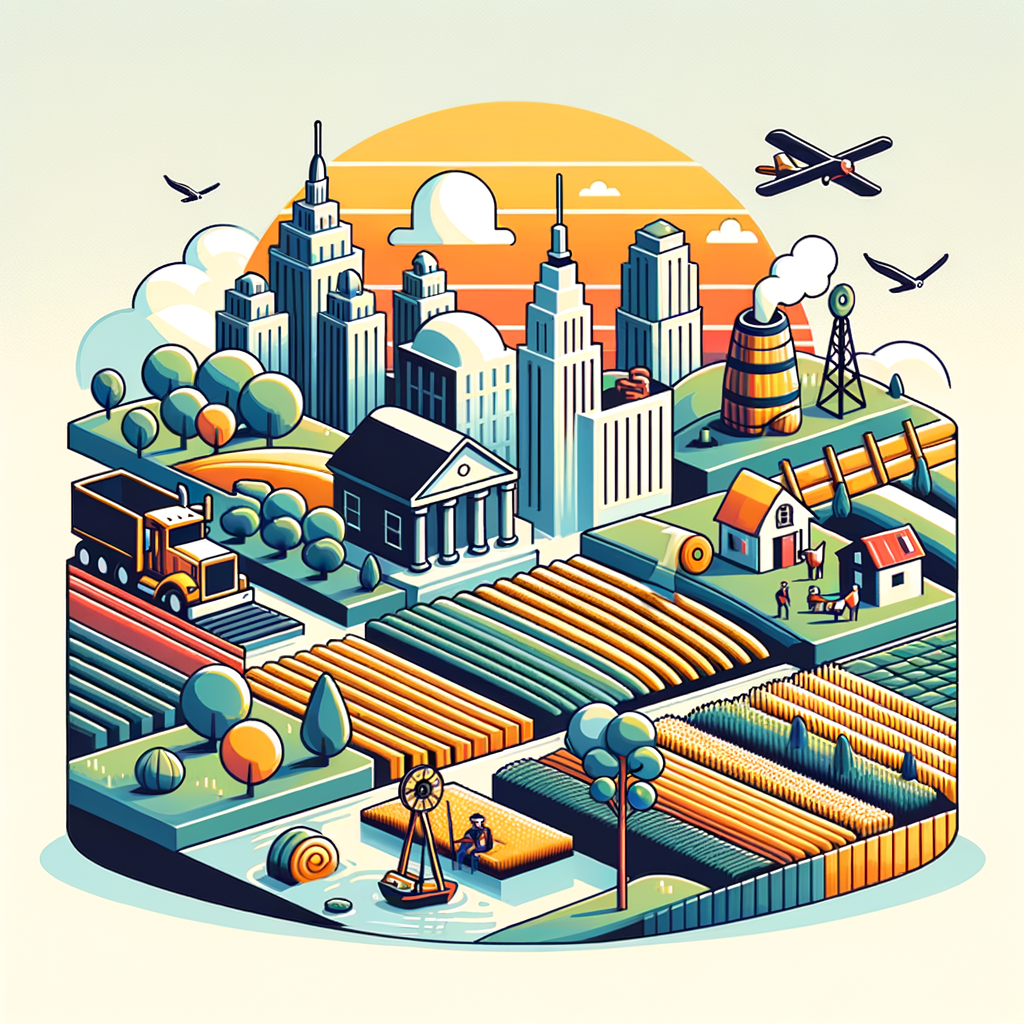
Understanding the dynamics underpinning any economy involves dissecting the fundamental components that contribute to production processes. These components, often referred to as the factors of production, are divided into four key categories: land, labor, capital, and entrepreneurship. Each of these factors plays a pivotal role in the creation of goods and services, providing a foundational framework that supports economic activity across the globe. This article delves into each of these categories, providing illustrative examples that underscore their importance and the intricate interplay between them. From the natural resources that form the basis of land to the innovative spirit that characterizes entrepreneurship, this comprehensive exploration seeks to provide a detailed understanding of how these factors are interconnected and their collective impact on both local and global economies.
Land, often associated with natural resources, encompasses everything from arable soil to mineral deposits. Its significance in production cannot be overstated, as it furnishes the raw materials necessary for the creation of various products. Labor, on the other hand, refers to the human effort, skills, and knowledge applied in the production process. It embodies the workforce that executes tasks ranging from manual labor to complex technical operations, channeling human potential into productive output. Capital is a man-made resource, which includes machinery, tools, and buildings, pivotal in enhancing productivity and facilitating more efficient production processes. Finally, entrepreneurship pertains to the risk-taking individuals who innovate, initiate business ventures, and often transform landscapes by introducing novel solutions to market demands.
In this detailed exploration, we will not only define each of these crucial economic elements but also explore real-world examples where these factors manifest, illustrating their indispensable role in shaping industries and influencing economic trajectories. By the conclusion, the reader will have a deeper appreciation for how land, labor, capital, and entrepreneurship synergize to fuel economic growth and prosperity. We endeavor to provide a narrative that is both enlightening and practical, reflecting the complex realities of economic systems which rely on these four foundational pillars.
Understanding Land
Land in economic terms is more than just the surface of the earth. It encompasses all natural resources that are not the direct result of human endeavor. This includes arable lands for agriculture, forests, lakes, rivers, mountains, and mineral deposits such as oil, coal, and metals. Land is inherently a passive factor of production; it requires the agency of labor, capital, and entrepreneurship to convert potential resources into actual, usable products. An excellent example of land as a factor of production is agriculture. Crops such as wheat, rice, and corn are grown on fertile lands, utilizing the natural fertility of the soil and climatic conditions favorable for crop growth.
Another instance where land plays a critical role is in the mining industry. Countries like Australia, which are rich in mineral resources such as iron ore, coal, and natural gas, leverage these natural endowments as a significant contributor to national wealth and economic stability. The exploitation of these resources requires minimal initial modification, exemplifying how land can directly influence economic prosperity. For instance, the mining of iron ore has propelled Western Australia into a position of economic strength, significantly contributing to the region’s GDP.
Land as a resource is finite and subject to natural limitations. Its effective management and preservation are crucial for sustainable economic development. Climate change and environmental degradation pose ongoing challenges to the traditional utility of land-based resources, prompting innovations in sustainable agriculture practices and reclamation projects to balance economic activities with environmental preservation.
The Role of Labor
Labor refers to the human resource that contributes physical or intellectual efforts to the production process. This factor includes everyone from factory workers to software engineers, contributing diverse skills and capabilities that are crucial to producing goods and services. Labor can be classified into different categories based on skill levels, such as unskilled, semi-skilled, skilled, and highly skilled labor.
An illustrative example of labor’s role is found in the technology industry. Companies such as Google and Apple rely heavily on highly skilled labor to develop cutting-edge software and innovative gadgets. Engineers and designers, through their intellectual efforts, drive technological advancements that keep these companies at the forefront of their industry, contributing substantially to economic growth. The labor force’s productivity and efficiency are pivotal in determining the competitive edge and innovative potential of any company.
The automobile industry provides another perspective, where assembly line workers, mechanics, and designers all play crucial roles. These laborers bring together various components to create a finished vehicle, demonstrating the integral nature of labor at every production stage. The involvement of labor across different skill levels ensures the seamless operation of complex production systems and contributes to economies’ industrial backbone.
The Importance of Capital
Capital encompasses the tools, machinery, and buildings that are used to produce goods and services. Unlike natural resources, capital is a product of human creation, evolving over time with technological advancements and economic development. Capital increases the productive capacity of labor and enhances production efficiency.
An example of capital’s pivotal role is evident in the manufacturing sector. Factories equipped with state-of-the-art machinery are able to produce goods more efficiently than those relying on manual labor alone. In the automobile industry, the use of robotic arms and automated machines significantly increases production rates while reducing error margins, thus highlighting capital’s capacity to augment productivity.
The role of capital is also observed in the finance sector. Investment in financial technology – such as automated trading systems and online banking platforms – illustrates how capital can transform industry operations. By enabling faster transactions and greater accessibility, capital investments in technology foster increased financial activity, contributing to economic growth.
Another notable example is the agricultural industry, which benefits immensely from capital in the form of advanced machinery. Tractors, combine harvesters, and irrigation systems enable large-scale farming and enhance crop yields, ensuring food security and contributing to global trade.
The Power of Entrepreneurship
Entrepreneurship is often described as the driving force behind economic innovation and growth. Entrepreneurs identify market opportunities and create new products or services that meet consumer demands. They undertake the risks associated with business ventures, seeking profit while contributing to economic development and job creation.
Notable examples of entrepreneurship can be observed in the rise of tech startups like Airbnb and Uber. These companies revolutionized the hospitality and transportation industries, respectively, by leveraging technology and innovative business models to meet unmet consumer needs. Entrepreneurs such as Brian Chesky and Travis Kalanick demonstrated vision and willingness to take risks, resulting in global enterprises that have transformed consumer behavior and industry standards.
Entrepreneurship also plays a crucial role in revitalizing local economies. Small business owners, often referred to as the backbone of the economy, contribute to community development by creating jobs and fostering regional economic activity. In areas where traditional industries have ceased to be viable, entrepreneurial ventures can provide an alternative pathway to economic resilience and sustainability.
A distinguishing feature of entrepreneurship is its ability to create new markets through innovation. Elon Musk’s ventures in space exploration and sustainable energy with SpaceX and Tesla exemplify how entrepreneurs push beyond existing boundaries to carve out new economic landscapes, enhancing future economic possibilities.
Conclusion
In conclusion, the four factors of production – land, labor, capital, and entrepreneurship – are integral to understanding economic systems and their functioning. They each play distinct yet interrelated roles in economic production and growth, showcasing their necessity in various sectors. Land provides the raw materials, labor contributes human effort and expertise, capital enhances production efficiency, and entrepreneurship drives innovation and economic dynamism.
The interplay between these factors is crucial for the success and sustainability of any economy. Effective management of land resources, investment in human capital, strategic deployment of financial capital, and fostering an entrepreneurial spirit are vital for economic resilience and growth. These factors are not isolated but rather interact in synergy to create a conducive environment for economic activities, facilitating advancements in technology, efficiency in production, and addressing consumer needs with innovative solutions.
Understanding these factors not only aids policymakers in framing economic policies that encourage sustainable development but also provides businesses with insight into optimizing their production processes. As economies continue to evolve, acknowledging the role and impact of these foundational elements remains essential in navigating the complexities of global and local markets, ensuring the prosperity and welfare of societies worldwide.
Frequently Asked Questions
1. What role does ‘land’ play in the factors of production, and can you provide some specific examples?
In the context of the factors of production, ‘land’ refers not only to the earth’s surfaces, such as fields and forests, but also to the various natural resources derived from it. This includes resources like minerals, water, and even the air. Essentially, land encompasses all the raw materials available or sourced from nature that contribute to the creation of goods and services. For instance, agricultural land is used for growing crops, oil reserves are tapped for fuel, and forests provide timber for construction and paper production. Each of these examples illustrates how land serves as a foundation for various industries and economic activities. Through its vast natural gifts, land supplies the essential ingredients for production, forming a critical component of economic ecosystems worldwide.
2. How does ‘labor’ contribute to production processes, and can you offer examples of different types of labor in various industries?
Labor is a vital component of the factors of production, comprising the human effort—both physical and intellectual—that is involved in the creation of goods and the provision of services. This includes a wide range of activities and roles, from the manual work performed by factory workers to the strategic planning carried out by business executives. For example, in the manufacturing industry, labor could involve assembly line workers, machine operators, and quality assurance personnel. In the IT sector, it might include software developers, network engineers, and IT support staff. In healthcare, labor extends to doctors, nurses, physiotherapists, and administrative staff. Each of these roles brings unique skills and expertise to the table, highlighting how diverse labor contributions drive productivity and innovation across sectors. Without labor, the transformation of raw materials into finished goods and services would be impossible, underscoring its indispensable role in the economy.
3. What is meant by ‘capital’ in economics, and could you provide illustrative examples of capital being used in various contexts?
In economic terms, ‘capital’ refers to the tools, machinery, and facilities used in the production of goods and services. It encompasses tangible items like factories, computers, transportation vehicles, and modern technology—essentially, any asset that helps in manufacturing or delivering a service. For example, the manufacturing industry uses machinery for mass production, while the transportation industry relies on vehicles and infrastructure to move people and goods. Technology companies invest in advanced computer systems to enhance software development. Even education institutions can be seen through the lens of capital when considering the buildings and technology they utilize to deliver educational services. Unlike other factors of production, capital is unique because it is a man-made asset, created to boost productivity. Efforts to increase capital through investments reflect a desire to enhance efficiency, scale operations, and ultimately, drive economic growth.
4. What is ‘entrepreneurship,’ and how does it link the other factors of production? Can you give examples of successful entrepreneurship in varied industries?
Entrepreneurship is the driving force that brings together the other factors of production—land, labor, and capital—by recognizing opportunities, innovating solutions, and assuming the risks necessary to produce and market new products and services. Entrepreneurs are visionaries who leverage their creativity and strategic thinking to meld raw materials, workforce, and machinery to create economic value. For example, in the tech industry, entrepreneurs like Elon Musk have merged technological innovations with the right talent and infrastructure to revolutionize sectors like automotive and space travel. Similarly, Jeff Bezos transformed the way we shop by integrating logistics, technology, and workforce management to create Amazon. In the food industry, entrepreneurs constantly fuse new culinary techniques with market insights to cater to changing consumer preferences. By spearheading initiatives that harness the factors of production, entrepreneurs catalyze progress and competitive advantage, propelling industries and economies forward.
5. How do the factors of production intertwine with each other to drive economic development, and what are some real-world examples of this symbiosis in action?
The factors of production—land, labor, capital, and entrepreneurship—interact dynamically to facilitate economic development, each complementing the others to stimulate productivity and innovation. This interplay is evident in sectors like the tech industry, where human labor, intellectual capital, and raw materials like silicon for chips come together under entrepreneurial vision to create groundbreaking products. Consider the construction industry: land is allocated for building, laborers perform the physical and skilled work, capital provides the machinery and tools, and entrepreneurs or developers strategize for market demand and project execution. These examples underscore how intertwined these factors are to manifest tangible goods, efficient services, and innovative developments. When optimized, this synergy leads to increased efficiency, lower costs, and higher outputs, thereby fostering economic growth. Hence, understanding and enhancing the confluence of these factors remains a fundamental aspect of bolstering any economy’s developmental trajectory.