
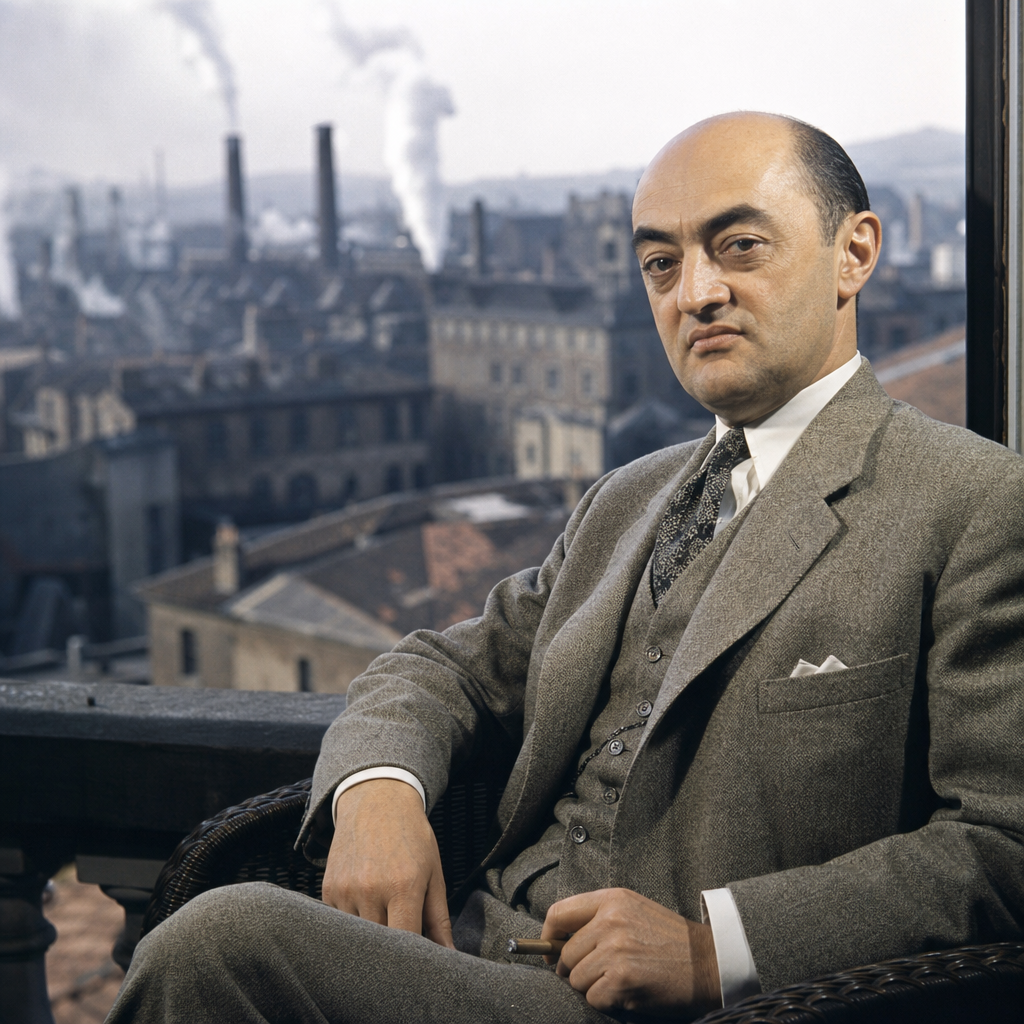
Joseph Schumpeter and creative destruction describe one of the most important ideas in economics: capitalism advances not through stability, but through relentless replacement. Schumpeter used the phrase to explain how new products, production methods, business models, and forms of organization overturn older ones, reshaping industries and standards of living at the same time. In plain terms, creative destruction means progress creates winners, but it also makes existing firms, skills, and routines obsolete.
This concept matters because it helps explain why economies grow unevenly, why dominant companies can fall quickly, and why innovation often arrives with disruption rather than calm improvement. I have seen this framework clarify everything from the decline of local retailers after ecommerce expansion to the pressure artificial intelligence now places on professional services. It is not just a theory about entrepreneurship. It is a practical lens for understanding business cycles, labor market churn, policy debates, and long-run productivity growth.
Joseph Schumpeter was an Austrian-born economist, later active at Harvard, whose major works included The Theory of Economic Development in 1911, Business Cycles in 1939, and Capitalism, Socialism and Democracy in 1942. He argued that the central force in capitalism is not price competition alone, as in many textbook models, but innovation carried by entrepreneurs and financed through credit. That innovation sets off waves of change. New combinations displace old arrangements. Entire sectors reorganize. Consumers benefit from better and cheaper goods, yet firms and workers tied to the older order bear real costs.
Understanding Schumpeter requires defining several connected terms. Innovation means introducing a new good, a new method of production, a new market, a new source of supply, or a new organizational form. Entrepreneurship, in Schumpeter’s sense, is not simply owning a business. It is the act of recombining resources in novel ways that alter market structure. Capitalism, in his analysis, is a dynamic system driven by these breakthroughs, not a static equilibrium. Creative destruction is the process through which those breakthroughs diffuse, undermine incumbents, and generate new growth paths.
For an economics hub page, this subject is especially useful because it links macroeconomics, microeconomics, industrial organization, labor economics, finance, economic history, and public policy. It also serves as a guide to many “miscellaneous” topics that do not fit neatly in one category: technological unemployment, monopoly power, startup ecosystems, regulation, productivity slowdowns, and structural change. If you want one idea that ties together railroads, automobiles, semiconductors, streaming media, and generative AI, Schumpeter’s framework is the place to start.
Who Joseph Schumpeter Was and What He Changed in Economics
Schumpeter was born in 1883 in Moravia, then part of the Austro-Hungarian Empire, and trained in the Austrian intellectual tradition, but his economics differed sharply from a simple free-market defense. He was deeply historical, institutionally aware, and interested in how banking systems, corporate structures, and social attitudes shape development. When I teach his ideas, the first correction I make is that Schumpeter was not mainly describing small, gradual market adjustments. He was describing discontinuous change driven by entrepreneurial innovation.
Before Schumpeter, much economic analysis emphasized equilibrium: how prices coordinate supply and demand under given conditions. Schumpeter shifted attention to how the conditions themselves change. In his famous account, entrepreneurs introduce “new combinations,” often using bank credit to pull resources away from established uses. That interrupts circular flow, the routine repetition of existing production. Development begins when routine is broken. Growth, then, is not just more of the same. It is qualitative transformation.
His influence extends beyond economics departments. Management thinkers use Schumpeter to explain disruption. Historians use him to interpret industrial revolutions. Investors use his logic to identify firms with durable innovative capacity. Competition authorities increasingly confront Schumpeterian questions when deciding whether temporary monopoly profits are a reward for innovation or a barrier that prevents the next wave. That breadth is why this topic belongs at the center of a broad economics hub.
What Creative Destruction Means in Practice
Creative destruction is the continual process by which innovation destroys the economic value of older technologies, skills, assets, and firms while creating new value elsewhere. The process is “creative” because it raises productivity and expands possibilities. It is “destructive” because factories close, business models fail, and workers must adapt. Both sides are essential. If an economy keeps only the gains and none of the losses, it is not describing real change; it is describing marketing language.
A straightforward example is photography. Film-based companies such as Kodak excelled in chemistry, manufacturing, and distribution built around rolls of film and development services. Digital imaging changed the basis of competition. Image capture became electronic, storage became software-based, and sharing moved online. Consumers gained convenience and lower marginal cost per photo, but incumbent capabilities lost value rapidly. Kodak’s decline was not caused by one bad quarter. It reflected a technological and organizational transition consistent with Schumpeter’s model.
Another example is transportation. Railroads transformed freight and passenger movement in the nineteenth century, then automobiles and trucks changed settlement patterns, logistics, and consumer behavior in the twentieth. Later, containerization revolutionized global trade by standardizing shipping units, slashing handling costs, and integrating ports, rail, and trucking. Each wave built wealth, but each also displaced earlier infrastructures, firms, and labor arrangements. Creative destruction unfolds over decades as often as it does over a few years.
| Innovation wave | What it replaced | Main economic effect |
|---|---|---|
| Steam railways | Canals and horse transport | Faster trade, national markets, urban expansion |
| Automobiles | Horse-drawn local transport | Mass mobility, suburbs, oil and road industries |
| Digital photography | Film and photo processing | Near-zero image cost, platform-based sharing |
| Streaming media | Physical media rental and broadcast schedules | On-demand access, subscription platforms, data-driven content |
| Cloud software | On-premise enterprise systems | Lower upfront costs, rapid deployment, recurring revenue models |
Innovation, Entrepreneurs, and Finance
Schumpeter placed the entrepreneur at the center of development, but not as a lone genius myth. In his framework, entrepreneurs redirect resources into new combinations. That may involve launching a startup, transforming a large corporation, or opening an entirely new market. The critical point is function, not personality. The entrepreneur breaks routine and creates temporary advantage by doing something economically new.
Finance is equally important. Schumpeter argued that credit creation allows innovators to command resources before their ideas have generated profits. In modern terms, venture capital, growth equity, corporate R&D budgets, and bank lending all help determine which experiments scale. The history of innovation supports this view. Semiconductor development relied on defense procurement, specialized finance, and research universities. Biotechnology depended on patent systems, public science, and risk capital. Software platforms scaled through network effects and capital markets willing to fund growth ahead of earnings.
This is why creative destruction is not only a story about inventors. It is also a story about institutions. Strong property rights, bankruptcy procedures, securities law, antitrust enforcement, research funding, and labor mobility affect how quickly an economy can reallocate resources. Silicon Valley became a dense innovation ecosystem partly because talent, capital, universities, suppliers, and experienced founders interacted repeatedly. Regions without that institutional depth often generate ideas but struggle to commercialize them.
Business Cycles, Long Waves, and Structural Change
Schumpeter did not see recessions purely as random shocks or policy mistakes. He thought clusters of innovation can create booms, followed by adjustment periods as investment is digested and weaker firms fail. That does not mean every downturn is healthy or self-correcting. It means technological transformation often arrives in bursts, and those bursts generate overexpansion, imitation, and eventual shakeout. In my experience, this is one of the most useful ways to explain why transformative sectors attract too much capital before settling into sustainable structures.
Consider the dot-com era. The internet genuinely changed commerce, advertising, communications, and enterprise software. Yet the late 1990s also produced excess speculation, weak business models, and inflated valuations. The crash destroyed firms and paper wealth, but it did not invalidate the underlying innovation. Instead, the shakeout cleared space for stronger companies, better infrastructure, and more disciplined execution. Amazon survived and expanded. Broadband improved. Digital payments matured. The destruction was painful, but the creative side kept unfolding.
Schumpeter is also associated with long waves of development, often discussed alongside Kondratiev cycles, though the evidence for strict periodicity is mixed. The stronger point is that general-purpose technologies such as electricity, the internal combustion engine, and information technology diffuse across many sectors over long periods. Their full economic impact appears gradually through complementary investments, worker retraining, standards, and organizational redesign. Productivity gains often lag invention because adoption takes time.
Monopoly, Competition, and the Role of Large Firms
One of Schumpeter’s most debated claims is that large firms with market power may sometimes innovate more effectively than atomized competitors because they possess research capacity, distribution, and financing. He did not celebrate monopoly as harmless. He argued that the relevant competition in capitalism can be competition from the new product or the new technology, not just from a rival selling a similar product today. That is a crucial distinction in antitrust and market analysis.
For example, IBM dominated mainframes, then personal computers shifted computing toward different architectures. Microsoft controlled desktop operating systems, yet mobile computing reduced the centrality of that position. Nokia led mobile handsets before smartphones changed the basis of competition. More recently, streaming displaced parts of cable television’s old bundle. In each case, incumbents were pressured not only by price rivals, but by a new technological paradigm.
Still, Schumpeterian competition has limits. Network effects, data advantages, switching costs, and acquisitions can allow incumbents to neutralize threats before destruction becomes creative for the broader economy. Digital platforms illustrate the tradeoff. Scale can fund innovation and lower consumer prices, but it can also entrench gatekeepers. Good policy should distinguish size earned through innovation from behavior that blocks future entry.
Workers, Inequality, and Social Costs
Creative destruction raises output over time, but its gains and losses are unevenly distributed. Workers in declining sectors face unemployment, wage pressure, geographic immobility, and skill mismatch. Communities built around one employer or industry can deteriorate for decades after a technological or trade shock. I have seen analysts talk about disruption as if labor can be reallocated instantly. In practice, retraining is slow, housing markets are sticky, and social identity is tied to occupation.
The decline of U.S. manufacturing employment after automation and global integration shows this clearly. Output can rise while employment falls because productivity improves. That is efficient in one sense, but harsh in another. Similar tensions now appear in clerical work, customer service, and routine programming tasks as AI systems improve. Economists should state both truths at once: innovation expands possibility, and adjustment costs are real.
Policy responses matter. Wage insurance, portable benefits, community college partnerships, apprenticeships, relocation support, and effective unemployment insurance can reduce the damage without freezing progress. The Nordic “flexicurity” approach is often cited because it combines labor market flexibility with stronger safety nets and active labor market policies. No model transfers perfectly across countries, but the principle is sound: economies adapt better when workers are supported through transitions rather than left to absorb all the shock alone.
Why Schumpeter Still Matters in the Age of AI
Schumpeter’s relevance is especially clear in artificial intelligence. AI is not merely another software feature. It changes cost structures, task allocation, product design, and competitive advantage across sectors from law and consulting to logistics, healthcare, and media. Firms that integrate AI into workflows can increase output per worker, reduce turnaround times, and offer services at lower price points. At the same time, older processes lose value, and some entry-level roles may shrink before new categories fully emerge.
The right Schumpeterian question is not whether AI will “replace all jobs.” It is which tasks are being automated, which complementary skills become more valuable, and which organizations can redesign processes fastest. History suggests the biggest winners are not always the inventors of a technology, but the firms that deploy it effectively at scale. That was true for electricity in manufacturing and for the internet in retail. It is likely to be true for AI in knowledge work.
For readers using this economics hub as a starting point, Schumpeter provides a durable framework: growth comes from new combinations, those combinations spread through institutions and finance, and the result is uneven but transformative change. To understand modern capitalism, follow the innovations, the incentives behind them, and the groups asked to bear the transition costs. Use that lens across every miscellaneous economic topic you encounter, and you will read the news, markets, and policy debates more clearly.
Frequently Asked Questions
What did Joseph Schumpeter mean by creative destruction?
Joseph Schumpeter used the term creative destruction to describe the process by which capitalism renews itself from within. Instead of seeing economic progress as smooth, stable, or gradual, he argued that growth often comes through disruption. New inventions, better production methods, new business models, and new forms of organization do not simply add to the existing economy. They frequently displace older firms, older technologies, and even older ways of working. In that sense, destruction is “creative” because the loss of outdated structures makes room for more productive ones.
A simple way to understand the idea is to think about how automobiles replaced horse-drawn transport, or how digital photography overtook film. In both cases, innovation improved convenience, lowered costs, expanded access, and created entirely new industries. At the same time, it also undermined businesses, jobs, and skills tied to the older system. Schumpeter believed this was not a side effect of capitalism but one of its central mechanisms. The economy advances because entrepreneurs introduce new combinations that upset the status quo and force markets to reorganize around more efficient and valuable solutions.
Why is creative destruction considered so important in capitalism?
Creative destruction is important because it helps explain how capitalist economies generate long-term growth. In Schumpeter’s view, competition is not only about firms lowering prices within an existing market. More importantly, it is about innovators changing the market itself. A breakthrough product, a superior technology, or a radically better business model can overturn dominant companies and redefine entire industries. That kind of dynamic competition is one of the main reasons capitalist systems tend to produce rising productivity, expanding consumer choice, and higher standards of living over time.
The concept also matters because it captures a hard truth about economic progress: growth is rarely painless. The same process that creates new wealth can also eliminate established businesses and render certain skills less valuable. Workers may need retraining, firms may fail, and entire regions can struggle if they depend heavily on declining industries. Schumpeter’s insight is valuable precisely because it recognizes both sides at once. Capitalism’s strength lies in its ability to adapt and innovate, but that adaptability often comes with instability, dislocation, and uneven outcomes in the short run.
Can you give real-world examples of creative destruction?
Yes. One of the clearest examples is the shift from film cameras to digital photography. Digital technology made photography cheaper, faster, and easier to share, which benefited consumers and created new opportunities in software, smartphones, and online platforms. But it also devastated firms built around film production and processing. Another major example is the rise of e-commerce, which transformed retail by giving consumers greater convenience, broader selection, and often lower prices. At the same time, many traditional brick-and-mortar retailers lost market share or disappeared entirely because they could not adapt quickly enough.
Other examples include streaming services replacing physical media and much of traditional video rental, ride-sharing platforms challenging older transport models, and renewable energy technologies pressuring parts of the fossil fuel economy. In each case, the pattern is similar. Innovation opens new possibilities, attracts investment, changes consumer expectations, and eventually alters the structure of the market. The gains can be substantial, but they come with disruption for existing firms and workers. That tension is exactly what Schumpeter meant: progress does not simply build on the old order; it often replaces it.
How does creative destruction affect workers, businesses, and society?
For workers, creative destruction can be both an opportunity and a risk. New industries create jobs, raise demand for new skills, and can improve wages for those able to adapt. But workers in declining sectors may face layoffs, wage pressure, or the need to retrain. The impact is rarely distributed evenly. People with flexible skills, mobility, or access to education tend to adjust more easily, while those tied to a shrinking occupation or region may bear a heavier burden. That is why discussions of innovation often overlap with concerns about labor markets, education, and social policy.
For businesses, creative destruction creates constant pressure to improve. Firms cannot rely forever on past success, because a new competitor with a better idea can quickly erode their position. This encourages investment, experimentation, and efficiency, but it also means failure is a normal part of a dynamic economy. For society as a whole, the long-run benefits are often significant: better products, lower costs, new industries, and higher productivity. Still, the social costs can be serious if transitions are unmanaged. Economies usually benefit most when they combine openness to innovation with institutions that help people adjust, such as training systems, safety nets, and policies that support entrepreneurship and competition.
Is creative destruction always a good thing?
Not automatically. Schumpeter saw creative destruction as a driving force behind economic development, but that does not mean every disruption is beneficial in every respect. Some forms of change raise productivity and improve living standards broadly, while others may create gains that are concentrated among a small group while imposing large costs on workers, communities, or consumers. The quality of the innovation matters, the market structure matters, and the broader institutional setting matters. A disruptive change that increases efficiency but destroys livelihoods without pathways for adjustment can produce social and political strain even if it looks positive in narrow economic terms.
The most balanced way to view creative destruction is as a powerful engine of progress that needs capable institutions around it. Economies generally prosper when they allow experimentation, entry, and competition, because those forces generate discovery and renewal. But healthy capitalism also depends on helping people transition when older industries decline. In practice, that means the goal is not to stop creative destruction altogether, since doing so can trap an economy in stagnation. The goal is to capture its benefits while reducing unnecessary harm through education, retraining, mobility, and fair competitive rules. Schumpeter’s idea remains so influential because it explains both the dynamism and the turbulence at the heart of capitalist change.