
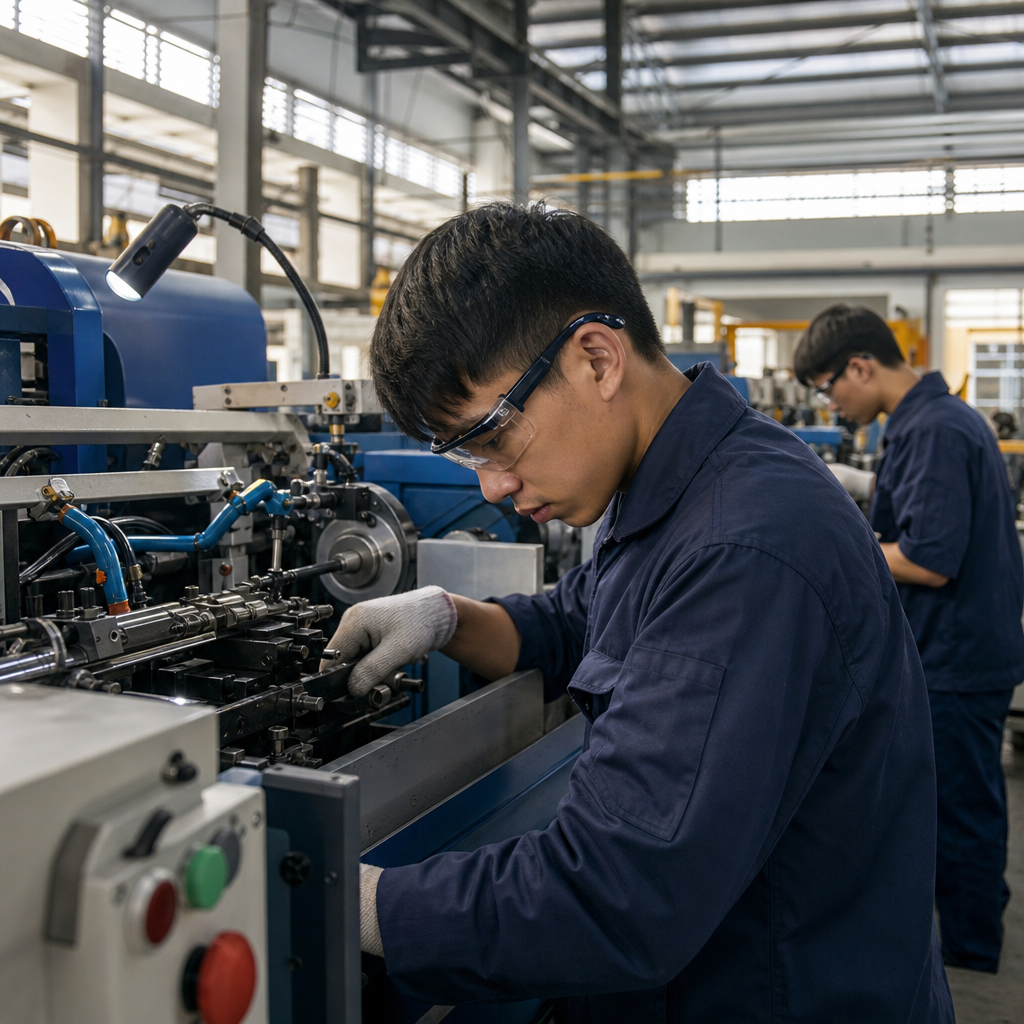
Infant industry protection is the policy of sheltering new domestic industries from foreign competition until they become productive enough to compete on their own. In practice, governments use tariffs, import quotas, subsidies, local content rules, procurement preferences, or temporary tax advantages to give young firms breathing room. The idea appears simple: if a country leaves every market fully open from the start, established foreign producers with larger scale, better technology, and cheaper finance may crush local entrants before they can learn. I have seen this argument surface repeatedly in trade policy work, especially when officials compare a promising sector’s long-term potential with its weak short-term balance sheet.
The key term is “infant industry.” It does not mean a small firm in general. It means an industry that could eventually achieve international competitiveness after a period of learning-by-doing, investment in capabilities, and expansion to efficient scale. The protection is therefore justified, if at all, by a dynamic argument rather than a static one. Static efficiency asks who can produce most cheaply today. Dynamic efficiency asks whether a temporary intervention can create future productivity gains large enough to outweigh current costs. That distinction is the heart of the debate.
This topic matters because it sits at the intersection of development economics, trade theory, industrial policy, and political economy. Many now-rich economies used some form of protection during industrialization, yet many protection programs also failed, raising prices, rewarding lobbying, and locking countries into uncompetitive production. For an economics hub page, infant industry protection is essential because it connects to comparative advantage, economies of scale, externalities, export discipline, state capacity, and the recurring question of when governments should intervene in markets and when they should not.
The economic logic behind infant industry protection
The classic case for infant industry protection starts from market failure. If private investors cannot capture all the benefits from building a new industry, they may invest too little even when the country as a whole would gain. Learning-by-doing is the standard example. When one firm trains workers, experiments with production methods, and helps create a supplier network, other firms often benefit. Those spillovers are real, but the pioneering firm may not be paid for them. In that setting, free trade can produce underinvestment in capabilities that matter for future growth.
Another pillar of the argument is increasing returns to scale. New manufacturing sectors often have high fixed costs for machinery, engineering talent, standards compliance, and distribution. Established foreign producers spread those costs over large output, while local entrants cannot. Temporary protection can create a domestic market large enough for local firms to move down the average cost curve. Once scale is reached, the domestic industry may survive without shelter. Economists sometimes describe this as helping firms cross a coordination threshold that private markets alone may not cross.
Capital market imperfections strengthen the logic. In lower-income economies, long-term finance for risky industrial projects is often scarce or expensive. Banks prefer collateralized lending, not uncertain bets on new sectors. If entrepreneurs cannot borrow against future productivity gains, potentially viable industries remain unborn. Protection, especially when combined with development banking or targeted subsidies, can offset that financing gap. The intellectual foundation traces back to Alexander Hamilton’s 1791 Report on Manufactures and Friedrich List’s nineteenth-century defense of national development through temporary industrial support.
However, the argument is conditional. Protection makes economic sense only if three tests are met: the industry can become efficient, the state can identify supportable activities with reasonable accuracy, and the protection can be removed once maturity arrives. Those conditions are demanding. Without them, the infant industry claim becomes a slogan used to shield any politically connected producer. That is why serious analysis never stops at “new industries need help.” It asks how capability formation will happen, who pays the cost, and what measurable evidence would prove that the industry has graduated.
How governments protect infant industries in practice
Governments have several policy tools, and each works differently. Tariffs raise the price of imported goods, allowing domestic firms to charge more while building scale. Import quotas directly limit foreign supply. Production subsidies lower costs instead of raising consumer prices, though they require budget resources and administrative discipline. Local content rules require firms to source a share of inputs domestically, which can nurture supplier ecosystems but may also raise costs. Public procurement can guarantee demand for domestic producers in sectors such as rail equipment, defense components, pharmaceuticals, or renewable energy equipment.
In my experience, the choice of instrument matters as much as the decision to intervene. A transparent, declining tariff schedule tied to investment and export targets is less distortionary than open-ended protection with no benchmarks. Export requirements have historically been important because they force firms to meet world standards rather than remain comfortable in a captive home market. East Asian industrial policy often worked best where support was conditional on performance, not simply granted in response to lobbying. That distinction separates strategic discipline from rent distribution.
| Policy tool | How it helps | Main risk | Typical best use |
|---|---|---|---|
| Tariff | Creates price space for domestic firms to learn and expand | Higher prices for consumers and weak pressure to improve | Short, declining protection in tradable manufacturing |
| Subsidy | Lowers production cost without restricting imports directly | Fiscal burden and misallocation if poorly targeted | Technology adoption, training, early scale-up |
| Quota | Guarantees market share for local producers | Encourages scarcity rents and corruption | Rarely ideal except in tightly administered transitions |
| Local content rule | Builds supplier linkages and domestic value chains | Can trap firms into expensive inputs | Sectors with realistic supplier development potential |
| Public procurement | Provides reliable demand and reference customers | Political favoritism and cost overruns | Health, infrastructure, transport, strategic equipment |
Good design also requires sunset clauses, independent review, and hard metrics. Productivity growth, export performance, defect rates, unit cost reduction, and domestic value-added are better indicators than employment alone. Employment matters, but protected jobs can be very expensive if output remains inefficient. The practical question is never whether an industry exists after protection. It is whether it becomes competitive enough that support can end without collapse. If not, the infant has become permanently dependent.
Historical examples: success, failure, and mixed outcomes
Supporters of infant industry protection usually point to the United States, Germany, Japan, South Korea, and Taiwan during key phases of industrial development. The historical record does show that many successful industrializers did not rely on pure laissez-faire. In the nineteenth century, the United States maintained relatively high tariffs for long periods while building manufacturing capacity. Germany also used protective measures while integrating industrial policy with banking, technical education, and infrastructure. The broad lesson is not that tariffs alone created success, but that trade policy operated alongside institutional development and investment in productive capability.
South Korea offers one of the clearest modern examples of disciplined support. From the 1960s through the 1980s, the state directed credit, protected selected sectors, and promoted heavy and chemical industries. But the support came with relentless export pressure. Firms had to sell abroad, earn foreign exchange, and meet performance goals. Companies such as Hyundai and Samsung did not become globally competitive because they were protected forever; they became competitive because temporary shelter was paired with scale, technology acquisition, managerial upgrading, and brutal exposure to world markets.
Brazil and India illustrate a more mixed record. Both countries used import substitution industrialization for long periods in the twentieth century. They did create domestic industrial bases in automobiles, machinery, chemicals, and other sectors. Yet extended protection often produced high-cost production, technological lag, fragmented scale, and weak export competitiveness. India’s pre-1991 “License Raj” combined protection with complex regulation that limited rivalry and slowed productivity growth. Brazil built notable capabilities in some fields, but many protected sectors remained expensive and dependent. These cases show that protection without competition and accountability can preserve inefficiency rather than overcome it.
Latin America’s experience generally underscores this point. Import substitution helped diversify economies beyond primary commodities, but in many countries the domestic market was too small to support efficient scale across many industries. When firms faced little external competition, they often had weak incentives to innovate or cut costs. By contrast, economies that linked support to exporting were more likely to convert protection into capability. The variable that matters most is not protection by itself; it is whether policy creates a temporary bridge to competitiveness or a permanent barrier against it.
The strongest criticisms of infant industry protection
The first criticism is informational. Governments may not know which industries truly have long-run potential. Predicting future competitiveness is difficult even for investors who specialize in a sector, and public agencies face weaker incentives to admit mistakes. A protected steel mill, solar manufacturer, or electronics assembler may claim future efficiency for years without ever achieving it. Economists therefore warn that the infant industry argument is easier to state than to implement. In theory, the state supports future winners. In practice, it may support current lobbyists.
The second criticism is political economy. Once protection is granted, firms invest heavily in keeping it. They organize associations, fund campaigns, shape public narratives around jobs and national pride, and resist sunset clauses. This is how temporary measures become permanent. Rent-seeking can absorb managerial attention that should go into productivity improvements. I have watched protected sectors devote more energy to tariff hearings than factory modernization. That is not an accidental side effect; it is a predictable incentive when profits depend more on policy than performance.
The third criticism concerns economic cost. Tariffs and quotas typically raise prices for consumers and downstream producers. If imported machinery parts, fabrics, or chemicals become more expensive, firms using those inputs become less competitive. The burden often falls hardest on lower-income households because protected consumer goods cost more. There is also an opportunity cost. Resources channeled into an inefficient sector cannot be used in education, ports, power systems, or health, which may deliver higher economy-wide returns. Protection can therefore reduce welfare even when it preserves visible jobs.
A final criticism is that some market failures are better addressed directly. If the problem is worker training spillovers, subsidize training. If the problem is research and development, fund R&D or support technology extension services. If the problem is scarce long-term finance, strengthen development finance institutions or credit guarantees. Trade barriers are blunt instruments. They may help, but they also distort prices across the economy. For that reason, many economists accept the theoretical logic of infant industry protection while opposing tariffs as the default solution.
When protection can work, and the conditions that matter
Infant industry protection is most defensible when five conditions hold. First, there is a clear source of dynamic gains, such as learning curves, supplier spillovers, or strategic scale economies. Second, the country has enough complementary capabilities, including skilled labor, logistics, energy reliability, and management depth. Third, support is temporary and measurable. Fourth, rivalry remains strong, either through export targets or competition among domestic firms. Fifth, policymakers can monitor performance and terminate support when goals are missed. Without these conditions, the odds of failure rise sharply.
The semiconductor industry shows why complementarity matters. No tariff can substitute for engineering talent, precision equipment, intellectual property management, clean-room standards, and vast capital expenditure. By contrast, sectors such as garments, furniture, food processing, or basic consumer electronics may be more realistic starting points for lower-income economies because capability gaps are narrower and learning curves are faster. Successful industrial policy usually begins where the country can plausibly climb, not where the technology frontier is impossibly distant.
Modern trade rules also shape what governments can do. The World Trade Organization limits many forms of trade-distorting support, and regional trade agreements often add stricter rules. That does not eliminate policy space, but it changes the menu. Skills programs, infrastructure, standards institutions, research support, export credit, and carefully designed procurement may be more feasible than broad tariffs in many cases. The best contemporary strategies often blend openness with targeted capability building rather than attempting blanket import substitution across the whole economy.
For policymakers, the practical test is straightforward: define the market failure, pick the least distortive instrument that addresses it, set a timeline, publish performance criteria, and review outcomes independently. For readers trying to understand the economics, the central insight is equally clear. Infant industry protection is neither a myth nor a magic formula. It is a risky but sometimes valid response to real development constraints. Use it badly, and it entrenches inefficiency. Use it well, and it can help transform an economy’s productive structure.
Infant industry protection remains one of the most contested ideas in economics because both sides have strong evidence. The logic is credible: young industries may need temporary shelter to overcome learning costs, scale barriers, and financing gaps. History shows that strategic support has contributed to industrialization in several successful economies. Yet the criticism is equally powerful. Protection often becomes permanent, raises prices, encourages lobbying, and props up firms that never become competitive. The difference between success and failure lies less in the slogan than in the design, discipline, and surrounding institutions.
For an economics hub article, the main takeaway is that infant industry protection should be judged as a conditional policy, not an article of faith. Ask what market failure exists, why trade barriers are preferable to narrower tools, how performance will be measured, and when support will end. Also ask who bears the cost: consumers, taxpayers, or downstream firms. Those questions connect this topic to broader debates about trade, development, industrial policy, and the role of the state in shaping structural change.
If you are exploring economics more deeply, use infant industry protection as a lens for evaluating real policy debates in autos, clean energy, semiconductors, agriculture, and digital manufacturing. Look beyond claims about patriotism or free markets and focus on incentives, evidence, and outcomes. That habit will sharpen your understanding of how economies actually develop and why good policy requires both ambition and restraint.
Frequently Asked Questions
What is infant industry protection, and why do economists say it can make sense?
Infant industry protection is the idea that a new domestic industry may need temporary shelter from established foreign competitors while it builds the capabilities required to compete efficiently. The basic economic logic is straightforward: young firms often begin at a disadvantage because they lack scale, experience, supplier networks, trained workers, and access to finance. Meanwhile, foreign producers may already benefit from years of learning, advanced technology, lower unit costs, and global distribution systems. If markets are fully open from the start, the new domestic firms may disappear before they ever have a chance to become productive.
Supporters argue that some industries become competitive only after a period of “learning by doing.” Costs can fall as firms gain experience, workers improve, managers refine production processes, and supporting infrastructure develops. In that setting, temporary protection can act as a bridge. It gives firms breathing room to invest, expand output, adopt better methods, and move down their cost curve. The argument is especially strong when the benefits of industrial learning spill over beyond one company, such as when worker training, supplier development, or technical know-how strengthen the broader economy.
Economists who take the argument seriously usually add an important condition: the protection must be temporary, targeted, and tied to a credible path toward competitiveness. The policy is not meant to shield permanently inefficient firms. Rather, it is supposed to help potentially viable industries survive an early stage in which private markets may underinvest because the future gains are uncertain or widely shared. In that limited sense, infant industry protection can make economic sense, but only if the protected industry really can mature into an efficient competitor.
What policy tools do governments use to protect infant industries?
Governments use several instruments to support young domestic industries, and each works in a different way. Tariffs are one of the most common tools. By raising the price of imported goods, tariffs give local firms room to sell at prices that would otherwise be too high to survive international competition. Import quotas achieve a similar result by directly limiting the quantity of foreign goods entering the market. Both measures reduce competitive pressure from abroad, although they also tend to increase prices for consumers and downstream businesses.
Subsidies are another major tool. Instead of making imports more expensive, subsidies reduce the cost of domestic production through grants, low-interest loans, tax credits, or direct financial support. This can be less visibly restrictive than tariffs, but it still transfers resources toward favored industries. Local content rules require producers to use a certain share of domestic inputs, helping local suppliers grow alongside the protected industry. Government procurement preferences can also play a powerful role by guaranteeing demand, especially in sectors such as defense, energy, transportation, and technology.
Some governments prefer temporary tax advantages, export support, state-backed financing, or public investment in training, infrastructure, and research. In fact, the most effective versions of infant industry policy often rely on more than border protection alone. They combine selective shelter with performance requirements, such as productivity targets, export benchmarks, time limits, or declining support schedules. That distinction matters. Pure protection without discipline often breeds complacency, while protection tied to measurable results has a better chance of helping firms become genuinely competitive.
What are the main criticisms of infant industry protection?
The biggest criticism is that governments often protect the wrong industries for too long. In theory, the policy is supposed to help firms through a temporary early stage. In practice, once protection is granted, industries gain a strong incentive to lobby for its extension. What begins as short-term support can turn into permanent shelter for firms that never become efficient. Economists sometimes describe this as a political economy problem: the concentrated benefits to producers encourage lobbying, while the costs to consumers are spread widely and may attract less resistance.
Another criticism is that protection can reduce competition and weaken the pressure to innovate. Firms that are insulated from world-class rivals may have less reason to cut costs, improve quality, or invest in new technology. Instead of nurturing future champions, protection may preserve inefficient production structures. Consumers typically pay higher prices, and businesses that rely on protected inputs can also suffer from higher costs. That means the policy may help one industry while quietly harming many others across the economy.
Critics also question whether governments can accurately identify which industries truly have long-run potential. This is often called the “picking winners” problem. Officials may back sectors for political, strategic, or symbolic reasons rather than economic merit. Corruption, favoritism, and weak accountability can make the results worse. Even when the goal is legitimate, it can be very difficult to know in advance whether a protected industry will eventually become internationally competitive. For these reasons, many economists argue that infant industry protection is risky and should be used only under strict conditions, if at all.
Under what conditions can infant industry protection actually work?
Infant industry protection is most likely to work when the protected industry has a realistic path to becoming efficient within a defined period. That usually means there are genuine dynamic gains available from scale, learning, technology adoption, or coordination across suppliers and workers. The industry should not simply be high-cost by nature with no prospect of improvement. There needs to be a credible reason to believe that temporary support will solve a transitional problem rather than mask a permanent weakness.
Good policy design is essential. Protection should be limited in time, transparent, and conditional on performance. Governments need clear benchmarks, such as falling unit costs, rising productivity, export growth, quality improvements, or increased private investment. If those benchmarks are not met, support should be reduced or withdrawn. This is where many real-world programs fail: they create protection, but not discipline. Without a built-in exit strategy, firms can become dependent on state support instead of preparing for open competition.
Administrative capacity matters just as much as economic theory. A government must be able to evaluate industries, monitor results, resist lobbying pressure, and correct mistakes. It also helps if protection is paired with complementary policies, including infrastructure, education, credit access, technical training, legal stability, and competition within the domestic market. In other words, infant industry protection works best not as a standalone wall against imports, but as one part of a broader development strategy. Even then, success is never automatic. The policy demands unusually strong institutions, discipline, and a willingness to end support when the expected gains do not materialize.
How is infant industry protection different from simple protectionism?
The key difference lies in purpose, duration, and standards of success. Infant industry protection is theoretically a temporary and strategic policy designed to help young but potentially competitive industries overcome early disadvantages. Simple protectionism, by contrast, is often broader, more permanent, and less disciplined. It may be used to shield domestic producers from competition regardless of whether they are improving, innovating, or moving toward efficiency. The infant industry case rests on a developmental argument; ordinary protectionism often rests on political pressure or a general preference for domestic production.
In principle, infant industry protection includes an exit plan. The protection is supposed to phase out once firms are strong enough to compete on their own. It also implies some standard for judging whether the policy is working, such as improvements in productivity, cost reduction, technological capability, or export performance. If those gains do not appear, the justification weakens considerably. Simple protectionism often lacks that kind of discipline. It can continue indefinitely even when the industry remains inefficient and consumers keep paying the price.
That said, the line between the two can become blurry in practice. A policy may begin with the language of infant industry development but evolve into long-term protection for politically connected firms. This is why critics are often skeptical of the distinction. They argue that many governments invoke the infant industry idea as a respectable economic rationale for measures that function as ordinary protectionism. The concept remains important in economic theory, but its real-world value depends entirely on whether governments can keep the policy narrow, temporary, accountable, and tied to actual industrial progress.