
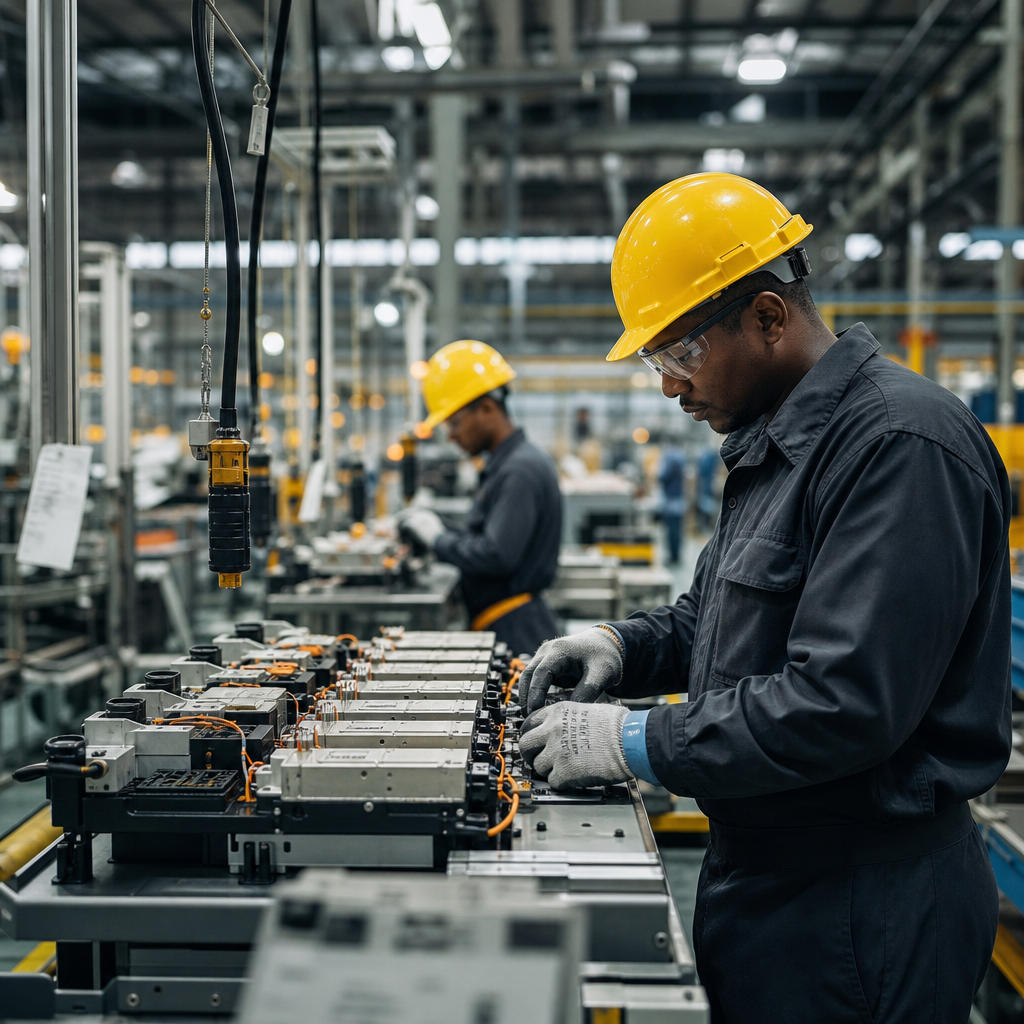
Industrial policy in development has returned to the center of economic debate because governments everywhere are asking the same question: should the state actively shape production, technology, and trade, or leave structural change mostly to markets? At its core, industrial policy means deliberate public action to influence the sectoral composition of an economy. That can include tariffs, subsidies, state investment banks, procurement rules, export targets, local content requirements, special economic zones, vocational training, and support for research and development. Development, in this context, is not simply GDP growth. It means moving labor and capital into higher-productivity activities, building domestic capabilities, raising wages, and reducing external vulnerability.
I have worked on country diagnostics where policymakers used the phrase loosely, sometimes meaning import substitution, sometimes innovation policy, and sometimes any intervention at all. That confusion matters. Good industrial policy is not a synonym for permanent protection or political favoritism. It is a framework for accelerating structural transformation when markets alone underinvest in learning, coordination, infrastructure, and technology adoption. Critics are right that badly designed interventions can entrench inefficiency. Supporters are right that every high-income economy used some form of targeted support during its climb. The real issue is not whether industrial policy exists, but whether it is disciplined, transparent, and tied to measurable performance.
This matters now for several reasons. First, global supply chains have shown how dependence on a narrow set of imports can become a strategic weakness, as seen during the pandemic shortages of semiconductors, pharmaceuticals, and basic medical equipment. Second, climate goals require rapid deployment of clean energy, batteries, grids, public transit, and low-carbon materials, all of which involve scale economies and coordination failures. Third, many developing countries face premature deindustrialization, meaning manufacturing peaks at lower income levels than it did for earlier industrializers. If countries cannot rely on the old export-manufacturing ladder, they need more deliberate strategies to build tradable capabilities in industry, modern services, agribusiness, and green sectors.
The old debate: markets versus the state
The classic argument against industrial policy begins with information. Governments do not know in advance which firms or sectors will succeed. Friedrich Hayek emphasized dispersed knowledge, and public choice economists later argued that politicians and bureaucrats are vulnerable to lobbying, rent-seeking, and corruption. These are serious concerns. I have seen subsidy schemes drift into entitlement programs because agencies lacked sunset clauses and the political cost of ending support grew over time. Protection without discipline often produces firms that survive by connection rather than competence. Latin America’s earlier import-substitution era provides examples of domestic industries that achieved scale behind tariffs but failed to become globally competitive because export pressure and technological upgrading were too weak.
The argument for industrial policy begins with equally important market failures. Alexander Hamilton and Friedrich List both argued that late industrializers need support for infant industries until capabilities mature. Modern development economics adds coordination failures, dynamic increasing returns, learning-by-doing, and capital market imperfections. A private firm may hesitate to enter a new sector if suppliers, trained workers, testing labs, and transport links do not yet exist. Yet none of those complementary investments happen unless someone moves first. In practice, states often solve this chicken-and-egg problem by co-investing in infrastructure, standards, training systems, and early demand. East Asia’s experience shows that when support is conditional on export performance, productivity improvement, and technology acquisition, intervention can speed convergence dramatically.
What successful industrial policy actually looks like
Successful industrial policy is selective, but not arbitrary. It targets activities with spillovers rather than merely protecting incumbents. In South Korea, state support in steel, shipbuilding, autos, and electronics was combined with strict performance monitoring. Firms that failed export targets could lose credit access. Japan’s Ministry of International Trade and Industry is often romanticized, but the more useful lesson is institutional: agencies gathered information continuously, coordinated with firms, and adjusted policy as markets changed. Taiwan paired industrial parks, public research institutes, and small-firm supplier networks to diffuse technology broadly rather than concentrating support only in a few conglomerates.
The practical toolkit is broader than tariffs. Governments use concessional finance through development banks, public procurement to create lead markets, tax credits for research, extension services for small manufacturers, export insurance, standards bodies, and cluster infrastructure. Germany’s Fraunhofer institutes demonstrate how applied research institutions can bridge universities and industry. Singapore’s Economic Development Board built credibility by solving investor problems quickly, aligning skills policy with sector strategy, and maintaining clear administrative processes. These examples show that the binding constraint is often organizational capability inside the state itself. A country can have a long list of incentives and still fail if agencies cannot coordinate, collect firm-level data, or enforce conditions.
| Approach | Main Goal | Typical Tools | Key Risk | Best Use Case |
|---|---|---|---|---|
| Infant industry support | Build domestic production capacity | Temporary tariffs, subsidized credit, training | Permanent protection | Early-stage manufacturing with export potential |
| Innovation-led strategy | Raise technology intensity | R&D grants, patent support, research institutes | Funding weak projects | Middle-income economies upgrading into complex products |
| Green industrial policy | Accelerate low-carbon transition | Procurement, carbon contracts, grid investment | Poor sequencing | Energy, transport, batteries, critical minerals processing |
| Place-based policy | Reduce regional disparities | Zones, logistics, vocational centers | Underused infrastructure | Lagging regions with clear connectivity advantages |
Why industrial policy is back in advanced and developing economies
The recent revival is not ideological fashion. It reflects changed conditions. The United States has used the CHIPS and Science Act and the Inflation Reduction Act to support semiconductors, clean energy manufacturing, and domestic supply chains. The European Union has relaxed some state-aid rules while launching the Green Deal Industrial Plan and strategic initiatives around batteries and hydrogen. China has long used coordinated industrial strategy through public finance, procurement, local government incentives, and technology goals, especially in solar panels, electric vehicles, and advanced manufacturing. When large economies intervene, smaller economies cannot pretend the playing field remains neutral. They must decide where to integrate, where to hedge dependence, and where to build their own capabilities.
For developing countries, the urgency is sharper. Commodity dependence creates fiscal volatility and weak job creation. Services can be dynamic, but not all services generate the productivity spillovers associated with engineering-intensive manufacturing or tradable digital sectors. At the same time, automation has reduced the labor-cost advantage that once helped low-income countries enter global value chains through simple assembly. This does not mean industry is obsolete. It means policy must focus on capabilities: reliable electricity, ports, customs efficiency, standards certification, engineering education, supplier development, and managerial upgrading. In diagnostics I have done, firms often cite these meso-level constraints before they mention taxes or wages. Industrial policy, when done well, addresses that missing middle between macro reform and individual entrepreneurship.
The main design principles that separate success from failure
Three principles matter most. First, discipline support with performance criteria. Subsidies should be time-bound, reviewed regularly, and tied to exports, productivity, technology transfer, employment quality, or emissions reduction. Second, build embedded autonomy. That means agencies stay connected enough to firms to understand bottlenecks but independent enough to resist capture. Peter Evans used this term to describe states that combine capable bureaucracy with structured public-private collaboration. In practice, it requires meritocratic recruitment, clear mandates, audited programs, and decision logs. Third, treat industrial policy as a portfolio, not a single bet. Some projects will fail. The objective is not zero failure; it is learning fast, reallocating resources, and preventing weak projects from surviving indefinitely.
Sequencing also matters. Countries should not begin with the most technologically complex sectors simply because they are fashionable. A realistic strategy starts from adjacent capabilities. Morocco’s automotive expansion built on logistics, supplier parks, and trade access to Europe. Vietnam moved from garments into electronics assembly and gradually into more sophisticated supplier roles, supported by export manufacturing zones and infrastructure. Ethiopia’s industrial parks created jobs in apparel, but results were limited when foreign exchange shortages, logistics delays, and political instability undermined operations. The lesson is clear: incentives cannot compensate for broken fundamentals. Exchange-rate management, power reliability, transport systems, customs administration, and contract enforcement remain core components of any credible industrial strategy.
Industrial policy beyond factories: services, agriculture, and the green transition
A modern development strategy must go beyond smokestack manufacturing. High-value services such as software, business process outsourcing, design, logistics, engineering, and digital payments can benefit from targeted capability building. India’s information technology sector was not created by laissez-faire alone; it depended on engineering education, telecom reforms, software parks, and export market development. Agriculture also belongs in the industrial policy conversation because agro-processing, cold chains, input systems, quality standards, and rural logistics determine whether countries export raw commodities or higher-value food products. Rwanda’s efforts in specialty coffee and horticulture, for example, show how public coordination around standards, branding, and logistics can lift export earnings.
The green transition has made industrial policy even more relevant. Decarbonization requires large upfront investment, new infrastructure, and coordinated demand creation. Solar and wind deployment depend on grid expansion, storage, permitting systems, and local technical skills. Battery value chains require decisions about mining, refining, cell production, recycling, and electricity pricing. Countries rich in critical minerals face a strategic choice: export ores, or move into processing and component manufacturing where feasible. There are tradeoffs. Local content rules can create domestic investment, but if they are imposed before firms are competitive, costs rise and deployment slows. The best green industrial policies align climate targets with realistic capability-building paths and clear investment rules.
Common mistakes and how policymakers can avoid them
The most common mistake is confusing protection with development. Tariffs may shield a sector long enough for learning, but without competition, benchmarking, and technology upgrading, protection becomes a tax on consumers and downstream producers. Another mistake is spreading resources too thinly across dozens of sectors. Effective strategies concentrate on a manageable set of priorities linked to national capabilities. I have seen plans listing aerospace, pharmaceuticals, artificial intelligence, textiles, steel, electric vehicles, and biotech all at once. That is not strategy; it is a wish list. Capacity constraints inside government are real, so prioritization is essential.
Another frequent error is ignoring politics. Industrial policy is implemented by institutions that operate within coalitions, elections, and budget cycles. Reformers need mechanisms that survive political turnover: independent evaluation units, published eligibility rules, procurement transparency, and data systems that track firm performance. They also need exit rules. If a supported firm misses milestones repeatedly, support must end. Finally, policymakers should link sector policy to social outcomes. Development is not just output growth. It includes decent work, regional inclusion, gender access to skilled jobs, and environmental compliance. A hub article on economics should emphasize this broader point: industrial policy works best when it is integrated with trade policy, competition policy, labor market institutions, infrastructure planning, and macroeconomic stability.
Industrial policy in development is neither an outdated relic nor a magic formula. It is a practical response to a persistent fact: economies do not automatically diversify into complex, high-productivity activities on their own timetable. Markets are powerful discovery mechanisms, but they routinely underprovide coordination, long-horizon finance, technological learning, and resilience. That is why the most successful development stories combined entrepreneurial firms with active, disciplined states. The debate should move past slogans about picking winners or trusting markets completely. The relevant question is how to design institutions that support experimentation, reward performance, and withdraw from failure without political paralysis.
For readers using this economics hub to explore the wider topic, the central takeaway is simple. Industrial policy becomes a necessity when a country needs structural transformation, cleaner production, stronger supply security, or better jobs than its current economic structure can generate. It fails when governments protect inefficiency, ignore fundamentals, or let lobbying replace evidence. The best policies are transparent, selective, and adaptive. They build capabilities step by step, starting from what an economy can plausibly do next. If you are assessing any country strategy, ask four questions: what capability is being built, what market failure justifies intervention, how success will be measured, and when support will end. Start there, and the old idea becomes a modern tool.
Frequently Asked Questions
What is industrial policy, and why has it become important again in development debates?
Industrial policy refers to deliberate government action designed to influence what an economy produces, how it produces, and which sectors become more competitive over time. In practical terms, it can include tariffs, subsidies, tax incentives, public development banks, government procurement rules, export promotion, local content requirements, technology support, and targeted infrastructure investment. The core idea is that structural transformation does not always happen automatically through market forces alone. Countries often need coordinated action to move labor and capital from low-productivity activities into higher-productivity manufacturing, services, energy, and technology sectors.
It has returned to the center of debate because the world economy has changed in ways that expose the limits of a purely hands-off approach. Global supply chain disruptions, geopolitical competition, climate transition demands, rising concern over technological dependence, and the uneven effects of globalization have all pushed governments to think more strategically about production. Advanced economies are now using subsidies and strategic investment to support semiconductors, clean energy, and critical minerals, while developing countries are revisiting how to build domestic capabilities instead of remaining stuck in commodity dependence or low-value assembly. As a result, industrial policy is no longer seen only as a historical development tool; it is increasingly viewed as a current necessity for resilience, productivity growth, and long-term national development.
Is industrial policy an old development idea, or is it a new necessity in today’s economy?
It is both. Industrial policy is an old idea in the sense that many of today’s rich economies used it extensively during their own development phases. Historically, governments protected infant industries, financed strategic sectors, invested in railways and ports, supported exporters, and built technical capabilities through education and state institutions. East Asian development experiences are often cited because they combined state direction, discipline, and export competitiveness in ways that accelerated industrial upgrading. Even countries that later embraced free-market rhetoric often relied on active public support during critical stages of industrialization.
At the same time, industrial policy is a new necessity because the challenges facing developing economies today are different in scale and complexity. Countries are trying to industrialize in a world marked by automation, concentrated intellectual property, fragmented global value chains, climate constraints, and aggressive subsidy competition among major powers. Development now requires not only expanding production, but also mastering technology, meeting environmental standards, improving energy systems, and reducing vulnerability to external shocks. In that context, industrial policy is not simply a revival of the past. It is an updated strategy for managing transformation under modern conditions, where leaving everything to markets can mean missing strategic opportunities or becoming dependent on foreign producers in critical sectors.
What are the main tools governments use in industrial policy?
Governments use a wide range of instruments, and the most effective industrial policies usually combine several tools rather than relying on one alone. Common measures include tariffs or temporary trade protection for emerging sectors, subsidies for production or research, tax incentives for investment, low-cost financing through state development banks, export credits, and public procurement policies that create demand for domestic firms. Governments may also use local content requirements, special economic zones, performance standards, technology extension services, vocational training systems, and direct investment in infrastructure such as transport, electricity, broadband, and logistics. In some cases, state-owned enterprises also play a role where private investment is weak or strategic control is considered important.
The effectiveness of these tools depends less on ideology and more on design, sequencing, and institutional capacity. A subsidy without clear performance targets can become a transfer to politically connected firms. Protection without timelines or competitiveness goals can shelter inefficiency. By contrast, well-designed industrial policy typically links support to measurable outcomes such as export growth, productivity gains, job creation, technology transfer, or movement up the value chain. Successful policy also requires feedback mechanisms: governments must be able to learn, adjust, and withdraw support when programs fail. In other words, industrial policy is not just a list of interventions; it is a process of strategic coordination between the state and the private sector.
What are the biggest risks or criticisms of industrial policy?
The main criticism is that industrial policy can easily go wrong if governments lack capability, discipline, or transparency. Critics argue that states may not be good at “picking winners,” and that targeted support can be captured by powerful firms, political insiders, or uncompetitive sectors that lobby to preserve benefits indefinitely. There is also the risk of wasting public resources on projects that never become viable, distorting prices in ways that reduce efficiency, or creating protected industries that survive only because of continued state support. In weak institutional environments, industrial policy may become less about development and more about patronage, corruption, or politically motivated allocation of credit and contracts.
These risks are real, but they do not automatically mean industrial policy should be rejected. Markets also fail, especially in areas involving coordination problems, learning-by-doing, technology adoption, infrastructure gaps, and long investment horizons. The better question is not whether intervention is risky, but how to build institutions that make intervention more effective and accountable. Strong industrial policy frameworks usually include clear objectives, sunset clauses, performance conditions, independent evaluation, competition safeguards, and a willingness to terminate support when results do not materialize. The debate, then, is less about state versus market in absolute terms and more about how to create a capable state that can correct market failures without becoming captive to special interests.
How can developing countries design industrial policy that actually supports long-term development?
Developing countries are more likely to succeed when industrial policy is realistic, selective, and closely tied to domestic capabilities. That means starting with sectors where there is some existing base of skills, natural advantage, regional demand, or technological potential rather than trying to create globally competitive industries from scratch in every field. Good policy design usually begins with diagnosing constraints: firms may be held back not only by lack of capital, but also by unreliable electricity, poor logistics, weak standards systems, limited engineering talent, scarce foreign exchange, or the absence of supplier networks. Addressing those bottlenecks can often be more important than announcing large subsidy programs.
Long-term success also depends on coordination and discipline. Governments need institutions that can work with firms, labor, financiers, and training providers while maintaining public accountability. Support should be conditional on performance, especially in areas such as exports, productivity, innovation, and employment quality. Industrial policy should also be connected to broader goals, including social inclusion, regional development, climate resilience, and technological upgrading. For example, a country pursuing green industrialization might combine renewable energy investment, local manufacturing incentives, skills development, and procurement policies to build domestic value chains. The central lesson is that industrial policy works best when it is treated not as a slogan or a one-time intervention, but as a sustained strategy for structural transformation grounded in learning, experimentation, and institutional competence.