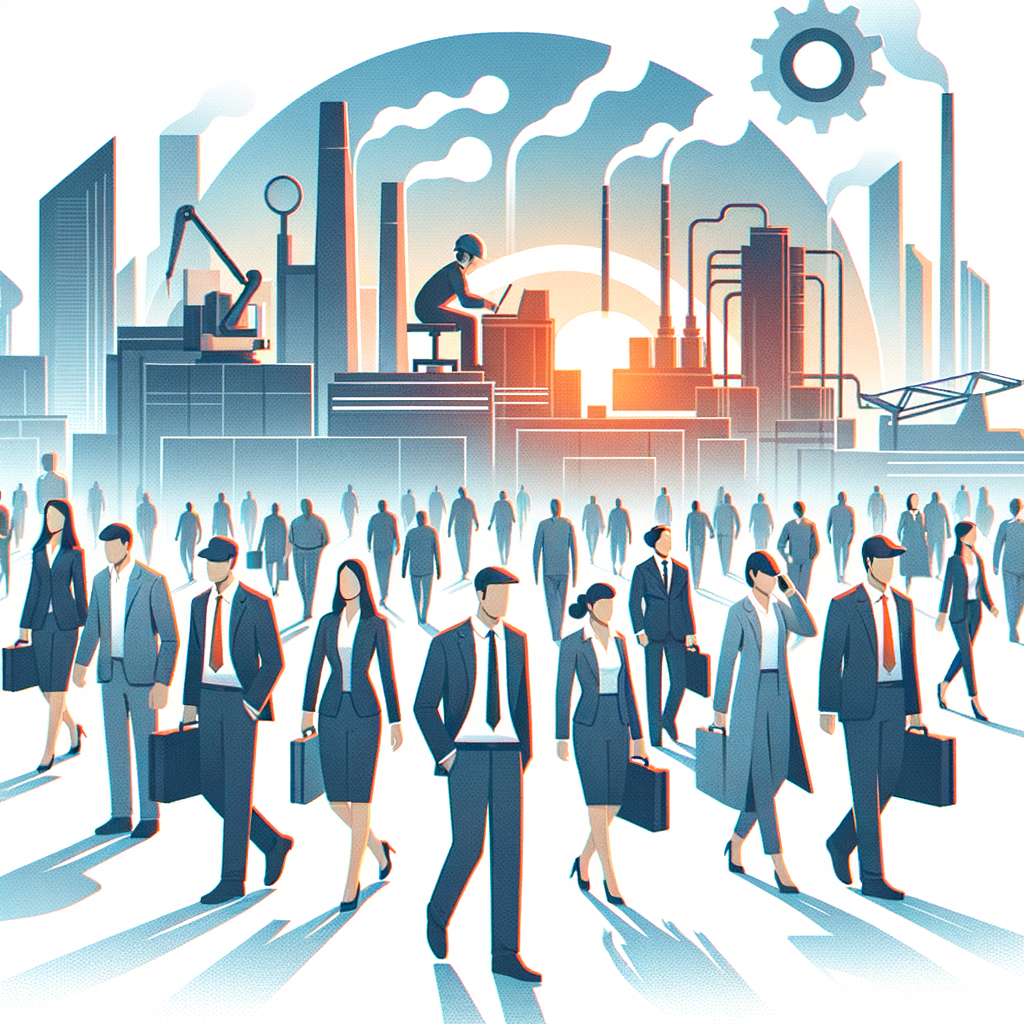
The phenomenon of globalization has been a defining feature of the modern era, influencing almost every aspect of human life. When discussing globalization, we primarily focus on its impact on economies, cultures, and political systems. However, one of the most profound effects of globalization can be observed in the sphere of employment, specifically how it affects workers and wages. The interdependence of the world’s economies has brought both opportunities and challenges for workers across the globe. While globalization has led to increased economic growth and improved living standards in many regions, it has also ushered in significant shifts in labor markets, altering how we view work and compensation.
Undoubtedly, the influence of globalization on workers and wages is multifaceted, driven by complex interrelations between global trade, technological advancement, and international policies. On the one hand, it has opened up new employment opportunities by allowing businesses to expand beyond domestic borders, creating jobs in places that previously lacked such economic activity. On the other hand, globalization can contribute to widening income inequality, disrupt traditional industries, and lead to job losses as companies seek cheaper labor across borders. Furthermore, the integration of global markets means that local wages cannot be insulated from global pressures, often resulting in a downward push on pay and working conditions.
Globalization presents a paradox: while it can enhance productivity and create high-paying jobs in some sectors, it also poses significant challenges to workers, particularly in industries vulnerable to outsourcing and automation. Understanding this complex relationship requires a careful examination of the factors at play, ranging from trade liberalization policies to the spread of technology and global supply chains. By doing so, we can gain insights into both the positive and negative impacts of globalization on workers and wages, and explore potential policy responses to address its challenges.
Impact of Globalization on Employment Opportunities
The expansion of trade and the liberalization of global markets have allowed companies to operate across borders with relative ease, leading to increased job creation in countries capable of attracting foreign investment. Developing nations, in particular, have benefited from this trend, as they often provide cheap labor, thus becoming attractive locations for multinational corporations seeking to maximize profits. This can result in significant employment opportunities in regions that previously might have had limited industrial activity.
However, while globalization creates jobs, it also changes the nature of employment. The rise of global supply chains means that jobs in manufacturing, for instance, may be fragmented across multiple countries, with different stages of production taking place where labor costs are lowest. This alteration can make the labor market more volatile, as jobs are subject to the changing patterns of international trade and investment.
Wage Disparity and Globalization
One of the most contentious aspects of globalization is its impact on wages. The increased competition from a global pool of workers often leads to downward pressure on wages, particularly in developed countries where businesses face higher costs. As companies seek cost efficiencies, they may outsource jobs to countries with cheaper labor or employ immigrant workers willing to work for less, reducing bargaining power for domestic workers.
This can widen income inequality, as workers in high-skill, high-demand fields may see wage increases due to globalization, while those in low-skill jobs face stagnation or decline in wages. The migration of workers between countries due to globalization can also exacerbate this wage disparity, as the influx of skilled or unskilled labor affects supply and demand dynamics within local economies.
Technological Advancements and Their Influence
Globalization and technological innovation are intertwined, and together, they significantly impact workers and wages. Technology often complements the globalization process by enabling companies to coordinate complex international operations efficiently. Advances in technology have also been pivotal in reshaping labor markets. Developments such as automation and artificial intelligence are automating tasks that were once done manually, altering the demand for specific skills and therefore influencing wages.
While technology can lead to productivity gains and the creation of new high-tech roles, it also presents significant challenges. Automation can result in job displacement, particularly for workers in manufacturing and routine task-oriented roles. The demand for digital skills increases, leaving behind those without access to education and training in new technologies, thus potentially widening the wage gap.
Global Supply Chains
Globalization thrives on the establishment of intricate global supply chains, whereby companies source materials and labor from various locations worldwide. These supply chains drive economic growth by optimizing production and reducing costs. However, they can also make labor more susceptible to global economic fluctuations. A downturn in one region can negatively affect workers across the supply chain, leading to job losses and wage reductions.
Furthermore, global supply chains frequently result in regulatory challenges concerning labor standards and workers’ rights, as different countries have varied labor laws and practices. This discrepancy can lead companies to relocate operations to regions with less stringent protections, impacting wages and working conditions negatively.
Policy and Regulation
The role of national and international policy in mediating the effects of globalization is crucial. Trade agreements, labor regulations, and immigration policies all play a part in shaping how globalization impacts workers. For instance, policies aimed at protecting domestic industries can shield jobs but may also limit the benefits associated with open markets driven by globalization. Conversely, policies that embrace globalization without proper safeguards can lead to job insecurity and downward pressure on wages.
Effective public policy needs to balance the advantages of globalization with measures that protect workers. This could entail implementing labor standards in trade agreements, investing in workforce training programs, and supporting sectors undergoing significant changes due to global competition and technological innovation.
Education and Skill Development
Globalization emphasizes the importance of education and skill development as crucial components for workers to adapt in a rapidly changing world. As global competition influences job markets, employees need to possess skills that align with the demands of new industries and technologies. Education systems must evolve to provide workers with the capabilities to thrive in a globalized economy, offering training in high-demand sectors such as tech, engineering, and green industries.
Continuing education and access to skill development programs can also help workers transition from declining industries to emerging ones, potentially mitigating some negative wage impacts by providing pathways to better-paying jobs. Investment in higher education and technical training is necessary for empowering workers and maintaining competitiveness in a global market.
Global Workers’ Rights Movement
In response to the challenges posed by globalization, there has been a rise in global movements advocating for workers’ rights. These movements aim to standardize labor conditions across countries, ensuring fair wages and safe working environments. Labor unions and advocacy groups have increased their international collaboration, aiming to address issues of inequality and wage disparity brought on by globalization.
This collective effort has led to some companies adopting fair trade practices and adhering to international labor standards, recognizing that responsible practices can foster sustainable business models. Such changes, however incremental, indicate that a balance between economic expansion and workers’ welfare can eventually be achieved through consistent advocacy and policy reform.
Conclusion
Globalization has undoubtedly transformed the global economy, presenting both opportunities and challenges for workers and influencing wages worldwide. Its effects are complex, driven by factors such as international trade, technological advancements, and global supply chains. While globalization can spur economic growth and provide new employment opportunities, it also brings significant challenges, including job displacement, wage disparity, and uneven labor standards.
The continual advancement of technology interconnected with globalization also pressures workers, requiring them to adapt by acquiring new skills and adapting to changing job markets. Policymakers play a crucial role in negotiating trade-offs, as effective regulations and investment in workforce development can mitigate adverse effects, enabling workers to reap the potential benefits of globalization.
Ultimately, addressing the consequences of globalization on workers and wages requires coordinated global action, involving policymakers, businesses, and civil society. By promoting fair standards and investing in the future workforce, we can aspire to a more equitable global economy, where the benefits of globalization are broadly shared among all workers. As we continue to navigate the complexities of globalization, an informed and balanced approach is essential to ensure that progress is sustainable and inclusive, benefiting workers across all sectors.
Frequently Asked Questions
1. How does globalization create job opportunities for workers?
Globalization, with its expansive reach and connectivity, opens up numerous opportunities for workers by expanding markets and facilitating international trade. For instance, companies that once operated locally can now access a global customer base, which can lead to increased production needs and, consequently, more jobs. Additionally, globalization has spurred the growth of multinational corporations (MNCs), which establish operations in various countries. This has brought new job opportunities, particularly in countries with lower labor costs, as MNCs often seek to tap into these markets to reduce operational expenses.
Furthermore, the rise of global supply chains has led to new job creation, from manufacturing to logistics, to meet the increased demand for goods across different regions. In many cases, developed countries may witness an increase in high-skilled job opportunities due to innovation and technology-driven industries that cater to a worldwide market. Meanwhile, emerging economies might see more openings in manufacturing and service industries as they become integral parts of the global supply chain.
2. What challenges do workers face due to globalization?
While globalization can bring about new job opportunities, it also presents several challenges for workers in various sectors. One primary challenge is job displacement. As companies aim to reduce costs by outsourcing or relocating production to countries with cheaper labor markets, workers in higher-cost countries may find their jobs at risk. This shift is often referred to as ‘offshoring,’ and it can lead to significant job losses in industrialized nations.
Moreover, globalization increases competition among workers worldwide. Individuals now compete not just with their local peers but with a global workforce, which can drive down wages in some sectors, especially those involving low-skilled labor. This increased competition might also pressure workers to upskill or face stagnation or job loss.
The intensified emphasis on cost efficiency and productivity can also lead to precarious employment conditions, often characterized by temporary contracts, lack of job security, and minimal worker benefits. Workers may find themselves in a more volatile employment environment, needing to adapt quickly to changes in global economic conditions and trends.
3. How does globalization affect wage levels in different countries?
The impact of globalization on wages can vary significantly across countries, influenced by several factors. In developing countries, globalization can lead to wage increases as foreign investments and the establishment of MNCs introduce new industries and require labor, often paying more than local companies to attract skilled workers. This can elevate the overall wage levels and contribute positively to the economy.
Conversely, in developed countries, workers in manufacturing and other low-skilled sectors might experience stagnation or even decline in wages due to competition with cheaper labor markets abroad. Companies may opt to import labor-intensive goods from countries with lower wage structures, putting downward pressure on domestic wages in those sectors. However, for workers in industries that heavily rely on high-skilled labor and technological innovation, globalization can result in wage premiums as their skills are in high demand globally.
Overall, while some workers may benefit from globalization with higher wages, others may face wage suppression. The overall impact on wage levels depends on the sector, the skill sets required, and how integrated the local economy is into the global market.
4. What is the role of labor unions in the context of globalization?
Labor unions play a critical role in the globalized economy by advocating for workers’ rights, ensuring fair wages, and improving working conditions amidst the significant changes globalization brings. They are instrumental in negotiating collective bargaining agreements that safeguard against the negative impacts of globalization, such as job insecurity and wage suppression.
Unions also work to ensure that outsourcing and offshoring practices adhere to ethical standards, pushing for better labor laws and corporate accountability in both home and host countries of MNCs. By building networks internationally, labor unions can exert pressure on corporations to improve conditions and wages globally, thus promoting a fairer distribution of the benefits of globalization.
Moreover, unions often provide support in retraining and reskilling efforts, helping workers displaced by globalization to transition into new roles or industries. They’re integral in shaping labor policies that address the challenges posed by a rapidly globalizing world, ensuring that the benefits of globalization are more equitably distributed.
5. How can workers prepare for the changes globalization brings?
To effectively navigate the changes wrought by globalization, workers need to embrace lifelong learning and adaptability. Upskilling and reskilling are crucial, as the demand for certain skills might shift rapidly with global trends. For instance, increased automation and technological advancements require workers to become proficient in using new tools and technologies relevant to their fields.
Additionally, gaining a broader understanding of cultural diversity and developing teamwork skills to collaborate across international boundaries can offer a competitive edge. Workers who can effectively communicate and work in multicultural environments are highly valued in a globalized market.
Pursuing education in areas less susceptible to automation, such as creative industries, advanced technology sectors, and jobs requiring complex problem-solving, can also be beneficial. Networking, not only locally but internationally, can open up career opportunities that leverage the global market.
In summary, embracing a proactive approach towards personal and professional development can empower workers to seize the opportunities globalization offers while mitigating its challenges.