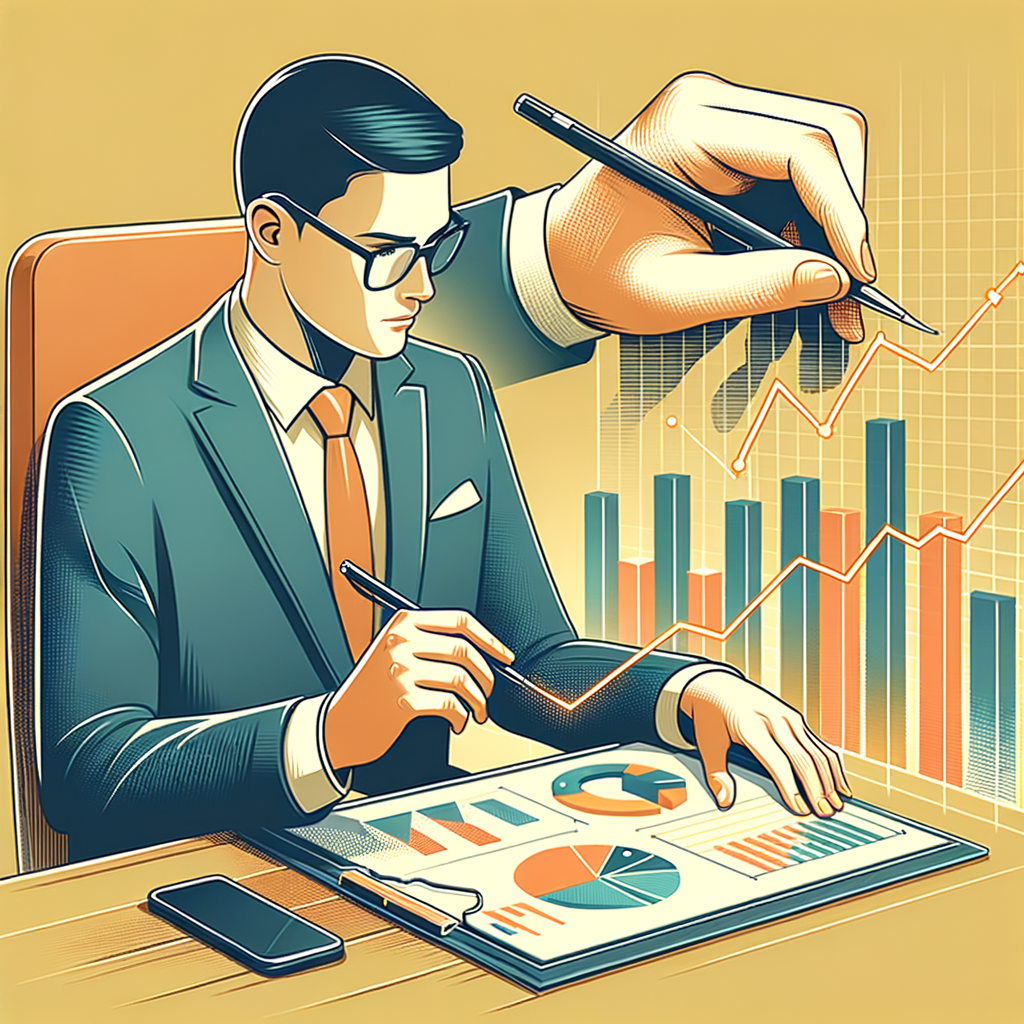
Economics is a field that seeks to understand how individuals, firms, and governments allocate resources and make decisions. At its core, economics deals with concepts that can sometimes be abstract. To make these concepts more tangible, economists rely on tools such as graphs, models, and data. These tools help them to analyze economic phenomena and predict future economic outcomes. Graphs allow for the visualization of complex datasets and the relationships between different variables. Models serve as simplified representations of economic processes that help in theorizing and testing economic hypotheses. Data provides the factual base for empirical analysis, allowing economists to test their models and theories against real-world information. Economists use these tools in tandem to break down complex concepts into understandable insights, making economics more accessible to both academics and the general public. This article delves into how these tools are integral to the field of economics, exploring their roles, applications, and the types of insights they offer.
Graphs in Economics
Graphs are a fundamental tool used in economics to visualize relationships between variables. They provide a visual representation that can reveal trends, patterns, and anomalies in data. Economists commonly use line graphs to display time series data, such as tracking GDP growth over several years or observing the fluctuation of unemployment rates. By displaying data in this format, trends become immediately apparent, allowing for quick analysis of whether an economy is improving or deteriorating.
Bar graphs and pie charts are also frequently used, especially when comparing different data points at a single moment in time. For instance, a bar graph might compare the economic output of various sectors within an economy, while a pie chart could illustrate the proportion of total income accounted for by different socioeconomic groups. Scatter plots, another vital type of graph, often support regression analysis, helping economists to understand correlations between two variables, such as years of education and income levels.
Graphs serve an educational role by simplifying complex datasets, making it easier for economists to communicate their findings to audiences who may not have technical expertise. In research papers, policy briefs, or news articles, graphs provide a snapshot of key information, embodying the adage that a picture is worth a thousand words.
Economic Models
Economic models are simplified representations of reality, constructed to gain insight into complex economic processes. These models can be theoretical or empirical, serving different purposes depending on their construction and application. Theoretical models are typically mathematical and used to generate hypotheses regarding economic behavior. For instance, supply and demand models are foundational in economics, illustrating how market equilibrium is reached based on the interaction of supply and demand curves.
Empirical models, on the other hand, use real-world data to test hypotheses and forecast economic trends. Economists employ econometrics, which involves statistical methods to quantify relationships within empirical models. An example of an empirical model is the Phillips Curve, which represents the inverse relationship between rates of unemployment and rates of inflation within an economy. Such models are crucial for policy making, as they allow for examination of “what if” scenarios and policy simulations.
The utility of models lies in their ability to abstract away from the myriad of real-world complexities, focusing on the essential features that drive economic phenomena. This abstraction allows economists to derive clear predictions, form policy recommendations, and communicate their ideas effectively.
The Role of Data
Data is the bedrock of any economic analysis, providing the raw material from which economists derive conclusions. Economists rely on data to test their hypotheses, validate models, and make decisions based on empirical evidence. Economic data is vast and varied, ranging from micro-level data such as consumer spending habits to macro-level indicators like GDP, unemployment rates, and inflation figures.
Sources of data include government agencies, international organizations, private companies, and academic institutions. The Census Bureau and the Bureau of Economic Analysis are key sources of data in the United States, providing regular updates on various economic metrics. Internationally, organizations such as the World Bank and the International Monetary Fund collect and disseminate data that facilitate economic comparison across countries.
Data collection and analysis are not without challenges. Issues such as data availability, accuracy, and consistency can affect the reliability of economic analysis. Economists must be vigilant in ensuring data quality by cross-verifying sources, using robust statistical techniques, and clearly stating assumptions and limitations in their analysis.
Case Study: Graphs, Models, and Data in Action
To illustrate the combined use of graphs, models, and data, consider the example of analyzing the effects of fiscal policy on economic growth. Economists may begin by developing a theoretical model that posits a relationship between government spending and GDP growth. This model could be represented through graphs, showing potential output changes resulting from increased government expenditure.
With this model in hand, economists collect data on past instances of fiscal policy changes, examining historical GDP figures, unemployment rates, and inflation data before and after the implementation of fiscal policies. Using econometric techniques, they can apply statistical analysis to establish empirical correlations, interpret the significance of the effects, and adjust the model as necessary.
Graphs are then used to present the findings, showing how GDP growth rates changed following policy implementations, perhaps illustrating a correlation between increased government spending and enhanced economic output. These visual aids simplify the presentation of complex model results, making conclusions accessible to policymakers and the public.
Limitations and Challenges
Despite their utility, graphs, models, and data come with inherent limitations and challenges. Graphs, while useful for illustration, can oversimplify data or be misinterpreted without proper context. Data visualization may lead to incorrect conclusions if not carefully analyzed and cross-referenced with other information.
Economic models, while powerful, rely heavily on assumptions that may not hold true in all situations. Models require simplifications that exclude certain variables, meaning their predictions only fit particular scenarios accurately. Inaccurate assumptions can lead to misleading conclusions, which is why continuous refinement, testing, and updating of models are vital.
Data quality issues, such as gaps, biases, or measurement errors, can impact the reliability of any economic analysis. Gaps in data coverage can result from political interference, limitations in technology, or inadequate data-collection methodologies. Biases might be introduced through selective data reporting, leading to skewed analyses or incomplete insights.
Conclusion
In the realm of economics, graphs, models, and data are not just tools; they are the lenses through which economists interpret the world, understand relationships, and forecast future trends. They allow economists to distill complex ideas into digestible formats, support empirical tests of hypotheses, and facilitate the communication of findings to diverse audiences. By using these tools, economics transcends abstraction and delves into actionable policy-making and informed decision-making.
However, to leverage these tools effectively, economists must exercise due diligence, rigorously verifying data sources, questioning model assumptions, and applying robust statistical methodologies. Moreover, they must remain aware of the limitations inherent in these tools, continually refining methods and cross-validating results to ensure the most accurate and reliable insights. The symbiotic relationship between graphs, models, and data forms the backbone of economic analysis, ensuring that this discipline remains as dynamic, relevant, and impactful as ever.
Ultimately, an economist’s ability to generate valuable insights from graphs, models, and data—despite their limitations—determines their contribution to the field and their influence on economic policy and business strategy. As technology advances and data availability grows, the potential for more refined and comprehensive economic analyses continues to expand, promising a future replete with newfound understanding of economies both local and global.
Frequently Asked Questions
1. How do economists use graphs to represent economic concepts?
Graphs are invaluable to economists because they transform abstract economic concepts into more tangible visuals. When economists want to convey relationships between variables, they often use graphs. For example, supply and demand are classic economic concepts frequently illustrated through graphs. In a supply and demand graph, economists can show how the quantity of goods demanded by consumers relates to the price level and how the quantity supplied by producers does the same. This visual representation makes it easier to understand how these variables interact in the real world. Additionally, graphs allow economists to portray trends over time, enabling easier identification of patterns or cyclical behaviors in economic data. By using graphs, economists facilitate a better understanding of complex datasets, making it much more straightforward for policymakers, students, and the wider public to grasp economic principles.
2. In what ways do economists use economic models?
Economic models are essential tools for economists aiming to simplify reality and focus on specific relationships between economic variables. They are used primarily to test theories, analyze potential economic outcomes, and guide policy decisions. For example, econometric models can predict how changes in interest rates might affect consumer spending or how government interventions could stabilize an economy during a recession. While no model can perfectly capture the entirety of a real-world economy due to its complexity, by making simplifying assumptions, economists can use models to simulate various scenarios and examine their potential outcomes. Additionally, these models can help economists isolate the effects of individual variables, providing a clearer understanding of their roles in economic phenomena. They’re dynamic tools, evolving with new data and methodologies, continually enhancing their precision and effectiveness in economic analysis.
3. How is data utilized by economists to support their analyses?
Data is fundamental for economists, serving as the empirical backbone that supports models and theories. Economists collect and analyze data to observe real-world economic phenomena, test hypotheses, and validate models. For example, labor market data such as unemployment rates and workforce demographics help economists understand employment trends. By analyzing historical data sets, economists can identify trends, correlations, and potential causal relationships that inform policy and decision-making. Moreover, with advances in technology, economists now have access to vast datasets, allowing for more detailed and comprehensive analyses than ever before. This data-driven approach enables economists to provide more accurate forecasts and tailor recommendations to address economic issues effectively. In summary, data not only validates and informs economic theories but also plays a critical role in crafting practical solutions for economic challenges.
4. Why are simplifications in economic models necessary?
Economic models inherently involve simplifications due to the vast complexity of real-world markets and human behavior. Simplifications allow economists to focus on key variables and relationships without becoming overwhelmed by less pertinent details. By distilling reality into its most essential components, models become more manageable and intelligible. For example, a macroeconomic model might assume a closed economy to simplify the analysis, even though no economy is perfectly closed. These simplifications are necessary because they allow economists to generate insights and predictions that would be otherwise impossible. However, economists are always aware of the assumptions inherent in their models and acknowledge the limitations these simplifications may impose. By striking a careful balance, economists can generate useful, actionable forecasts while continuously refining their models to better replicate real-world conditions.
5. How do economists ensure that the data they use is reliable?
For economists, the reliability of data is of paramount importance as it informs models, theories, and ultimately policy recommendations. To ensure data reliability, economists often rely on data from reputable sources such as government agencies, international organizations, and well-regarded research institutions. They employ robust statistical methods to clean and verify data, checking for anomalies, biases, or outliers that could skew interpretations. In the age of big data, ensuring reliability also involves the use of advanced analytical techniques such as machine learning to filter and refine data inputs. Additionally, economists apply cross-validation techniques, comparing findings with data from multiple sources or checking consistency over time, to reinforce confidence in their analyses. Moreover, peer review is an essential component of the economic research process; before any conclusions are published or utilized in policy-making, they are scrutinized by other experts in the field. This rigorous process helps ensure the reliability of data and the integrity of economic analyses.