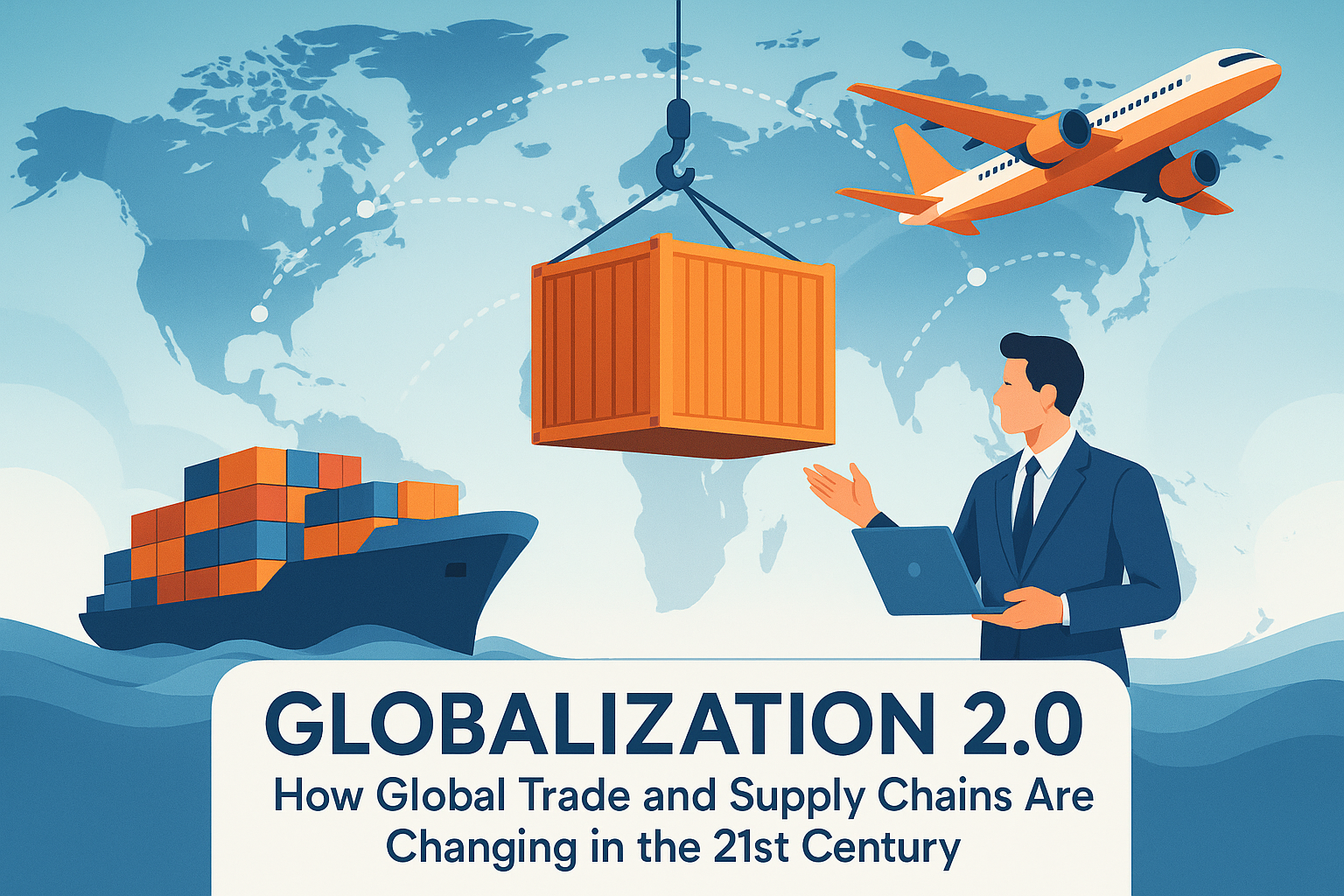
Introduction: The Evolution of Globalization
Globalization has long been a driving force in shaping economies, cultures, and geopolitical landscapes. However, as we advance into the 21st century, we are witnessing the emergence of what can be termed as Globalization 2.0. This phase is characterized by rapid digital communication, increasingly complex supply chains, and a shift in the center of economic gravity. It matters now more than ever because it affects not just global conglomerates but also small and medium enterprises, consumers, and policymakers across the globe.
At its core, globalization refers to the integration of markets across different geographies, enabled by trade, investment, and technology. In this evolving phase, it is marked by the elimination of traditional boundaries—be it physical, political, or economic—creating a more interconnected yet complex web of relationships. Understanding Globalization 2.0 is crucial for adapting to these changes and leveraging new opportunities while mitigating risks.
Supply Chains in the Digital Age
The transformation in supply chains due to digital advancements is a cornerstone of Globalization 2.0. Modern supply chains are no longer linear paths but complex, dynamic networks that rely heavily on real-time data and analytics. This digital integration allows companies to track inventory, optimize logistics, and respond swiftly to consumer demands.
For instance, consider the example of Amazon. The company’s sophisticated supply chain infrastructure enables it to deliver packages within hours and offer a vast selection of products worldwide. This is made possible through real-time data analytics and automation technologies that optimize each step of the supply chain from procurement to last-mile delivery.
In today’s digital age, this transformation is critical as organizations aim to achieve operational efficiency, reduce costs, and provide enhanced customer experiences.
The Rise of Regional Trade Agreements
Another significant trend in the landscape of Globalization 2.0 is the increasing prevalence of regional trade agreements (RTAs). These agreements, such as the Comprehensive and Progressive Agreement for Trans-Pacific Partnership (CPTPP) and the African Continental Free Trade Area (AfCFTA), aim to facilitate trade by reducing tariffs and addressing regulatory barriers within specific regions.
Unlike global trade organizations, RTAs often address more localized issues and allow for quicker decision-making processes. For instance, the European Union’s trade policies allow member states to trade freely without traditional barriers, contributing to economic growth within the region.
This shift towards regionalization presents both opportunities and challenges. While it helps regional economies integrate and grow, it may also lead to a fragmented global trade system unless harmonized with multilateral trade rules.
Impact of Technology and Automation
Technology and automation are revolutionizing the way businesses operate on a global scale. Advanced technologies such as artificial intelligence, blockchain, and Internet of Things (IoT) are being leveraged to enhance efficiency, transparency, and security across supply chains.
Take the example of Maersk, a global shipping giant that utilizes blockchain technology to streamline its logistics processes. By maintaining a decentralized ledger of transactions, they can securely share information across various stakeholders, minimizing errors and enhancing efficiency.
These technological advancements enable companies to reduce operational costs, expedite processes, and provide real-time insights, thus gaining competitive advantages in the global marketplace.
Consumer Preferences and Sustainability
As consumers become more environmentally conscious, sustainability has emerged as a key consideration in global trade and supply chains. Businesses are increasingly adopting sustainable practices to meet consumer expectations and comply with stricter environmental regulations.
For example, Unilever has committed to making all of its plastic packaging reusable, recyclable, or compostable by 2025. Such initiatives not only enhance brand reputation but also address long-term sustainability challenges, aligning with consumer preferences for ethical and environmentally friendly products.
Sustainability is no longer an option but a necessity for businesses looking to thrive in the 21st century. Companies that prioritize sustainability are better positioned to build trust with consumers while contributing positively to the planet.
Geopolitical Influences and Trade Policies
Geopolitical tensions and trade policies play a pivotal role in shaping Globalization 2.0. Events like Brexit and the US-China trade war have underscored the vulnerability of global supply chains to geopolitical disruptions and have prompted businesses to reassess their strategies.
Nations are increasingly resorting to protectionist measures, which can lead to trade wars and disrupt supply chains. For example, tariffs imposed by the US on Chinese goods have prompted businesses to relocate manufacturing plants, diversify sourcing, and explore alternatives to maintain supply chain resilience.
Understanding these geopolitical influences is crucial for businesses to navigate uncertainties and develop adaptive strategies to mitigate risks associated with trade disruptions.
Table of Key Factors Influencing Globalization 2.0
| Factor | Impact | Example |
|---|---|---|
| Digital Technology | Enhances supply chain efficiency | Amazon’s real-time data use |
| Regional Trade Agreements | Facilitates localized trade | European Union trade policies |
| Sustainability | Drives consumer preference | Unilever’s packaging initiative |
| Geopolitical Forces | Influences trade dynamics | US-China trade tensions |
Conclusion: Navigating the Age of Globalization 2.0
As Globalization 2.0 continues to evolve, understanding its multifaceted impact on trade and supply chains is crucial for businesses and policymakers worldwide. The integration of digital technologies, the emphasis on sustainability, and the influence of regional trade agreements and geopolitical dynamics are paramount in shaping the global economic landscape.
Businesses that embrace these changes can gain competitive advantages by optimizing their operations, aligning with consumer values, and enhancing their resilience to external shocks. For the reader, the main benefit lies in gaining insights into these dynamics, enabling informed decision-making and strategic planning in a rapidly changing global environment.
As we move forward, it is imperative to embrace a proactive approach to adapt strategies, foster innovation, and collaborate across borders. Whether you’re a business leader, policymaker, or engaged citizen, staying informed and engaged with the evolving phase of Globalization 2.0 is key to thriving in the interconnected world of the 21st century.
Frequently Asked Questions
1. What is Globalization 2.0 and how does it differ from previous phases of globalization?
Globalization 2.0 refers to the modern phase of globalization characterized by enhanced digital communication, the development of intricate supply chains, and a noticeable shift in the global economic power. Unlike its predecessors, Globalization 2.0 doesn’t just focus on the movement of goods and services across borders, but largely on the rapid exchange of information, technological innovations, and data. Communication technologies, like the internet and mobile devices, have made it easier for businesses to operate across borders more efficiently than ever before. Prior phases of globalization primarily concentrated on cost-cutting by outsourcing production to countries with lower labor costs. However, Globalization 2.0 is also about innovation, gaining access to new markets, and leveraging technology to improve efficiency and productivity. The center of economic gravity is shifting more towards emerging markets in Asia and Africa, with an increasing emphasis on sustainability and localized production tailored to meet specific regional demands. It’s an evolution where integration is not just economic, but also socio-political and cultural, paving the way for a more interconnected world.
2. How are supply chains changing in the 21st century under Globalization 2.0?
The supply chains in the 21st century are far more complex and dynamic compared to the linear chains of the past. Globalization 2.0’s hallmark digital technology allows for real-time tracking and data analytics, optimizing the entire production lifecycle. Companies are increasingly adopting digital platforms to manage supply chains, which are interwoven with software, automation, and artificial intelligence. The flexibility afforded by these technologies means that businesses can respond swiftly to changes in demand or disruptions, such as those caused by geopolitical tensions or environmental factors. There’s also a movement towards more sustainable supply chains that reduce carbon footprints and support ethical trade practices. Regionalization is another emerging trend where businesses are deploying semi-autonomous supply chains closer to key markets to minimize risks associated with global logistics, highlighting a focus on resilience, environmental consciousness, and customer-specific customization.
3. How is digital technology influencing globalization and international trade?
Digital technology is the backbone of Globalization 2.0, influencing nearly every aspect of international trade. The internet has made it possible for even small businesses to access global markets, leveling the playing field between them and multinational corporations. E-commerce platforms allow businesses to reach customers worldwide with minimal upfront investment. Additionally, technologies like blockchain are being used to increase transparency in transactions and enhance security across supply chains, while artificial intelligence is used to forecast demand, optimize routes, and reduce lead times. Emerging technologies also facilitate the creation of digital ecosystems where data flows freely between businesses, fostering collaboration and innovation at unprecedented levels. This accessibility to information and resources has democratized participation in global trade and led to the diversification of players involved in the global economy.
4. What role do emerging markets play in Globalization 2.0?
Emerging markets play a crucial role in Globalization 2.0. As the epicenter of economic growth shifts, many emerging markets, particularly in Asia and Africa, are becoming significant players on the global stage. These regions have experienced rapid economic growth, increased foreign investments, and a burgeoning middle class, which contribute to an expanding market for global goods and services. Furthermore, emerging markets offer rich opportunities for digital innovation due to their young, tech-savvy populations that are quick to embrace new technologies. They are becoming hotbeds for innovation, often leapfrogging traditional stages of technological development due to the lack of entrenched systems. These regions exemplify the dynamism and potential of Globalization 2.0, being both contributors and beneficiaries of the shifts in global economic power structures. As they develop further, their influence on global trade and economic policy is expected to grow significantly.
5. How have geopolitical factors affected Globalization 2.0?
Geopolitical factors significantly influence Globalization 2.0, presenting both challenges and opportunities. Political shifts, such as the rise of nationalism and protectionism, can create friction in international trade, prompting businesses to rethink their supply chain strategies. Economic policies like tariffs and trade barriers can alter the landscape of global commerce, compelling companies to seek alternatives like regionalization to mitigate risk. Moreover, global interconnectedness means that political events, even those in distant countries, can have immediate, ripple effects worldwide. On the flip side, the need for cooperative solutions to shared challenges, such as climate change and cybersecurity threats, demands greater international collaboration. Navigating these geopolitical complexities requires businesses to be agile and adaptable, as they must constantly assess risks and opportunities in different regions. As countries seek to balance national interests with global partnerships, impactful diplomatic relations and strategic alliances become increasingly critical in shaping the course of Globalization 2.0.