
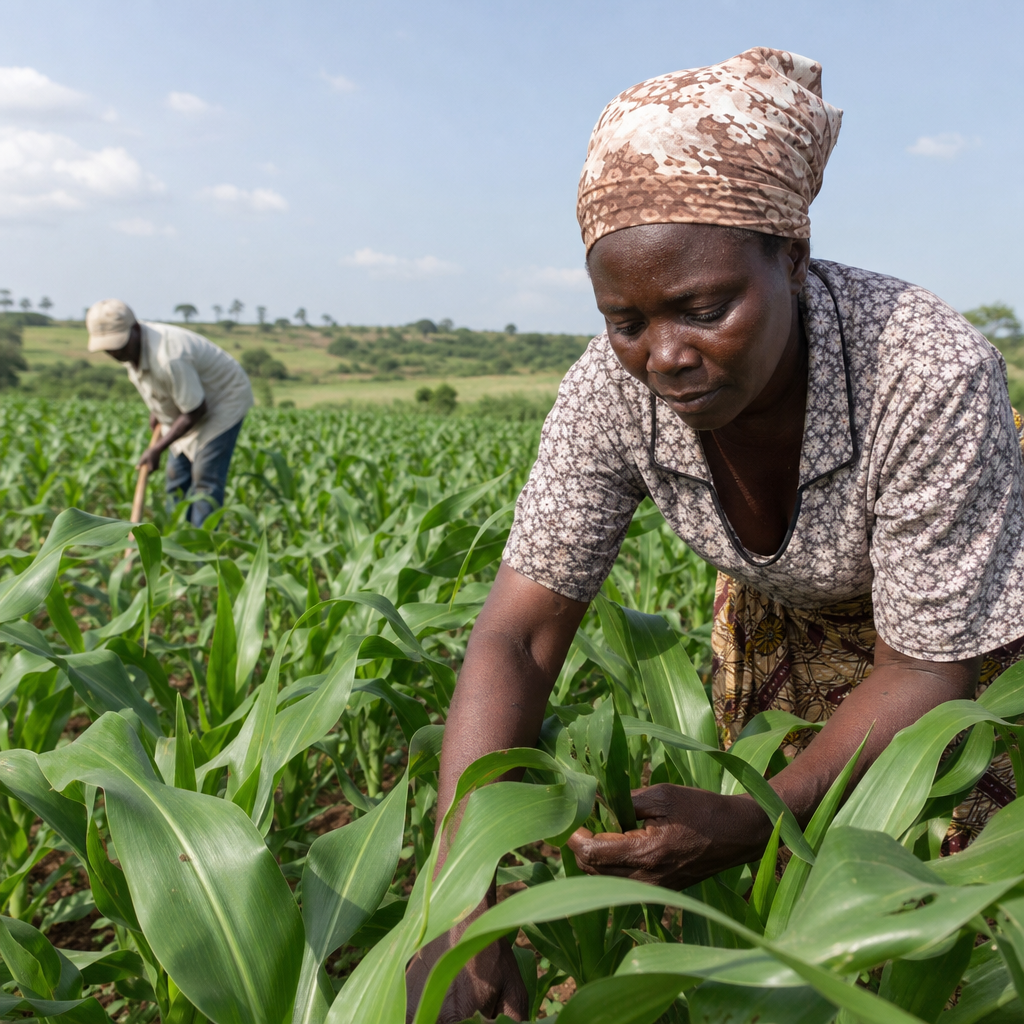
Food security and agricultural productivity are inseparable pillars of economic stability, public health, and social resilience. Food security means that all people, at all times, have physical, social, and economic access to sufficient, safe, and nutritious food that meets dietary needs and preferences for an active, healthy life. Agricultural productivity refers to how efficiently farms convert land, labor, water, seed, fertilizer, capital, and knowledge into crops, livestock, and other outputs. When productivity rises in a sustainable way, food becomes more available, farm incomes can improve, and economies gain protection against supply shocks. When productivity stagnates or food systems fail, hunger, inflation, malnutrition, and political stress often follow.
This subject matters because food systems sit at the center of development. Agriculture still employs large shares of workers across low-income and lower-middle-income countries, while every household, rich or poor, depends on stable food supplies. In my work reviewing farm performance and rural market systems, I have seen the same pattern repeatedly: better seed alone is not enough, irrigation alone is not enough, and credit alone is not enough. Durable gains come from combining technology, infrastructure, institutions, and incentives. A productive farm sector lowers pressure on food prices, strengthens export earnings where conditions allow, and releases labor and capital toward higher-value activities across the wider economy.
Food security is usually assessed through four dimensions: availability, access, utilization, and stability. Availability concerns whether enough food exists from domestic production, imports, or reserves. Access concerns whether households can afford and obtain that food. Utilization focuses on diet quality, food safety, sanitation, and health, because calories alone do not prevent malnutrition. Stability asks whether the other three dimensions hold over time, especially during droughts, conflict, pandemics, or price spikes. Agricultural productivity touches all four. Higher yields can improve availability. Better market integration can improve access. Diversified production can improve utilization. Climate-smart risk management can improve stability.
Yet higher output does not automatically create secure food systems. A country can produce record harvests and still face hunger if rural roads are weak, if conflict blocks trade, if storage losses are high, or if poor households lack income. Likewise, a country can import food efficiently and remain food secure if it has strong purchasing power and reliable logistics. The practical question is not whether production or trade matters more in the abstract. It is how to design a balanced system that protects consumers, rewards producers, and withstands shocks.
What drives agricultural productivity
Agricultural productivity grows when farmers produce more value per hectare, per worker, per unit of water, or per unit of capital without degrading the resource base. The main drivers are well known. Improved genetics raise yield potential and resistance to pests or drought. Soil fertility management supplies the nutrients plants need, whether through mineral fertilizer, compost, manure, lime, or precision blends. Water control matters enormously; reliable irrigation can stabilize production and allow multiple cropping seasons. Mechanization reduces drudgery and expands the area that can be cultivated on time. Extension services translate research into field decisions, while digital advisory tools now complement in-person support with weather alerts, pest diagnosis, and market information.
Productivity also depends on management quality. Two farmers with the same seed and fertilizer often achieve very different results because planting dates, spacing, weed control, pest scouting, post-harvest handling, and recordkeeping differ. In maize systems, for example, delayed weeding can erase much of the gain from improved seed. In rice, alternate wetting and drying can reduce water use while sustaining yields under the right conditions. In horticulture, cold chain discipline often matters as much as field production because spoilage can destroy marketable output after harvest. In livestock, feed conversion efficiency, vaccination schedules, and breeding programs shape productivity more than herd size alone.
Scale is another important but nuanced factor. Large farms may benefit from mechanization, bulk purchasing, and easier access to finance. Smallholders may use labor intensively, adopt high-value crops, and manage plots carefully, sometimes achieving excellent yields. The policy goal should not be to force one farm structure over another. It should be to ensure that farms of different sizes can access roads, energy, input markets, land rights, insurance, and fair output markets. Where land tenure is insecure, farmers underinvest in irrigation, trees, and soil improvement because the future return is uncertain.
How productivity supports food security
The clearest link between agricultural productivity and food security is supply. When farms harvest more from the same land area, markets receive more grain, vegetables, fruit, milk, eggs, or meat. Greater supply can moderate prices, especially for staple foods that dominate poor households’ budgets. Since low-income families spend a larger share of income on food, price reductions improve real purchasing power quickly. During periods of inflation, even modest productivity gains can soften volatility by reducing dependence on emergency imports. This is one reason policymakers watch yield trends in wheat, rice, maize, and oilseeds so closely.
Productivity also improves rural incomes. Higher yields spread fixed costs across more output, and better quality can lift farm-gate prices. When farming households earn more, they buy more diverse diets, invest in children’s education, and spend on healthcare. Those gains ripple outward through rural nonfarm businesses such as transport, processing, repair services, and retail. The result is broader economic multipliers, not just larger harvests. In many regions, agricultural growth has proven more effective at reducing extreme poverty than growth concentrated in capital-intensive sectors because it reaches poor households directly.
Still, the transmission from productivity to food security is mediated by policy and market structure. If input costs rise faster than output prices, farmers may harvest more yet remain financially stressed. If middlemen dominate fragmented markets without transparent pricing, producers may capture little of the value they create. If export bans are imposed unpredictably, investment incentives weaken. I have seen cases where on-farm yields improved but local hunger remained severe because storage, roads, and wholesale markets were dysfunctional. Secure food systems require both productive farms and functioning value chains.
Major constraints across the food system
The most persistent barriers to food security and agricultural productivity are climate risk, degraded natural resources, weak infrastructure, limited finance, pest and disease pressure, and poor governance. Climate change intensifies heat stress, drought frequency, erratic rainfall, flood damage, and pest migration. Soil degradation reduces organic matter, nutrient balance, and water-holding capacity, gradually lowering yield response to inputs. Water scarcity is worsening in heavily irrigated regions where aquifers are overdrawn or river basins are stressed. These are not distant threats. They are current production constraints in Asia, Africa, Latin America, and parts of Europe and North America.
Infrastructure failures create losses at every step. Inadequate rural roads raise transport costs and isolate farmers from buyers. Unreliable electricity undermines irrigation pumps, refrigeration, and processing. Weak storage invites insect damage, mold, and aflatoxin contamination, which hurts both nutrition and trade competitiveness. Financing gaps prevent farmers from buying quality inputs at the right time, while uninsured risk discourages investment in better technologies. Gender inequality compounds these problems. Women farmers often have less access to land titles, extension advice, credit, machinery, and producer organizations despite playing central roles in production and household nutrition.
| Constraint | How it reduces productivity | How it weakens food security |
|---|---|---|
| Drought and heat | Lowers yields, stresses livestock, reduces water availability | Raises prices and disrupts supply stability |
| Soil degradation | Reduces nutrient uptake and crop response to inputs | Shrinks harvests and limits diet diversity |
| Post-harvest loss | Destroys marketable output after production | Cuts available food and farmer income |
| Credit constraints | Delays purchase of seed, fertilizer, equipment, and feed | Reduces output and household purchasing power |
| Poor market access | Weakens price incentives and investment returns | Limits affordable distribution to consumers |
Conflict is another critical factor. It displaces farmers, damages irrigation systems, interrupts input supply, and blocks transport corridors. Even where fields remain cultivable, insecurity can prevent planting or harvesting. Pandemic disruptions demonstrated similar fragility from another angle: labor shortages, container delays, fertilizer price spikes, and reduced household incomes affected both producers and consumers. Food systems are therefore exposed to biological, climatic, economic, and geopolitical shocks simultaneously. Resilience must be designed, not assumed.
Policies, markets, and institutions that matter most
Effective policy starts with price signals and public goods. Governments should invest heavily in agricultural research, extension, roads, ports, storage standards, irrigation governance, animal health systems, and market information. These are classic public goods that private actors underprovide. Research institutions such as CGIAR centers have demonstrated large returns from improved varieties, agronomy, and stress tolerance, especially when national systems adapt innovations to local conditions. But productivity breakthroughs only spread when seed regulation is workable, extension is credible, and farmers can buy inputs in time for the season.
Trade policy also matters. Open trade can buffer domestic shortages, yet excessive import dependence creates vulnerability if foreign exchange is scarce or global markets tighten. The answer is diversification, not autarky. Countries need a mix of domestic production capacity, strategic reserves where justified, dependable import channels, and transparent safety nets for vulnerable households. Blanket consumer price controls often backfire by discouraging production and causing shortages. Targeted cash transfers, school feeding, nutrition programs, and public works are usually more efficient tools for protecting access to food while preserving incentives to produce.
Institutions in the middle of the chain deserve equal attention. Producer organizations can aggregate output, negotiate better contracts, and lower transaction costs for members. Warehouse receipt systems can let farmers store grain and borrow against it instead of selling immediately after harvest at low prices. Grades and standards improve transparency. Crop insurance, especially index-based products tied to rainfall or vegetation data, can help manage catastrophic risk, although design quality matters and basis risk remains a real limitation. Digital payments and farm records can strengthen credit scoring, making seasonal finance more accessible.
Land policy is often politically difficult but economically decisive. Clear, enforceable land rights support long-term investments in terraces, orchards, drainage, irrigation, and soil rehabilitation. Where tenure is uncertain, farmers rationally prioritize short-run survival over long-run improvement. Water institutions matter just as much. Irrigation performs best where user associations, maintenance funding, metering where feasible, and allocation rules are taken seriously. Poorly governed systems waste water, favor influential users, and deteriorate quickly.
Sustainable pathways and the future of food systems
The future of food security and agricultural productivity will be determined by whether countries can raise output while protecting soils, water, biodiversity, and farm viability. Sustainable intensification is the practical objective: producing more from existing farmland through better management, improved inputs, precision techniques, and ecological stewardship rather than relying mainly on land expansion. Conservation agriculture, integrated pest management, agroforestry, rotational grazing, improved pasture systems, drip irrigation, and nutrient management plans all have roles, though none is universal. What works in semi-arid sorghum systems differs from what works in irrigated vegetables or temperate dairy.
Technology will help, but it is not a shortcut around institutions. Remote sensing can monitor crop stress. Geographic information systems can guide fertilizer recommendations and insurance triggers. Drought-tolerant seed, biologicals, and gene-edited traits may improve resilience. Controlled-environment agriculture can produce high-value crops near cities. Yet without affordable finance, trusted extension, and viable markets, adoption stalls. I have seen promising tools fail because they arrived without dealer networks, spare parts, or training. Productive agriculture is built through systems, not gadgets.
Nutrition must remain central. A food-secure economy is not measured only by cereal tonnage. It also needs pulses, fruits, vegetables, animal-source foods where appropriate, and fortified staples where deficiencies are common. Diversification reduces both nutritional risk and income risk. Urbanization will further reshape demand toward convenience, quality, cold chains, traceability, and processed foods, creating opportunities for value addition but also requiring stronger food safety regulation.
Food security and agricultural productivity are ultimately about building a food system that is efficient, inclusive, and resilient. Higher yields matter, but so do roads, storage, trade rules, land rights, nutrition policy, climate adaptation, and functioning markets. The strongest strategies combine farm-level innovation with institutions that lower risk and reward good management. If you are evaluating this field as an economics hub topic, focus on the full chain from inputs to diets, because that is where the real gains are found. Use this page as the foundation for deeper work on trade, rural finance, climate risk, technology adoption, land policy, and nutrition-sensitive development.
Frequently Asked Questions
What is the relationship between food security and agricultural productivity?
Food security and agricultural productivity are closely connected because the ability to produce food efficiently has a direct effect on the availability, affordability, and stability of the food supply. Food security exists when people consistently have access to enough safe, nutritious food for a healthy and active life. Agricultural productivity supports that goal by increasing the amount of food farmers can produce from available land, water, labor, capital, and other inputs. When productivity improves, farmers can often grow more food, reduce production costs per unit, and supply markets more reliably, which can help lower prices and improve access for consumers.
At the same time, the relationship is not only about producing more. Food security also depends on whether food reaches the people who need it, whether households can afford it, and whether diets are nutritious and stable over time. A country may have strong farm output and still face food insecurity if distribution systems are weak, incomes are low, conflict disrupts markets, or climate shocks cause sudden shortages. In that sense, agricultural productivity is a foundational pillar of food security, but it works best when combined with sound infrastructure, functioning markets, social protection, public health systems, and policies that support equitable access to food.
Why is agricultural productivity so important for economic stability and public health?
Agricultural productivity matters for economic stability because agriculture remains a major source of employment, income, and raw materials in many regions. When farms produce more efficiently, they can generate higher yields and more marketable surplus, which strengthens rural livelihoods and supports broader economic activity. Higher productivity can raise farmer incomes, reduce vulnerability to crop failure, stimulate demand for transportation and storage services, and contribute to national food supplies. In economies where a large share of household spending goes toward food, productivity gains can also help moderate food prices, which protects consumers from inflation and reduces financial pressure on low-income families.
Its importance to public health is just as significant. Reliable agricultural production helps ensure that communities have access not only to enough calories, but also to diverse and nutritious foods such as grains, legumes, fruits, vegetables, dairy, and animal protein. Better access to these foods supports child growth, immune function, maternal health, and long-term disease prevention. When productivity is low or unstable, food shortages and price spikes can push households toward cheaper, less nutritious diets, increasing the risks of malnutrition, micronutrient deficiencies, and poor health outcomes. In other words, stronger agricultural productivity helps create the conditions for healthier diets, more resilient communities, and a more stable economy.
What are the main factors that influence agricultural productivity?
Agricultural productivity is shaped by a combination of natural, technological, economic, and institutional factors. Key influences include soil quality, rainfall patterns, water availability, seed quality, access to fertilizer, pest and disease management, farm equipment, labor skills, and the use of improved farming practices. Farmers who have access to irrigation, climate-resilient seeds, timely agronomic advice, and appropriate mechanization are generally better positioned to produce higher and more reliable yields. Knowledge also plays a major role, as training in crop rotation, nutrient management, livestock care, post-harvest handling, and precision agriculture can significantly improve results.
Beyond the farm itself, productivity depends on larger systems that support agriculture. Roads, storage facilities, electricity, digital tools, access to credit, crop insurance, land tenure security, and market information all affect how efficiently farmers can operate and invest. Government policies and research institutions also matter because they influence input costs, agricultural extension services, rural finance, trade conditions, and innovation. Increasingly, climate change has become one of the most important productivity factors, since extreme heat, drought, flooding, and shifting pest pressures can reduce output and make production more uncertain. Sustained productivity growth usually comes from addressing these factors together rather than relying on a single solution.
How can countries improve food security without harming the environment?
Improving food security in an environmentally responsible way requires a long-term approach that balances higher output with the protection of soil, water, biodiversity, and climate systems. One of the most effective strategies is sustainable intensification, which means producing more from existing farmland while reducing waste and limiting environmental damage. This can include better seed varieties, precision fertilizer use, efficient irrigation, integrated pest management, crop diversification, agroforestry, conservation tillage, rotational grazing, and practices that build soil organic matter. These methods help farmers improve yields while preserving the natural resources that future food production depends on.
Countries can also strengthen food security by addressing losses beyond the field. Large amounts of food are lost during storage, transport, and processing, or wasted at the retail and household levels. Investing in cold chains, storage systems, roads, packaging, and food safety infrastructure can make the food system more efficient without requiring major expansion of farmland. Policy support is equally important. Governments can encourage sustainable production through research, extension services, incentives for water conservation, climate adaptation programs, and land management policies that prevent deforestation and degradation. When environmental stewardship is integrated into agricultural planning, food security becomes more durable, resilient, and equitable over time.
What role do farmers, governments, and consumers each play in strengthening food security?
Farmers are at the center of food security because they make day-to-day decisions that affect food production, quality, and resilience. Their choices around crop selection, livestock management, irrigation, soil care, pest control, and post-harvest handling shape both productivity and sustainability. Farmers also serve as practical innovators, adapting new technologies and methods to local conditions. When they have access to training, finance, markets, land security, and reliable infrastructure, they are better able to produce consistent, nutritious food and respond to changing weather, market conditions, and consumer demand.
Governments create the enabling environment that allows food systems to function well. Their role includes investing in agricultural research, rural roads, irrigation, extension services, education, nutrition programs, food safety standards, and emergency reserves. They also shape trade, subsidies, land policy, and social protection systems that can reduce hunger and buffer vulnerable households during crises. Consumers play an important role as well by influencing demand for nutritious, responsibly produced food and by reducing food waste. Informed consumer choices can encourage more diverse diets and more sustainable supply chains. In practice, strong food security depends on coordination across all three groups: productive and supported farmers, effective public policy, and consumers who value nutrition, efficiency, and resilience in the food system.