
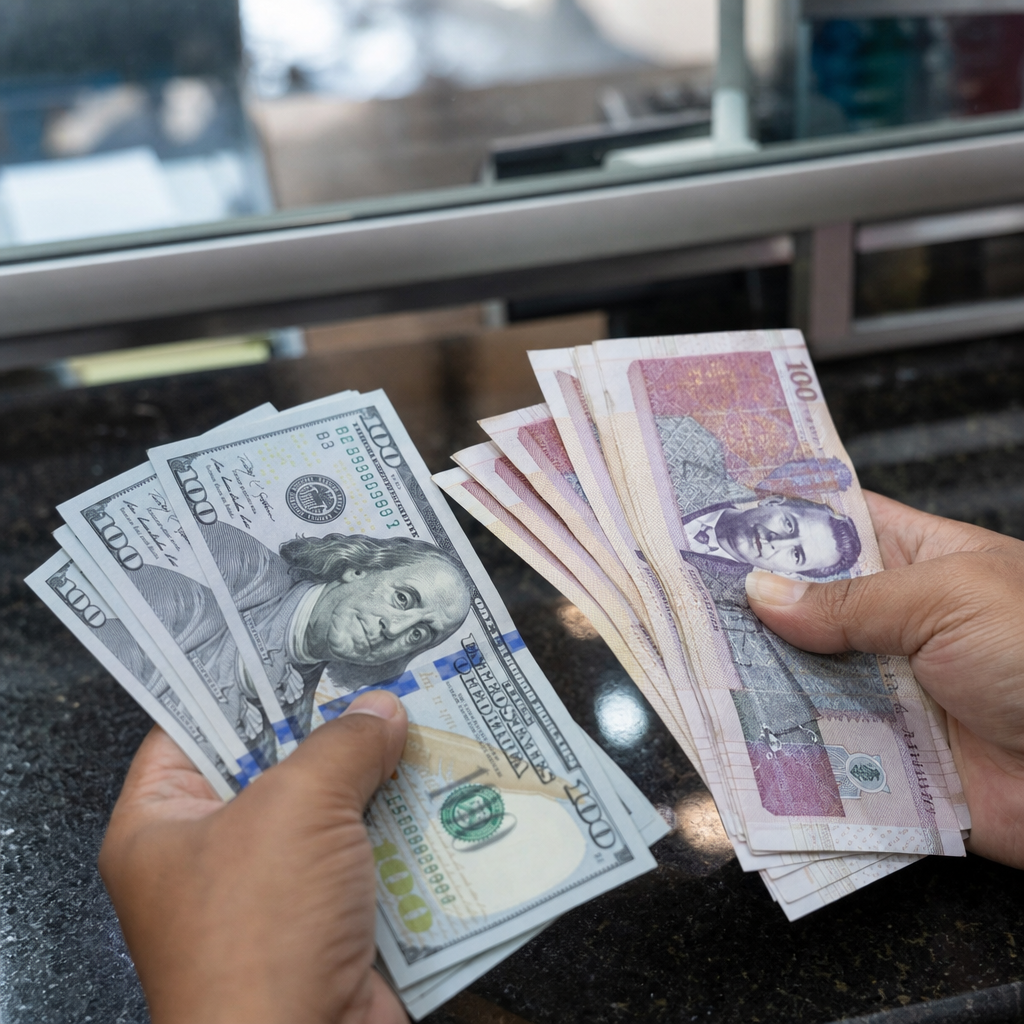
Currency substitution and dollarization describe a situation in which households and firms choose to use a foreign currency alongside, or instead of, their domestic money for saving, pricing, borrowing, and everyday transactions. In practice, people usually switch because they no longer trust the local currency to hold value, settle trade efficiently, or serve as a reliable unit of account. I have seen this pattern emerge whenever inflation accelerates, exchange controls tighten, and confidence in monetary policy breaks down. What begins as a practical coping mechanism can reshape banking, tax collection, credit markets, and the state’s ability to manage the economy.
The distinction between the two terms matters. Currency substitution is the broader concept: residents replace some functions of domestic money with a foreign one, often the U.S. dollar, euro, or another hard currency. Dollarization is a specific and widely used form of that process, though economists also use the term for official adoption of a foreign currency by the state. A country can be partially dollarized when people save in dollars but pay wages in local money, or fully dollarized when the domestic currency disappears from legal use. Economists also separate unofficial dollarization, driven by private behavior, from official dollarization, imposed or endorsed by law.
This topic matters because money is not just a payment tool; it is a core public institution. When residents abandon local money, they reveal deep information about inflation expectations, political credibility, financial stability, and state capacity. Currency substitution often signals that people prefer immediate monetary safety over national monetary sovereignty. For citizens, that can protect purchasing power and facilitate imports. For governments, however, it can reduce seigniorage revenue, weaken lender-of-last-resort capacity, and limit exchange-rate policy. Understanding the causes, forms, and consequences of dollarization is essential for interpreting crises in Latin America, Eastern Europe, Africa, and smaller open economies worldwide.
At a practical level, the subject also helps explain common questions: Why do shops quote prices in dollars during inflationary episodes? Why do bank deposits shift into foreign currency even when local interest rates are higher? Why do some governments ban foreign-currency transactions while others legalize them? Why is exiting dollarization so difficult once it becomes embedded in contracts and expectations? The answers lie in how money performs three classic functions: medium of exchange, store of value, and unit of account. When domestic money fails in one or more of these roles, substitution begins. When failure becomes persistent, dollarization can become entrenched.
What causes currency substitution and dollarization?
The primary cause is chronic macroeconomic instability. High inflation erodes the store-of-value function of money, so households move savings into a more stable foreign currency. If inflation becomes very high or unpredictable, sellers start quoting durable goods, rent, and wholesale trade in dollars because the domestic currency no longer serves as a dependable unit of account. In my experience reviewing crisis episodes, people rarely shift because foreign money is fashionable; they shift because domestic money imposes constant losses and planning costs. A stable external currency reduces the need to renegotiate prices, reprint menus, and recalculate wages every week.
Exchange-rate volatility is a second major driver. Even if inflation is not extreme, repeated devaluations can push importers, landlords, and lenders toward foreign-currency contracts. Countries with a history of sharp balance-of-payments crises often develop financial dollarization because banks and depositors remember prior losses. Weak institutions reinforce the process. If central banks lack independence, fiscal deficits are monetized, or property rights are uncertain, residents infer that future inflation is likely. Political instability, sanctions, war risk, and capital controls can make foreign cash or offshore deposits even more attractive.
Open economies are especially vulnerable when they depend heavily on imported fuel, food, or capital goods. Traders naturally think in the currency used to pay external suppliers. Network effects then accelerate substitution: once wholesalers, landlords, or doctors prefer dollar pricing, everyone else follows because it lowers transaction friction. Remittances can also spread foreign-currency use. In economies with large migrant inflows, families receiving dollars or euros may save and spend in those currencies, deepening local acceptance. Technology now amplifies this mechanism through digital wallets, card settlement, and cross-border payment apps.
A final cause is relative policy credibility. Residents compare expected inflation, legal enforcement, banking safety, and convertibility across currencies. If the domestic authority cannot match the perceived discipline of the Federal Reserve or the European Central Bank, substitution becomes rational. That does not mean foreign monetary policy is ideal for the local economy; it means the local alternative is seen as worse. This is why de-dollarization is not achieved through decrees alone. It requires restoring confidence through sustained disinflation, healthier public finances, credible banking regulation, and a payment system people can trust under stress.
Forms of dollarization: unofficial, partial, and official
Unofficial dollarization occurs when residents adopt foreign currency without the state replacing the domestic unit by law. This can begin with cash savings under mattresses, then spread to bank deposits, real-estate listings, vehicle sales, and business invoices. Economists often classify the process by function. Asset substitution means people hold wealth in foreign-currency deposits or notes. Currency substitution in the narrow sense means they use foreign money for transactions. Unit-of-account substitution means prices and contracts are denominated in the foreign currency even if payment occurs in local money at the daily exchange rate.
Partial dollarization is common and often persistent. A country may pay taxes and public salaries in domestic currency while allowing private deposits, mortgage lending, and rent contracts in dollars. In several Latin American and post-Soviet economies, bank balance sheets became heavily dollarized even after inflation fell, because savers remembered past confiscations and devaluations. This persistence is sometimes called hysteresis: once foreign-currency habits and contracts take root, they do not disappear quickly. People continue using the external unit because it coordinates expectations and lowers perceived risk.
Official dollarization is more radical. The government gives up the domestic currency and adopts a foreign one as legal tender for most or all payments. Panama has long operated with the U.S. dollar alongside its own coins; Ecuador officially dollarized in 2000 after a severe banking and exchange-rate crisis; El Salvador adopted the dollar in 2001. Some microstates and territories use foreign currencies because maintaining a separate monetary system would be inefficient. Official adoption can eliminate exchange-rate risk against the anchor currency and often lowers inflation rapidly, but it also removes autonomous monetary policy.
| Form | Main features | Typical example | Key tradeoff |
|---|---|---|---|
| Unofficial | Foreign cash, deposits, or pricing used privately while local currency remains legal tender | Argentina during high-inflation periods | Flexibility for households, but policy transmission weakens |
| Partial | Mixed system: taxes and wages in local money, savings and credit partly in dollars | Peru in the 1990s and 2000s | Stability for savers, but currency mismatch risk for borrowers |
| Official | State adopts foreign currency as legal tender and retires or sidelines domestic money | Ecuador since 2000 | Lower inflation credibility, but no independent monetary policy |
The legal framework matters because it shapes convertibility, banking supervision, deposit insurance, and accounting rules. Yet law does not create trust by itself. I have worked through cases where official restrictions on dollar pricing simply pushed activity into informal markets, while jurisdictions that allowed legal foreign-currency accounts attracted savings back into the banking system. The key analytical point is that dollarization exists on a spectrum. A country can move gradually from sporadic cash use to contract denomination to full legal adoption, depending on the depth of domestic monetary failure and the credibility of reforms.
Economic effects on inflation, banking, trade, and policy
The most immediate benefit of dollarization is nominal stability. When residents switch to a low-inflation currency, the domestic economy can anchor prices more effectively, especially after episodes of hyperinflation or very high inflation. Ecuador’s inflation fell sharply after official dollarization, and confidence in bank deposits improved over time. Businesses gain from lower menu costs, clearer accounting, and reduced exchange-rate uncertainty when dealing with imports or external debt. In highly open economies, these gains can be substantial because a stable invoicing currency simplifies supply chains and inventory management.
But the costs are equally important. A country that adopts or heavily relies on foreign currency gives up monetary sovereignty. Its central bank cannot freely issue the currency used by the public, which limits lender-of-last-resort operations during bank runs. Seigniorage revenue declines because the profits from issuing money accrue mainly to the foreign issuer. Exchange-rate adjustment also disappears under official dollarization, so shocks must be absorbed through wages, prices, employment, fiscal policy, or migration. That can make recessions more painful when the economy needs relative-price adjustment but cannot devalue.
Financial stability becomes complicated under partial dollarization. If banks take dollar deposits and make dollar loans to borrowers who earn local currency, a depreciation can suddenly raise debt burdens and default rates. This is classic currency mismatch. I have seen balance sheets that looked healthy at a fixed exchange rate become fragile after a single devaluation. Regulators therefore watch indicators such as foreign-currency loan shares, net open positions, and reserve adequacy. Prudential tools may include higher risk weights on unhedged foreign-currency loans, liquidity requirements in hard currency, and tighter disclosure standards.
Trade effects depend on economic structure. Using a global currency can lower transaction costs with foreign suppliers, improve price transparency, and reduce hedging expenses. Tourism and remittance sectors often benefit because visitors and diaspora transfers already arrive in hard currency. However, the same arrangement can reduce competitiveness if the anchor currency strengthens globally while domestic productivity lags. Without an independent exchange rate, exports must adjust through costs and efficiency gains rather than nominal depreciation. For that reason, labor-market flexibility, fiscal discipline, and banking resilience matter far more in dollarized systems than many policymakers initially assume.
Country examples and lessons from experience
Latin America provides the clearest modern examples. Ecuador adopted the U.S. dollar in 2000 after a traumatic banking crisis, steep depreciation, and surging inflation. The move stabilized prices and restored confidence, but it required painful fiscal adjustment and a banking overhaul. El Salvador’s 2001 adoption was more preemptive and aimed at lowering interest rates and integrating more closely with the United States. Panama is often cited as the long-running case of successful official dollar use, supported by a service-oriented economy, international finance, and a relatively flexible institutional framework.
Peru illustrates partial dollarization and gradual reversal. During and after the inflation crises of the late 1980s and early 1990s, residents preferred dollar deposits and loans. Over time, the Central Reserve Bank of Peru built credibility through inflation targeting, reserve accumulation, and targeted macroprudential measures. Dollarization declined, not because people were forced out of dollars, but because local-currency stability improved and regulation made unhedged foreign-currency borrowing less attractive. This is an important lesson: sustainable de-dollarization is earned through credible policy consistency, not short-term coercion.
Argentina shows how persistent distrust can keep currency substitution alive. Even when legal restrictions tighten, households often save in dollars through cash holdings, offshore accounts, or informal markets because they expect future inflation or devaluation. Real estate has long been quoted in dollars, a textbook example of unit-of-account substitution. Zimbabwe offers another stark case. After hyperinflation destroyed confidence in the local currency, foreign currencies became essential for transactions. Although authorities later attempted to restore a national currency, credibility remained fragile because people remembered prior monetary collapse.
The broader lesson from these cases is that institutional memory matters. Once residents experience confiscation, forced conversion, hyperinflation, or repeated devaluations, trust recovers slowly. Policy frameworks must therefore address not only current inflation but also legal certainty, bank resolution, fiscal transparency, and communication. Countries that stabilize successfully usually combine orthodox macroeconomic anchors with practical measures that reduce mismatch risk and improve payment convenience. Countries that fail often announce monetary reforms while continuing deficit monetization or imposing abrupt controls, which only deepens the incentive to escape into foreign currency.
Can countries reverse dollarization?
Yes, but only under demanding conditions. The first requirement is durable low inflation supported by credible fiscal policy. If budget deficits are repeatedly financed by the central bank, no communication strategy will persuade savers to hold local money. The second requirement is a trustworthy financial system with adequate capital, supervision aligned with Basel principles, and clear deposit-protection rules. Third, authorities need deep local-currency markets, including government bonds across maturities, benchmark yield curves, and payment infrastructure that makes domestic-currency use convenient for households and firms.
Successful de-dollarization typically relies on incentives rather than bans. Central banks can strengthen local-currency appeal by maintaining positive real interest rates, improving inflation forecasting, and publishing transparent policy reaction functions. Regulators can discourage risky dollar lending to borrowers without foreign-currency income. Governments can help by issuing debt in domestic currency, indexing some instruments appropriately, and paying suppliers on time. The process is slow because contracts, accounting systems, and expectations adjust gradually. The payoff, however, is meaningful: stronger monetary transmission, lower balance-sheet vulnerability, and greater policy flexibility during shocks.
The crucial caution is that some economies may rationally retain a high degree of foreign-currency use because they are very small, highly open, and deeply integrated with a larger monetary area. In those cases, the goal is not ideological purity but resilience. Policymakers should ask a practical question: does the monetary arrangement support price stability, healthy credit allocation, and shock absorption better than realistic alternatives? Understanding currency substitution and dollarization through that lens leads to better analysis and better policy. If you want to explore economics more deeply, start by mapping how trust in money shapes every other market.
Frequently Asked Questions
What is the difference between currency substitution and dollarization?
Currency substitution and dollarization are closely related, but they are not exactly the same thing. Currency substitution is the broader concept. It happens when households and businesses begin using a foreign currency for some functions that the domestic currency no longer performs well. That can include saving in foreign cash, pricing goods in another currency, borrowing in foreign-denominated loans, or settling large transactions outside the local money system. In other words, people are substituting away from the domestic currency because they believe another currency does a better job as a store of value, medium of exchange, or unit of account.
Dollarization is a specific form of that process, usually referring to the use of the U.S. dollar, though in some regions another foreign currency can play the same role. It can be unofficial, partial, or official. In unofficial dollarization, people simply start using dollars in practice even if the law still says the domestic currency is the only legal tender. In partial dollarization, the domestic currency remains in circulation, but dollars become common for savings, property transactions, imports, rents, or business accounting. In official dollarization, a country formally adopts a foreign currency as legal tender and gives up its own national currency altogether.
The key distinction is that currency substitution describes the behavior, while dollarization describes one prominent outcome of that behavior. Not every case of currency substitution becomes full official dollarization, but many episodes move in that direction when local monetary instability becomes severe and persistent.
Why do people start using a foreign currency instead of their domestic money?
People usually shift toward a foreign currency when trust in the domestic one breaks down. At the most basic level, money works only if people believe it will retain enough value to be useful tomorrow, next month, or next year. When inflation accelerates, that confidence erodes quickly. Households no longer want to hold cash balances that lose purchasing power every week, and firms become reluctant to keep working capital in a currency that is rapidly depreciating. The natural response is to move savings, prices, and contracts into a more stable currency.
Exchange rate instability is another major driver. If the local currency falls sharply and unpredictably against a trusted foreign currency, importers, exporters, landlords, lenders, and consumers start thinking in foreign-currency terms because it reduces uncertainty. A store may begin pricing durable goods in dollars. A landlord may request rent tied to a foreign exchange benchmark. A business may borrow in foreign currency if domestic interest rates are extremely high or if local credit markets are dysfunctional. Over time, this behavior can spread from large financial transactions into everyday commerce.
Government policy often plays an important role as well. Exchange controls, capital restrictions, forced conversion rules, and limits on access to foreign currency can sometimes intensify substitution rather than prevent it. If people fear they will be trapped in a weakening currency, they often look for informal ways to hold and transact in something more reliable. The deeper issue is confidence. Once people start to believe the domestic currency is no longer a trustworthy store of value or unit of account, they do not need an official decree to begin using an alternative.
What are the main economic effects of dollarization on households, businesses, and governments?
The effects of dollarization are mixed and depend on how deep and widespread it becomes. For households, one immediate benefit is protection against inflation and currency depreciation. If wages, savings, or remittances are held in a stable foreign currency, families may preserve purchasing power more effectively than they could in a rapidly weakening local currency. For businesses, using a foreign currency can make pricing more predictable, simplify import transactions, and reduce the chaos caused by constant exchange rate swings. In highly unstable environments, this can restore a basic level of commercial functioning.
At the same time, there are important costs and risks. A heavily dollarized economy can become more financially fragile if borrowers earn income in local currency but owe debts in foreign currency. If the exchange rate moves sharply, debt burdens can suddenly become much harder to repay. This mismatch can damage household balance sheets, corporate finances, and bank loan portfolios. It also reduces the central bank’s policy flexibility. When residents largely save and borrow in foreign currency, changes in domestic interest rates may have less effect, and the authorities lose some control over liquidity and credit conditions.
For governments, dollarization can impose significant constraints. A country that officially dollarizes gives up its independent monetary policy and its ability to issue its own currency. That means it cannot respond to shocks by adjusting the exchange rate or expanding the money supply in the usual way. It also loses seigniorage revenue, which is the income the state earns from issuing money. On the other hand, in some cases official dollarization can help end chronic inflation, impose fiscal discipline, and improve credibility if domestic institutions have repeatedly failed to preserve currency stability. So while dollarization can create short-term stability, it often does so by trading away policy autonomy.
Is dollarization always a sign of economic crisis, or can it happen in more stable economies too?
Dollarization is most commonly associated with economic stress, especially high inflation, repeated devaluations, weak banking systems, and low confidence in public institutions. In those settings, it often emerges as a defensive response. People are not choosing a foreign currency because they prefer it in principle; they are choosing it because the domestic currency no longer performs its core functions reliably. That is why dollarization is frequently seen in countries with histories of monetary instability, fiscal imbalances, or financial repression.
However, foreign currency use can also appear in economies that are not in outright crisis. In small open economies, border regions, tourism-heavy markets, and countries with strong trade, remittance, or financial links to a larger monetary area, foreign currency use may become common even when inflation is moderate. For example, people may save in dollars because they receive remittances in dollars, or businesses may price certain goods in euros because their supply chains and contracts are linked to Europe. In these cases, the behavior may reflect convenience, network effects, and integration with global commerce as much as fear of domestic money.
That said, the intensity and meaning of dollarization matter. Limited use of a foreign currency in specialized sectors is not the same as broad-based replacement of domestic money in savings, pricing, and everyday transactions. When a foreign currency begins to dominate all three functions of money, it is usually signaling deeper credibility problems in the domestic monetary system. So the short answer is no, dollarization is not always a sign of acute crisis, but widespread currency substitution almost always points to an underlying confidence issue.
Can a country reverse currency substitution and rebuild trust in its domestic currency?
Yes, but reversing currency substitution is usually slow and difficult because confidence, once lost, is hard to restore. People do not return to the domestic currency simply because the government tells them to. They return when they believe the conditions that caused them to flee have genuinely changed. That means inflation must come down in a durable way, exchange rate volatility must ease, the banking system must become more credible, and fiscal policy must look sustainable. In practice, successful dedollarization usually requires consistent macroeconomic stabilization over a long period rather than a one-time policy announcement.
Authorities often need a combination of reforms. These can include tighter and more credible monetary policy, stronger central bank independence, lower fiscal deficits, healthier foreign reserve buffers, and financial regulations that reduce excessive foreign-currency borrowing. Governments may also encourage greater use of local-currency savings instruments by offering inflation-linked bonds, improving domestic payment systems, and deepening local capital markets. The goal is to make the domestic currency useful again, not just legally mandatory.
Forced measures alone rarely work well. Strict bans on foreign-currency pricing, deposit restrictions, or coercive conversion rules can backfire if the public still distrusts the local currency. Instead of restoring confidence, they may drive foreign-currency activity into informal channels. Durable reversals usually happen when economic agents voluntarily choose the domestic currency because it has become stable, liquid, and predictable again. In short, dedollarization is possible, but it is ultimately a credibility project, not just a regulatory one.