
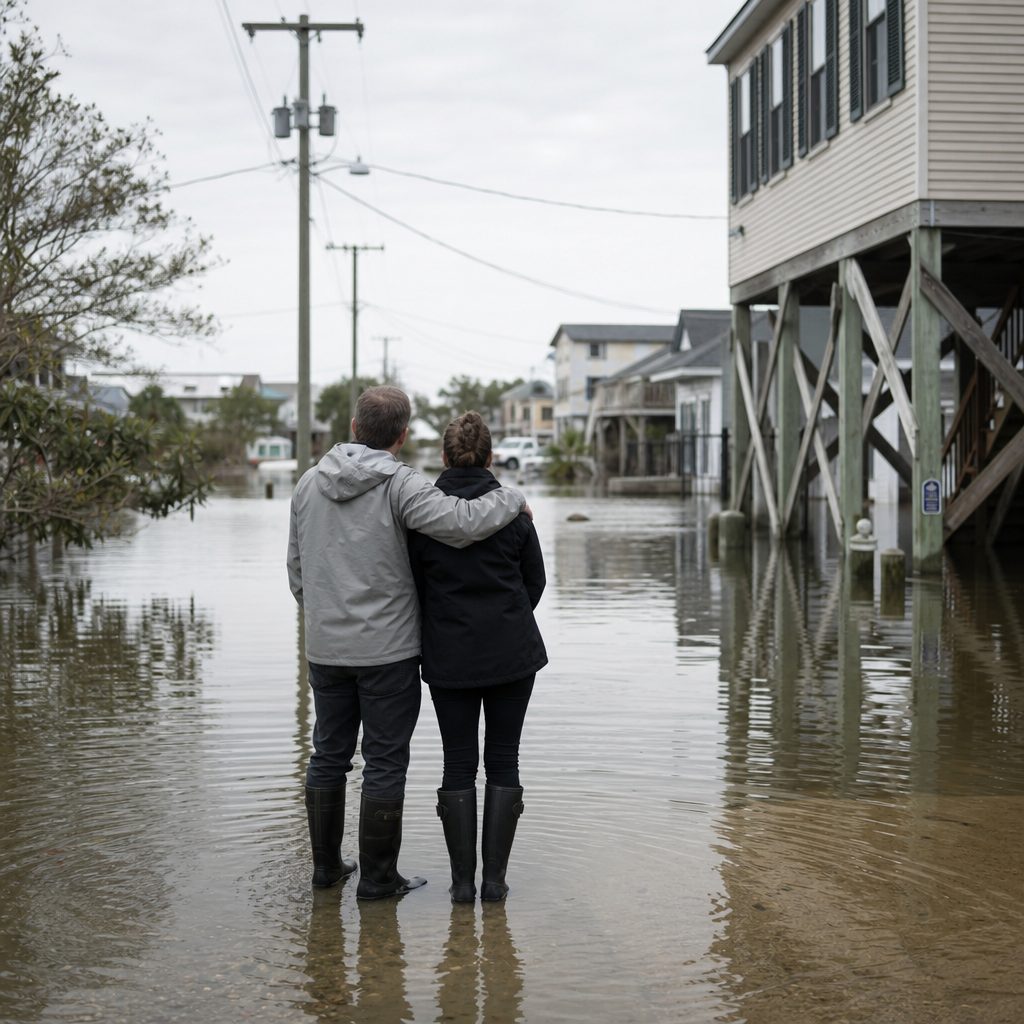
Climate adaptation economics asks a blunt question: as heat, floods, drought, wildfire, and sea level rise intensify, who pays to protect homes, infrastructure, businesses, food systems, and public health? Adaptation means adjusting physical assets, policies, and behavior to reduce harm from climate impacts that are already happening or locked in by past emissions. Resilience is the practical outcome: roads that withstand floodwater, power grids that survive heat waves, farms that conserve water, and communities that recover faster after disaster. The economics matter because adaptation is not free, the benefits are uneven, and the bill is arriving faster than most public budgets, insurance systems, and private balance sheets were built to handle.
In my work reviewing infrastructure business cases and post-disaster recovery plans, the same pattern appears repeatedly. Decision makers agree that resilience investments are cheaper than repeated losses, yet they struggle with timing, incentives, and fairness. A city may know it needs a seawall, stormwater tunnels, urban tree canopy, backup power for hospitals, and updated building codes. A utility may know that undergrounding lines in high-risk zones reduces outages. A manufacturer may know that diversifying suppliers cuts climate disruption risk. But knowing what is economically sensible is different from knowing who should pay upfront, who captures the savings later, and how to protect lower-income households from bearing costs they did not create.
This is why climate adaptation economics sits at the center of public finance, insurance, development, real estate, and corporate strategy. The Global Commission on Adaptation estimated that investments in resilient infrastructure, dryland agriculture, mangrove protection, water resource management, and early warning systems can produce benefit-cost ratios ranging from 2:1 to 10:1. The World Bank has shown that resilient infrastructure often adds around 3 percent to upfront costs while generating much larger lifecycle savings. Yet aggregate needs remain enormous. UNEP’s Adaptation Gap reports consistently find that developing countries face annual adaptation finance needs far above current flows. The hub question, then, is not whether adaptation pays in the long run. It is how societies allocate the costs, returns, and risks in ways that are efficient, politically durable, and socially legitimate.
Why adaptation spending is rising faster than traditional funding models
Adaptation costs are climbing because climate hazards are becoming more frequent, more intense, and more correlated across regions. A single heat dome can stress electricity demand, reduce rail performance, threaten labor productivity, and worsen health outcomes at the same time. Compound events matter economically. Flooding after wildfire, storm surge during high tide, or drought combined with extreme heat can multiply damages beyond what older actuarial models assumed. Public capital plans built around historical weather averages are now underpricing future maintenance and replacement costs, which turns deferred resilience spending into larger emergency spending later.
Another driver is asset concentration. More people and more valuable property sit in exposed coastal zones, floodplains, and heat-vulnerable urban districts. Adaptation economics therefore includes not only climate science but land use economics. If a city keeps permitting high-value development in areas with rising hazard, the future protection bill grows. If insurers retreat, governments often become the insurer of last resort, either formally through public programs or informally through disaster aid. That shift socializes risk after losses occur, even when the gains from risky development were private before the disaster.
There is also a budgeting mismatch. Adaptation often requires large capital outlays today for avoided damages spread over decades. Municipal finance works on annual budgets, election cycles, debt limits, and procurement rules that can undervalue long-term resilience. Finance officers therefore need tools such as lifecycle cost analysis, avoided-loss modeling, and scenario planning. Standards are improving. FEMA’s Benefit-Cost Analysis toolkit, the U.S. Federal Flood Risk Management Standard, and ISO 14090 on adaptation planning all help translate climate risk into decisions. Still, many governments lack the staff, data, or fiscal headroom to apply these tools consistently.
Who pays now: governments, households, insurers, and firms
In practice, adaptation is financed through a patchwork. National governments pay for major protective infrastructure, agricultural extension, emergency management, public health systems, and transfers to local authorities. States, provinces, and municipalities fund drainage, roads, cooling centers, building inspections, and zoning enforcement. Households pay through higher utility bills, retrofits such as elevation or insulation, insurance premiums, deductibles, and property taxes. Businesses pay through supply chain redesign, backup generation, cooling systems, water recycling, and resilience upgrades to facilities. Insurers pay claims until premiums, exclusions, or market exits rebalance the system. After extreme events, donors and development banks often fill gaps in lower-income countries.
The crucial economic issue is incidence, not just source. A utility may finance grid hardening, but customers repay through rates. A city may issue a resilience bond, but taxpayers service the debt. A landlord may install flood barriers, but tenants may face higher rents if markets are tight. This is why adaptation finance debates quickly become distributional debates. Efficiency argues for investment where avoided losses are highest. Equity asks whether vulnerable groups can afford their share and whether they benefited from past decisions that created exposure. Good policy has to address both questions together.
| Payer | Typical instruments | Main strengths | Main limitations |
|---|---|---|---|
| National and local government | Taxes, grants, municipal bonds, public budgets | Can fund public goods and protect vulnerable communities | Budget constraints, political cycles, debt capacity |
| Households and property owners | Savings, mortgages, retrofit loans, insurance | Can act quickly on building-level risk reduction | Affordability barriers, split incentives, uneven information |
| Businesses and utilities | Capex budgets, green or resilience bonds, rate base investment | Operational expertise and measurable asset benefits | May pass costs to customers, focus on high-value assets first |
| Insurers and reinsurers | Premiums, parametric products, risk pricing | Strong data signals and incentives for loss prevention | Coverage can become unaffordable or unavailable in high-risk areas |
| Development banks and donors | Concessional loans, guarantees, grants, blended finance | Important for low-income countries and project preparation | Flows remain far below estimated adaptation needs |
Public goods, private benefits, and the fairness problem
Many adaptation investments are classic public goods. A restored wetland reduces downstream flood risk for thousands of people. A citywide heat warning system protects residents regardless of income. Updated building codes improve safety across the market, including for future buyers. Because private actors cannot capture all benefits, they will underinvest without public intervention. That is textbook economics, but the politics are harder. Taxpayers in safer areas may resist subsidizing high-risk neighborhoods. Renters may ask why they should fund protections that raise landlord asset values. Younger households may object to paying for legacy infrastructure deferred by previous generations.
Fairness depends on context. It is economically sensible to ask beneficiaries to contribute, but strict beneficiary-pays rules can fail where need is greatest. Lower-income households often occupy hotter neighborhoods with less tree cover, poorer drainage, and older housing stock. They may also face credit constraints that block cost-saving retrofits. If policy relies only on private payment, the result can be maladaptation by inequality: wealthier districts buy resilience, while vulnerable communities absorb repeated losses, displacement, and health harm. That outcome increases public costs later through emergency shelter, hospital burdens, and reduced local tax bases.
The polluter-pays principle also enters adaptation debates, especially in international finance and climate litigation. High-emitting countries and firms did not cause every local climate impact, but they contributed disproportionately to the underlying risk. That strengthens the case for grant finance, loss-and-damage support, and targeted transfers for vulnerable countries with low historical emissions and limited fiscal capacity. Economically, the argument is not only moral. Without outside finance, many countries will underinvest in resilience, leading to larger humanitarian crises, debt stress, migration pressures, and supply chain disruptions that spill across borders.
How insurance, property markets, and credit are reshaping resilience
Insurance is often treated as a financial cushion, but it is also a pricing mechanism that signals where adaptation is urgent. Rising premiums in Florida, California, Australia, and parts of Europe reflect changing hazard profiles and reinsurance costs. When premiums rise sharply or insurers withdraw, property values can adjust downward, mortgage access can tighten, and local governments can lose revenue. This is adaptation economics in real time. Markets are repricing climate exposure, although often unevenly and sometimes too late because of data lags, subsidies, and expectations of post-disaster aid.
Public insurance backstops can stabilize markets, but if they suppress risk pricing too much, they encourage continued development in hazardous areas. The U.S. National Flood Insurance Program illustrates the tension. It provides essential coverage where private markets are thin, yet historically subsidized premiums and repetitive-loss properties have drawn criticism for masking true risk. Recent pricing reforms aim to align premiums more closely with property-specific exposure, but affordability concerns are significant. The policy lesson is clear: risk-based pricing improves signals, while means-tested assistance is usually a better equity tool than broad underpricing.
Credit markets are moving too. Banks, rating agencies, and investors increasingly assess physical climate risk in municipal bonds, infrastructure debt, and corporate lending. Moody’s, S&P Global Ratings, and Fitch all evaluate climate exposure in different ways. The Task Force on Climate-related Financial Disclosures and the ISSB framework pushed organizations to describe material climate risks, including physical risks. Once lenders demand stronger resilience planning, adaptation financing becomes easier for well-prepared borrowers and more expensive for those ignoring exposure. That can improve discipline, but it can also deepen inequality if poorer municipalities lack technical capacity to produce credible adaptation plans.
What works: financing tools and policy designs that align incentives
The most effective adaptation finance combines clear risk assessment, stable funding, and incentives tied to measurable resilience outcomes. Municipal bonds remain a core tool for stormwater systems, seawalls, transit upgrades, and water infrastructure, especially when climate risk is built into design standards. Some issuers use labeled green or resilience bonds, but label quality varies; investors still need project-level evidence showing how the asset reduces expected losses or service disruptions. In several cities, stormwater utilities charge fees based on impervious surface area, creating a dedicated revenue stream while encouraging permeable pavements, green roofs, and retention systems.
Targeted grants and revolving loan funds work well for household retrofits when paired with technical assistance. I have seen much higher uptake when programs package energy efficiency, cooling, floodproofing, and healthy-home improvements into one assessment rather than forcing residents to navigate separate agencies. Building codes are another high-return instrument because they spread resilience through normal capital turnover. Strong codes for wind resistance, flood elevation, cool roofs, and defensible space around buildings can save multiples of compliance costs over time. The Institute for Business & Home Safety and NIBS have repeatedly documented favorable returns from mitigation-oriented code upgrades.
Nature-based solutions can also be financially compelling when evaluated correctly. Mangroves reduce storm surge, wetlands store floodwater, and urban trees lower ambient temperatures and cut heat-related illness. These assets often provide co-benefits that gray infrastructure appraisals miss, such as biodiversity, recreation, air quality, and groundwater recharge. The challenge is maintenance, land acquisition, and benefit attribution. Good project appraisal therefore uses avoided-damage models plus ecosystem service valuation where appropriate. Adaptation economics should not romanticize nature-based solutions, but where site conditions fit, they frequently outperform hard infrastructure on cost, flexibility, or social acceptance.
The global gap: why developing countries face the hardest adaptation bill
Low- and middle-income countries face the sharpest adaptation financing challenge because exposure is high, insurance penetration is low, informal settlements are extensive, and public borrowing costs are often elevated. Small island developing states must finance coastal protection, freshwater security, stronger health systems, and resilient transport while also managing debt vulnerabilities. In sub-Saharan Africa and South Asia, adaptation needs in agriculture, urban drainage, and heat resilience are rising even as fiscal space remains limited. A concessional loan can help, but loans alone are not enough when the adaptation investment produces social benefits without direct cash flow.
This is why grants, guarantees, and pre-arranged disaster finance matter. Multilateral development banks can lower capital costs, support project preparation, and crowd in private investment where revenue models exist. Parametric insurance can provide rapid liquidity after cyclones or drought triggers, but it is not a substitute for long-term risk reduction and can suffer from basis risk if payouts do not match actual losses. Debt-for-climate swaps, resilience trust funds, and contingent credit lines are promising in specific contexts, especially when they are tied to governance reforms, maintenance plans, and transparent monitoring.
Ultimately, the adaptation gap is as much institutional as financial. Countries need hazard data, land registries, procurement capacity, building code enforcement, and credible maintenance budgets. Without those foundations, more money will not reliably produce resilience. The countries making the strongest progress usually integrate adaptation into mainstream public investment systems rather than treating it as a stand-alone environmental program. That means finance ministries, planning commissions, utilities, and local governments all use climate risk screening as a normal part of project selection.
How to decide who should pay
The best rule is simple: match the payer to the type of benefit, while protecting vulnerable people and preserving accurate risk signals. Public goods such as seawalls, watershed restoration, early warning systems, and emergency health capacity should be publicly financed, often with national support for local delivery. Private property measures such as elevating a house, installing shutters, or upgrading cooling can reasonably require owner contribution, but grants or low-cost finance are essential where affordability blocks action. Regulated utilities can recover resilience investments through rates when benefits are broad and independently verified. Insurers should price risk transparently, while governments provide targeted affordability assistance instead of blanket subsidies that encourage continued exposure.
The practical test is whether a financing design reduces future losses without trapping people in unaffordable places or pushing risk onto those least able to bear it. Climate adaptation economics is therefore not a side issue within environmental policy. It is a core question of fiscal strategy, market design, and social contract. Communities that answer it well build safer assets, lower long-run costs, and create more credible growth. Communities that avoid it end up paying anyway, but through disaster recovery, insurance crises, health burdens, and declining investment confidence. Use this hub to examine each branch of the adaptation finance puzzle, then apply the same standard everywhere: invest early, price risk honestly, and share costs fairly.
Frequently Asked Questions
What does climate adaptation economics actually mean?
Climate adaptation economics is the study of how societies pay for reducing the damage caused by climate risks that are already here or increasingly unavoidable. Instead of focusing on cutting emissions to prevent future warming, adaptation economics looks at the costs and benefits of practical protective measures such as stronger stormwater systems, cooler buildings, drought-resistant agriculture, wildfire buffers, upgraded power grids, heat health programs, and coastal defenses. The core question is not whether climate impacts are real, but how to allocate limited money in ways that reduce losses, keep essential services functioning, and protect lives and livelihoods.
At its heart, adaptation economics compares the price of acting now with the cost of inaction later. A city might spend heavily to elevate roads, improve drainage, or expand tree cover, but that spending can be economically justified if it prevents repeated flood damage, business interruption, hospital strain, insurance losses, and infrastructure failure. The field also examines timing, uncertainty, and trade-offs. Some investments make sense immediately because they deliver benefits under many climate scenarios, while others may need phased or flexible planning. In that way, adaptation economics is really about resilience under pressure: deciding who pays, when they pay, and which investments create the most durable protection for communities and economies.
Who usually pays for climate resilience and adaptation projects?
In practice, the costs are shared across several groups, and that is exactly why the politics and economics can get complicated. Governments at the local, regional, and national level often carry a large part of the burden because they fund public infrastructure, emergency management, water systems, public health programs, schools, and transportation networks. Municipalities may issue bonds for drainage upgrades, states may support wildfire mitigation, and national governments may provide grants, disaster recovery funds, or long-term resilience financing. Public spending is especially important when the benefits are broad and cannot easily be captured by one private owner, such as flood barriers, heat warning systems, or grid modernization.
Private households and businesses also pay, directly or indirectly. Homeowners may invest in insulation, elevation, backup power, floodproofing, defensible space, or more efficient cooling systems. Businesses may strengthen supply chains, harden facilities, relocate vulnerable operations, or redesign buildings to withstand heat and storms. Utilities, insurers, lenders, developers, and investors all influence who pays through rates, premiums, loan terms, and capital decisions. In many cases, the real answer is that everyone pays somehow, whether through taxes, utility bills, insurance premiums, higher rents, product prices, or lost asset value. The central policy challenge is making sure those costs are allocated fairly, transparently, and in ways that protect the most vulnerable rather than leaving them exposed because they cannot afford resilience on their own.
Why is there so much debate about who should bear the costs?
The debate exists because climate adaptation creates both shared benefits and uneven burdens. A seawall, upgraded drainage network, or wildfire prevention program may protect an entire region, but the taxpayers funding it may not all face the same level of risk. Likewise, some areas have more wealth, stronger tax bases, or better access to credit, making it easier for them to invest in resilience, while lower-income communities may face the greatest exposure but the least ability to pay. That creates a fairness problem. If resilience depends too heavily on private spending, wealthier households and businesses can protect themselves while poorer communities fall further behind.
There is also a responsibility question. Some argue that public budgets should lead because climate risk affects essential services and because vulnerable populations should not carry the heaviest burden. Others argue that property owners, businesses, developers, and insurers should bear more of the cost when they benefit directly or when poor planning increased exposure in the first place. On top of that, adaptation projects can raise difficult issues around relocation, land use, stranded assets, and whether governments should keep defending highly exposed areas indefinitely. The debate is not just economic; it is moral, legal, and political. It asks whether resilience should be treated as a public good, a private responsibility, or a blended obligation across society.
How do economists decide whether an adaptation investment is worth the money?
Economists typically evaluate adaptation by comparing expected costs with expected benefits over time. Benefits often include avoided property damage, lower recovery costs, fewer disruptions to transportation and energy systems, reduced health impacts, preserved agricultural output, stronger labor productivity, and less business interruption. For example, investing in urban cooling through reflective roofs, shade trees, and better building design may reduce heat illness, cut electricity demand, and improve worker performance. Similarly, upgrading drainage systems may prevent repeated flood repairs, emergency response costs, and economic shutdowns during major storms. The goal is to identify whether spending now reduces larger losses later.
That said, adaptation analysis is not always straightforward. Climate risks are uncertain, impacts vary by location, and many benefits are hard to price precisely. How do you fully value avoided deaths during a heat wave, the stability of a food supply, or the protection of a community hospital during a flood? Because of that, economists increasingly use broader decision tools alongside traditional cost-benefit analysis, including scenario planning, stress testing, and assessments of social vulnerability. They also look for “no-regrets” investments that provide value even if future climate conditions differ from current projections. Good adaptation economics does not pretend the future is perfectly predictable. It focuses on robust decisions that perform well across a range of climate outcomes and protect the systems people rely on every day.
What are the biggest challenges in financing climate adaptation fairly and effectively?
One major challenge is that adaptation often requires large upfront spending while the benefits arrive gradually over many years. Political systems and private markets do not always reward that kind of long-term investment. Elected officials may prioritize short-term visible needs, and private investors may avoid projects where returns are diffuse or hard to monetize. Another problem is that many resilience benefits spill beyond the entity paying for them. A city may fund flood protection that helps residents, businesses, insurers, and regional supply chains, but the city alone cannot easily capture all of that value. That mismatch can lead to underinvestment unless higher levels of government or new financing models help close the gap.
Equity is an equally serious challenge. If adaptation is funded mainly through property taxes, utility rates, insurance premiums, or homeowner spending, the burden can fall hardest on people with the fewest resources. Meanwhile, affluent areas may attract more protection because they have stronger political influence or higher-value assets. Effective financing therefore needs both economic discipline and social safeguards. That can include targeted subsidies, resilience grants for low-income households, climate-informed infrastructure planning, insurance reform, public-private partnerships, and rules that prevent risky development from simply shifting future costs onto the public. The most effective adaptation finance systems recognize that resilience is not just about building walls or upgrading pipes. It is about designing funding structures that reduce losses, preserve essential services, and distribute protection in a way that is economically sound and socially legitimate.