
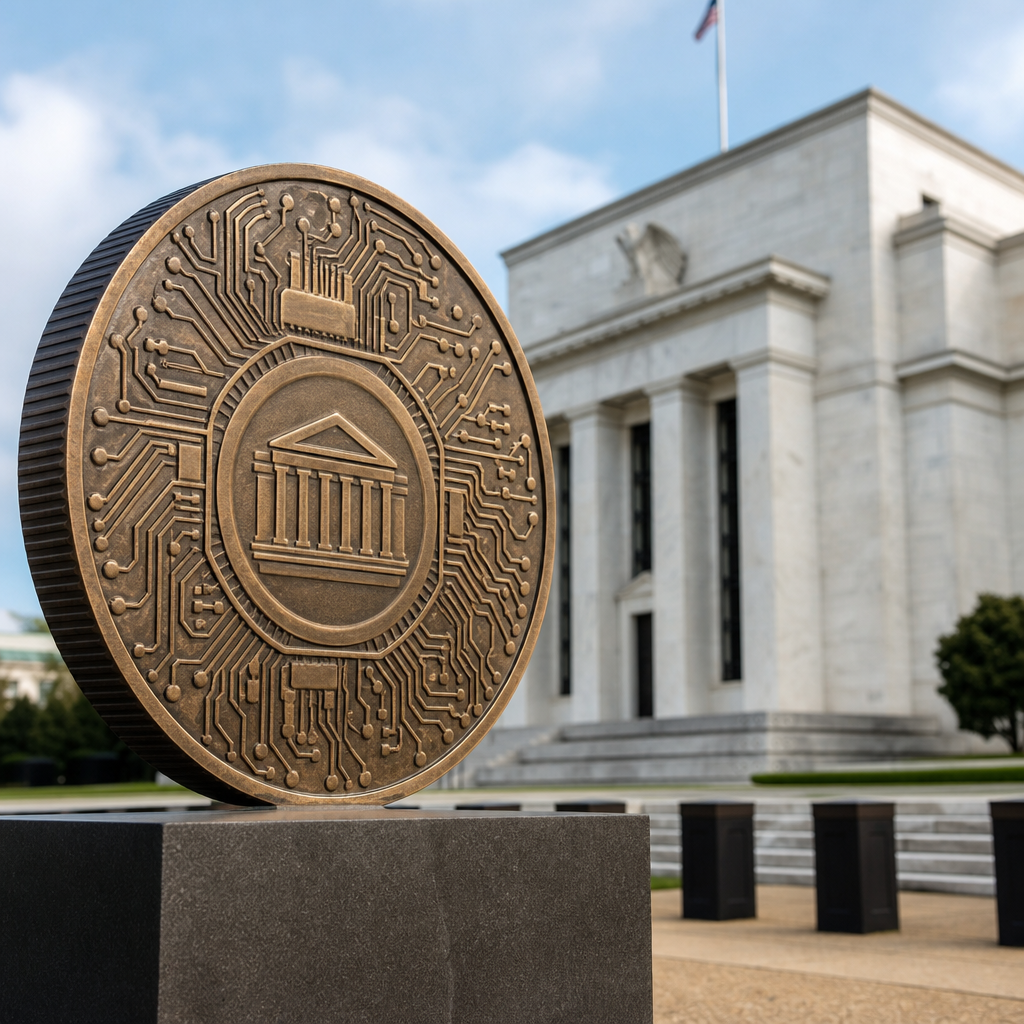
Central bank digital currency, usually shortened to CBDC, is a digital form of sovereign money issued by a nation’s central bank and denominated in the same unit as cash and bank reserves. Unlike cryptocurrencies such as Bitcoin, a CBDC is a liability of the state, not a privately created token with floating value. Unlike commercial bank deposits, it carries direct central bank backing. In policy discussions, that distinction matters because money design shapes financial stability, payment competition, privacy, monetary transmission, and the future role of banks. After working with payment strategy teams and reviewing consultation papers from the Bank for International Settlements, the European Central Bank, the Federal Reserve, and the Bank of England, I have seen one pattern repeatedly: debates about CBDCs are rarely about technology alone. They are really debates about institutional trust, legal authority, and the architecture of modern money.
The term includes two broad models. A retail CBDC would be available to households and businesses for everyday transactions, potentially through digital wallets, cards, or bank-linked interfaces. A wholesale CBDC would be restricted to financial institutions for interbank settlement, securities transactions, and cross-border payment infrastructure. Some countries are testing token-based designs that verify ownership through cryptographic proof, while others prefer account-based systems tied to identity verification. Offline payment capability, transaction limits, remuneration policy, programmability, and interoperability with existing payment rails all affect how useful a CBDC would be in practice. These design choices also determine whether a new system improves resilience or simply duplicates what fast payment networks already do.
Why does this topic matter now? Cash use is declining in many advanced economies, private payment platforms have gained significant market power, and stablecoins have challenged assumptions about who can issue widely used digital money. Policymakers are also concerned about preserving monetary sovereignty if foreign digital currencies become common in domestic transactions. At the same time, millions of consumers and small firms still face expensive, slow, or exclusionary payment services. A well-designed CBDC could widen access, support competition, and create a public option in digital payments. A poorly designed one could disintermediate banks, intensify runs during crises, and normalize state visibility into personal transactions. That is why the economics and policy debates around central bank digital currency deserve careful, grounded analysis rather than slogans.
What a Central Bank Digital Currency Is Meant to Solve
The first question any serious analysis should answer is simple: what problem is a CBDC supposed to fix? In countries with efficient instant payments, strong deposit insurance, and broad bank access, the incremental value of a retail CBDC may be limited. In countries with fragmented banking systems, high remittance costs, weak competition, or a rapid decline in cash acceptance, the case becomes stronger. I have found that CBDC projects gain traction when officials define a narrow public objective, such as payment resilience, financial inclusion, or preserving access to risk-free money, rather than promising every benefit at once.
Public access to central bank money has historically come through cash. As cash use falls, households may increasingly hold only private money in bank accounts or e-money wallets. Economists worry that this could leave the monetary system overly dependent on private intermediaries and make payment markets less contestable. A retail CBDC can preserve a public anchor for money by ensuring that consumers retain access to state-backed digital value. Sweden’s e-krona debate emerged from exactly this concern as cash acceptance declined sharply. In the euro area, the digital euro conversation has similarly emphasized strategic autonomy and continued access to public money in a digital economy.
Cross-border payments are another motivation. Current correspondent banking arrangements can be slow, expensive, and opaque, especially for smaller firms and migrant workers sending remittances. Wholesale CBDC experiments have explored whether shared ledgers or linked national systems can reduce settlement frictions. Projects such as mBridge, involving multiple central banks, have tested cross-border transfers using common technical standards. These experiments do not prove that CBDCs are the only solution, but they do show where public-sector digital money might improve infrastructure that private providers have not modernized sufficiently.
Economic Effects on Banks, Credit, and Financial Stability
The most contested economic issue is whether a retail CBDC would pull deposits away from commercial banks. Banks fund a significant share of lending with relatively stable retail deposits. If households can hold large amounts of perfectly safe central bank money, especially during stress, they may shift balances out of banks faster than today. That can raise bank funding costs, shrink credit supply, or push banks toward more volatile wholesale funding. The concern is not theoretical. During periods of uncertainty, depositors already move money toward perceived safety. A frictionless digital public alternative could accelerate that behavior.
Design can mitigate this risk. Central banks have considered holding caps, tiered remuneration, non-interest-bearing wallets, and limits on large or rapid transfers. The basic idea is to make CBDC useful for payments without turning it into the dominant savings vehicle. The Bank of England and European policymakers have both discussed caps as a practical safeguard. In my experience, this is one of the clearest examples of a policy tradeoff: the more attractive a CBDC is as a store of value, the greater the risk of deposit migration; the less attractive it is, the weaker the public adoption case.
Financial stability arguments run in both directions. Supporters say a CBDC could provide a safer payment instrument and reduce dependence on single private platforms or vulnerable card networks. Critics argue it could create a new channel for digital bank runs. Both are correct under different conditions. If architecture includes strong limits, delayed conversion rules in emergencies, and integration with lender-of-last-resort tools, the system may improve resilience. If not, a crisis could turn millions of phones into instant flight-to-safety devices. The economics therefore depend less on the label CBDC and more on detailed operating rules.
| Design choice | Main benefit | Main risk | Policy response |
|---|---|---|---|
| High holding limit | Greater convenience and adoption | Deposit outflows from banks | Tiered interest or dynamic caps |
| Interest-bearing CBDC | Stronger monetary transmission | Competes directly with bank deposits | Below-market rates for large balances |
| Offline payments | Resilience during outages | Fraud and double-spend challenges | Secure hardware and value limits |
| Full identity linkage | AML and fraud control | Privacy concerns and lower trust | Tiered wallets and minimal data retention |
Monetary Policy, Transmission, and the Zero Lower Bound
A CBDC could change how monetary policy reaches households and firms, but many claims are overstated. In a standard banking system, policy rates influence borrowing and saving through bank funding costs, asset prices, and expectations. If a central bank offers an interest-bearing CBDC, rate changes could pass more directly to consumers, especially if banks respond by adjusting deposit rates faster. Some economists also argue that a CBDC could weaken the effective lower bound by making it easier to impose negative rates than with cash. That is technically plausible, but politically highly sensitive.
In practice, most central banks have been cautious about tying retail CBDC too closely to active monetary policy. A fully remunerated public wallet could transform retail finance and materially alter bank behavior. That is one reason many proposals favor either zero interest or tiered rates. The objective is to preserve usability for payments while avoiding abrupt balance-sheet shifts. I have yet to see a major central bank present a retail CBDC primarily as a tool for aggressive monetary experimentation. The main policy framing is usually payment system modernization, not bypassing the banking sector.
Wholesale CBDCs have a different monetary relevance. They can improve settlement efficiency in interbank markets, delivery-versus-payment in securities transactions, and potentially the use of tokenized collateral. For central banks exploring tokenized financial infrastructure, the question is whether wholesale digital settlement reduces counterparty risk and operational frictions compared with existing real-time gross settlement systems. Some pilots suggest gains in programmability and atomic settlement, but legacy systems are already robust in many jurisdictions. The policy case therefore depends on whether new infrastructure lowers cost and complexity enough to justify migration.
Privacy, Civil Liberties, and the Politics of Trust
No issue generates more public resistance than privacy. Citizens reasonably ask whether a CBDC would let the state monitor purchases, freeze funds arbitrarily, or enforce spending conditions on ordinary people. These fears are not solved by saying that banks already collect transaction data. Public trust depends on legal protections, technical architecture, and governance constraints that are visible and enforceable. In every serious consultation I have reviewed, privacy concerns ranked near the top, often ahead of convenience or innovation.
There is no single privacy model. A central bank can design a system where private intermediaries manage customer-facing wallets and the central bank sees only limited, pseudonymized data. It can allow low-value transactions with simplified identity checks while requiring stronger verification for larger balances. It can set strict statutory limits on data retention, lawful access, and the use of transaction records beyond anti-money-laundering and counter-terrorist-financing obligations. The European debate has moved strongly in this direction, emphasizing that public institutions should not have routine visibility into personal payment behavior.
However, privacy is always a tradeoff, not an absolute. Full anonymity comparable to cash is difficult in digital systems that must manage fraud, sanctions screening, illicit finance controls, and lost-device recovery. Policymakers should say this plainly. The realistic target is privacy by design: collect the minimum necessary data, separate functions across institutions, require due process for access, and subject the whole framework to independent oversight. Without that architecture, adoption will suffer because people do not use money they do not trust.
Global Models, Pilot Programs, and Lessons from Early Movers
Different countries are pursuing very different paths, and those differences matter more than headlines about a global CBDC race. The Bahamas launched the Sand Dollar to improve payment access across islands where physical banking infrastructure is costly. Nigeria introduced the eNaira with ambitions around inclusion and payment modernization, but adoption challenges highlighted a consistent lesson: issuance alone does not create usage. Consumers need simple interfaces, merchant acceptance, clear incentives, and confidence that the new instrument offers value beyond existing methods.
China’s e-CNY pilot is the most prominent large-scale retail experiment. It has tested wallet tiers, offline features, and distribution through authorized operators across multiple cities and event settings. The policy context there includes payment market concentration and state interest in digital infrastructure standards. Yet even in China, user adoption depends on integration into daily commerce, not just technical rollout. This is a reminder that payment habits are sticky. If a CBDC does not beat incumbents on convenience, cost, or acceptance, usage will remain limited.
Advanced economies have generally moved more slowly. The Federal Reserve has not committed to issuing a U.S. retail CBDC and has emphasized the need for congressional support, public input, and clear benefits over existing options. The European Central Bank has advanced preparation work for a digital euro while stressing privacy, resilience, and coexistence with cash. The Bank for International Settlements has coordinated research and cross-border experiments, helping standardize terminology and test interoperability. The broad lesson from all of these cases is straightforward: institutional context determines viability. There is no universal template that can simply be copied from one jurisdiction to another.
How This Hub Connects the Broader Economics Debate
As a hub article within Economics, this topic connects to several adjacent debates that deserve separate analysis but should be understood together. CBDCs sit at the intersection of monetary economics, banking regulation, public finance, technology governance, and international political economy. If you are mapping the field, the next logical areas include inflation transmission, payment systems and market structure, financial inclusion metrics, stablecoin regulation, bank funding models, anti-money-laundering rules, and cross-border capital flow management. Each of those subjects shapes whether a central bank digital currency is desirable, feasible, or unnecessary.
The most useful way to think about CBDCs is not as an inevitable replacement for cash or bank deposits, but as a policy instrument with narrow use cases and significant design constraints. Some jurisdictions may conclude that faster payments, better competition law, improved digital identification, and stronger regulation of private money achieve the same goals with less disruption. Others may determine that a public digital payment rail is strategically essential. The correct answer depends on local payment habits, legal traditions, financial structure, and institutional credibility.
For policymakers, the central takeaway is discipline. Define the public problem, test the smallest workable solution, publish governance rules, and measure effects on banks, users, and market competition before scaling. For businesses, the key is preparation: monitor standards, wallet models, compliance requirements, and settlement implications. For readers following the Economics landscape, central bank digital currency is best seen as a lens through which bigger questions come into focus: who creates money, who controls payment infrastructure, and how public institutions should adapt when commerce becomes fully digital. Keep exploring the connected topics in this hub, because the future of money will be decided through those linked debates, not through technology alone.
Frequently Asked Questions
What is a central bank digital currency, and how is it different from cash, bank deposits, and cryptocurrencies?
A central bank digital currency, or CBDC, is a digital version of sovereign money issued by a country’s central bank. It is denominated in the national unit of account, such as dollars, euros, or pounds, and it represents a direct claim on the central bank, much like physical cash. That makes it fundamentally different from most private digital assets. A CBDC is not designed to float in value like Bitcoin or other cryptocurrencies, nor is it simply another payment app layered on top of commercial bank money. Its defining feature is that it is state-issued money in digital form.
The clearest distinction is legal and institutional. Cash is a physical liability of the central bank. Commercial bank deposits are liabilities of private banks, even though they are typically regulated and often insured up to certain limits. A CBDC would sit closer to cash because it would be backed directly by the central bank rather than by a private intermediary. That difference matters in times of stress, because households and firms may view a CBDC as safer than a commercial bank deposit if both are available in digital form.
CBDCs also differ sharply from cryptocurrencies. Most cryptocurrencies are not claims on a public institution, are not necessarily stable in value, and are not generally accepted as legal tender. Their price often fluctuates based on market demand, speculation, and perceived scarcity. By contrast, a CBDC would be intended to maintain one-for-one parity with the national currency and function as money rather than as a speculative asset. In practical policy terms, the debate around CBDCs is less about inventing a new currency and more about redesigning access to central bank money for the digital age.
Why are central banks and governments interested in CBDCs in the first place?
Central banks are exploring CBDCs because the way people pay, save, and move money is changing rapidly. In many economies, cash use is falling, while digital payments are increasingly dominated by a small number of private platforms, card networks, and banks. That trend raises questions about competition, resilience, inclusion, and public access to sovereign money. A CBDC is often seen as one possible response: a way to preserve the role of public money in a financial system that is becoming more digital and more intermediated by private firms.
Another major motivation is payment efficiency. Cross-border payments remain slow, costly, and fragmented in many parts of the world. Domestic payments can also be expensive for merchants and inconvenient for consumers, especially where legacy infrastructure is outdated. A well-designed CBDC could potentially improve settlement speed, lower transaction costs, and widen access to digital payments, particularly for people who are underserved by the traditional banking system. That said, these gains are not automatic. They depend on governance, technical architecture, interoperability, and whether the CBDC solves a real problem better than existing alternatives.
There is also a strategic and geopolitical dimension. Policymakers worry about the rise of large private payment ecosystems, foreign digital currencies, and stablecoins that could reduce monetary sovereignty if widely adopted. In smaller or more dollarized economies, this concern can be especially strong. A CBDC may be viewed as a way to reinforce trust in the domestic currency and ensure that the state retains a meaningful role in the payment system. Still, many central banks are cautious. Interest in CBDCs does not mean every country should issue one. In many cases, authorities are studying them precisely because the economic tradeoffs are significant and highly country-specific.
What are the biggest economic benefits and risks associated with a CBDC?
The potential benefits of a CBDC usually center on safety, inclusion, competition, and payment modernization. Because a CBDC would be a direct claim on the central bank, it could provide households and businesses with a very low-risk digital payment asset. That could enhance public confidence in the payment system and preserve access to central bank money even as cash use declines. A CBDC could also encourage more competition if it reduces dependence on a small number of dominant private intermediaries and allows new payment providers to build services on top of public infrastructure.
Financial inclusion is another frequently cited benefit, especially in countries where large segments of the population lack reliable access to bank accounts. If designed with low fees, simple onboarding, and offline functionality, a CBDC could make digital payments more accessible. It might also improve the delivery of government transfers, tax refunds, or emergency support by enabling faster and more direct disbursement. In cross-border contexts, some policymakers hope CBDCs could streamline settlement and reduce frictions that currently make international payments expensive and slow.
The risks, however, are just as important. One of the biggest concerns is disintermediation of the banking system. If consumers can hold central bank money directly in digital wallets, they may shift funds out of commercial bank deposits, especially during periods of market stress. That could raise banks’ funding costs, reduce credit creation, or intensify bank runs by making it easier to move money instantly into the safest available asset. Another key risk is privacy. A CBDC could create unprecedented visibility into payment activity if not designed with strong legal protections and technical safeguards. Cybersecurity, operational resilience, and political misuse are also serious concerns. In other words, the economic promise of a CBDC depends heavily on whether its design can capture public benefits without destabilizing the institutions that currently support credit, payments, and trust.
How could a CBDC affect monetary policy and financial stability?
A CBDC could change the transmission of monetary policy by altering how people hold money and how quickly they can reallocate funds across the financial system. In a traditional system, most households interact with central bank policy indirectly through commercial banks, which pass through interest rate changes to loans and deposits with varying speed and intensity. If a retail CBDC were interest-bearing, the central bank could, at least in theory, influence savers more directly. That possibility has generated interest among economists, but it has also raised concerns about how much power central banks should have over retail money holdings and whether such tools would create political or market tensions.
Financial stability concerns are even more prominent. In normal times, a CBDC might coexist smoothly with bank deposits, especially if holdings are capped or structured in tiers. But in stressed conditions, people may rush into CBDC wallets because central bank money is perceived as safer than private bank liabilities. This could accelerate deposit flight and make banking panics more severe or more instantaneous. The same feature that makes a CBDC attractive as a safe public asset could make it destabilizing if the broader system is not designed to absorb rapid shifts in liquidity.
To address these risks, policymakers often discuss design tools such as holding limits, non-interest-bearing retail balances, tiered remuneration that discourages large accumulations, or an intermediated model in which private firms manage customer-facing services while the central bank provides the settlement layer. These design choices matter because a CBDC is not just a new payment instrument; it changes the structure of money itself. In short, the monetary policy implications may be meaningful, but the financial stability implications are often the more immediate concern. Much of the policy debate is really about balancing innovation with the need to avoid weakening the banking system’s role in credit intermediation.
What are the main policy debates around privacy, control, and the best design for a CBDC?
The most politically sensitive CBDC debates are often not about technology at all, but about power, rights, and institutional trust. Privacy is at the center of that discussion. Critics worry that a poorly designed CBDC could allow the state to monitor individual transactions at a level that cash does not permit. Supporters respond that digital payments already generate vast amounts of private-sector data and that a public system could potentially be designed with stronger protections than today’s commercial platforms. The core issue is not whether data will exist, but who can access it, under what legal standards, and with what safeguards against misuse.
Another debate concerns programmability and control. Some policymakers and technologists see value in making digital money “smart,” meaning capable of automatic compliance checks, targeted transfers, or conditional use cases. Others view that possibility with deep suspicion, fearing that it could enable restrictions on how citizens spend money or make the currency vulnerable to political overreach. Even if central banks do not intend to impose such controls, public trust can erode quickly if the architecture appears capable of supporting them. That is why governance frameworks, legislative limits, and institutional transparency are as important as software design.
There is also an active debate over whether a CBDC should be retail or wholesale, account-based or token-based, direct or intermediated. A wholesale CBDC would be limited to financial institutions and focus mainly on interbank settlement, while a retail CBDC would be available to the general public. An account-based system typically requires identity verification through managed accounts, while a token-based design resembles digital bearer instruments that may allow more cash-like use. Most current policy thinking favors intermediated models that preserve a role for banks and payment providers in customer service, compliance, and innovation, while leaving the central bank responsible for the core monetary liability. Ultimately, the best design depends on the problem a country is trying to solve. A CBDC is not a one-size-fits-all product; it is a policy choice with major consequences for privacy, market structure, and the future relationship between citizens, money, and the state.