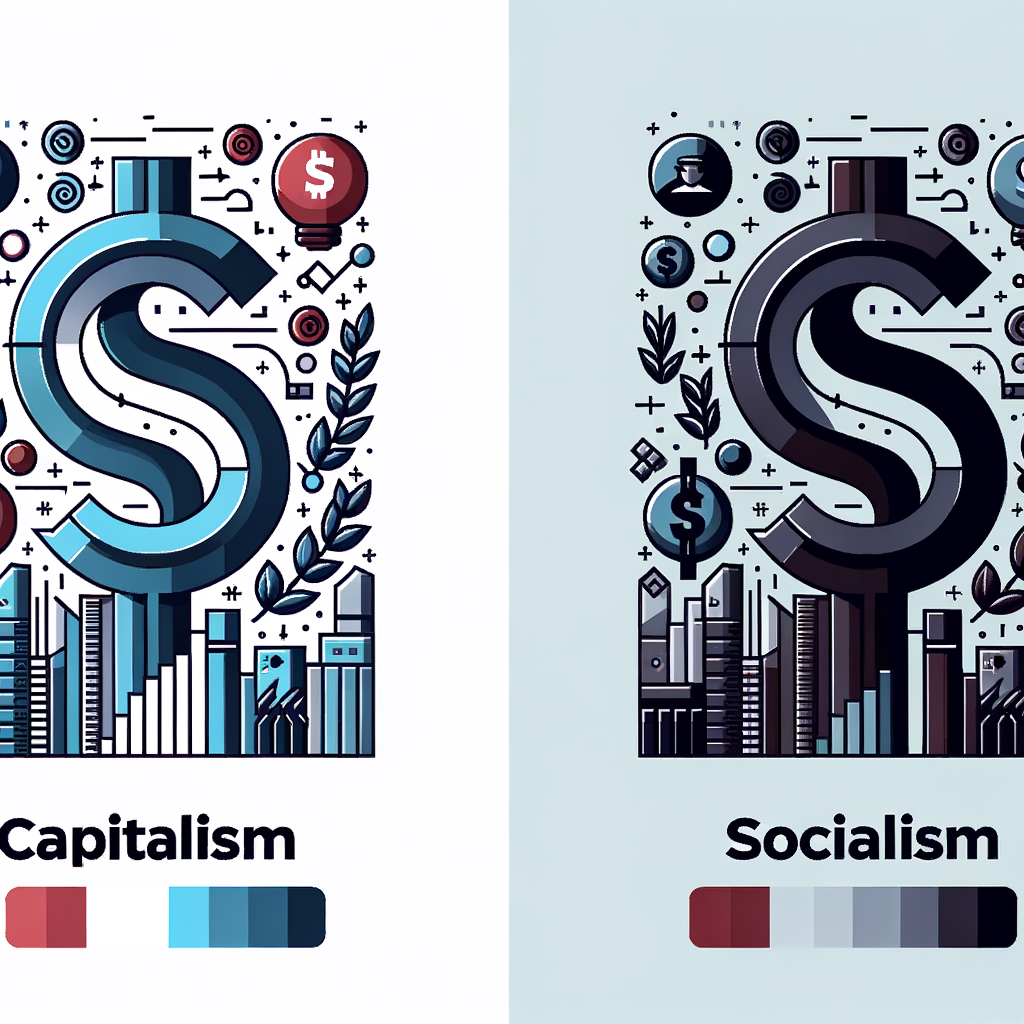
Capitalism and socialism are two predominant economic and political systems that have shaped societies across the globe. Each system offers distinct frameworks for organizing a country’s economy, aims to serve the collective good, and, ultimately, provides unique solutions to societal issues. Understanding the fundamental differences between capitalism and socialism is crucial, as these systems influence everything from production and distribution to individual freedom and societal equality. This comparative analysis will delve into the principles, advantages, and disadvantages of each system, offering a comprehensive understanding of how they function and impact global societies.
The concept of capitalism centers around private ownership and a free market economy. Here, the means of production, distribution, and exchange are in private hands with minimal government intervention. Driven by the principles of supply and demand, capitalism aims to maximize profits and emphasizes individual freedom and entrepreneurial spirit. Conversely, socialism is grounded in the idea of social ownership and egalitarian distribution of resources. It advocates for government intervention to reduce inequalities, with the aim of providing for everyone’s basic needs. Socialism emphasizes collective welfare and reducing the gap between the wealthy and the underprivileged.
While capitalism promotes innovation and efficiency by rewarding entrepreneurial efforts, it may also lead to economic inequality and monopolies. Socialism, on the other hand, seeks to ensure equitable distribution of wealth and resources but may curb individual incentives and stifle innovation. The debate between capitalism and socialism is pivotal in shaping ideologies, societies, and economies worldwide. Understanding their core principles and implications provides significant insights for policymakers and individuals alike.
Understanding Capitalism
Capitalism operates on the foundations of private ownership and competitive markets. Primarily accentuating individualism, it alleges that human beings are highly driven by self-interest. Business owners, also known as capitalists in this system, aim to maximize profits, subsequently leading to innovation and efficient allocation of resources. The market forces, primarily dictated by supply and demand, determine the prices of goods and services. While government intervention is minimal, it plays a crucial role in enforcing property rights, maintaining the rule of law, and ensuring the proper functioning of financial systems.
A crucial pillar of capitalism is the encouragement of competition, which ostensibly results in improved quality of products and services alongside ensuring lower prices for consumers. Innovation is spurred by the competitive drive, as businesses vie for consumer allegiance by offering superior goods and services. Thus, capitalism promotes a dynamic economy where the forces of the market instigate economic growth and development.
Despite these benefits, capitalism is frequently critiqued for engendering economic disparities. The concentration of wealth and power often results in inequality, where a small segment of society controls a significant portion of resources. This disparity may lead to the exploitation of workers, unfair labor practices, and a compromised standard of living for certain sections of society. Furthermore, capitalism can precipitate cyclical economic booms and busts, inflicting instability on economies.
Another focal critique is the emergence of monopolies, where large corporations, unfettered by competition, may dominate markets and inhibit smaller enterprises. Such environments diminish consumer choice, compromise product quality, and can exert undue influence on political processes. Moreover, capitalism is often held accountable for fostering environmental degradation, given its focus on profit maximization without necessarily considering the ecological consequences.
Yet, proponents assert that capitalism’s intrinsic incentives structure potentially self-corrects over time, paving avenues for technological and scientific advancements. Such developments improve standards of living and create wealth, enhancing societal welfare in the long run. An efficient capitalist system ideally includes a robust regulatory framework that mitigates excesses and fosters equitable opportunities for all participants.
Understanding Socialism
In contrast to capitalism, socialism hinges on the principles of collective ownership and social welfare. The system focuses on equitable distribution of resources to ensure societal well-being. Under socialism, the government often controls major industries, with the intention of abolishing class distinctions and closing the gap between the rich and the poor. Economic planning replaces the market forces as the primary allocator of resources, steering them towards societal needs over individual profits.
A pivotal ideology underpinning socialism is the belief in collective welfare. It aims to guarantee that all members of society have access to basic necessities such as healthcare, education, and housing. An equitable distribution of wealth ensures that individuals have confidence that their needs will be met, potentially cultivating a more cohesive society. Furthermore, socialism upholds the principle of equal opportunity, striving to dismantle barriers that prevent individuals from achieving their potential.
Despite its egalitarian vision, socialism is frequently critiqued for potentially stymying individual ambition and innovation. Detractors argue that pervasive government control can result in inefficiency, lack of competition, and bureaucratic excess. This may inhibit the entrepreneurial spirit, dampening innovation and slowing economic advancement. Moreover, central planning in a socialist economy can often be less responsive to consumer demands and market changes, leading to resource misallocation.
Socialism also encounters challenges in fostering the same level of wealth creation as capitalism. When the incentive structure is skewed towards equitable distribution rather than profit maximization, the drive to excel and innovate, integral features of capitalism, may diminish. This can lead to sluggish economic growth and stagnation, limiting the resources available for redistribution.
Nevertheless, socialism presents an attractive model for reducing inequities and fostering harmony in diverse communities. By prioritizing social welfare, socialism endeavors to ensure equitable access to essential services, potentially reducing poverty and enhancing quality of life. Coupled with efforts to uphold democratic freedoms and human rights, socialist systems can potentially coalesce individuals towards shared societal objectives.
The Intersection of Capitalism and Socialism
While capitalism and socialism are fundamentally different, real-world implementations often incorporate elements of both systems. Mixed economies blend aspects of capitalism and socialism, aiming to harness optimal benefits while minimizing inherent drawbacks. Such systems involve the coexistence of both private enterprise and government intervention, seeking a balance that fosters economic growth and equitable distribution of resources.
In mixed economies, the government may regulate critical sectors like healthcare, education, and transportation, ensuring accessibility to all citizens while maintaining a predominantly capitalist framework. This hybrid model attempts to achieve innovation-driven economic growth alongside improved social welfare, thereby enhancing the overall quality of life for citizens.
Notably, countries like Nordic nations exemplify successful mixed economies. These countries underscore the seamless integration of capitalism’s dynamism with socialism’s welfare objectives, showcasing how the systems can mutually reinforce to deliver socio-economic prosperity. Such models enhance inclusivity by allowing private entities to thrive within a framework that prioritizes social welfare and equality.
Furthermore, mixed economies address some of the inherent challenges in each system. They allow for a level of governmental intervention that mitigates the adverse effects of unchecked capitalism such as inequality and monopolies, while simultaneously maintaining a competitive market structure that fosters growth and innovation. This pragmatic approach embraces adaptability, ensuring that governmental policies reflect economic realities and societal needs.
However, crafting a harmonious blend of capitalism and socialism is a learning process for nations worldwide. The dynamic interplay often results in tensions between state control and market freedom, demanding continuous evaluation and reformulation of policies to ensure the effective coalescence of these ideologically divergent systems.
Conclusion
The ongoing ideological debate between capitalism and socialism illuminates foundational questions about economic structures, governance, and societal values. Each system offers unique perspectives and solutions, bearing consequences for individuals and societies worldwide. Capitalism, with its emphasis on free markets and individual enterprise, propels innovation and wealth creation but may culminate in significant inequalities. Socialism, focusing on equitable wealth distribution and collective welfare, addresses disparities but may inhibit innovation and economic dynamism.
Emerging trends indicate a growing convergence between these systems in the form of mixed economies, wherein principles of both capitalism and socialism integrate to craft models that aspire for both economic growth and social equity. The adaptability of nations in leveraging the strengths and addressing the weaknesses of each system underscores their resolve to enhance the well-being of citizens.
Ultimately, the discourse surrounding these economic models will persist as a fundamental consideration for policymakers, theoreticians, and global citizens. Understanding the intricacies of capitalism and socialism provides crucial insights into crafting sustainable and equitable societies, underscoring the need for nuanced approaches that align economic practices with societal aspirations.
Frequently Asked Questions
1. What are the core principles of capitalism and socialism?
At its core, capitalism is grounded in the principles of private ownership, free markets, competition, and profit motive. Capitalists believe that when individuals or businesses own the means of production, it encourages innovation, efficiency, and wealth creation. The market largely regulates itself through supply and demand, leading to the effective allocation of resources.
In contrast, socialism is based on the idea of collective ownership and the equitable distribution of wealth. Socialists advocate for a system where key industries and services are controlled by the state or cooperatives. The driving principle is to diminish the disparity between the wealthy and the less fortunate, promoting an equitable distribution of resources to ensure basic needs, like healthcare and education, are universally accessible.
2. How do capitalism and socialism approach resource distribution?
In a capitalist system, resource distribution is predominantly governed by the market. Prices are determined by supply and demand dynamics, which theoretically ensure that resources are allocated to their most efficient use. It relies on the notion that individuals and companies motivated by self-interest will naturally lead to the overall prosperity of society. However, this system can often result in significant inequalities in wealth and access to resources.
Socialism, however, aims for a more structured approach to resource distribution, intending to provide equal access to essential services and goods. The state often plays a critical role in resource allocation, attempting to offer basic needs such as healthcare, education, and housing at little to no cost. This system tries to bridge the gap between different socioeconomic classes by ensuring everyone receives a fair share of the national wealth.
3. What are the potential advantages of capitalism?
One of the primary advantages of capitalism is its encouragement of innovation and entrepreneurship. By allowing private ownership and competition, individuals and businesses are incentivized to develop new products and services, improving efficiency and technological advancement. This can lead to higher economic growth and increased consumer choice. Additionally, capitalism often results in a higher standard of living, as competition tends to drive down prices and improve quality.
Capitalism also champions individual freedoms and liberties. With minimal government intervention, people have the autonomy to make choices about their careers, investments, and consumption. This personal agency is a cornerstone for many who support capitalist ideals, underscoring freedom and opportunity as key benefits of the system.
4. What are the potential advantages of socialism?
Socialism offers the advantage of striving for social equality and fairness. By emphasizing equal distribution of resources and state control over essential services, socialism seeks to ensure that everyone has access to the basics of life, such as healthcare, education, and shelter. This can reduce poverty and decrease the gap between the affluent and the underprivileged, promoting a more cohesive society.
Furthermore, socialism can reduce the often devastating effects of economic cycles seen in capitalism, like recessions and booms, by offering a safety net for citizens through social programs. This aspect can create a sense of societal solidarity and stability, especially in times of economic turmoil, as citizens have assured access to necessary resources irrespective of market conditions.
5. How do capitalism and socialism impact personal freedom and societal equality?
Capitalism prioritizes personal freedom, emphasizing individual rights to own property, start businesses, and make economic decisions. This focus on self-determination enables people to pursue their personal and financial goals, often leading to significant innovations and economic dynamism. However, this individualistic drive can sometimes come at the expense of societal equality, creating disparities in wealth and opportunity that can limit access to resources for those less economically empowered.
Conversely, socialism places a higher value on societal equality, aiming to ensure that resources are distributed in a way that serves the needs of everyone. This often involves sacrificing some levels of personal economic freedom, as the government regulates and redistributes resources to level the playing field. While this can enhance social welfare and reduce discrimination and inequality, critics argue it can suppress motivation for individual and economic achievement.