
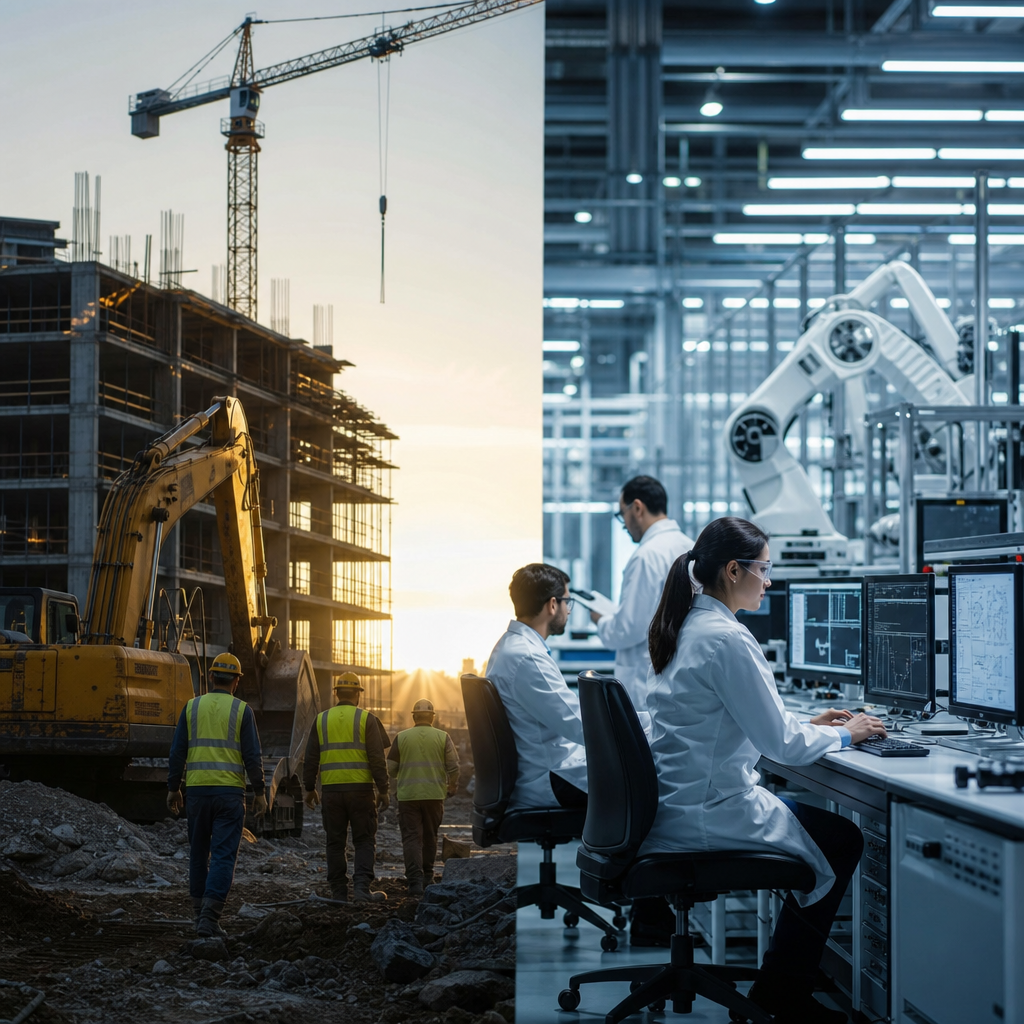
Capital deepening and technological progress are two of the most important forces behind long-run economic growth, yet they are often confused because both raise output and living standards. Capital deepening means increasing the amount of capital available per worker: more machines, better equipment, larger factories, improved software, and stronger infrastructure. Technological progress means finding better ways to combine labor, capital, energy, and knowledge so the same inputs produce more output, or so entirely new products and processes become possible. In practice, economists separate the two because they affect productivity, wages, profits, and policy in different ways.
This distinction matters for anyone trying to understand why some firms, regions, or countries grow faster than others. In my work reviewing business investment plans and productivity reports, I have repeatedly seen managers assume that buying more equipment automatically creates durable competitiveness. It does not. A warehouse can double its forklifts and still lag if routing software, training, and inventory systems remain outdated. By contrast, a company that adopts machine vision, redesigns workflows, and retrains staff may increase output with only modest new physical investment. The same logic applies at the national level. A country can raise output for a time by adding roads, ports, and machinery, but without innovation and diffusion of new techniques, returns eventually fade.
As a hub page for this economics topic, this article explains the core concepts, the mechanisms behind each growth driver, where they overlap, and why the difference shapes debates on productivity, wages, inequality, and development strategy. It also points readers toward the wider “Misc” territory that often surrounds growth discussions: measurement problems, intangible capital, institutions, human capital, energy constraints, demographics, and the role of policy. If you understand capital deepening versus technological progress clearly, many other economics questions become easier to analyze.
What Capital Deepening Means in Economics
Capital deepening occurs when the capital-labor ratio rises. Put simply, each worker has more capital to work with. Capital includes machinery, vehicles, buildings, tools, communication networks, data centers, and increasingly intangible assets such as enterprise software and process systems. A classic example is manufacturing automation. If a factory adds numerically controlled machines, industrial robots, and inspection equipment while employment stays flat, workers can produce more per hour because each person is supported by more productive assets.
Economists usually connect capital deepening to neoclassical growth theory, especially the Solow model. In that framework, extra capital raises output, but diminishing marginal returns apply. The first tractor on a farm makes a major difference; the tenth additional tractor on the same acreage contributes far less. That is why capital deepening alone cannot sustain perpetual growth in output per worker. It can lift the economy toward a higher level of productivity, but once the optimal capital stock relative to labor is approached, growth slows unless something else changes.
Real-world examples are easy to find. In logistics, firms add automated sorting lines and warehouse management systems. In agriculture, drip irrigation, GPS-guided combines, and storage facilities raise yields and reduce waste. In healthcare, MRI scanners, electronic records, and surgical equipment expand what clinicians can do. In each case, output per worker often rises because workers have stronger tools. Yet these gains depend on maintenance, financing costs, utilization rates, and managerial competence. Idle or poorly integrated capital does little for productivity.
What Technological Progress Means and Why It Is Different
Technological progress refers to improvements in knowledge, methods, design, and organization that increase total factor productivity. Instead of simply giving workers more tools, it changes how effectively all inputs are used. This includes product innovation, process innovation, new business models, scientific discoveries, algorithmic improvements, and organizational practices such as lean production or just-in-time scheduling. The defining feature is efficiency gain that cannot be explained only by adding more labor or more capital.
A simple example is the shift from paper maps to real-time navigation software. Delivery firms did not just buy more vans; they used route optimization to reduce fuel use, idle time, and missed stops. Another example is semiconductor design. Chipmakers certainly invest heavily in fabrication plants, but huge productivity leaps also come from better lithography techniques, improved architectures, and more efficient design software. In services, cloud computing illustrates the distinction well. Renting scalable computing resources can count as access to capital, but the larger productivity effect often comes from new software architectures, data pipelines, and machine learning methods that let firms operate differently.
Technological progress matters because it can offset diminishing returns. Better ideas can be replicated at low marginal cost, especially when codified in software, standards, and engineering practices. Once a production method improves, many firms can adopt it. This diffusion process is uneven and often slow, which explains why measured productivity sometimes lags behind visible innovation. The internet emerged before many sectors learned how to reorganize around it. The same pattern is visible today with artificial intelligence, where early gains depend less on model access alone and more on workflow redesign, data quality, and employee adaptation.
How the Two Forces Work Together in Practice
Capital deepening and technological progress interact constantly. New technology often requires new capital, and new capital is often only valuable because it embodies improved technology. A modern CNC machine is not just another machine; it contains software, sensors, control systems, and design advances accumulated over decades. Economists call this embodied technological change. Buying the asset deepens capital, but much of the productivity gain comes from the technology built into it.
I have seen this clearly in mid-market manufacturing. One firm spent heavily on additional machines yet saw only modest throughput gains because setup times, quality control, and scheduling were unchanged. Another bought fewer machines but paired them with statistical process control, predictive maintenance sensors, and operator training. Scrap fell, downtime dropped, and output rose more sharply. The lesson is straightforward: investment spending is not enough. Productivity improves when capital, skills, and operating methods align.
The relationship can also run in reverse. A technological breakthrough may create incentives for further capital deepening. The spread of electrification in the early twentieth century led factories to redesign layouts and invest in new equipment configured around distributed electric power rather than central steam drives. More recently, e-commerce software induced massive investment in fulfillment centers, robotics, and delivery networks. Technology changed the production possibility frontier; capital deepening helped firms move along it at scale.
| Dimension | Capital Deepening | Technological Progress |
|---|---|---|
| Core idea | More capital per worker | Better ways to produce |
| Main channel | Higher capital-labor ratio | Higher total factor productivity |
| Return pattern | Diminishing returns over time | Can offset diminishing returns |
| Typical examples | More machines, buildings, software seats | New algorithms, improved processes, scientific advances |
| Policy levers | Investment incentives, infrastructure, financing | R&D, education, competition, diffusion systems |
Why Economists Separate Them in Growth Accounting
Growth accounting decomposes output growth into contributions from labor, capital, and a residual often interpreted as total factor productivity. The standard methods used by the U.S. Bureau of Labor Statistics, the OECD, and academic researchers treat capital accumulation as distinct from productivity improvements not directly explained by input growth. This matters because policy conclusions change depending on which component is doing the work.
If rising output comes mainly from capital deepening, an economy may be relying on high savings, credit expansion, or public investment. That can be effective, especially in lower-income economies with severe infrastructure gaps. However, debt burdens, misallocation, and diminishing returns become risks. If growth comes mainly from technological progress, the economy may have stronger long-run potential, but distributional effects can be sharper because frontier firms capture outsized gains while laggards fall behind.
Measurement is difficult. Software, branding, design, data assets, and organizational know-how blur the line between capital and technology. National accounts now capitalize some intellectual property products, including R&D and software, but important intangible assets remain hard to measure. When a firm improves management routines or creates proprietary datasets, part of the gain may appear as productivity rather than investment. That does not make the distinction useless; it means analysts should treat published productivity statistics as informed estimates, not perfect truth.
Effects on Wages, Jobs, and Inequality
Both forces can raise wages, but they do so through different mechanisms. Capital deepening often increases the marginal product of labor because better tools make workers more productive. A construction crew with modern equipment completes projects faster and more safely than one using outdated machinery. Technological progress can also raise wages, especially for workers who complement the new methods. Software engineers, technicians, data analysts, and advanced machine operators often benefit when innovation spreads.
But the gains are not evenly distributed. Routine tasks are especially vulnerable when technology substitutes for labor rather than complements it. Automated checkout, document processing systems, and industrial robots can reduce demand for some roles even as they create others. Capital deepening can widen firm-level gaps too. Large companies with cheaper financing can invest earlier and spread fixed costs over larger output, giving them a productivity advantage that smaller rivals struggle to match.
This helps explain why economies can experience solid productivity growth while many workers feel stagnant. The issue is not only whether output rises, but who owns the capital, who has the skills to work with new technology, and how competitive markets are. Labor market institutions, education systems, and tax policy all mediate the outcome. The broad economic lesson is clear: growth drivers are not socially neutral.
Implications for Development, Business Strategy, and Policy
For developing economies, capital deepening is often the fastest initial path to higher output. Basic roads, reliable electricity, port capacity, irrigation, and industrial equipment can transform productivity from a very low base. East Asian growth episodes showed how high investment rates can accelerate structural change. Yet as economies mature, technological progress becomes more important. Simply building more of the same factories is not enough once the easiest gains are captured.
For businesses, the practical question is not whether to choose capital deepening or technological progress, but how to sequence them. A retailer investing in automated storage without clean product data and redesigned replenishment rules will disappoint itself. A hospital buying advanced imaging devices without trained staff and workflow integration will underuse expensive assets. The best operators test processes first, invest where bottlenecks are clear, and track results with measures such as output per labor hour, capacity utilization, defect rates, and return on invested capital.
Policy follows the same logic. Investment tax credits, accelerated depreciation, and infrastructure spending can support capital deepening. R&D subsidies, university research, antitrust enforcement, standards policy, immigration of skilled workers, and broadband rollout can support technological progress and diffusion. Neither set of tools works well in isolation. Countries grow sustainably when they combine productive investment with innovation, capable institutions, and broad skill formation across the workforce.
Common Misunderstandings and the Bigger Economics Hub
A frequent misunderstanding is that all automation is technological progress. Sometimes firms automate badly and merely replace one cost with another. Another mistake is assuming that innovation always means inventions at the scientific frontier. In many industries, the biggest productivity gains come from diffusion: adopting known best practices, improving management, and integrating existing software effectively. Economists such as Nicholas Bloom and John Van Reenen have shown that management quality itself has measurable productivity effects across countries and firms.
This broader view is why the topic belongs in a “Misc” hub within economics. Capital deepening versus technological progress connects to business cycles, finance, labor economics, industrial organization, development, public policy, economic history, and environmental constraints. It also links to adjacent questions readers often ask: Is AI mainly capital or technology? Why do productivity statistics miss digital value? Can green investment raise productivity? Why do some countries trap themselves in low-productivity equilibria? A solid hub page should orient readers across all of these discussions, because growth is never driven by one variable alone.
The key takeaway is simple. Capital deepening gives workers more and better tools; technological progress helps everyone use tools, skills, and resources more effectively. The first raises capacity, the second raises capability, and lasting prosperity usually requires both. When you analyze a company, sector, or country, ask what share of performance comes from added capital, what share comes from better methods, and whether the gains can persist. Use that framework as your guide for the rest of this economics hub, and explore the related articles to deepen your understanding of growth, productivity, and economic change.
Frequently Asked Questions
What is the difference between capital deepening and technological progress?
Capital deepening and technological progress both increase output, but they do so in different ways. Capital deepening happens when each worker has more capital to work with, such as better machinery, more advanced software, improved tools, larger production facilities, or stronger infrastructure. In simple terms, it raises the amount of capital available per worker. A warehouse employee with faster scanners, a farmer with more efficient tractors, or an office worker with better computers can all produce more because they are supported by more or better capital.
Technological progress, by contrast, means discovering better methods of production so that labor, capital, energy, and knowledge are combined more efficiently. It is not just about having more equipment; it is about using resources in smarter and more productive ways. This can include new production techniques, improved business processes, breakthroughs in engineering, software innovations, logistics optimization, or scientific discoveries that allow firms to make more with the same inputs.
The key distinction is that capital deepening increases output by giving workers more or better capital, while technological progress increases output by improving the productivity of the entire production process. In practice, the two often work together. A new machine may reflect capital deepening, but if that machine embodies a new invention, it may also reflect technological progress. That overlap is one reason the concepts are often confused, even though economists treat them as distinct drivers of growth.
Why do economists separate these two sources of economic growth?
Economists distinguish between capital deepening and technological progress because they have different long-run implications for productivity, wages, investment, and growth policy. Capital deepening is closely tied to savings, investment, and the accumulation of physical and intangible assets. If businesses and governments invest more in equipment, infrastructure, or digital systems, workers generally become more productive because they have more capital to work with.
However, capital deepening by itself may face diminishing returns. Adding one machine per worker can raise output significantly at first, but continually adding more capital often produces smaller and smaller gains unless new ideas or better methods also emerge. This is why simply investing more is not always enough to sustain rapid long-run growth. At some point, the economy needs innovation, better organization, and new technologies to keep productivity advancing strongly.
Technological progress matters because it can shift the entire productive capacity of the economy upward. It allows the same labor and capital to generate more output than before, often creating broad and lasting efficiency gains. By separating the two, economists can better understand whether growth is being driven mostly by higher investment or by genuine innovation. That distinction helps explain why some countries grow quickly for a period through heavy capital accumulation but later slow down, while others maintain stronger long-run growth through continuous technological advancement.
Can capital deepening happen without technological progress?
Yes. Capital deepening can occur even if technology remains unchanged. Imagine a factory that buys more of the same type of machines it already uses, or a company that expands office space and installs additional computers without changing how work is organized. In both cases, workers have more capital available per person, so output per worker may rise, at least for a time, even though there has been no breakthrough in production methods.
This kind of growth is common in developing or rapidly industrializing economies, where moving from low levels of capital per worker to higher levels can generate large productivity gains. Building roads, ports, power grids, irrigation systems, and manufacturing capacity can significantly improve economic performance without requiring cutting-edge innovations. The same basic technologies simply become more widely available and better supplied across the economy.
Still, there are limits. If the underlying technology does not improve, each additional unit of capital may contribute less than the one before it. Workers can only make effective use of so many machines, buildings, or software systems under a fixed production method. That is why capital deepening alone often cannot sustain indefinitely high growth rates. Over the long run, economies usually need technological progress to continue raising productivity in a meaningful and durable way.
How does technological progress improve living standards differently from capital deepening?
Both forces can raise incomes and living standards, but technological progress often has broader and more transformative effects. Capital deepening improves living standards by making workers more productive through greater access to tools, equipment, and infrastructure. This can lead to higher wages, lower production costs, and expanded output. For example, better transportation networks can reduce delivery times, while upgraded machinery can increase manufacturing efficiency and product quality.
Technological progress goes further because it can fundamentally change what is possible in an economy. It may create entirely new products, industries, and services, while also lowering the cost of existing goods. Think about the effects of modern computing, cloud software, advanced medical treatments, precision agriculture, or improved energy systems. These innovations do not merely add more capital per worker; they change the productivity frontier itself by enabling people and firms to do things that were previously impossible or far less efficient.
Another important difference is that technological progress can spread across many sectors and generate spillover benefits. A software breakthrough in one industry may improve logistics, finance, healthcare, retail, and education at the same time. As a result, technological progress often plays a central role in sustained long-run increases in real wages, product variety, health outcomes, and overall quality of life. Capital deepening remains essential, but technology is often what keeps living standards rising over generations rather than only during periods of heavy investment.
Which matters more for long-run growth: capital deepening or technological progress?
For long-run economic growth, technological progress is generally considered the more fundamental driver, although capital deepening is still critically important. Capital accumulation can raise output per worker, especially when an economy starts with low levels of equipment, infrastructure, or productive assets. This is why investment booms often coincide with rapid growth. But because capital tends to face diminishing returns, an economy cannot rely on capital deepening alone forever.
Technological progress is what allows growth to continue without running into the same limits. When new ideas, processes, designs, and organizational methods make both labor and capital more productive, the economy can keep generating higher output over time. This is the main reason modern growth theory places so much emphasis on innovation, research and development, education, knowledge diffusion, and institutions that support entrepreneurship and adaptation.
That said, it is usually not a matter of choosing one over the other. The strongest growth often occurs when capital deepening and technological progress reinforce each other. New technology frequently requires investment in machines, software, training, and infrastructure before it can be used effectively. Likewise, new capital is often most valuable when it embodies recent innovations. In real economies, durable long-run prosperity usually comes from combining steady investment with continuous technological improvement, rather than depending exclusively on either force.