
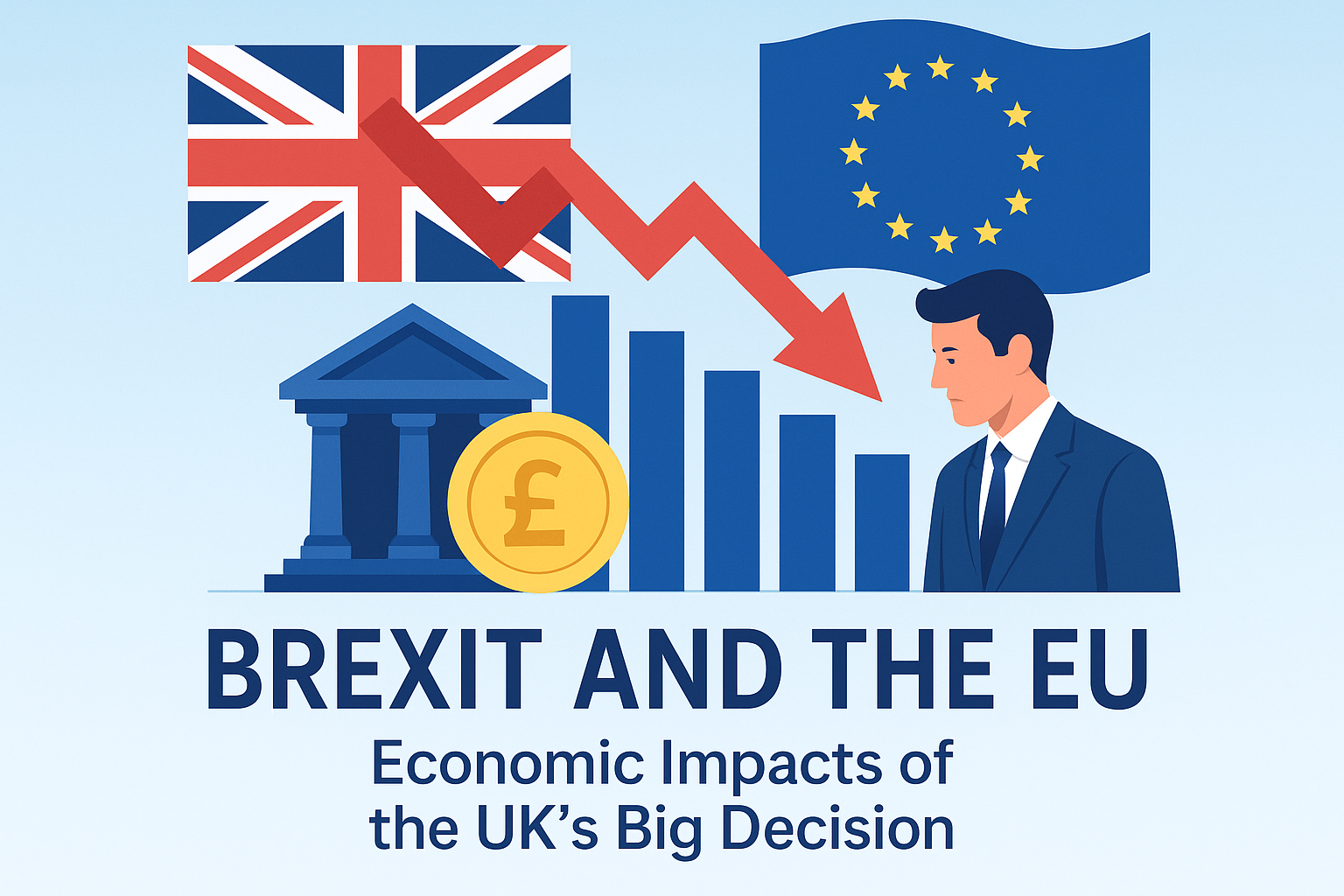
Introduction to Brexit and Its Significance
Brexit, a portmanteau of “Britain” and “exit,” refers to the United Kingdom’s decision to leave the European Union, a political and economic union of 27 European countries. The historic referendum held on June 23, 2016, saw 52% of UK voters favoring the departure, marking a pivotal shift in the UK’s relationship with its European neighbors. Brexit represents not only a significant political realignment but also a decision with profound economic implications for both the UK and the EU. Understanding these economic impacts is crucial as they affect trade policies, financial markets, immigration, and regulatory frameworks across Europe and beyond.
Key terms associated with Brexit include the “Single Market,” the “Customs Union,” and the “Withdrawal Agreement.” The Single Market allows free movement of goods, services, people, and capital across EU countries. The Customs Union facilitates tariff-free trade among EU members but requires a common external tariff on imports from non-EU countries. The Withdrawal Agreement outlines the terms of the UK’s departure, ensuring a transition period aimed at minimizing disruptions. Analyzing Brexit’s economic impacts sheds light on potential changes in trade dynamics, labor markets, investments, and regulatory standards that influence the daily lives of millions in Europe and around the world.
Trade Dynamics: A Shift in the UK’s Economic Relationships
The departure from the EU marked a substantial shift in the UK’s trade dynamics, affecting not only its direct relationship with EU member states but also its position on the global trade stage. The EU was the UK’s largest trading partner, accounting for approximately 50% of the country’s trade in goods. Post-Brexit, the UK no longer enjoyed the benefits of tariff-free trade with the EU, requiring the negotiation of new free-trade agreements to mitigate potential disruptions.
An illustrative example of this shift is the trade agreement between the UK and Japan. In October 2020, the UK signed a continuity trade deal with Japan, a move aligned with the UK’s efforts to establish trade networks with non-EU countries. This agreement, broadly based on the existing EU-Japan deal, demonstrated the UK’s initiative to secure economic partnerships and maintain market access amidst its EU departure.
Adapting to this new landscape involved challenges, including potential trade barriers, regulatory discrepancies, and customs checks, increasing costs and complexities for UK businesses operating in the EU market. Businesses had to adjust supply chains and adapt to new trade regulations, impacting industries such as manufacturing, agriculture, and services.
Financial Markets and Investment: Navigating Uncertainty
Brexit introduced a period of uncertainty and volatility in financial markets, affecting investment flows and currency valuations. The immediate aftermath of the referendum saw a significant drop in the value of the British pound, illustrating market apprehension over economic stability. Investors faced challenges in assessing market risks and making informed decisions amidst changing regulations and uncertain trade prospects.
The financial sector, a vital component of the UK economy, experienced specific challenges. London, a global financial hub, grappled with potential implications on its status and attractiveness to foreign banks and financial institutions. While some firms considered relocating operations to other EU financial centers like Frankfurt or Paris, others sought to establish strategic partnerships or subsidiaries within the EU to maintain their market presence.
An example of navigating this uncertainty is the Bank of England’s proactive measures to set up temporary facilities and offer guidance to financial institutions. This ensured they had the operational and financial support needed to manage changes in market access and regulatory requirements. Despite these initiatives, the broader uncertainty surrounding Brexit triggered caution in investment decisions, impacting foreign direct investment (FDI) and, by extension, the UK’s economic growth potential.
Labor Markets: Changes and Challenges
Brexit brought significant changes to labor markets, affecting workforce dynamics and immigration policies between the UK and EU countries. One notable impact was on the free movement of people, a fundamental principle of the EU that facilitated labor mobility and access to a diverse talent pool.
The UK’s exit from the EU led to the introduction of a new immigration system, focusing on skilled migrants while ending the automatic right of EU citizens to work and live in the UK. This policy shift has implications for sectors heavily reliant on EU workers, such as healthcare, agriculture, and hospitality. Companies faced challenges in recruiting and retaining skilled labor, necessitating adjustments in workforce planning and talent acquisition strategies.
Real-world examples, such as the UK National Health Service (NHS), illustrate these labor market dynamics. The NHS, a major employer of EU nationals, experienced workforce shortages and navigated new visa requirements for EU employees. These challenges highlighted the importance of addressing labor market needs and ensuring sectors with skills shortages can access the workers they require to meet demand.
Regulatory Framework and Standards: Divergence and Adaptation
Brexit marked the UK’s departure from the EU’s regulatory frameworks, prompting discussions on regulatory divergence and adaptation. As a member of the EU, the UK adhered to common standards across industries such as agriculture, pharmaceuticals, and aviation. The exit offered the UK the opportunity to establish its own regulatory policies but also entailed complexities in aligning with international standards.
In the pharmaceutical sector, for example, regulatory divergence raised concerns about drug approvals, safety standards, and supply chain continuity. Companies operating in both the UK and EU needed to navigate differences in regulatory requirements, potentially facing increased compliance costs and administrative burdens.
The UK government’s approach involved balancing regulatory autonomy with the need to remain competitive and aligned with global norms. This included efforts to negotiate mutual recognition agreements and foster collaboration on regulatory standards to ensure smooth market access and minimize trade disruptions.
The introduction of new regulatory frameworks necessitated businesses to invest in compliance and adapt operational processes. This adaptation was crucial for maintaining competitiveness and ensuring consumer safety and product quality in domestic and international markets.
Conclusion: Navigating the Post-Brexit Landscape
Brexit represents a significant economic transformation with far-reaching implications for the UK and the EU. The UK’s departure from the EU has affected trade dynamics, financial markets, labor mobility, and regulatory frameworks, necessitating adaptation and resilience from businesses and policymakers alike. Key takeaways from this transition involve understanding the complexities of new trade agreements, navigating uncertainty in financial markets, addressing labor market challenges, and managing regulatory divergence.
For readers, the primary benefit lies in gaining insight into the broader economic landscape and recognizing the interconnectedness of global markets. Staying informed about Brexit’s impacts helps individuals and businesses make well-informed decisions in an ever-evolving economic environment.
As the UK and EU continue to navigate this new reality, staying engaged and proactive is essential. Readers are encouraged to follow developments, seek expert advice, and leverage available resources to adapt to changing circumstances. In a world defined by dynamic economic shifts, understanding the ripple effects of major geopolitical events like Brexit is pivotal for future success and sustainability.
- Realigning trade agreements and market access post-Brexit
- Ensuring financial stability amidst market uncertainty
- Adapting to new labor market dynamics and immigration policies
- Navigating regulatory divergence and maintaining global competitiveness
Frequently Asked Questions
1. What is Brexit, and why is it significant?
Brexit is a term derived from merging “Britain” and “exit” and is used to describe the United Kingdom’s decision to leave the European Union (EU). The EU is a political and economic union involving 27 European countries that allows for free trade and movement of goods, services, people, and capital among member states. The decision for Brexit was determined in a referendum on June 23, 2016, where 52% of UK voters chose to depart from the EU. This decision is historically significant as it marked a huge shift in the trajectory of UK’s political stance and its related policies. The UK had been part of the EU (and its predecessor European Economic Community) for 43 years, allowing it to participate in a gigantic single market and cooperate extensively with its neighbors. Brexit is not simply a political move; it carries potential economic ramifications that could reshape not only the UK but also the EU’s economic landscape. The decision is seen as part of a rise in nationalism and populism, signaling a move away from transnational cooperation toward more independent national policies.
2. How did Brexit impact the UK’s economy immediately after the referendum?
Immediately after the Brexit referendum, there was a noticeable impact on the UK’s economy. One of the most significant changes was the sharp depreciation of the British Pound against other major currencies, such as the US dollar and the euro. This devaluation reflected the financial market’s uncertainty regarding future UK economic prospects outside the EU. A weaker pound had mixed effects: while it boosted UK exports by making them cheaper for foreign buyers, it also increased the cost of imports, contributing to inflation. Consumer confidence took a hit due to the uncertainty about economic stability, affecting spending habits. Businesses, especially those in sectors heavily reliant on EU trade, faced increased uncertainty, leading to postponements in investment and hiring decisions. It was a period marked by volatility and uncertainty as the UK began to navigate the challenges of realigning its economic framework with the rest of the world.
3. What are the long-term economic impacts of Brexit expected to be?
The long-term economic impacts of Brexit are still unfolding, with many aspects contingent upon ongoing political negotiations and new trade agreements. However, several potential impacts have been identified by economists and analysts. First, trade: with the UK outside the single EU market, there may be decreased ease and volume of trade between the UK and EU countries. This is because the UK now must negotiate individual trade agreements, a complex and lengthy process. Second, investment: there is concern that the UK could become less attractive to foreign investors, particularly in industries that relied on free access to the European market, such as financial services, manufacturing, and the automotive industry. This could lead to shifts in business operations or relocations to EU countries. Third, labor market: as of Brexit, free movement of labor from EU countries stopped, meaning industries reliant on EU migrant workers might face labor shortages. This change could impact sectors like hospitality, healthcare, and agriculture profoundly. Lastly, regulatory ramifications: the UK now has the freedom to set regulations independently from the EU which could foster regulatory divergence, contributing challenges to industries operating across borders.
4. How has Brexit affected trade between the UK and EU?
Brexit has significantly impacted trade between the UK and the EU. With the UK leaving the EU’s single market and customs union, new trade barriers have emerged, impacting the flow of goods and services. There are new customs checks, regulatory compliances, and border controls that businesses must navigate, leading to increased costs and delays. Small and medium-sized enterprises (SMEs) particularly have struggled with the administration and costs associated with these changes. Furthermore, sectors like agriculture and fisheries, which heavily depended on smooth trade flows, have experienced disruptions. On the service side, the end of free movement has affected industries such as finance, which once operated freely across Europe. This has resulted in some businesses relocating or restructuring to retain a presence within the EU market. While the UK government has been trying to establish free trade agreements globally, replacing the level of access and ease provided by EU membership remains a substantial challenge.
5. How does Brexit impact the EU’s economy?
Brexit does not only have repercussions for the UK; it affects the EU’s economy as well. The UK was one of the largest economies and a noteworthy contributor to the EU’s budget, meaning its departure has financial ramifications. The budget gap caused by the UK’s exit required the EU to reassess and redistribute financial commitments among the remaining member states, potentially impacting funding allocations for various projects and policies. Furthermore, the EU also faces trade implications. The UK was one of its major trading partners, and the reintroduction of barriers may affect EU companies that previously benefitted from unimpeded access to the UK market. Moreover, Brexit sets a precedent for other countries’ consideration of the value of EU membership which could incite political and economic instability. However, it also presents opportunities: for instance, financial hubs like Paris and Frankfurt have positioned themselves as alternatives for businesses wanting an EU base. The long-term impacts of Brexit on the EU’s economy will depend largely on how both entities adjust their regulatory and trade frameworks going forward.