
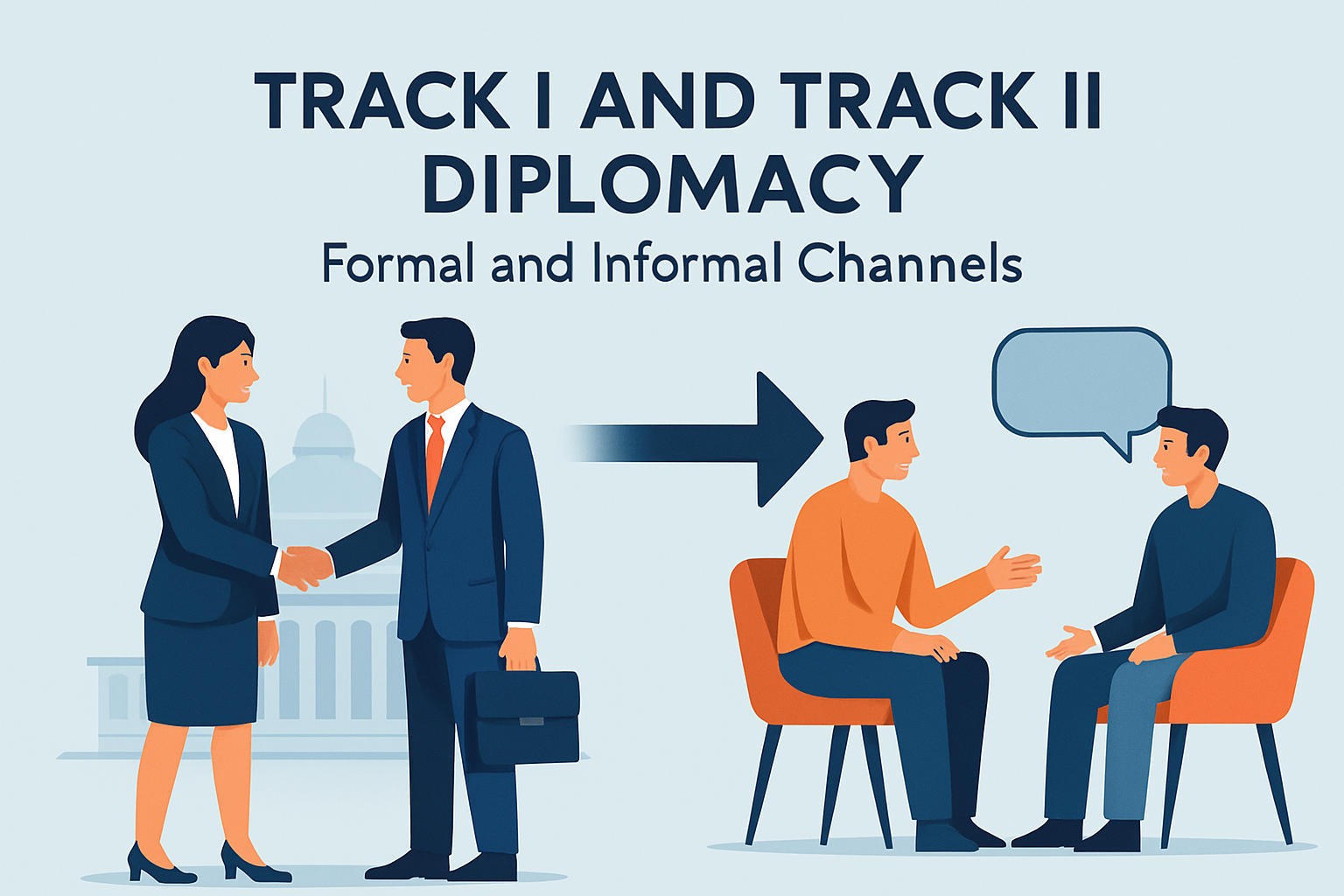
Diplomacy plays a crucial role in fostering international relations, resolving conflicts, and promoting peace. Within this realm, Track I and Track II diplomacy emerge as two significant paradigms, each fulfilling specific roles. Track I diplomacy refers to the formal, official interactions between governments, while Track II diplomacy involves informal, non-official interactions often by non-governmental actors such as intellectuals, scholars, and civil society. Understanding the nuances between these two channels is vital as they symbolize distinct avenues through which international and regional conflicts can be addressed.
The stakes are high on the global stage: political tensions, arms negotiations, trade agreements, and climate change policies require adept navigation and robust frameworks for resolution. The delineation between Track I and Track II diplomacy often shapes how policies are developed and implemented, impacting peace initiatives and transnational discussions worldwide. By understanding both tracks, entities can skillfully leverage the advantages inherent in each approach to achieve durable solutions.
Track I Diplomacy: The Formal Avenue
Track I diplomacy predominantly involves government-to-government interaction. Engaging state representatives such as presidents, prime ministers, diplomats, and ambassadors, this form of diplomacy operates within the parameters of official channels. The primary intention is to negotiate treaties, resolve potential conflicts, and bolster bilateral or multilateral relations.
An example of Track I diplomacy can be seen in the strategic discussions between the United States and North Korea in recent years. These high-level meetings involved presidents, secretaries of state, and other senior diplomats on both sides. Ensuring that atomic threats were mitigated was paramount, illustrating the importance of formal dialogue in navigating and resolving international crises.
This form of diplomacy rests heavily on bureaucratic protocols and involves considerable documentation and signing of treaties, which have lasting implications for national and international laws. Although it has wide-ranging effectiveness, Track I diplomacy might sometimes become rigid due to its emphasis on procedure and official protocol, potentially overlooking grassroots issues that could be addressed more readily through informal channels.
Track II Diplomacy: The Informal Channel
Track II diplomacy, on the other hand, focuses on unofficial, informal interactions facilitated by non-state actors. This may include academics, think tanks, retired officials, and influential members of civil society. The freedom from formal constraints allows these actors to engage in more creative and independent strategies for conflict resolution.
An illustrative example of Track II diplomacy was seen in the Arab-Israeli context, where meetings organized by academic institutions and peace organizations helped lay the groundwork that would eventually support formal negotiations. Such initiatives provided a neutral space for dialogue, contributing to a more profound, grassroots understanding between the conflicting parties.
Table 1 illustrates the differences between Track I and Track II diplomacy, emphasizing their respective roles and impacts:
| Aspect | Track I Diplomacy | Track II Diplomacy |
|---|---|---|
| Participants | Government Officials | Non-Governmental Actors |
| Formality | Formal Procedures | Informal Setting |
| Scope | Official Policy Change | Influential Advice and Support |
| Flexibility | Limited | High |
The Interplay Between Track I and Track II
The effectiveness of diplomacy is often enhanced through the interaction between Track I and Track II processes. Both tracks, while distinctive in approach, often influence each other in significant ways. Track II interventions can build a conducive environment for formal discussions, enriching the informational input that negotiators bring to the table in Track I settings.
For instance, in the Middle East peace process, Track II organizations nurtured dialogue around contentious issues like refugees and borders. These sessions informed and supplemented the Track I efforts of state negotiators, contributing to more informed and holistic peace talks.
The fluidity between both tracks lies in Track II’s capability to innovate and experiment with solutions while Track I officially institutes these learned practices at the policy level. Indeed, this symbiotic relationship enhances the adaptability and comprehensive impact on diplomacy efforts worldwide.
Unique Contributions of Both Tracks
Both diplomatic tracks offer unique benefits. Track I, by its official nature, lends a degree of authority and enforceability to international agreements which is indispensable in the global architecture. It embodies the power to foster macro-level legal changes and secure resources necessary for transnational cooperation.
Conversely, Track II is celebrated for its capacity to forge personal relationships and trust among parties, which often proves invaluable when official channels come to a standstill. By enabling dialogue in a non-threatening setting, Track II diplomacy can creatively address cultural sensitivities and historical grievances.
A significant example includes the “Unofficial Back Channel” talks between the U.S. and Cuba, leading up to the normalization of relations after years of embargo and tension. The behind-the-scenes discussions opened doors that official diplomacy had long found barred, showcasing how informal pathways can creatively complement formal negotiations, breaking impasses otherwise resistant to resolution.
Incorporating Technological Advancements
As technology advances, the lines between Track I and Track II diplomacy blur further. Social media and digital platforms provide novel arenas for public engagement and influence. Emerging tools like AI and data analytics make richer analyses available to both formal and informal negotiators, allowing for more nuanced understanding and prediction of geopolitical climates.
This intersection is a promising avenue for further exploration in Track II diplomacy, where informal actors can leverage digital tools to broaden participation and democratize insights that feed into official discussions. Case studies on digital diplomacy efforts by organizations worldwide underscore the shift towards more inclusive diplomatic processes, augmenting traditional methods through innovative technological integration.
The Way Forward: Synergizing Tracks
Moving forward, it is important for actors engaged in diplomacy to creatively amalgamate the strengths of both approaches. Policymakers and leaders must recognize the inherent value each track offers, worrying less about choosing between them and more about harmonizing them for optimal results.
Strategically synergetic use of Track I and Track II diplomacy can prove transformational in solving enduring conflicts. By allowing informal tracks to pave the way for innovative solutions and adapting formal methods to execute these, the landscape of conflict resolution and international cooperation stands to be profoundly enriched.
Conclusion: Navigating Diplomatic Channels Knowledgeably
In summary, Track I and Track II diplomacy serve critical yet distinct roles in the international arena. While Track I diplomacy ensures that official, enforceable agreements are negotiated and maintained between states, Track II provides the flexibility needed to build understanding and consensus informally.
A robust diplomatic strategy will inherently involve a combination of both tracks, utilizing the binding power of Track I agreements and the influential capability of Track II dialogues. The payoff from integrating these channels is evident in smoother negotiations, richer international collaborations, and ultimately, the preservation of global peace and security.
Frequently Asked Questions
1. What is the difference between Track I and Track II diplomacy?
Track I diplomacy refers to the formal and official communication undertaken by government officials, diplomats, and state representatives. This includes negotiations, treaties, and other conventional forms of international relations conducted on a governmental level. Its primary aim is to reach official agreements and resolutions between states through structured channels and protocols.
On the other hand, Track II diplomacy operates on an informal level, involving non-governmental actors such as intellectuals, academics, representatives of civil society, and sometimes retired officials. These individuals or groups engage in dialogues and discussions to foster understanding and manage conflicts where official diplomacy may face challenges. Track II often sets the stage for Track I by creating a conducive environment for formal negotiations and is particularly useful in situations where official contacts are stagnant or strained.
2. How do Track I and Track II diplomacy complement each other?
Track I and Track II diplomacy often work in tandem to achieve a harmonious and effective diplomatic process. While Track I diplomacy is crucial for making binding agreements and implementing foreign policy, it can sometimes be limited by political constraints and formalities. This is where Track II diplomacy steps in, providing a platform for open, candid dialogue that might be constrained in official settings.
Track II allows for brainstorming and testing of innovative ideas, which can then be elevated to the Track I level once they gain traction. For instance, Track II dialogues may help build mutual trust and understanding, reducing tensions and paving the way for more formal discussions. Essentially, Track II acts as a bridge, smoothing out complications and preparing the ground for successful Track I negotiations.
3. Who are the primary actors involved in Track II diplomacy?
The primary actors in Track II diplomacy are usually non-governmental individuals or groups who bring diverse perspectives to international issues. These include scholars, academics, former government officials, think tanks, NGOs, and civil society organizations. These actors are typically well-acquainted with the cultural, historical, and political contexts of the issues they address, enabling them to provide unique insights and solutions.
These players engage in activities like workshops, conferences, cooperative research projects, and dialogue initiatives, all aimed at easing tensions and promoting mutual understanding between conflicting parties. Their informality allows for open-minded discussions, which often leads to innovative solutions that could be challenging to explore in a formal diplomatic setting.
4. What are some examples of successful Track II diplomacy initiatives?
One notable example of successful Track II diplomacy is the Oslo Accords between Israel and the Palestine Liberation Organization (PLO). Before official Track I negotiations, there was a series of secret, informal meetings organized and facilitated by academics and non-governmental entities. These Track II dialogues played a vital role in conceiving ideas and facilitating behind-the-scenes conversations that ultimately led to the landmark agreements.
Another example can be seen in inter-Korean relations, where Track II diplomacy through academic exchanges and civil society dialogues has provided an unofficial channel to explore and address critical issues when official government-to-government communication was limited or non-existent. These Track II efforts contributed to maintaining communication lines and discussing sensitive matters, often making way for renewed official negotiations.
5. What challenges do Track II diplomacy initiatives face?
Despite their benefits, Track II diplomacy initiatives often face several challenges. One significant hurdle is the lack of official authority; since Track II participants do not represent their governments, their recommendations may not carry weight in formal policy making. However, they can influence policy indirectly by shaping public opinion and providing innovative solutions.
Furthermore, funding and resource constraints can limit the scale and impact of Track II initiatives. They often rely on donations, grants, or other forms of financial support, which can be uncertain and inconsistent. Finally, ensuring the credibility and impartiality of participants is paramount, as perceived biases may undermine the discussions’ outcomes and acceptance in official circles. Nonetheless, despite these challenges, Track II diplomacy remains a valuable and flexible tool in the international relations toolkit, often proving to be a precursor or supportive partner to Track I efforts.