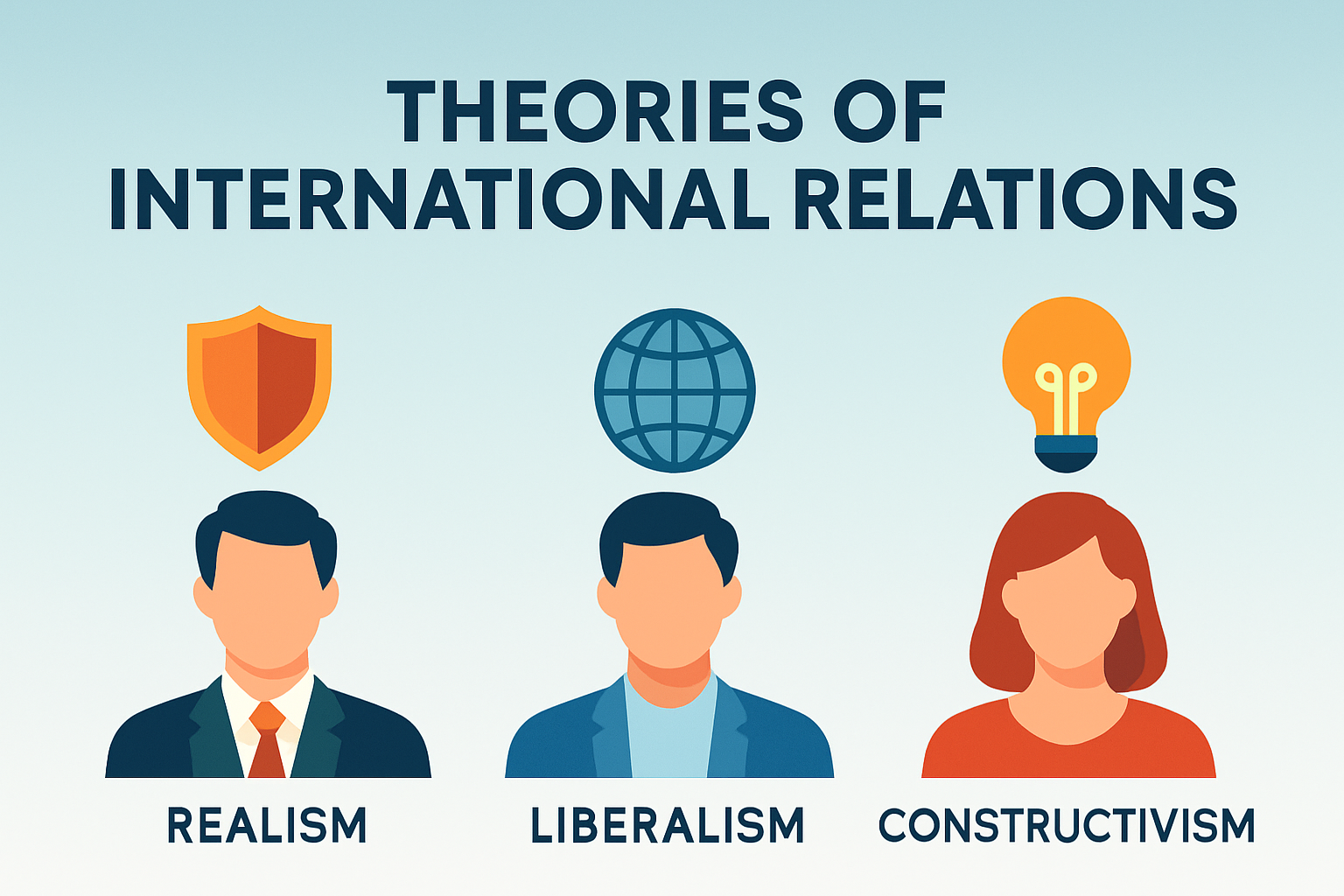
International relations is a fascinating field of study that delves into the dynamic interactions between countries, international organizations, and non-state actors. At the core of this discipline are theories that provide frameworks for understanding and interpreting these complex interactions. Three of the most influential theories in the field are Realism, Liberalism, and Constructivism. These theories not only offer different lenses through which to view international relations but also have significant implications for policymakers and scholars alike. By examining these theories, we can better comprehend global political dynamics and the forces that shape our world. In this article, we will explore each of these theories in depth, providing real-world examples to illustrate their application, and conclude with insights on how these theories can inform our understanding of international affairs.
Realism: The Pursuit of Power
Realism is one of the oldest and most influential theories in international relations. It is grounded in the notion that the international system is anarchic, meaning there is no overarching authority above states. Consequently, states are primarily concerned with their own survival and security, leading them to focus on power and military capabilities. Realists argue that states operate in a self-help environment where they must rely on their own resources to protect their national interests.
A classic example of Realism in action can be seen in the Cold War era. During this period, the United States and the Soviet Union engaged in a fierce competition for global influence and military supremacy. Both superpowers amassed nuclear arsenals and engaged in proxy wars to project their power and secure their interests. The arms race and the doctrine of mutually assured destruction are emblematic of the Realist emphasis on military strength as a deterrent to conflict.
Realism remains relevant today, as evidenced by the power dynamics in the South China Sea. China’s territorial claims and military buildup in this region have raised tensions with neighboring countries and the United States. Realists would argue that China is acting rationally to assert its dominance and protect its strategic interests in a crucial maritime region.
Liberalism: Cooperation and Institutions
In contrast to Realism, Liberalism emphasizes the potential for cooperation among states and the importance of international institutions in fostering peace and stability. Liberals argue that states are not exclusively driven by power but can also pursue common interests through diplomacy, trade, and institutions. The establishment of international norms and institutions can mitigate the anarchic nature of the international system and promote collaboration.
The European Union (EU) serves as a prime example of Liberalism in practice. The EU has successfully integrated its member states economically and politically, reducing the likelihood of conflict in Europe. Through institutions like the European Commission and the European Court of Justice, the EU fosters cooperation on a wide range of issues, from trade to human rights.
Similarly, the Paris Agreement on climate change is a testament to the Liberal belief in multilateralism. By bringing together countries to address a global challenge, the agreement demonstrates how international cooperation can lead to collective benefits. Liberals contend that such agreements and institutions can create a more peaceful and stable international order by fostering dialogue and reducing unilateral actions.
Constructivism: The Role of Ideas and Identity
Constructivism offers a distinct perspective on international relations by emphasizing the role of ideas, norms, and identities in shaping state behavior. Unlike Realism and Liberalism, which focus predominantly on material factors, Constructivism posits that the social construction of reality plays a crucial role in international politics. States are influenced by their identities, beliefs, and the norms they adopt, which can shape their interests and actions.
An illustration of Constructivism can be found in the process of European integration. Constructivists argue that the EU’s development is not solely the result of economic and security interests but also the shared identity and values of its member states. The promotion of a European identity and the adherence to norms of democracy and human rights have been pivotal in strengthening the cohesion and legitimacy of the EU.
- Identity: Shared European identity fosters unity.
- Norms: Emphasis on democracy and human rights.
- Ideas: Vision of a peaceful, united Europe.
Constructivism also provides insights into the changing nature of sovereignty and intervention. The concept of the “Responsibility to Protect” (R2P) has emerged as a norm that challenges traditional notions of state sovereignty. Constructivists argue that the acceptance of R2P is indicative of a shift in the international community’s understanding of state responsibilities, influenced by evolving norms around human rights and humanitarian intervention.
Comparing the Theories: Complementary Perspectives
While Realism, Liberalism, and Constructivism each offer distinct approaches to understanding international relations, they are not mutually exclusive. Each theory sheds light on different aspects of the global political landscape and can be used in conjunction with one another to gain a more comprehensive understanding.
| Theory | Main Focus | Key Concepts |
|---|---|---|
| Realism | State power | Survival, anarchy, military strength |
| Liberalism | Cooperation | Institutions, diplomacy, trade |
| Constructivism | Ideas and identity | Norms, beliefs, identity |
Realism’s focus on power and security can explain geopolitical tensions and military conflicts, while Liberalism highlights the importance of international cooperation and institutions in fostering global order. Constructivism provides a lens through which to understand the impact of ideas and identities on state behavior, illustrating how norms evolve and shape international norms.
In practice, policymakers may draw from all three theories to develop strategies that address a broad range of challenges in international relations. Recognizing the value of each perspective can enable a more nuanced and adaptable approach to diplomacy and global governance.
Real-World Applications and Implications
The theories of International Relations have significant real-world implications for how policymakers, scholars, and the general populace comprehend and engage with the global political environment. From conflict resolution to international trade and environmental policies, these theories provide vital frameworks for analysis and decision-making.
For instance, a country facing security threats might rely on Realist principles to bolster its military alliances and defense capabilities. Meanwhile, in the realm of international trade, Liberalism’s emphasis on free markets and institutions like the World Trade Organization (WTO) helps facilitate smoother economic transactions between countries.
As global challenges like climate change and pandemics require collective action, the insights from Liberalism and Constructivism become increasingly relevant. International agreements and collaborations that stem from these theories are crucial in tackling issues that transcend national borders.
Conclusion: Embracing Multidimensional Perspectives
In conclusion, Realism, Liberalism, and Constructivism each contribute valuable insights into the study of international relations. By understanding these theories, individuals and policymakers can better appreciate the complex and multifaceted nature of global politics. Realism provides a lens for examining power dynamics and security concerns, while Liberalism emphasizes the potential for cooperation and institutional solutions. Constructivism, meanwhile, highlights the influence of ideas and identities in shaping state behavior and international norms.
Ultimately, embracing a multidimensional perspective that incorporates elements from all three theories can lead to more informed and effective approaches to international affairs. To truly understand the challenges and opportunities of the globalized world, it is essential to consider the diverse range of factors that influence international relations. Readers are encouraged to explore these theories further, apply them to current events, and engage critically with the ever-evolving landscape of global politics.
By doing so, we can contribute to a more peaceful, prosperous, and well-understood international community.
Frequently Asked Questions
1. What is Realism in International Relations?
Realism is one of the foundational theories in International Relations. It’s all about understanding the world as it is, not as we wish it to be. Realists believe that the international system is anarchic, meaning there’s no overarching authority above states. Each country looks out for its own interests above all else, mainly focusing on survival and power. Realists view power as the currency of international politics, with military force being a primary tool because at the end of the day, it’s about who’s got the bigger stick. They argue that conflict is inevitable because countries are always in competition for power and security. Prominent thinkers like Hans Morgenthau, who wrote “Politics Among Nations,” laid the groundwork for this perspective, emphasizing human nature’s role in driving states to pursue power. It’s a somewhat pessimistic view, seeing international relations as a zero-sum game where one’s gain is another’s loss. Realism teaches us to be cautious and pragmatic, urging states to prepare for potential threats and act in their national interest.
2. How does Liberalism differ from Realism?
Liberalism in International Relations offers a more optimistic view than Realism. It suggests that, despite the anarchic structure of the international system, cooperation among states is not only possible but beneficial too. Liberals believe that other factors, besides just power, drive international relations. These include shared interests, economic exchanges, institutions, and democracy. The theory posits that democracy and open markets lead to more peaceful international interactions. Also, international organizations and laws play crucial roles in fostering cooperation and reducing the chances of conflict. Think about institutions like the United Nations or the World Trade Organization that provide platforms for dialogue and the resolution of disputes. Unlike Realists, Liberals argue that global interdependence—how nations rely on each other for goods, services, and security—can foster peace. Some famous names associated with Liberalism include Immanuel Kant and Woodrow Wilson, who advocated for collective security and international cooperation. So, while Realism focuses on power and conflict, Liberalism emphasizes collaboration and institutions as means to achieve a more stable and prosperous international order.
3. Can you explain Constructivism in International Relations?
Constructivism is a relatively recent addition to the theories of International Relations, but it has quickly gained prominence. It shifts away from the material focus of Realists and Liberals and instead suggests that international relations are socially constructed through ideas, beliefs, and identities. Constructivists argue that the key structures in the international system are not material but social, and that the nature of international politics is shaped by these social structures. What does this mean? Well, it’s about how the identities and interests of states are not fixed but are influenced by interactions and perceptions. If countries perceive each other as threats, they behave accordingly, but if they see potential friends, they might act cooperatively. Constructivism emphasizes the role of international norms and the ways they influence state behavior. It looks closely at how states’ identities are formed and how norms evolve over time. Scholars like Alexander Wendt, who penned “Anarchy is What States Make of It,” highlight that international anarchy does not inherently lead to conflict; rather, it depends on the nature of inter-state relations. This theory importantly opens the door to understanding how change is possible in international relations through shifts in social structures and shared beliefs.
4. Why do these theories matter in today’s world?
Understanding theories of International Relations is crucial because they offer insights that help explain the complex web of global politics today. Realism, Liberalism, and Constructivism provide different perspectives that highlight the diverse factors influencing world affairs. By examining these theories, political leaders, diplomats, and scholars gain tools to analyze global events and craft policies. Realism is invaluable in understanding power dynamics and national security concerns, reminding leaders to be vigilant about potential threats. Liberalism underscores the importance of cooperation and international institutions like the United Nations, which play pivotal roles in conflict resolution and peacekeeping efforts. Constructivism sheds light on the power of ideas and culture in shaping international policies, explaining why some conflicts arise due to differing beliefs and identities. For instance, understanding the Syrian conflict or North Korea’s nuclear ambitions requires a multifaceted approach that these theories can provide. Thus, whether navigating international trade tensions or peace talks, these theories ensure a well-rounded grasp of the stakes and possibilities in the international arena.
5. Are these theories mutually exclusive, or can they be combined?
It’s a fascinating question because, while these theories often emphasize different elements of international relations, they are not necessarily mutually exclusive. Many scholars and practitioners argue for an integrative approach, leveraging insights from all three to tackle the complexities of global politics. For example, in a conflict situation, a realistic approach might focus on the power and security dynamics, while Liberalism could offer pathways to cooperation and Constructivism might provide understanding of the identity and normative aspects influencing the participants. This blending of perspectives allows for a more comprehensive analysis. Contemporary issues like climate change, terrorism, and cyber-security require understanding not just through the lens of power dynamics but also international cooperation, norms, and identities. The synthesis of these theories enables a more holistic picture of international affairs, allowing policymakers to craft nuanced strategies that account for diverse influences and potential outcomes. So yes, while they come from different traditions, these theories can complement each other, providing a richer and more effective framework for understanding and engaging in international relations.