
Introduction
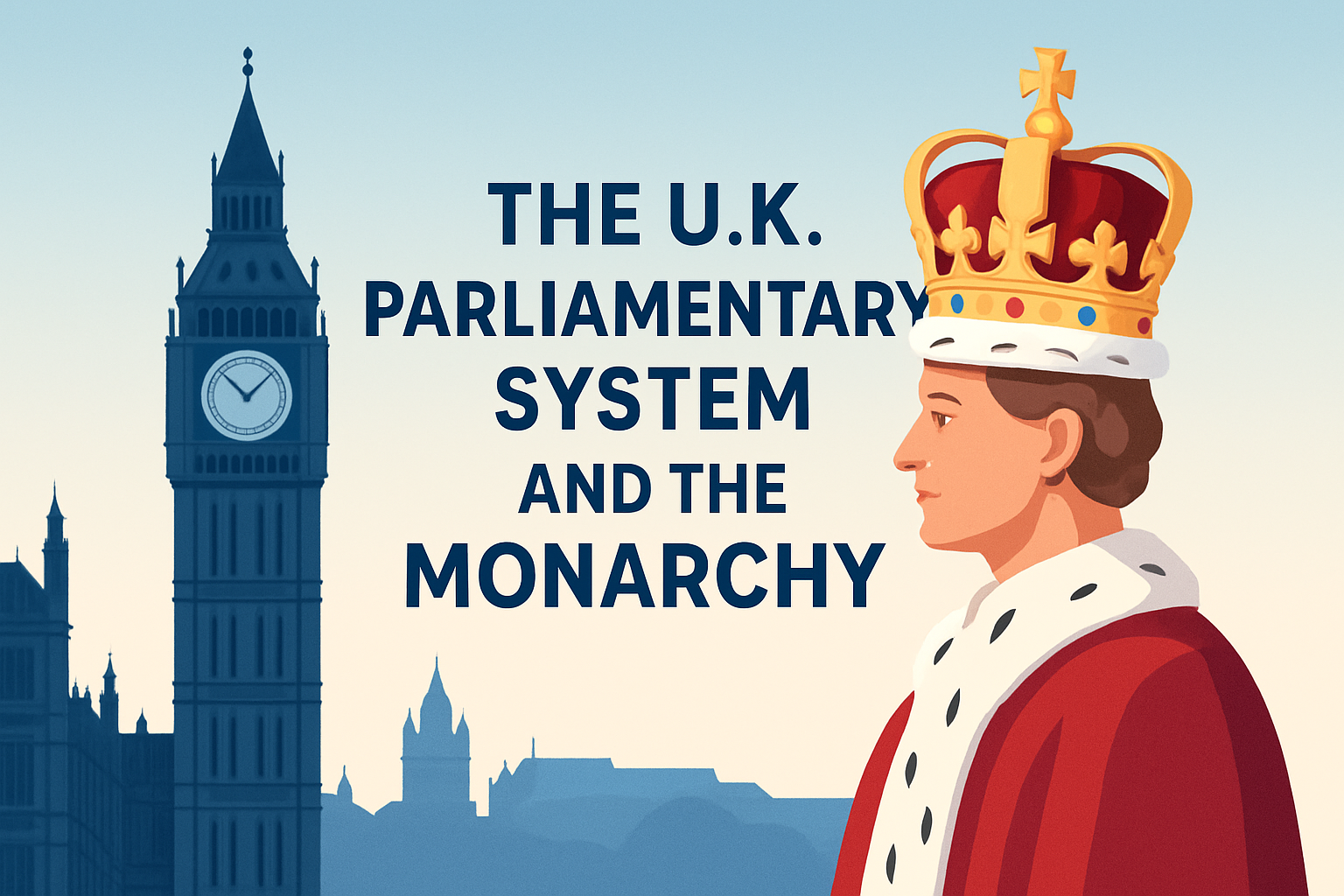
The United Kingdom’s parliamentary system, intertwined with its constitutional monarchy, is a fascinating blend of historical tradition and modern governance. Understanding these frameworks is essential for comprehending how political power is distributed and executed in one of the world’s oldest democracies. The U.K.’s political structure is characterized by a dual system where both democratic parliamentary elements and the ceremonial monarchy play distinctive roles. Such a balance has influences not only within the U.K. but has also affected many political systems worldwide, as former British colonies often adopted similar models. In this article, we will explore the core elements of the U.K. parliamentary system, the role of the monarchy, and why these matter in today’s global political landscape.
The U.K. Parliamentary System: A Complex Structure
The U.K. parliamentary system operates under a constitutional monarchy, where the monarch retains a ceremonial position while political power is exercised by elected officials. The U.K. Parliament consists of two houses: the House of Commons and the House of Lords. The House of Commons functions as the primary legislative body composed of Members of Parliament (MPs) elected by the public in general elections. The leader of the political party that holds the majority in the House of Commons typically becomes the Prime Minister and forms the government.
In contrast, the House of Lords consists of appointed members, including life peers, bishops, and hereditary peers. It acts as a revising chamber that scrutinizes proposed legislation. Although the Lords cannot veto bills outright, they can delay legislation and suggest amendments. This system ensures a balance between rapid legislative action and thorough review, contributing to a more deliberate form of democracy.
The Role of the Monarchy in the U.K.
While the monarch’s role is predominantly ceremonial in the U.K., it serves as a critical symbol of continuity and national identity. The monarch is responsible for performing various constitutional duties, such as the State Opening of Parliament, granting Royal Assent to bills passed by Parliament, and appointing the Prime Minister. Although these actions are largely formal, they underscore the monarchy’s influence as a unifying figure above the political fray.
A real-world example of the monarchy’s function can be seen during the State Opening of Parliament. It is an event marked by grandeur, where the monarch delivers the Queen’s Speech (or King’s Speech) written by the government, outlining the legislative agenda for the coming year. This event symbolizes the fusion of the executive, legislative, and ceremonial roles in the U.K. constitutional framework.
The Prime Minister: Head of the Government
The Prime Minister of the U.K. is the head of the government and is responsible for overseeing the operation of the Civil Service and government agencies, executing public policy, and representing the U.K. abroad. They are also central in shaping legislation and policy implementation. The Prime Minister’s role is pivotal in executing decisions made by the Cabinet, which comprises senior government ministers.
An effective Prime Minister must navigate the complexities of party politics, public opinion, and economic challenges. For example, during the economic crisis of 2008, the then-Prime Minister Gordon Brown played a crucial role in coordinating international responses to stabilize financial markets, showcasing the importance of the Prime Minister’s leadership in crises.
The House of Lords: An Unelected Revising Chamber
The House of Lords plays a vital role in scrutinizing and revising legislation proposed by the House of Commons. Its membership includes life and hereditary peers, as well as bishops of the Church of England. Although the House of Lords does not have the same legislative powers as the Commons, it serves as an essential check on the government, contributing to the refinement of laws through its revisions and recommendations.
- Life Peers: Individuals appointed because of their expertise, experience, or contribution to society, influencing legislation with their seasoned insights.
- Hereditary Peers: Individuals who inherit their position, although their number is limited and mostly phased out in modern times.
- Bishops: Senior members of the Church of England who bring a spiritual perspective to legislative discussions.
The House of Lords’ deliberative process is evident in instances such as the review of Brexit legislation. The Lords scrutinized and amended numerous proposals, ensuring thorough debates on key issues, which helped shape the final policies implemented by the government.
The Monarch’s Reserve Powers
Although largely ceremonial, the monarchy holds certain reserve powers known as royal prerogatives. These include the ability to appoint the Prime Minister, dissolve Parliament, and grant pardons. In practice, these powers are rarely invoked without government advice, illustrating the constitutional principle of the monarchy acting within the framework of a parliamentary democracy.
A significant example of the monarchy’s involvement in politics occurred in 1975 when Australia’s Governor-General, representing the British monarch, dismissed the Australian Prime Minister in response to a governmental deadlock. While this action was controversial, it underscored the potential influence of the monarchy’s residual powers within the broader Commonwealth context.
Conclusion: Understanding the U.K. Parliamentary Democracy and Monarchy Today
In summary, the U.K. parliamentary system is a complex and intricate blend of tradition and modernity, where the roles of the monarchy and Parliament are clearly delineated yet interconnected. Understanding this system reveals how the U.K. balances ceremonial tradition with practical governance, ensuring continuity, stability, and democratic accountability. As political dynamics continue to evolve, observing how the U.K. manages this balance offers insights into the enduring relevance of its constitutional framework. This knowledge invites readers to further explore and engage with U.K. political developments, recognizing the significance of these systems in global democratic practices.
The U.K.’s parliamentary system and constitutional monarchy represent a unique strand of governance that continues to captivate political analysts and academics worldwide. As you reflect on the information provided, consider visiting Parliament during a session or catching a televised session to witness the dynamic engagements of U.K. political life.
Frequently Asked Questions
1. What is the role of the monarchy in the U.K.’s parliamentary system?
The monarchy in the United Kingdom serves primarily a ceremonial role within the parliamentary system. Although the monarch is the head of state, actual political power and decision-making are carried out by the elected government, headed by the Prime Minister who is the head of government. The traditions and ceremonial duties performed by the monarch include the official opening of Parliament, the granting of royal assent to legislation, and the appointment of the Prime Minister from the political party that has the most members in the House of Commons following an election.
It’s essential to understand that the monarchy’s role, although steeped in history and pageantry, does not interfere with the democratic processes of the government. The Queen or King acts on the advice of the Prime Minister and the elected government officials, essentially executing functions that symbolize the unity and character of the nation without directly impacting its day-to-day political governance. This established setup underlines the constitutional monarchy that defines the U.K.’s unique system of governance.
2. How does the U.K. Parliament function and what is its structure?
The U.K. Parliament is a bicameral institution, meaning it has two houses: the House of Commons and the House of Lords. The House of Commons is the lower house, consisting of Members of Parliament (MPs) who are elected by the public in general elections. The party or coalition of parties with the most seats in the Commons usually forms the government, with its leader becoming the Prime Minister. The Commons are primarily responsible for making decisions on national policy and passing legislation.
On the other hand, the House of Lords, the upper house, is made up of appointed members, including life peers, bishops, and hereditary peers. Its role is to scrutinize legislation proposed by the Commons, providing expertise, revision, and amendment. Though the Lords cannot permanently block legislation, they can suggest changes and delay its passage, ensuring thorough review and discussion. Both houses work together, with legislation requiring approval from both to become law.
3. How is the Prime Minister of the UK selected?
The Prime Minister of the United Kingdom is usually the leader of the political party that gains the most seats in the House of Commons during a general election. A general election is held every five years unless an earlier election is necessitated by a vote of no confidence or other political arrangements. Once the election results are in, the monarch invites the leader of the successful party to form a government, entrusting them with the role of Prime Minister.
If no single party achieves a majority, it may lead to a coalition government, where two or more parties come together to form a majority. An alternative is a minority government, where the party with the most seats governs without a formal coalition but requires support from other parties to pass key legislation. The Prime Minister directs government operations, sets policy agendas, and represents the United Kingdom both domestically and internationally.
4. What powers do Members of Parliament (MPs) have in the U.K. system?
Members of Parliament (MPs) in the United Kingdom possess significant influence and responsibilities within the parliamentary system. Their primary role is to represent the interests and concerns of their constituents, acting as their voice within the national government. MPs participate in debating key issues, scrutinizing the workings of the government, and shaping and voting on legislation brought before the Commons.
MPs work in various capacities, including serving on committees that focus on specific areas like finance, health, or foreign affairs. These committees investigate, analyze, and hold inquiries on matters of national importance, ensuring that government actions align with public interest. Additionally, MPs have the power to propose new laws or amendments and hold the government accountable by requesting explanations and justifications for policies and decisions.
5. How does the House of Lords differ from the House of Commons, and what is its role?
The House of Lords, distinct from the elected House of Commons, is a body of appointed and hereditary members known for its expertise and broad experience in a range of fields. It is not elected but comprises life peers appointed for their knowledge and contributions to society, bishops of the Church of England, and hereditary peers who inherit their positions, though recent reforms have limited their numbers.
The Lords acts as a revising chamber, providing a second level of scrutiny on proposed legislation after it has passed through the Commons. This house reviews, amends, and debates bills in depth, often using the specialized knowledge of its members. While it cannot permanently block legislation, it can suggest amendments and improvements, prompting further consideration by the Commons. The interplay between these two houses ensures that laws are thoroughly vetted before enactment, enhancing the quality and effectiveness of the legislative process.