
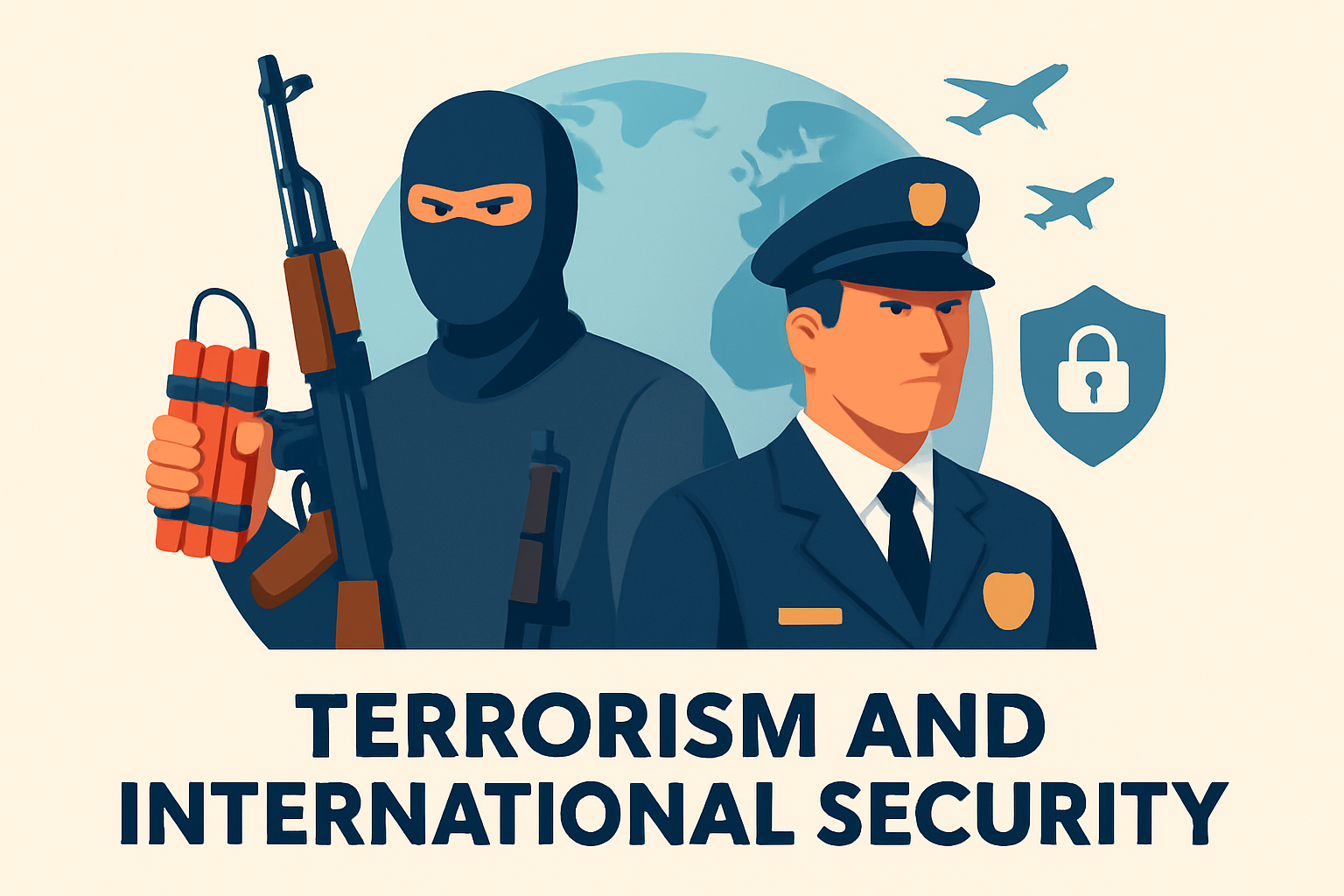
Terrorism and international security are two inseparable subjects that have captured global attention, shaping policies, economies, and even everyday lives across continents. Terrorism, often defined as the unlawful use of violence and intimidation, particularly against civilians, in the pursuit of political aims, is not a new phenomenon. However, with increasing globalization and technological advancements, its capability to reach and impact broader international landscapes has intensified. International security, on the other hand, refers to the absence of threats to a nation’s stability, often highlighting the efforts to ensure global peace, protect nations from threats, and foster cooperative global relationships. Together, these topics form a complex web of challenges that nations must address collaboratively to ensure the safety and prosperity of the global community.
Why does terrorism and international security matter? At its core, terrorism aims to instill fear and disrupt societal norms, leveraging chaos to achieve political or ideological goals. This not only affects the immediate victims but creates ripples that impact international relations, economies, and humanitarian efforts worldwide. From the tragic events of September 11, 2001, to more recent threats posed by organizations like ISIS and continuing regional instabilities, terrorism has shaped global security agendas. It forces policymakers, security agencies, and international bodies to constantly adapt and evolve strategies to counteract these threats effectively. By understanding the dynamics between terrorism and international security, societies can better prepare, respond, and ultimately work towards a safer world.
The Evolution of Terrorism in the Modern Era
The landscape of terrorism has evolved significantly from simple, isolated acts to sophisticated operations involving international networks and technology. Historically, terrorism primarily consisted of isolated bombings or hostage situations, generally confined within national borders. However, the advent of the internet and global communication has facilitated the rise of transnational terrorist networks, allowing groups to recruit, advertise, and plan attacks on an international scale with relative ease.
For example, the emergence of Al-Qaeda marked a prominent shift in the nature of terrorism. The group, responsible for the September 11 attacks, exemplified how non-state actors could launch large-scale operations with global ramifications. Modern terrorist organizations now often operate beyond a single geographical jurisdiction, capitalizing on porous borders and political instability in regions like the Middle East and North Africa to expand their reach.
Technology and Terrorism
Technology plays a pivotal role in modern terrorism, acting as both a tool for inciting fear and a means of executing attacks. The proliferation of social media platforms, encrypted communication channels, and digital currencies has made it easier for terrorist organizations to maintain operational security, fund their activities, and spread their propaganda globally. Social media, especially, has become a powerful tool for radicalization, with groups leveraging accessible platforms to recruit members, train operatives, and inspire lone-wolf attacks.
A stark example is the social media campaign conducted by ISIS, which effectively used Twitter and YouTube to spread its messages and showcase violence, garnering international attention and influencing disenfranchised individuals worldwide. By understanding and mitigating these technological threats, international security forces can curtail the ability of terrorist groups to influence and act.
Regional Instabilities and International Impact
Many regions struggle with terrorism due to inherent political and social instabilities, often fueled by historical, ethnic, and religious tensions. The collapse of stable governance in nations such as Syria, Libya, and Yemen has created power vacuums, enabling terrorist organizations to flourish in these lawless territories. The impact of regional terrorism extends beyond their borders; massive refugee crises, economic destabilization, and international tensions have risen as nations react to the threat and consequences of prolonged instability.
Take, for example, the Syrian Civil War, which has displaced millions and served as a breeding ground for terrorist groups. The resulting refugee crisis has affected various countries, causing political rifts within the European Union over migration policies and humanitarian aid, showing that localized terrorism can have widespread international implications.
International Cooperation and Counterterrorism Strategies
To effectively combat terrorism, international cooperation is paramount. Cooperation includes intelligence sharing, joint military operations, financial restrictions on funding, and diplomatic efforts to prevent radicalization and recruitment. Countries and international organizations, including the United Nations and NATO, have consistently worked together to develop comprehensive counterterrorism strategies.
One notable example of international cooperation is the Global Coalition against ISIS, which comprises over 80 nations working collaboratively to degrade and defeat the organization through military and non-military means. Such coalitions highlight the critical nature of synergistic efforts in mitigating the global terrorism threat.
Human Rights and Anti-Terrorism Measures
In the pursuit of international security, balancing effective counter-terrorism measures with the protection of human rights remains a persistent challenge. Excessive measures that undermine civil liberties, such as unwarranted surveillance or profiling based on ethnicity or religion, can exacerbate societal divides and breed resentment, potentially leading to further radicalization.
- Privacy Concerns
- Freedom of Expression
- Discrimination and Profiling
Effective frameworks emphasize proactive engagement with at-risk communities, ensuring that anti-terror policies are both effective and respectful of individual rights. By fostering environments where diverse populations feel valued and protected, societies can reduce the grievances that often lead to extremism.
Future Challenges and Innovations in Security
The future of international security will likely face emerging challenges exacerbated by advances in technology and artificial intelligence. Cyberterrorism, bioterrorism, and drone attacks represent cutting-edge threats that require robust, innovative solutions. Cyberattacks, in particular, pose significant risks to national infrastructures, from power grids to financial systems, necessitating increased investments in cybersecurity resilience.
Countries around the world are now investing in cutting-edge technologies such as artificial intelligence to predict and thwart potential threats. Remaining agile and forward-thinking in the approach to international security allows nations to anticipate and proactively address the evolving landscape of terrorism.
| Type of Security Threat | Description | Example |
|---|---|---|
| Cyberterrorism | Attacks on digital infrastructures intended to cause harm or disrupt services. | Hacking into government systems to steal sensitive information. |
| Bioterrorism | Using biological agents to intimidate or harm populations. | The release of anthrax spores in public spaces. |
| Drone Attacks | Using drones to deliver explosives or gather intelligence clandestinely. | Equipping drones with explosive devices to target crowds. |
Conclusion: Towards a Safer World
Understanding the intricate dynamics between terrorism and international security is crucial in today’s interconnected world. The complexities of modern terrorism necessitate sophisticated strategies that respect human rights while effectively addressing potential threats. Through aggressive international cooperation, technological innovations, and emphasizing human rights, the global community can combat the evolving terrorist landscape effectively.
The key takeaway for readers is that terrorism and international security are domains where awareness, understanding, and proactive participation are crucial. As individuals and communities, promoting tolerance, inclusivity, and respect for human rights forms the foundation for combatting extremism. Furthermore, engaging with policymakers and supporting international cooperation efforts can contribute significantly to safer societies.
As a simple call-to-action, encourage discussions and educational initiatives on these topics within your community. Stay informed and engage with your local representatives to ensure that the fight against terrorism supports rather than undermines social cohesion. Together, informed citizens can drive policies that lead to more secure, peaceful, and resilient communities worldwide.
Frequently Asked Questions
1. What is the definition of terrorism in the context of international security?
Terrorism is commonly understood as the unlawful use of violence and intimidation, particularly against civilians, to achieve political aims. In the context of international security, terrorism transcends borders, impacting nations worldwide, and is often seen as a strategic tool to instill fear, disrupt societies, and destabilize governments. Its international implications mean that acts of terrorism in one country can have repercussions across the globe, necessitating a collaborative international response. This is why terrorism and international security are often discussed in unison; managing and counteracting terrorism is vital to ensuring global peace and stability. Technological advancements have made it easier for terrorist organizations to operate transnationally, using the internet for communication, recruitment, and propaganda, thus escalating the threat.
2. How has globalization affected terrorism?
Globalization has profoundly impacted terrorism by providing both opportunities and challenges. On one hand, increased connectivity through travel and technology allows terrorist ideologies to spread rapidly and reach a global audience. Terrorist groups can recruit internationally, coordinate attacks more efficiently, and raise funds across borders. On the other hand, globalization also facilitates improved international cooperation in the fight against terrorism. Countries are better able to share intelligence, coordinate cross-border counter-terrorism operations, and develop comprehensive security frameworks. However, the rapid dissemination of extremist content via social media platforms and encrypted messaging apps has complicated efforts to counteract terrorism. This dual-sided nature of globalization requires collaborative efforts to leverage its positive aspects while mitigating potential hazards.
3. What are some of the major challenges in combating international terrorism?
There are several significant challenges in combating international terrorism. First, the decentralized nature of terrorist groups, which often operate in loosely affiliated networks, makes it difficult to dismantle them entirely. These groups often reassemble or rebrand themselves even after significant defeats. Second, the ideological appeal and the ability to radicalize individuals over the internet presents a persistent challenge, necessitating efforts that go beyond military responses to include counter-radicalization strategies. Third, political and legal differences between countries can hinder effective international cooperation. Finally, the balance between ensuring security and protecting civil liberties is a delicate challenge that governments must manage, often under intense public scrutiny. Addressing these challenges requires a multifaceted approach that includes military, political, economic, and social strategies.
4. Why is international cooperation essential in responding to the threat of terrorism?
International cooperation is crucial in responding to terrorism because it transcends national borders, making unilateral action insufficient. Terrorist networks often operate globally, exploiting the lack of coordination between countries. By sharing intelligence, resources, and best practices, countries can significantly enhance their capacity to prevent and respond to terrorist threats. Furthermore, terrorism often targets international interests such as multinational corporations and civilian populations from multiple nations, necessitating a unified response. International organizations like the United Nations, NATO, and INTERPOL play vital roles in facilitating cooperation, offering platforms for dialogue, and coordinating joint efforts to combat terrorism effectively. This collaborative approach not only helps in tracking and disrupting terrorist activities but also in addressing the underlying factors that contribute to terrorism, such as poverty, political oppression, and societal grievances.
5. How can individuals contribute to enhancing international security against terrorism?
Individuals play a critical role in enhancing international security against terrorism through awareness, vigilance, and engagement. By staying informed about potential threats and understanding the signs of radicalization, people can help identify and report suspicious activities. Supporting community-based initiatives that promote inclusion, dialogue, and peaceful coexistence can counteract the spread of extremist ideologies. Moreover, individuals can participate in democratic processes, advocating for policies that address the root causes of terrorism, such as poverty, inequality, and political disenfranchisement. On a digital level, promoting critical media literacy helps combat online propaganda and misinformation. By fostering resilient and informed communities, individuals contribute to a collective security framework necessary for effectively countering terrorism on a global scale.