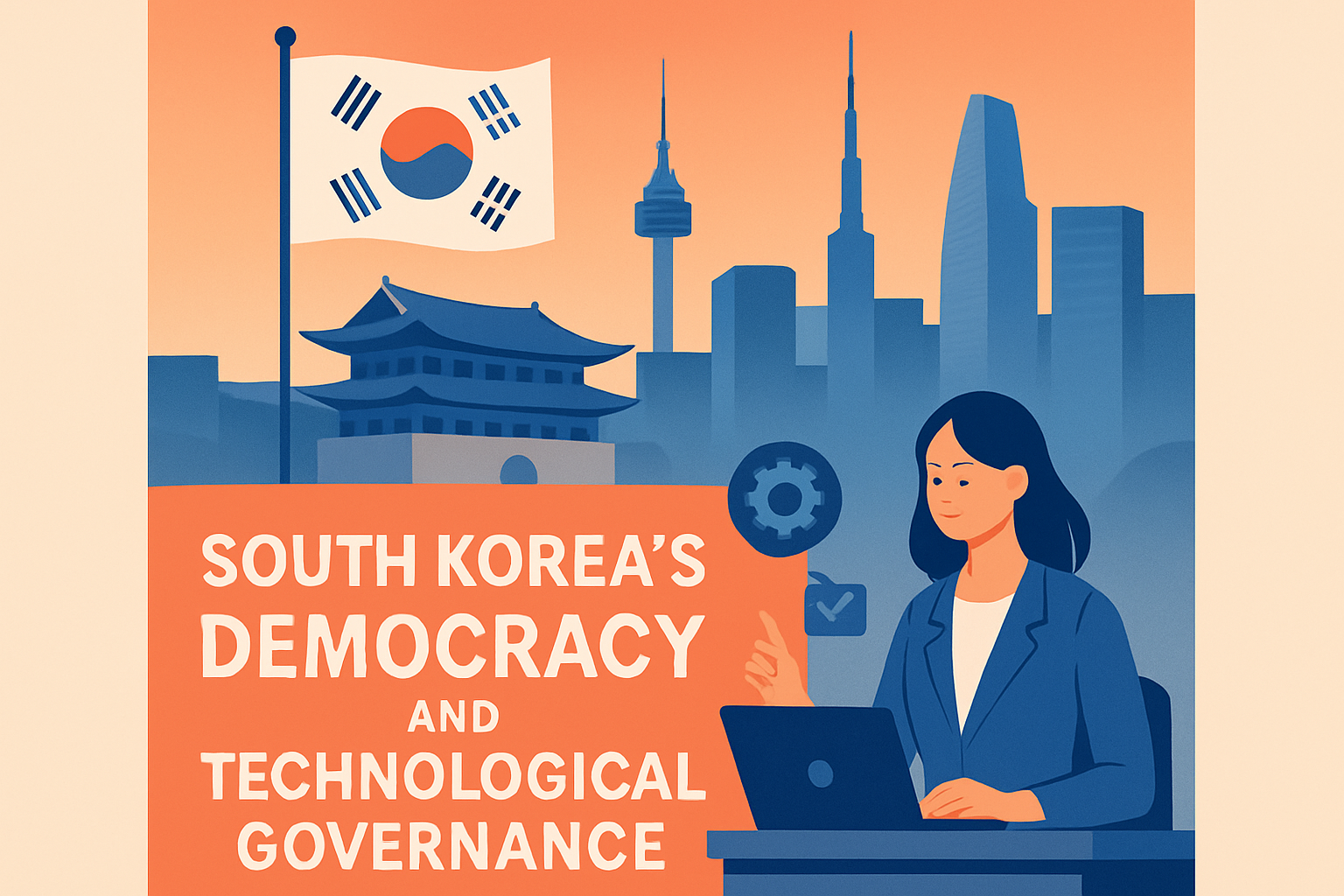
South Korea, often hailed as a technological powerhouse and vibrant democracy, presents a unique case study in the interplay between political governance and technological advancement. Founded on democratic principles and buoyed by its rapid technological progress, the nation has managed to strike a balance between governance and innovation. Key concepts such as democracy and technological governance are essential to understanding South Korea’s position on the global stage and its impact on shaping modern norms around technology use within a democratic society.
Democracy in South Korea implies a government elected by the people, characterized by pluralism, rule of law, and the safeguarding of individual freedoms. Technological governance, on the other hand, refers to the regulatory and policy frameworks guiding technological advancement and integration within the country. These frameworks ensure that technology supports societal goals without compromising democratic values. In examining South Korea, one gains insights into how a nation can harmonize the dual aims of technological innovation and democratic ideals.
The topic is particularly relevant in today’s global context where reports of digital authoritarianism and privacy breaches are mounting. By spotlighting South Korea’s journey, we explore a model where technological innovation supports democratic means rather than inhibits them. Such understanding assists other democracies in devising their technological policies that align with maintaining freedom and personal rights.
The Rise of South Korea as a Technological Leader
South Korea’s emergence as a leader in technology owes much to its strategic focus on ICT (Information and Communication Technology) development, innovation, and infrastructure enhancement. Policies such as the “fgrowth by innovation” and extensive government support for private-sector research and development have positioned South Korea at the forefront of technological advances.
One of the pivotal examples of this synergy is the advent of South Korea’s broadband internet, which transformed the nation into one of the world’s most connected. Through strategic investments and regulatory frameworks, South Korea boasts among the highest internet penetration rates and fastest internet speeds globally. This success stems from initiatives like the KII (Korea Information Infrastructure) and support for 4G and 5G networks, which create an ecosystem conducive to technological innovation.
An ordered focus on ICT development is deeply embedded in South Korean policy, shaping behaviors and expectations within its democratic framework. Various policies ensure equitable access to these infrastructures, aligning with democratic principles of inclusivity and participation.
Technological Governance and Its Challenges
However, achieving harmony between technological prowess and governance comes with its own set of challenges. South Korea is not immune to the complexities that arise from regulating technology while nurturing innovation. The nation faces issues such as cybersecurity threats, data privacy concerns, and regulating e-commerce without stifling competition.
One noteworthy challenge was during the introduction of the Personal Information Protection Act in 2011, aimed to fortify cybersecurity and data privacy. This act highlights the continuous balancing act between enforcing robust privacy standards and allowing businesses to utilize data effectively. South Korea also established the Korea Internet & Security Agency (KISA) to tackle online threats, exemplifying proactive governance approaches, demonstrating engagement in ensuring technological advances remain beneficial.
Democratic Participation Facilitated by Technology
Despite the challenges, South Korea exemplifies how technology can enhance democratic participation. E-governance initiatives allow citizens to engage directly with political processes. Government services have been digitized, and platforms facilitate citizen engagement, promoting transparency and accountability across governance systems.
A real-world manifestation of digital democracy was seen during Seoul’s traffic management system. This system used Big Data technology and traffic cameras to streamline traffic flow, involving public input and collaboration from city dwellers. Such participatory models increase trust among citizens and align well with democratic objectives, demonstrating an evolved approach to citizen-government interactions.
Moreover, an extensive public service platform offers remote services, like processing. It increases civic engagement opportunities, encouraging democratic practices further augmented by expansive ICT infrastructure and technologies like blockchain.
Commercial Technological Applications and Economic Growth
Commercial application of technology has played a substantial role in South Korea’s economic growth. The proliferation and expansion of technology companies exemplify how commercial interests align with national objectives.
Companies such as Samsung and LG have spearheaded innovation, making significant contributions to global tech evolution. These businesses not only benefit economically but also drive nationwide technological advancements. Government backing, coupled with regulatory frameworks, has fostered an environment in which businesses can thrive responsibly.
The circular benefit where technological prowess fuels economic growth, which in turn incentivizes further technological investments, illustrates a governance model fostering symbiotic relationships, enhancing both commercial and governance outcomes.
The table below exemplifies the synergy between technology policy and economic growth:
| Sector | Policy Initiative | Impact on Economy |
|---|---|---|
| ICT Infrastructure | High-speed internet subsidies | Increased accessibility and connectivity |
| Telecommunications | 5G network implementation | Enhanced communication speed and efficiency |
| Innovation | R&D funding and tax benefits | Increase in tech startups and employment |
Societal Impacts and Technological Inclusivity
Technological governance extends beyond economic realms, deeply affecting societal progress. South Korea has ensured technology serves as a tool for societal good, addressing challenges like the urban-rural digital divide and fostering inclusivity.
For instance, Korea’s Smart Village initiative aims to bridge digital divides, providing rural regions with the same technological conveniences found in urban centers. This access fosters overall societal advancement, democratizing technology beyond urban locales, ensuring benefits are widespread.
Additionally, technology has been harnessed to enhance education, health, and welfare. E-learning platforms expand educational access, while health technologies support aging populations, demonstrating a holistic commitment to societal betterment through technological capacity.
Future Prospects in Technological-Democratic Interactions
South Korea continually seeks to carve a path for future technological-democratic interactions. The promising intersection of Artificial Intelligence, Internet of Things, and Blockchain with governance presents opportunities to enhance administrative efficiency and reinforce democratic values.
Continued commitment to pro-innovation policies, international collaborations, and investment in future technologies ensures South Korea maintains its position as a beacon of balanced governance and innovation.
Conclusion
South Korea’s journey exemplifies the compatibility of technological governance with democratic values, highlighting a model for world democracies to consider. By strategically investing in ICT, encouraging participatory roles, and developing robust regulatory frameworks, South Korea surmounts challenges associated with integrating democracy with technological progress.
Such lessons hold the blueprint for nations grappling with similar issues, particularly in contexts where technology offers substantial potential for both growth and governance enhancement.
As ongoing advancements unfold, reflecting on South Korea’s experiences will be invaluable, fostering environments conducive for synergy between digital innovation and governance, ultimately contributing to a technologically empowered and democratically enriched future.
Frequently Asked Questions
1. How has South Korea’s democracy influenced its approach to technological governance?
South Korea’s democracy has deeply influenced its approach to technological governance by embedding democratic principles such as transparency, accountability, and public participation at the core of its technological advancement. The nation’s democratic framework ensures that technology policies are not only driven by innovation but also take into account the interests and rights of its citizens. The South Korean government actively encourages public involvement through forums, consultations, and public debates, allowing citizens to express their opinions on various technological matters, ensuring that technological growth aligns with societal values and public interest.
Additionally, democratic processes in South Korea have led to the establishment of regulatory bodies that oversee technological development and protect citizens’ data privacy and security. These bodies are held accountable through democratic mechanisms such as elections, judicial reviews, and media scrutiny, which help ensure they operate transparently and fairly. This unique blend of democracy and technological governance has positioned South Korea as a leader in technology while maintaining the trust of its citizens.
2. What role has technological advancement played in shaping South Korea’s political landscape?
Technological advancement has played a pivotal role in shaping South Korea’s political landscape by enhancing citizen engagement, improving governance efficiency, and enabling data-driven decision-making. With its robust digital infrastructure, South Korea has facilitated greater civic participation through online platforms that make government processes more accessible to its citizens. This digital interaction with the government strengthens democratic processes and allows for more direct communication and collaboration between citizens and policymakers.
Furthermore, technology has enabled the South Korean government to implement more efficient administrative processes, streamline services like e-government platforms, and offer real-time information access to its citizens. This progress not only boosts public trust but also encourages more responsive and adaptive political systems. Leveraging big data and analytics, South Korean policymakers can base decisions on accurate, up-to-date information, leading to smarter governance and enhanced policy outcomes.
3. In what ways has South Korea managed to balance technological innovation with democratic values?
South Korea has successfully balanced technological innovation with democratic values by instituting an inclusive policy-making environment where stakeholders, including the private sector, non-governmental organizations, and the general public, participate in discourse and decision-making. Policies are crafted ensuring that they empower innovation while safeguarding citizens’ rights and freedoms, reflecting both technological advancement and democratic ideals.
The government emphasizes transparency in technological governance, allowing citizens to have insights into policies, regulations, and use of technology in governmental affairs. Such transparency is crucial in maintaining public confidence and upholding democratic values. South Korea’s legal frameworks and policies are periodically reviewed and updated to reflect emerging technological trends and their implications, ensuring that its democratic foundations remain strong even as the nation progresses technologically.
4. What impact does technological governance have on privacy and data protection in South Korea?
Technological governance in South Korea has a significant impact on privacy and data protection by establishing stringent laws and regulations to safeguard citizens’ personal information. South Korea’s Personal Information Protection Act (PIPA) is one of the most comprehensive data privacy laws in the world, providing robust protections and obligating organizations to ensure the security and confidentiality of personal data.
The South Korean government has created an ecosystem where innovation does not come at the expense of privacy rights. Strong regulatory oversight, including the involvement of the Korea Communications Commission (KCC) and the Personal Information Protection Commission (PIPC), ensures compliance with data protection standards and mitigates risks associated with data breaches and misuse. This framework allows South Korea to foster a digital landscape where technology is an enabler of societal benefits while maintaining a strict adherence to privacy norms.
5. How does South Korea’s technological governance model compare to other leading digital nations?
South Korea’s technological governance model stands out compared to other leading digital nations through its unique integration of rapid technological innovation with deep-rooted democratic principles. While many countries face challenges balancing the two, South Korea’s approach showcases a model where both are seen as mutually reinforcing factors. The Korean government prioritizes policies that foster innovation and commercialization of new technologies, driven by transparent governance and inclusive public consultation processes.
Unlike countries with more centralized or authoritarian governance models that might prioritize rapid technological adoption at the expense of individual freedoms, South Korea’s model ensures public trust and support, facilitating sustainable technological growth. Its advanced infrastructure, a culture of innovation, and democratic foundations enable it to serve as a liberal digital innovation leader promoting both technological sophistication and personal liberties.
Exploring how South Korea navigates technological governance not only enhances understanding but also provides a case study that other nations might consider in aligning their technological growth with democratic values.