
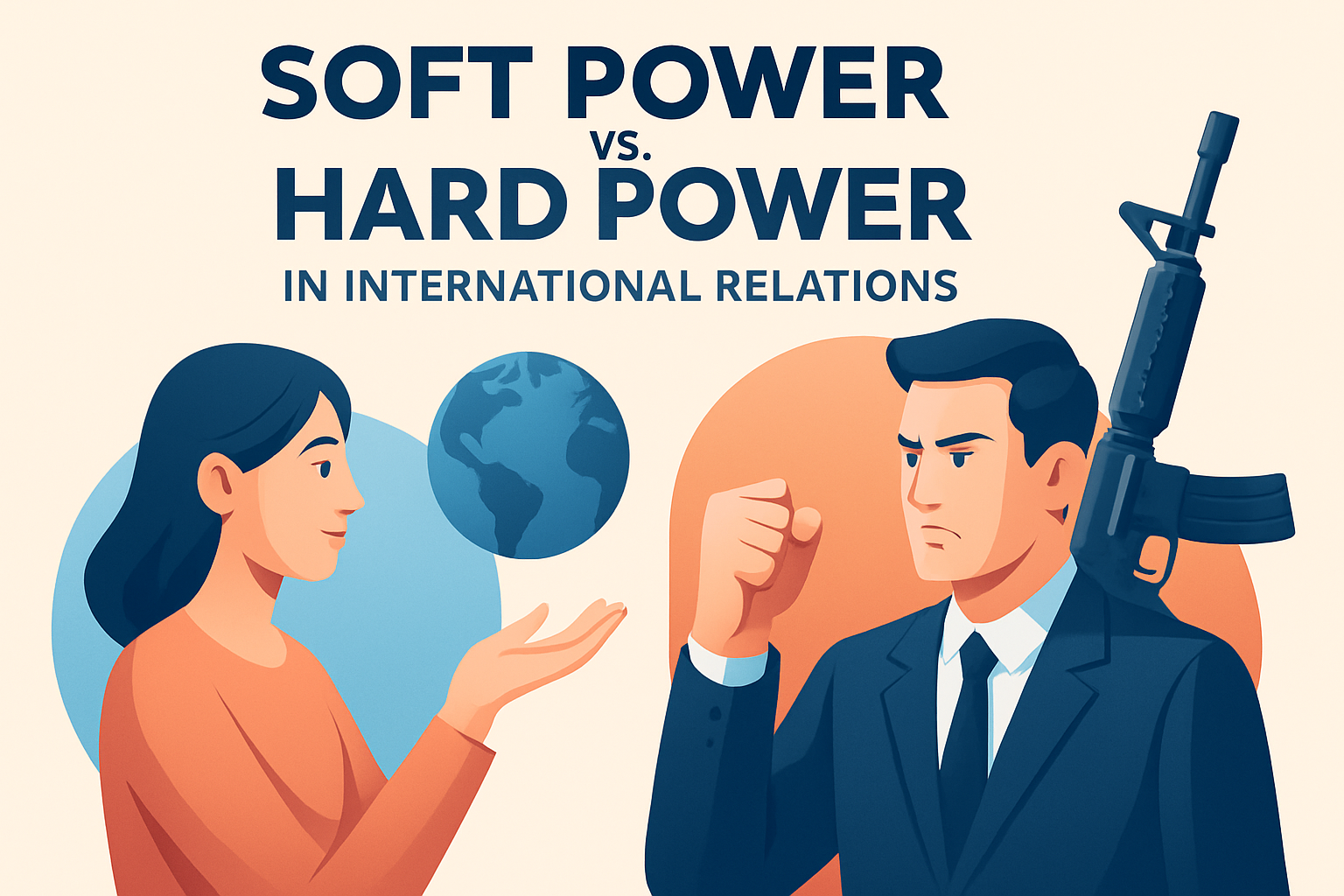
In the intricate web of international relationships, nations wield various types of influence to achieve their national interests. Among these, soft power and hard power stand out as the two quintessential forms of influence. Recognized for their strategic significance, these concepts serve as essential tools in the arsenal of foreign policy. This article aims to explore these two critical forms of power, defining each and elucidating their importance within the realm of international relations.
Soft power, a term popularized by political scientist Joseph Nye, refers to the ability to influence others through cultural appeal, ideological affinity, and diplomatic engagement rather than coercion or force. Contrarily, hard power involves a nation’s ability to enforce its will through military might and economic pressure. Understanding the distinction between soft power and hard power, and why they matter, is crucial for policymakers, scholars, and global citizens alike. As global dynamics continue to evolve, nations strive to strike a balance between the charm of soft power and the tangible force of hard power to achieve their strategic objectives.
The Evolution of Soft Power
Soft power has emerged as a pivotal component of global diplomacy, relying on cultural exchanges, education, and international cooperation to exert influence. Unlike hard power, which operates through tangible means such as military ability or economic sanctions, soft power aims to win hearts and minds by showcasing a nation’s ideals and values. One noteworthy example of soft power in action is the global influence of South Korea’s Hallyu wave, or “Korean Wave,” which encompasses music, television, and fashion. Through the global proliferation of Korean culture, South Korea has boosted its international image and economy.
The potential of soft power lies in its ability to foster mutual understanding and build lasting relationships across borders. In an interconnected world, where social media and digital communication connect so many, the significance of soft power has substantially increased. Nations leverage soft power to attract tourists, students, and investments, creating a positive feedback loop that strengthens their geopolitical position.
- Promotion of cultural diplomacy
- Fostering educational exchanges
- Utilizing global communication platforms
Hard Power: The Force Behind State Policies
Though often viewed with skepticism in an increasingly interconnected world, hard power continues to play a critical role in the conduct of international relations. Military strength remains a significant determinant of a country’s standing on the global stage. A clear embodiment of hard power can be found in the United States’ military presence worldwide, with bases strategically located across various continents.
Hard power is not confined to military might alone; it also encompasses economic leverage through sanctions and trade regulations. For instance, the imposition of sanctions on Iran by several Western nations aimed to curtail its nuclear development by exerting economic pressure. While effective, hard power tactics often risk unintended negative consequences, such as enduring hostility or enduring conflicts.
The Realities of Combining Soft and Hard Power
The contemporary geopolitical landscape necessitates a blend of both soft and hard power — a dynamic commonly referred to as “smart power.” Nations that adeptly integrate these two forms of power often achieve more enduring and sustainable outcomes. By combining the persuasive power of diplomacy with the tangible impact of military and economic strategies, states craft comprehensive foreign policies that address the complexities of the modern world.
China’s Belt and Road Initiative exemplifies the conjoint application of soft and hard power. Through this strategy, China invests in infrastructure projects across numerous countries while simultaneously promoting its cultural and political ties. This duality enables China to expand its influence worldwide, asserting its power in both economic and cultural terms.
| Country | Soft Power Indicator | Hard Power Indicator |
|---|---|---|
| United States | Cultural dominance via Hollywood | Global military reach |
| China | Belt and Road Initiative | Military expansion in South China Sea |
| France | Cultural influence via language and art | Effective diplomatic force in EU politics |
Case Studies: Outcomes from Power Balancing
Several instances of international relations provide insight into the effectiveness of blending soft and hard power. Japan, for instance, employs cultural diplomacy through its anime and technology industries alongside robust economic strategies. By cultivating an appealing global image and maintaining strong economic relations, Japan enhances its regional influence against a backdrop of limited military capability.
In contrast, the Soviet Union’s adherence to hard power during the Cold War, marked by military expansion and nuclear armament, achieved short-term geopolitical victories but ultimately failed to win lasting alliances. The inability to create attractive cultural or ideological appeal significantly limited the USSR’s capacity to sustain worldwide influence.
The Future of Power Dynamics in International Relations
The future of international relations will arguably hinge upon the innovative deployment of smart power strategies. As technology evolves, digital platforms and artificial intelligence present new avenues to exert influence globally. For instance, digital diplomacy through social media campaigns allows nations to reach foreign publics directly, thereby augmenting their soft power potential.
Nations that recognize and adapt to these changing mediums of influence will likely dominate future geopolitical landscapes. This underscores the call to action for policymakers: embrace the innovation of smart power. In doing so, they can forge resilient and adaptable foreign policies that withstand the challenges of an unpredictable global stage.
Conclusion: Embracing a Balanced Approach
In summary, soft power versus hard power represents a complex dynamic that shapes contemporary international relations. While soft power seeks to captivate through culture and ideology, hard power provides tangible influence through military and economic means. The convergence of these two forces in smart power embodies the best of both strategies, providing a holistic approach to global affairs.
With the continuous evolution of global challenges, nations must align their power strategies to maintain their influence and achieve their geopolitical goals. Leveraging the complementary nature of soft and hard power can result in long-lasting and effective international relations strategies. As the digital age forges new methods of engagement, countries need to adapt and innovate to remain relevant on the world stage.
Frequently Asked Questions
1. What is the difference between soft power and hard power?
In the delicate tapestry of international relations, soft power and hard power represent distinct yet complementary influences wielded by nations to achieve their goals. Let’s break down these critical concepts:
Hard power is a more overt and coercive form of influence, often relying on military force or economic sanctions to achieve desired outcomes. It’s about direct, sometimes aggressive action, ensuring compliance or dominance in international affairs. For example, the use of military interventions, imposing economic sanctions, or forming military alliances are typical hard power strategies. The primary goal is often to change the behavior of other entities through pressure or through economic incentives.
Soft power, on the other hand, revolves around the ability to shape preferences through appeal and attraction, rather than coercion. Coined by Joseph Nye, this form of power is embedded in cultural influence, political values, and foreign policies that are seen as legitimate or moral by others. Soft power is about convincing others to want the outcomes you want, without any force. It’s leveraged through diplomacy, cultural exchanges, international partnerships, educational programs, and spreading cultural values, which all help bolster a country’s positive image on the world stage.
The fundamental distinction is that while hard power is based on force and coercion, soft power relies on attraction and persuasion. In today’s interconnected world, nations often use a combination of both, known as smart power, to effectively engage with the global community.
2. Why is soft power considered important in international diplomacy?
Emphasizing soft power in international relations is pivotal for several reasons. In an age where military might alone cannot guarantee peace or successful global interaction, understanding and leveraging cultural and diplomatic avenues is more critical than ever.
Firstly, soft power helps foster enduring relationships and creates sustainable international partnerships. Instead of using force, nations can utilize cultural exchanges, global media, and educational initiatives to foster understanding, reduce tensions, and build coalitions. This form of influence is crucial in promoting global peace and enhancing mutual trust.
Secondly, it allows countries to set agendas in international discussions. By being perceived as cultural and moral leaders, nations gain seats at important international tables, where policy and direction-setting occur. This influence affords countries greater leverage in discussions that shape global frameworks, whether on climate change, human rights, or trade regulations.
Finally, in a world of ever-increasing global media, the reputation of a state is paramount to its influence. Through effective soft power strategies, states can promote a positive image that attracts foreign investments, tourism, and global talent, while also increasing their citizens’ confidence on the world stage. In essence, soft power shapes the narrative and helps solidify a country’s standing without unilateral shows of force.
3. Can soft power and hard power be used simultaneously?
Yes, soft power and hard power can and often are used in conjunction to form a comprehensive international relations strategy known as smart power. This approach utilizes the full spectrum of tools available to states to influence other global actors while adapting to complex, multifaceted international environments.
By incorporating both types of power, countries can maximize potential outcomes in diplomatic negotiations, conflict resolutions, and global engagements. Think of it as using the carrot and the stick simultaneously—where the carrot is the enticing prospect of cultural ties and the stick represents potential pressure from military or economic sanctions.
Implementing successful smart power strategies might involve leveraging diplomatic channels and cultural allure to open dialogues while maintaining a robust military presence to underpin those diplomatic efforts. The advantage of this approach is its flexibility; allowing states to not only counter immediate threats but also promote inclusive, long-lasting diplomatic solutions. This mix of using force prudently and engaging in diplomatic enchantment is crucial for maintaining balance and pursuing national interests without escalating conflicts unnecessarily.
4. How can a nation enhance its soft power effectively?
Enhancing soft power effectively requires a comprehensive, strategic approach that leverages various non-coercive tools to build influence. Here’s a detailed roadmap for how a nation could bolster its soft power:
Cultural Diplomacy: Nations can export cultural products—like films, music, and arts—through various cooperative formats and cultural exchange programs. Establishing cultural centers worldwide and sponsoring international cultural festivals can also enhance a nation’s image abroad.
Educational Exchange: Encouraging international students to study within the country by offering scholarships or engaging in exchange programs promotes goodwill and cultural engagement. Alumni of these programs often become informal ambassadors, fostering lasting ties with their host nation.
Technological Innovation: Maintaining leadership in technological advances and sharing these developments globally can enhance a country’s attractiveness. Innovating in areas like green technology can position a state as a forward-thinking leader, garnering international respect and partnerships.
Public Diplomacy and Media: Nations should focus on open communication strategies to shape narratives. Global media presence and outreach through digital platforms help project a nation’s values and perspectives more effectively.
Humanitarian Initiatives: Actively participating in global humanitarian aid, disaster response, and development assistance can bolster a state’s reputation as benevolent, fostering international goodwill.
By engaging in these myriad activities, states enhance their soft power steadily, allowing them not only to influence global narratives but also to cultivate international allies essential for long-term diplomatic success.
5. What are some examples of how countries have successfully used soft power?
Various countries around the globe have exemplified soft power principles to bolster their international influence successfully. Here are a few notable examples:
United States: The U.S. has long leveraged its cultural products—Hollywood films, music, tech innovations like the iPhone, and pervasive brands like McDonald’s—as formidable tools of soft power. These tools have extended American cultural norms, ideals, and values globally. The “American Dream” concept resonates worldwide, impacting many foreign perceptions positively, bridging gaps across cultures.
Japan: Through cultural exports like anime, manga, J-pop, and cuisines such as sushi, Japan has generated widespread appeal and admiration. The blending of traditional and modern elements in Japan’s global outreach strategy has earned the country a unique position of influence, particularly among younger demographics globally.
South Korea: The Korean Wave, or Hallyu, has become an effective soft power phenomenon. Through popular Korean drama series, K-pop music, and digital innovations, South Korea has achieved significant cultural persuasion. Global stars like BTS and international platforms like TV shows have facilitated inter-cultural connections, heightening South Korea’s international standing.
France: France’s emphasis on cultural diplomacy positions it as a soft power paragon. With robust global promotion of its language and heritage via the Alliance Française and advocacy within UNESCO, France continues to influence cultural tastemaking and heritage preservation worldwide.
These real-world applications reveal not just the diverse means nations employ to wield soft power, but also underscore its potential to foster meaningful international partnerships. Ultimately, the adept use of cultural, political, and technological soft power strengthens a nation’s global presence and furthers its international objectives in profound, lasting ways.