
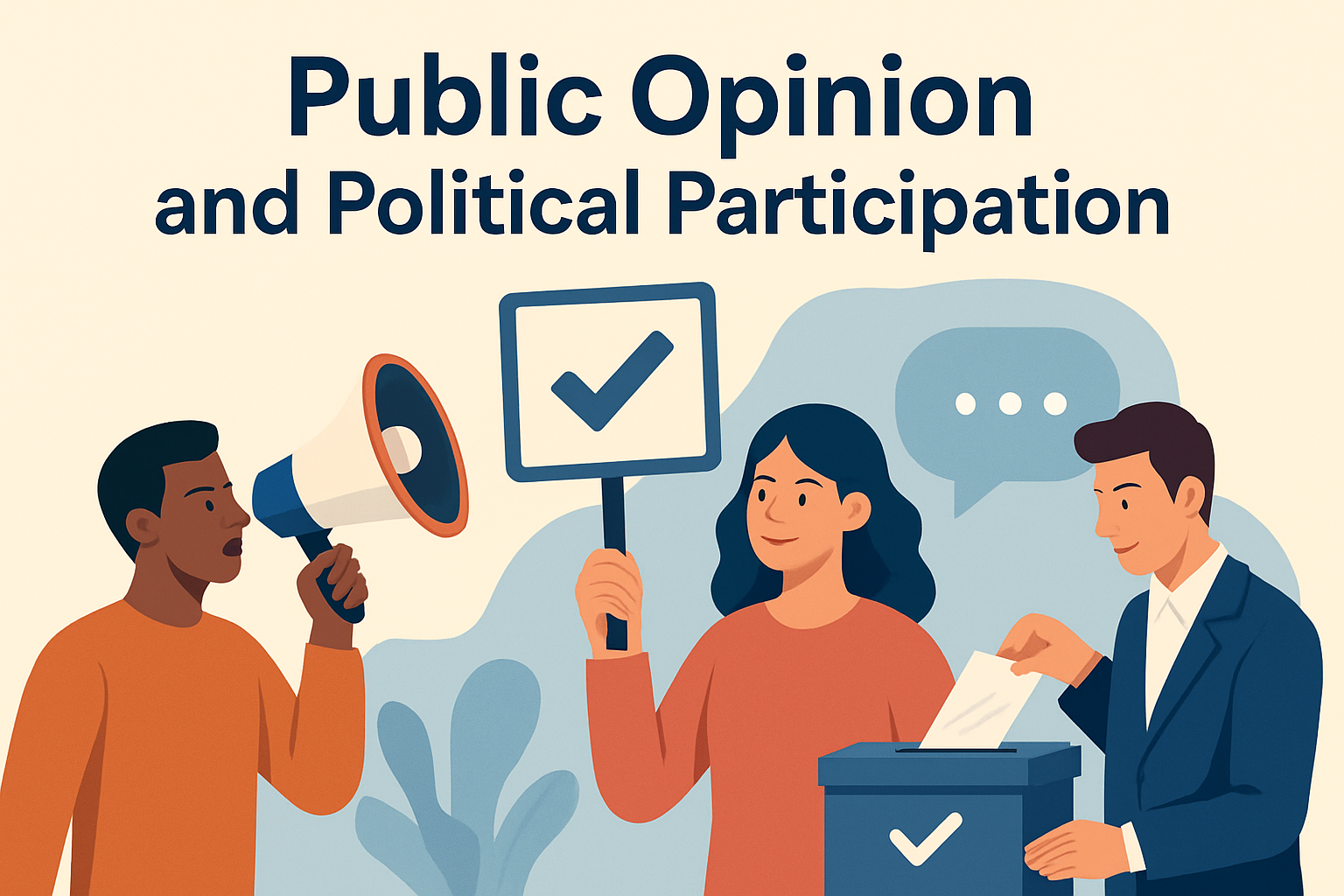
Public opinion and political participation are intertwined components of democratic societies. They serve as the pillars upon which the foundation of free and representative government stands. Understanding these concepts is critical for citizens and policymakers alike because they influence the political landscape and the decisions made within it. At its core, public opinion refers to the collective sentiments, attitudes, and beliefs of the general public concerning political issues. Conversely, political participation refers to the actions and behaviors of individuals aimed at influencing governmental decisions. This article will delve into these two elements, demonstrating their significance, interconnectedness, and impact on political systems worldwide.
The Nature of Public Opinion
Public opinion is the aggregation of individual attitudes or beliefs about certain issues or officials within a given population. It is not static, as it continuously evolves with societal changes, media influences, and political events. For example, the public opinion shifts in the United States on issues like healthcare or climate change profoundly illustrate how societal events can sway public sentiments over time. In the aftermath of significant events like the COVID-19 pandemic, public opinion on healthcare underwent substantial changes, leading to increased support for universal healthcare policies.
Understanding public opinion is crucial as it acts as a guide for political leaders and policymakers. It provides a snapshot of the public’s mood and priorities, allowing leaders to enact policies that reflect the will of the people. It is often measured through surveys and polls, which play an essential role in gauging public support or opposition to policies, political candidates, and governmental decisions.
Factors Influencing Public Opinion
Several factors influence public opinion. These include personal values, socialization, media exposure, major events, and cultural factors. For instance, media plays a significant role in shaping public opinion by highlighting certain issues, framing news stories, and creating narratives. The media’s influence was evident in the case of social movements like Black Lives Matter, where media coverage raised awareness and shifted public opinion towards greater support for racial equality and justice.
Moreover, individual experiences and backgrounds also affect public opinion. Personal experiences, such as economic hardships or discrimination, can shape one’s views on economic policies or civil rights issues. Cultural factors, including religion and regional identity, further contribute to the diversity of public opinion across different demographic groups.
Political Participation: A Spectrum of Engagement
Political participation encompasses the various ways citizens engage with the political process to influence public policy and leadership. It ranges from voting and election campaigning to grassroots activism and public demonstrations. The recent surge in youth activism, particularly on climate change, highlights the spectrum of political participation. Young people across the globe have organized protests, used social media platforms to spread awareness, and engaged in lobbying efforts to push for environmental reforms.
Political participation is vital as it allows citizens to express their opinions and hold their leaders accountable. It is the means through which individuals can bring about change and advocate for policies that align with their values.
Traditional vs. Modern Forms of Political Participation
Traditionally, political participation was limited to formal activities like voting, attending rallies, or joining political parties. However, modern forms of participation have expanded beyond these conventional methods. The rise of digital technology has introduced new platforms for engagement, such as online petitions, social media campaigns, and virtual town halls.
- Voting: The most common form of political participation, voting allows citizens to choose their representatives and express their policy preferences.
- Digital Campaigns: Social media platforms like Twitter and Facebook provide arenas for digital activism, allowing users to spread information and mobilize support for causes.
- Public Protests: Demonstrations and rallies remain powerful tools for collective political expression and can influence public opinion and policy.
- Participatory Budgeting: A process where citizens directly engage in budgetary decisions at a local level, fostering more direct democracy.
These modern forms of political participation demonstrate the evolving nature of civic engagement in a digital age, making it more accessible and inclusive for various demographic groups.
The Relationship Between Public Opinion and Political Participation
Public opinion and political participation are closely linked, with each influencing the other. Public opinion often acts as a catalyst for political participation. When a significant portion of the population holds a strong opinion on an issue, it can drive individuals to engage in various forms of political activity to see their views reflected in policies. For example, the women’s rights movement in the early 20th century was propelled by widespread public opinion supporting gender equality, leading to increased political participation that ultimately resulted in women gaining the right to vote.
Conversely, political participation can also shape public opinion. Active participation in political processes exposes individuals to diverse perspectives and information, which can lead to a more informed and engaged citizenry. For instance, participating in community meetings or discussion forums can influence one’s understanding of local issues and alter their viewpoints.
The Role of Government and Institutions
Governments and institutions play a pivotal role in facilitating public opinion and political participation. Democratic governments, in particular, are designed to be responsive to public opinion, creating channels for citizens to express their views and influence policy. Institutions like the judiciary, the media, and educational bodies contribute to informing the public and enabling participation.
Good governance requires a balance between listening to public opinion and exercising leadership to guide and make informed decisions in the public’s best interest. Elected representatives have the duty to be responsive to the electorate while also considering long-term implications of policies beyond immediate public pressure.
| Institution | Role in Public Opinion | Role in Political Participation |
|---|---|---|
| Media | Influences and reflects public opinion through reporting and commentary. | Facilitates participation by providing information and platforms for dialogue. |
| Educational Bodies | Shapes opinion through dissemination of civic knowledge and critical thinking. | Encourages participation by promoting civic education and engagement. |
| Government | Responds to and is shaped by public opinion in policy-making processes. | Enables participation through electoral processes and public consultations. |
Challenges in Public Opinion and Political Participation
Despite the important roles that public opinion and political participation play in democracy, they face several challenges. One significant issue is misinformation, which can distort public opinion and undermine electoral processes. The spread of fake news can influence political beliefs and lead to misguided participation, as seen in recent global electoral events where misinformation campaigns became a focal point.
Another challenge is political apathy and disenfranchisement among certain groups. Barriers such as voter suppression, lack of accessible information, and disillusionment with the political system can discourage participation, threatening the very fabric of democratic engagement.
The Future of Public Opinion and Political Participation
Looking ahead, the role of technology in shaping public opinion and political participation will continue to grow. Technological advancements can enhance democratic engagement by providing new tools for communication, education, and organizing. However, they also pose new risks, such as data privacy concerns and the potential for algorithmic bias in shaping public discourse.
To ensure a healthy democratic process, it is vital for societies to nurture informed and active citizenry, invest in media literacy programs, and strengthen mechanisms to protect the integrity of public opinion and electoral processes. Promoting transparency and accountability in government and encouraging diverse voices in political dialogue will also be crucial steps towards fostering an inclusive democratic landscape.
Conclusion
In summary, public opinion and political participation are essential components of democratic governance, influencing the development and implementation of policies that shape our societies. Understanding these concepts helps citizens exercise their rights more effectively and encourages more informed and active engagement in public life. For policymakers, being attuned to public opinion while fostering broad political participation is key to achieving a responsive and representative government.
As global dynamics change and technology evolves, it is imperative for individuals to stay informed and engaged in political processes. Citizens should seize opportunities to express their views and participate in shaping the future of their communities. By emphasizing education, dialogue, and technological advancements, societies can strengthen democratic institutions and create resilient environments for thriving civic life.
Engage with your community, stay informed, and make your voice heard. After all, the health of democracy relies not just on the institutions that uphold it, but on the active participation of its citizens.
Frequently Asked Questions
1. What is the significance of public opinion in a democracy?
Public opinion is highly significant in a democracy as it forms the backbone of the political decision-making process. In essence, a democracy is designed to reflect the will of the people – this means that the government should ideally act in alignment with what the majority of its citizens want or believe. Public opinion serves as an informal guideline for lawmakers and politicians, indicating the priorities and concerns of the voters. For instance, if a significant portion of the population expresses opposition to a proposed law or policy through opinion polls, this generally leads politicians to reconsider or modify their stance to align more closely with public sentiment. Moreover, public opinion can influence elections, as candidates who align with popular views are more likely to gain support and ultimately win office. Therefore, understanding and acknowledging public opinion is critical for any government to maintain legitimacy and trust with its citizens.
2. How do public opinion polls work, and how accurate are they?
Public opinion polls are systematic efforts to gauge the general public’s feelings or views on various issues, candidates, or policies. Pollsters collect data through different methods such as telephone interviews, online surveys, or face-to-face interactions. Once collected, this data is analyzed to derive meaningful insights about public opinion trends. Accurate polling relies on several factors: a well-designed sample that reflects the diversity of the general population, unbiased questioning that doesn’t lead respondents to a particular answer, and a sufficiently large sample size to ensure statistical reliability. While well-conducted polls can provide a snapshot of public opinion at a given time, their accuracy can be challenged by factors such as nonresponse bias, where certain groups are underrepresented, or social desirability bias, where respondents provide answers they think are socially acceptable rather than their true feelings. Despite these challenges, reputable polls, when conducted correctly, tend to offer a reliable gauge of public sentiment.
3. In what ways do individuals participate politically beyond voting?
While voting is perhaps the most fundamental form of political participation, there are numerous other avenues individuals can pursue to engage with the democratic process. These include joining or supporting political parties, participating in political rallies or demonstrations, signing petitions, engaging in community organizing, or even running for elected office. Individuals may also choose to contribute to political campaigns or engage in activism on specific issues they are passionate about. Additionally, political participation can take the form of staying informed by following news about current events, discussing political topics with friends and family, and using platforms like social media to express opinions and mobilize others. Engaging with policymakers directly through letters, emails, or town hall meetings is also a valuable form of political participation. All these actions contribute to a healthy democracy by strengthening the feedback loop between citizens and their representatives.
4. What impact does media have on public opinion and political participation?
The media plays a pivotal role in shaping public opinion and influencing political participation. It serves as the primary conduit through which information about politics and government reaches the public. The media can frame issues, highlight certain aspects over others, and set the agenda for what topics are deemed important. This “agenda-setting” function significantly influences what the public perceives to be critical issues worthy of attention or action. Additionally, the type of media individuals consume can create echo chambers that reinforce existing views or trigger shifts in opinions. With the advent of digital media and social platforms, information can be disseminated rapidly to a wide audience, increasing engagement and encouraging more immediate forms of political participation such as online campaigns, awareness initiatives, or crowdfunding for causes. On the flip side, misinformation or biased reporting can skew public perception and lead to misguided political actions, making critical media literacy skills essential in today’s information landscape.
5. What are common barriers to political participation, and how can they be addressed?
Several barriers can hinder political participation, ranging from structural issues to personal challenges. Common structural barriers include restrictive voting laws, such as those requiring specific forms of ID, or limited access to polling places, both of which can disproportionately impact marginalized groups. Economic barriers may prevent individuals from taking time off work to vote or participate in political activities. On a personal level, a lack of understanding or interest in politics can deter individuals from participating. Additionally, feeling that one’s vote does not make a difference, also known as voter apathy, remains a significant barrier. To address these obstacles, efforts could include implementing more inclusive voting laws, such as same-day registration or accessible mail-in voting. Educating citizens about the importance of political engagement and how it can affect their daily lives can increase interest and participation. Furthermore, fostering environments that encourage discourse and inclusion, such as civic education programs in schools and community outreach initiatives, can empower more individuals to involved in the political process.