
Introduction to Peacekeeping and Conflict Resolution
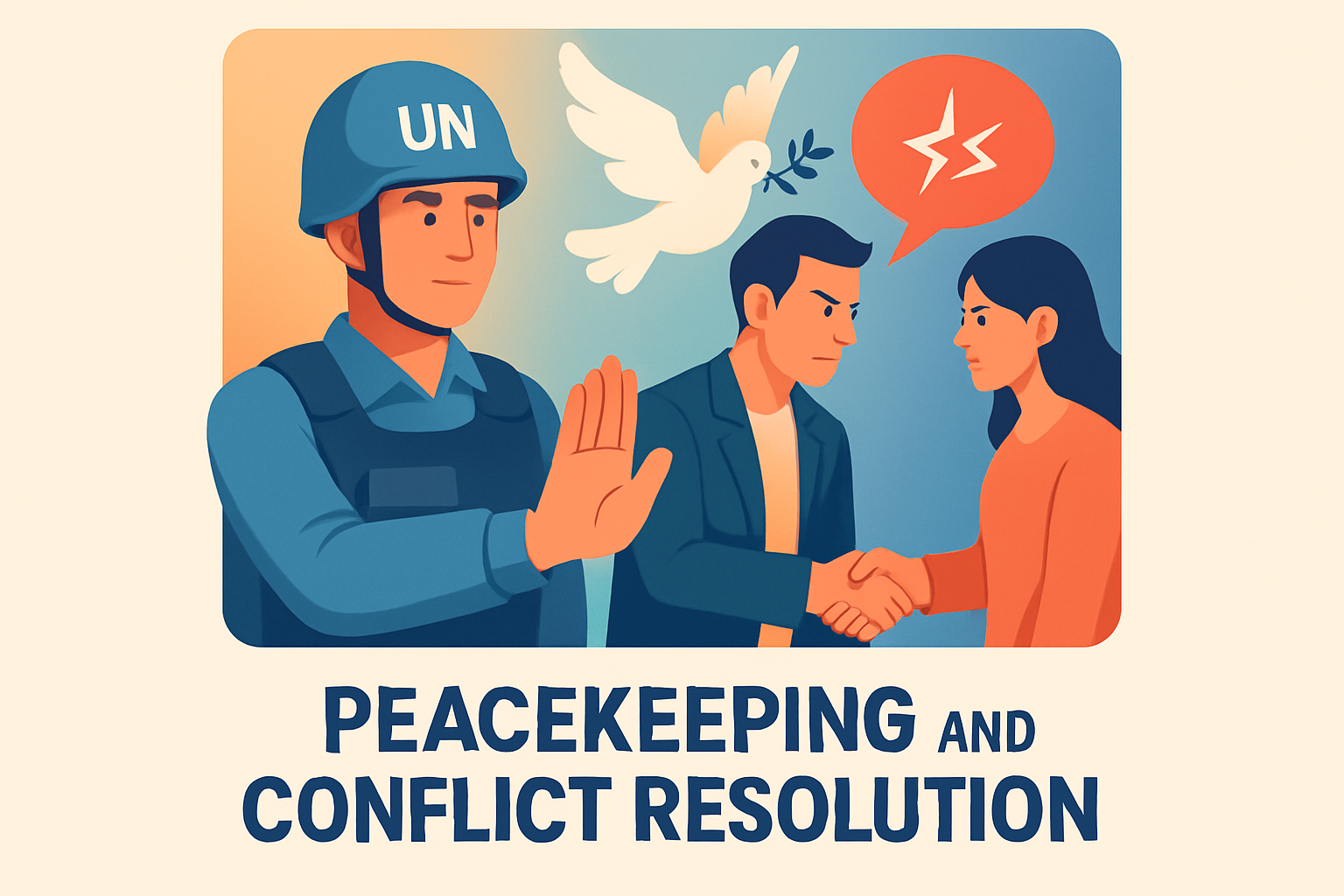
In today’s globally interconnected world, peacekeeping and conflict resolution have become vital components for maintaining international stability and security. As we witness geopolitics shifting dramatically, along with conflicts and disputes across various regions, it becomes increasingly essential to understand the mechanisms that promote peace and resolve conflicts. Peacekeeping refers to the deployment of international forces, usually under the banner of organizations like the United Nations, to help maintain or restore peace in areas of conflict. Conversely, conflict resolution involves the process of resolving a dispute or a conflict by providing solutions that all parties can agree upon.
These concepts hold substantial importance because they are instrumental in protecting civilian lives, maintaining human rights, and promoting sustainable development. In an age where even a localized conflict can have wide-ranging global repercussions, peacekeeping and conflict resolution serve as critical tools to mitigate violence, prevent human suffering, and foster long-term peace and development. Understanding these mechanisms can guide nations and institutions in building peaceful societies and, by extension, a peaceful world.
The Role of International Peacekeeping Forces
International peacekeeping forces, often led by organizations like the United Nations, play a crucial role in maintaining peace in conflict zones. These forces are typically composed of military, police, and civilian personnel from member countries, working to prevent the outbreak or escalation of violence, protect civilians, and support the implementation of peace agreements.
A notable example is the UN Peacekeeping mission in South Sudan (UNMISS), established in 2011. As the country grappled with internal strife and violence, UNMISS played a vital role in providing protection to civilians, facilitating humanitarian aid, and supporting the peace process. Through their continuous efforts, peacekeeping forces like UNMISS help stabilize fragile regions, enabling communities to rebuild and recover.
Conflict Resolution Strategies and Processes
Conflict resolution employs various strategies to address and settle disputes peacefully. Key methods include negotiation, mediation, arbitration, and collaborative problem solving. These practices aim to bring about peaceful resolutions by fostering dialogue, understanding, and compromise among conflicting parties.
A real-world example of successful conflict resolution is the Good Friday Agreement in Northern Ireland. Brokered in 1998, this agreement involved extensive negotiations facilitated by multiple parties, including international actors like the United States. It addressed decades of violence and sectarian conflict by establishing a power-sharing government and laying the groundwork for peace. The agreement highlights how effective conflict resolution can transform a historically turbulent region into one of relative peace and stability.
| Strategy | Application | Outcome |
|---|---|---|
| Negotiation | Direct talks between parties | Mutual agreement without third-party |
| Mediation | Facilitated by an impartial party | Resolution through assisted negotiation |
| Arbitration | Binding decision by a neutral party | Enforcement through arbitration agreements |
| Collaborative Problem Solving | Joint efforts in finding solutions | Creative outcomes and preserved relationships |
The Impact of Cultural and Societal Factors
Cultural and societal factors significantly impact peacekeeping and conflict resolution efforts. Conflict is often rooted in cultural misunderstandings, historical grievances, or social inequalities that require sensitive handling. Recognizing and respecting cultural differences can enhance understanding and facilitate more effective resolution strategies.
An illustrative example is the ongoing peace process between Israel and Palestine. The deep-seated historical and cultural tensions necessitate conflict resolution approaches that respect both parties’ cultural narratives and historical grievances. Dialogue and negotiation that acknowledge these factors are crucial for achieving a sustainable peace agreement.
The Role of Technology in Modern Peacekeeping
Technology plays an increasingly critical role in modern peacekeeping and conflict resolution. Innovations in communication, data collection, and analysis enable more efficient and effective peacekeeping operations. For instance, the use of satellite imagery and drones allows peacekeepers to monitor conflict zones more accurately and respond swiftly to emerging threats.
Additionally, social media and digital platforms offer new avenues for dialogue and negotiation, enabling stakeholders to communicate and collaborate across borders. Technology not only amplifies the ability to maintain peace in immediate conflict zones but also fosters long-term peacebuilding by connecting communities and facilitating information exchange.
Challenges and Limitations Facing Peacekeeping Efforts
Despite their importance, peacekeeping and conflict resolution efforts face several challenges. Political complexities, limited resources, and operational constraints can hinder peacekeeping missions. Moreover, the evolving nature of conflicts, where non-state actors and cyber warfare play significant roles, require adaptive strategies and innovative solutions.
The ongoing conflict in Syria exemplifies these challenges. Despite numerous international efforts, the complex interplay of regional powers and the involvement of non-state actors has made peacekeeping and resolution incredibly difficult. This situation underscores the necessity for robust international cooperation and adaptive strategies to navigate such multifaceted conflicts effectively.
Summary and Conclusion
Peacekeeping and conflict resolution are essential for maintaining global stability and promoting peaceful societies. By deploying international peacekeeping forces, employing diverse conflict resolution strategies, and leveraging technology, nations and organizations can address conflicts effectively. However, these efforts must consider cultural factors and adapt to modern challenges, requiring agile and cooperative approaches.
The benefits of successful peacekeeping and conflict resolution extend beyond immediate conflict zones, creating sustainable peace that supports economic growth, development, and global security. To move forward, nations, international organizations, and communities must enhance their capabilities, fostering a coordinated and adaptable framework for peacekeeping and conflict resolution.
For users interested in promoting peace and resolving conflicts, exploring strategies such as negotiation and mediation offers valuable insights into building harmony within various societal contexts. Moreover, staying informed about technological advancements and cultural factors can empower you to contribute effectively to peace efforts.
Considering the complexity of today’s global conflicts, proactive participation in initiatives and understanding international peacekeeping efforts can serve as a cornerstone for building and sustaining peace. Begin your journey towards peace today, and explore resources and services that can aid in understanding and participation in peacekeeping and conflict resolution processes.
Frequently Asked Questions
What is the main objective of peacekeeping operations?
The primary objective of peacekeeping operations is to help maintain or re-establish peace in areas of conflict. This involves the deployment of international military and civilian forces with the goal of ensuring the implementation of ceasefire agreements, protecting civilians, aiding in the disarmament process, and supporting the political process toward peaceful resolutions. These operations serve as a stabilizing presence to prevent the resurgence of violence, facilitate the safe delivery of humanitarian aid, and create a conducive environment for diplomatic dialogue and reconciliation efforts.
How does conflict resolution differ from peacekeeping?
While both peacekeeping and conflict resolution aim to promote peace, they operate via different methodologies. Peacekeeping often involves the deployment of external forces to stabilize a region, maintain peace agreements, and prevent further violence. On the other hand, conflict resolution refers to the systematic process of resolving disputes by addressing underlying issues and promoting negotiation and dialogue between parties involved in the conflict. Conflict resolution employs various strategies such as mediation, conciliation, and arbitration to reach amicable solutions, primarily focusing on the root causes of conflict rather than merely maintaining order.
What roles do international organizations play in peacekeeping?
International organizations such as the United Nations (UN), the African Union (AU), and the European Union (EU) play pivotal roles in peacekeeping installations. These entities are often responsible for establishing the framework and mandate for peacekeeping missions. The UN, in particular, has been instrumental in deploying thousands of peacekeepers worldwide, overseeing mission logistics, coordinating international support, and ensuring compliance with international law and human rights standards. Moreover, these organizations provide political backing, funding, and monitoring mechanisms to ensure mission effectiveness and contribute to long-term sustainable peace strategies.
What are some challenges faced by peacekeeping missions?
Peacekeeping missions encounter a diverse array of challenges. One significant obstacle is securing adequate international funding and support, which are critical for sustaining operations. Language barriers, cultural differences, and geopolitical tensions also complicate mission deployment and communication with local populations. Additionally, peacekeepers often face hostile environments with potential threats from insurgent groups or parties engaged in the conflict, requiring robust safety protocols for personnel. Furthermore, maintaining neutrality and gaining the trust of conflicting parties is a delicate task that requires diplomatic finesse and strategic patience. Finally, there is the ongoing challenge of ensuring an effective transition from peacekeeping to long-term conflict resolution and post-conflict reconstruction efforts.
How can individuals contribute to peacekeeping and conflict resolution efforts?
Individuals have the power to contribute to peacekeeping and conflict resolution in several ways. Education and awareness are critical; staying informed about global conflicts and understanding the dynamics of peace processes can inspire advocacy and informed discussions. Volunteering with international organizations and NGOs working in dispute regions can provide direct support to affected communities. Additionally, individuals can engage in or initiate local peacebuilding initiatives, promote dialogue through community forums, and support policies that advocate for peaceful conflict resolution. Moreover, utilizing platforms for digital advocacy can amplify awareness and mobilize collective efforts toward achieving global peace and stability.