
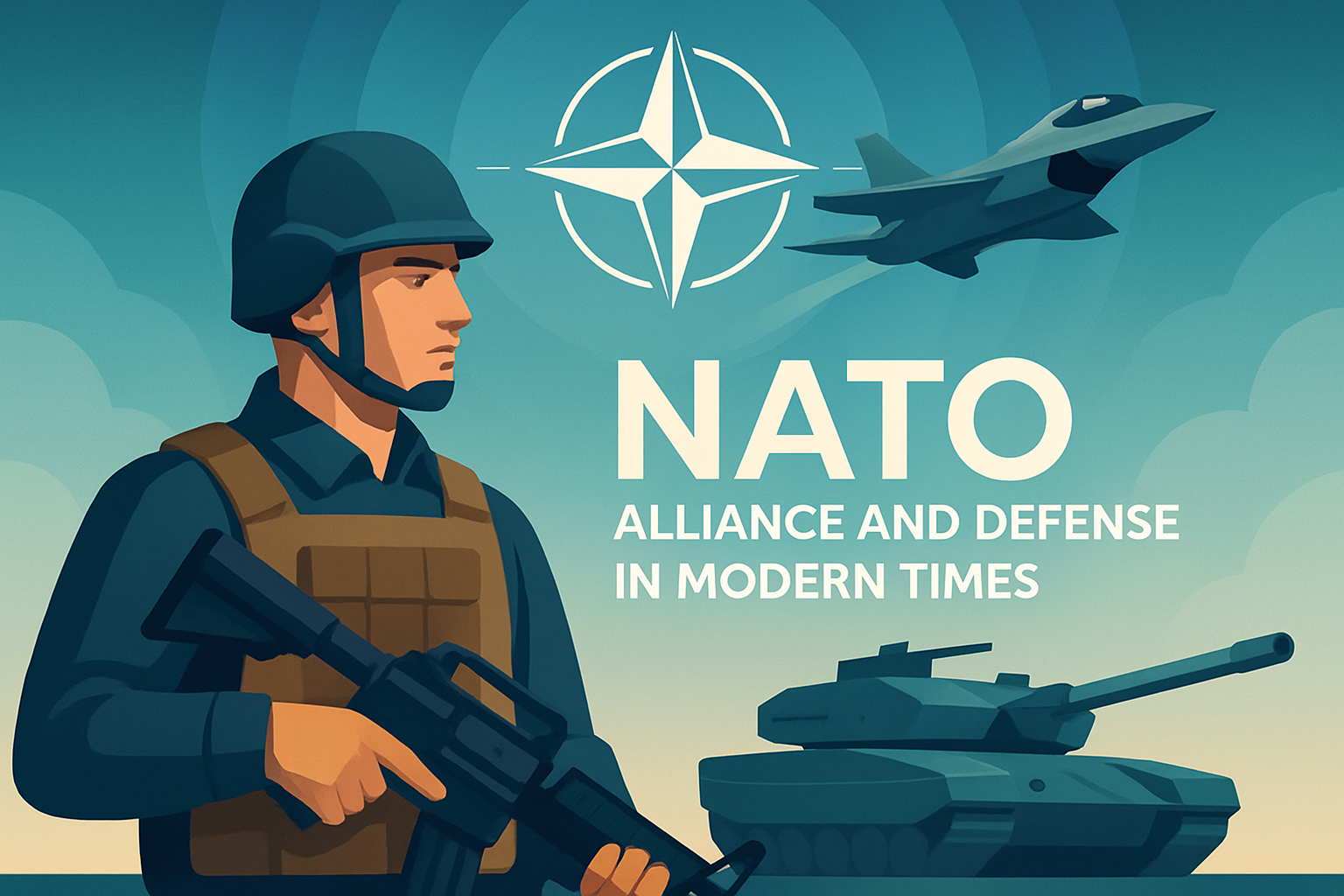
Introduction to NATO: Significance in the Current Global Context
The North Atlantic Treaty Organization, commonly known as NATO, is a military alliance formed in 1949 by a group of Western nations. It was a direct response to the collective security challenges posed by geopolitical tensions during the early Cold War era. Defined simply, NATO is a formal alliance between North American and European countries whose primary purpose is to ensure mutual defense and security against external threats. But why does an alliance born in the aftermath of World War II still matter today? In a world marked by rapid technological advances, shifting power balances, regional conficts, and global terrorism, NATO’s role has evolved, adapting to contemporary demands that extend beyond its original cold war mandate. With member states spanning multiple continents, NATO serves not only as a military bulwark but also as a quintessential example of international cooperation and coalition-building that underscores the importance of unity in the face of new threats such as cyber warfare, terrorism, and hybrid warfare.
The Evolution of NATO: From the Cold War to Present Day
NATO’s founding principle, encapsulated in Article 5 of the North Atlantic Treaty, is that an armed attack against one or more member states is considered an attack against them all. During the Cold War, this principle served as a powerful deterrent against Soviet aggression in Europe. However, the collapse of the Soviet Union and the end of the Cold War prompted a reevaluation of NATO’s mission and strategic objectives.
In response to events such as the Balkan conflicts of the 1990s, NATO expanded its operational scope to include peacekeeping initiatives and humanitarian interventions. The organization’s intervention in the Kosovo War in 1999 exemplifies this shift. It marked NATO’s first military engagement without a UN mandate, led primarily on humanitarian grounds to prevent ethnic cleansing.
In the 21st century, NATO has continued to adapt to new geopolitical realities. After the September 11 attacks in 2001, NATO invoked Article 5 for the first and only time, leading to its involvement in Afghanistan. This wartime footing underscored NATO’s flexibility and willingness to engage in counter-terrorism operations beyond its traditional Euro-Atlantic area.
Member Nations: A Diverse Coalition
As of today, NATO comprises 31 member countries, embodying a diverse coalition united by shared values of democracy, freedom, and the rule of law. The alliance’s strength lies in its diversity, as each member brings unique capabilities and perspectives to the table. This unified front is essential when addressing multifaceted security challenges.
Consider the case of the Baltic States—Estonia, Latvia, and Lithuania, which joined NATO in 2004. Their accession exemplified NATO’s post-Cold War enlargement aimed at promoting stability and security in Eastern Europe. For these nations, NATO membership is a decisive deterrent against potential aggression, particularly from an assertive Russia. This enlargement has demonstrated NATO’s ability to offer protective alliances and serve as a strategic anchor in unstable regions.
Operations and Exercises: Ensuring Preparedness
NATO regularly conducts military exercises and operations to ensure readiness and facilitate coordination among its member states. These activities range from joint exercises simulating conventional warfare to cybersecurity drills designed to bolster digital defenses. The significance of such exercises is evident in operations like the annual Trident Juncture exercise, one of the organization’s largest military drills.
For example, Trident Juncture 2018 involved around 50,000 participants from 31 countries, testing member nations and partners’ ability to work together. Such exercises not only enhance operational readiness but also send a strong message of collective support and resolve to potential adversaries.
Addressing Emerging Threats: Cybersecurity and Hybrid Warfare
The nature of global threats has transformed with technological advancements, prompting NATO to address non-traditional security challenges. Cybersecurity represents a crucial area of concern. In recent years, the alliance has declared cyberspace an operational domain, recognizing that cyber attacks can lead to significant disruption and be as damaging as conventional military operations.
The 2007 cyber attacks on Estonia—a NATO member—demonstrated the vulnerabilities of modern societies to digital assaults. In response, NATO established the Cooperative Cyber Defence Centre of Excellence, focusing on bolstering cyber defenses and strategies. This underscores the need for constant vigilance and proactive measures to protect against increasingly sophisticated cyber threats.
Commitment to Collective Defense and Crisis Management
NATO operates under three core tasks: collective defense, crisis management, and cooperative security. Collective defense, a cornerstone of the alliance, ensures that an attack on one member is an attack on all, facilitating a rapid and coordinated response. Meanwhile, crisis management initiatives focus on conflict prevention, ensuring that potential threats do not escalate into full-scale wars.
| NATO Core Tasks | Description |
|---|---|
| Collective Defense | Ensures military support among members against aggression. |
| Crisis Management | Involves conflict prevention and peacekeeping missions. |
| Cooperative Security | Focuses on partnerships and capacity building with non-member countries. |
For instance, NATO’s peacekeeping efforts in Bosnia and Herzegovina during the 1990s exemplified successful crisis management, helping to stabilize the region post-conflict. Such efforts extend NATO’s influence beyond collective defense to include vital roles in global peace and security.
Cooperative Security: Building Global Partnerships
NATO’s mission extends beyond safeguarding member states. Through cooperative security, the alliance builds partnerships with countries and organizations worldwide, fostering mutual understanding and collaboration. Key partners include nations like Japan, Australia, and organizations such as the European Union and the United Nations.
An example of this cooperation is the NATO-Afghanistan relationship. Since 2003, NATO has played a central role in the International Security Assistance Force and later, the Resolute Support Mission, assisting Afghan institutions in maintaining security and developing self-reliance. Such partnerships underscore NATO’s dedication to fostering global peace and stability beyond its traditional geographic area.
Challenges and Opportunities: The Future of NATO
Despite its achievements, NATO faces numerous challenges in modern times. Internal disagreements among member states, financial constraints, and divergent threat perceptions test the alliance’s cohesion. For instance, the debate over defense spending obligations has been a contentious issue, with some members failing to meet the 2% GDP defense spending target.
However, these challenges also present opportunities for growth and adaptation. The alliance’s ability to navigate internal and external pressures reflects its resilience. By fostering dialogue, enhancing capabilities, and investing in technology, NATO can continue to meet diverse security needs and remain a formidable force in global affairs.
Conclusion
In conclusion, NATO stands as a critical component of international security architecture. From its origins as a response to Cold War tensions to its current role in addressing modern challenges like terrorism, cybersecurity, and hybrid warfare, NATO’s adaptability ensures it remains relevant and effective. As the geopolitical landscape continues to evolve, NATO’s commitment to collective defense, crisis management, and cooperative security provides stability and peace to its member nations and beyond.
For readers, understanding NATO’s multifaceted role is crucial in appreciating how international alliances can offer security, stability, and resilience in an ever-changing world. By staying informed and engaged in global security discussions, individuals can better comprehend the stakes involved and support policies that bolster international cooperation. In this context, advocating for strategic investment and innovation within NATO’s framework is essential for securing a safer future for generations to come.
Frequently Asked Questions
1. What is the primary purpose of NATO in the modern world?
The primary purpose of NATO in the modern world is to ensure the collective defense and security of its member countries against external threats. Though originally established in response to Cold War tensions, NATO has evolved over the years to address a wide range of security challenges that have emerged due to geopolitical shifts. From cyber threats to terrorism, NATO’s scope has broadened, adapting to modern threats that transcend traditional military concerns. The alliance serves as a platform for transatlantic dialogue, fostering collaboration and cooperation among European and North American countries to maintain peace and stability in an increasingly unpredictable world. Moreover, NATO facilitates open exchanges on defense strategy, countering hostile state and non-state actors, and fortifying diplomatic efforts to prevent escalation of conflicts beyond conventional warfare.
2. How has NATO adapted to address non-traditional threats like cyber attacks?
NATO has significantly adapted its strategies to tackle non-traditional threats, such as cyber attacks, which have grown in prevalence and sophistication in the digital age. Recognizing the complexities and the potential devastation cyber threats pose, NATO established a strong cyber defense policy. They introduced the Enhanced Cyber Defense Policy in 2014, which was fortified further following high-profile cyber incidents in member countries. This policy outlines the significance of resilient cyber practices and comprehensive information-sharing among member states to build a reliable defense mechanism. Moreover, NATO set up the NATO Cooperative Cyber Defence Centre of Excellence (CCDCOE) located in Tallinn, Estonia, where collaborative research on cyber defense strategies is actively pursued. The alliance prioritizes regular training exercises, simulations, and collaborative defense workshops to enhance readiness against such digital incursions, reinforcing the understanding that a breach against any NATO member is a challenge to all.
3. What are the benefits of being a NATO member for participating countries?
NATO membership presents several strategic and tactical advantages for its members. Firstly, it provides collective security: an attack against one member is considered an attack against all, as enshrined in Article 5 of the NATO Treaty, ensuring a cooperative and robust response to any threat. This mutual defense clause serves as a powerful deterrent against potential aggressors. Secondly, members benefit from shared intelligence and military resources, as well as collaborative operational capabilities that enhance national security measures. Furthermore, NATO offers its members access to a wide array of training programs and military exercises, bolstering member countries’ defense proficiency and operational readiness. Economically, member countries often experience improved trade relations and economic stability due to the security backbone that the alliance provides. NATO’s political engagement also helps member nations address geopolitical issues, fostering dialogue, conflict resolution, and stable international relations. Beyond defense, NATO membership contributes to educational and technological advancements, established through partnerships and cooperative frameworks among allies.
4. How does NATO engage with non-member countries and international organizations?
NATO has nurtured an inclusive approach to fostering cooperative security efforts and engaging with non-member countries and international organizations. It maintains various partnership frameworks such as the Partnership for Peace (PfP) program, which spans a diverse array of countries from Eastern Europe, Central Asia, and the South Caucasus, as well as cooperative actions with the European Union and United Nations. These partnerships are instrumental in harmonizing international security efforts, promoting transparent defense practices, and augmenting efforts in peacekeeping operations. NATO also collaborates with international organizations on issues like crisis management, cyber defense initiatives, and counterterrorism efforts to leverage the strength of multilateral cooperation. Dialogue initiatives, educational partnerships, and joint exercises with these entities ensure a concerted alignment in strategy, investment, and information dissemination, creating an environment of mutual trust and shared understanding among NATO and its global partners.
5. What criticisms and challenges does NATO face in contemporary geopolitics?
Despite its contributions to global peace and security, NATO faces several criticisms and significant challenges in contemporary geopolitics. Firstly, there is ongoing debate about the financial commitments of its member countries, exemplified by the frequently discussed “2% GDP” defense spending target, where some members are perceived as not contributing equitably to defense allocations. This challenge brings into focus disparities in military capabilities and resource sharing within the alliance. Secondly, NATO’s expansion strategy has occasionally led to tensions with Russia, which views NATO’s eastward enlargement as a strategic encirclement, leading to periodic political frictions and security dilemmas. Additionally, internal divisions among member states about strategic priorities, such as the focus on cyber threats versus traditional military concerns, oil the complex challenge of maintaining coherence and a unified front. Furthermore, NATO’s engagement in global hotspots is often met with scrutiny regarding the balance it maintains between military intervention and diplomatic resolution. The evolving nature of hybrid warfare, encompassing misinformation and ideological battles, also poses considerable challenges, demanding resources and multifaceted strategies to adequately address asymmetric threats.