
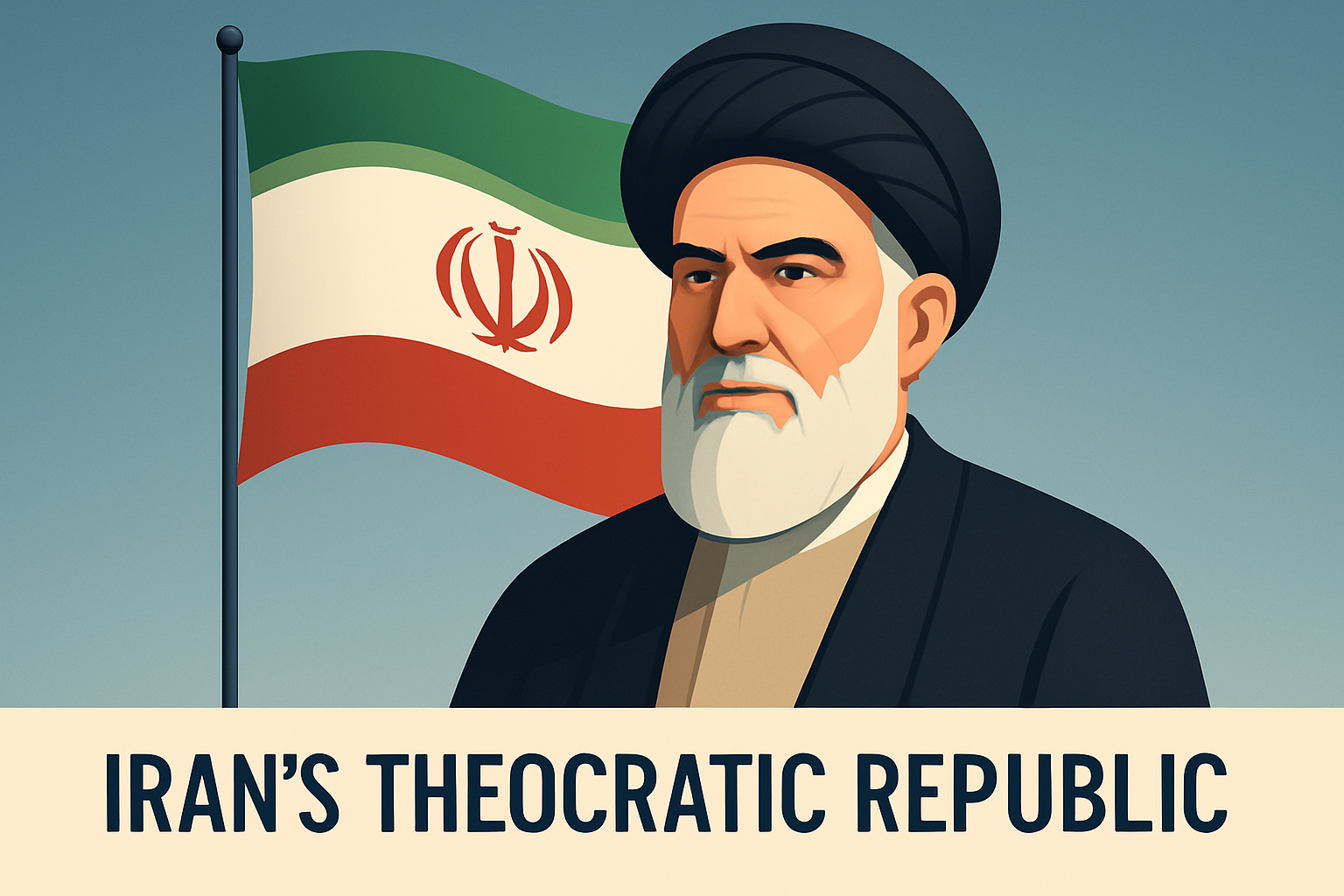
Iran’s theocratic republic is a unique form of government that combines elements of theocratic governance with republican structure, creating a distinctive political framework that has intrigued, perplexed, and affected the global political landscape since its establishment in 1979. Key to understanding Iran’s state system is comprehending the ideological backbone driving its policies and governance methods, which significantly impact both regional and global dynamics. By exploring the foundations of Iran’s theocratic republic, one gains insights into the complexities and consequences of its political traditions and practices, as well as an understanding of its enduring significance in world affairs.
The concept of theocratic governance implies a system where religious officials hold sway over political policy, basing laws and governance on theological doctrines. In Iran’s case, this theology is guided by Shi’a Islam. A republic typically denotes a state where citizens elect representatives, yet Iran’s hybrid model modifies this principle by integrating a firmly established clerical oversight that transcends conventional democratic structures. This duality merits scrutiny, especially given Iran’s strategic and economic position in relation to critical global regions like the Middle East, Europe, and Asia, alongside its resource-rich profile centered around oil and gas exports.
The Structure of Iran’s Theocratic Republic
Iran’s political system is layered, featuring both elected and appointed bodies that reflect its theocratic and republican elements. At the apex sits the Supreme Leader, who is the highest-ranking political and religious authority. Possessing vast powers, the Supreme Leader oversees the military, judiciary, and state media, asserting significant control over Iran’s political direction.
Beneath the Supreme Leader is the President, elected every four years by popular vote. While the President administers the execution of the country’s constitution and leads the executive branch, his powers are significantly overshadowed by those of the Supreme Leader. This dynamic often leads to a tension between Iran’s aspirations for democratic representation and theocratic governance.
The legislative branch, the Islamic Consultative Assembly or Majlis, is similarly influenced by these dual systems. Comprising 290 elected members, the Majlis crafts laws subject to the approval of the Guardian Council — an appointed body that ensures legislation complies with Islamic law and the constitution.
| Political Entity | Role | Process of Selection |
|---|---|---|
| Supreme Leader | Spiritual and political precedence, ultimate authority | Appointed by the Assembly of Experts |
| President | Head of government, executes laws | Elected by popular vote |
| Majlis | Legislative responsibilities, policy-making | Elected by popular vote |
| Guardian Council | Reviews legislation, supervises elections | Half appointed by Supreme Leader, half chosen by judiciary |
The Role of Religion in Governance
Religion is not merely auxiliary in Iran’s governance; it is foundational. The state’s constitutional framework codifies the principles of Shi’a Islam, with governance viewed through the lens of Islamic jurisprudence. The Guardian Council, a critical body in Iran’s political structure, validates the religious fidelity of legislation and electoral candidates, ensuring alignment with Islamic principles.
Real-world impacts of this dual system are evident in the strictures placed on personal freedoms and societal norms. For example, dress codes, public conduct, and speech in Iran are legislatively bound by religious tenets, a clear departure from more secular governance models that permit broader personal liberties.
Illustrative Policies and Implications
Iran’s economic and social policies often mirror its governance ideology. A salient example is its diplomatic and military posture, where it extends ideological influence via proxies such as Hezbollah in Lebanon and involvement in Syria’s civil war, manifesting a form of political theology that transcends its borders.
Domestically, the government’s economic strategies often reflect the dual imperatives of serving its population while navigating international sanctions. For instance, heavy state control over key industries like oil and natural gas demonstrates an approach balancing religious commitment to the welfare of the less privileged with practicalities of an export-driven economy.
- Supervision of dress codes and public behavior rooted in Islamic traditions.
- Management of nationalized oil supports revenue streams under economic sanctions.
- International ideological influence through Shi’a alliances and regional interventions.
Influence on International Relations
Iran’s governance structure significantly shapes its foreign policy, manifesting a unique blend of ideological fervor and realpolitik pragmatism. For example, its nuclear program, central to both its national pride and international negotiations, highlights how religious and nationalistic aspirations can both conflict with and inform foreign relations.
The Iran nuclear deal of 2015, or the Joint Comprehensive Plan of Action (JCPOA), reflects this intricate interplay, representing a pragmatic measure to relieve economic sanctions while retaining the right to nuclear progress—a compromise between its theocratic idealism and economic necessities.
Human Rights and Civil Liberties
Human rights and civil liberties within Iran remain areas of consistent international critique. State policies emanating from its theocratic underpinnings often result in stringent restrictions on freedoms such as speech, assembly, and press, which persist amid global human rights advocacy efforts.
Iran’s judiciary, intertwined with religious edicts, frequently enforces these policies, perpetuating a cycle that poses challenges to global perceptions and diplomatic relations. The dissension and activism observed within its borders attest to a populace grappling with the dichotomy of desired liberties and enforced religious doctrines.
Conclusion: Navigating a Complex Political Landscape
Iran’s theocratic republic is a conundrum of modern governance. It interlaces religious doctrine with political ambition, yielding a system both distinctive and divisive globally. Understanding Iran’s political structure offers insights into its internal dynamics and geopolitical strategies, essential for engaging constructively with the nation on issues ranging from economic relations to regional security.
For observers and policymakers, recognizing the synthesis of theocratic principles with republican aspirations serves as an analytical lens through which to interpret Iran’s actions and potential future pathways. Engaging with such complexities is crucial, promising informed strategies that address not only challenges but also opportunities for diplomacy and cooperation.
Reflecting upon the intricacies of Iran’s theocratic system prompts a rethinking of conventional approaches to international governance, encouraging a dialogue that respects religious and cultural paradigms while fostering collaboration. As Iran continues to negotiate its path on the world stage, stakeholders are urged to deepen their understanding and adaptively engage, cultivating relationships centered on mutual respect and shared interests.
Frequently Asked Questions
1. What is the structure of Iran’s theocratic republic?
The structure of Iran’s theocratic republic is a fascinating blend of religious governance and republican elements, a unique setup that gives the country its distinctive political identity. At the core of this system is the supreme leader, the highest-ranking political and religious authority, who holds tremendous power over all branches of government, the military, and media. This position is not elected by the public but is appointed for life by the Assembly of Experts, a body of clerics elected by the populace. Beneath the supreme leader is the president, who is elected by the people every four years and is responsible for the executive administration, including economic policies and other key government functions. The president’s powers, however, are limited by the overarching authority of the supreme leader. Additionally, Iran’s parliament, or Majlis, consists of members elected by the public, responsible for legislating and approving national budgets among other duties. Yet, even parliamentary laws require approval from the Guardian Council, an influential body that can veto legislation and approve or disqualify electoral candidates to ensure they comply with Islamic law. Understanding the interactive dynamics between these institutions and overarching authority figures is crucial for comprehending how policies are developed and enacted within Iran’s theocratic republic.
2. How did Iran come to establish a theocratic republic?
The establishment of Iran’s theocratic republic is deeply rooted in its tumultuous history, cultural shifts, and global influences leading up to the 1979 Islamic Revolution. Prior to the revolution, Iran was ruled by the Shah, a secular monarch whose modernization policies often clashed with traditional and religious sentiments within the country. Widespread dissatisfaction with political repression, economic inequalities, and rapid Westernization fueled public unrest. This discontent was compounded by the perception of the Shah’s regime as a puppet of Western powers, particularly the United States. A diverse coalition of opposition groups, including secular intellectuals, Marxists, and religious fundamentalists, unified under the charismatic leadership of Ayatollah Khomeini. Khomeini presented a vision of governance combining Islamic principles with revolutionary ideals, gaining significant public traction. His return from exile was the catalyst that led to the overthrow of the Shah, paving the way for the establishment of the Islamic Republic. The new government rewrote the constitution to integrate religious doctrine with republican governance structures, thus institutionalizing Khomeini’s vision. Exploring this historical context provides vital insights into the ideological foundations and societal transformations that shaped Iran’s political identity.
3. What role does the supreme leader play in Iran’s government?
The supreme leader in Iran holds a pivotal role, blending the religious authority of a Shia cleric with overarching political power that significantly shapes both domestic affairs and Iran’s stance on international issues. As the supreme religious authority, the leader is tasked with interpreting Islamic law and ensuring that the nation’s policies align with core Islamic values. Politically, the supreme leader possesses the ultimate decision-making power, influencing key governmental positions such as military commanders, the judiciary, and state-run media. He can appoint members to influential bodies like the Guardian Council and Expediency Discernment Council, determining legislative and governmental dynamics. The leader can also declare war and peace, and has the authority to veto or override decisions made by the president or parliament, rendering him the ultimate custodian of Iran’s religious and administrative systems. Understanding the supreme leader’s role elucidates the centralized power dynamics within Iran’s system, indicating how religious ideology is enforced at the highest levels of governance.
4. How does Iran’s theocratic government influence its foreign policy?
Iran’s theocratic government heavily influences its foreign policy through a lens that merges religious doctrine with strategic political considerations. The supreme leader is deeply involved in major foreign policy decisions, often reflecting ideological stances that emphasize resistance against Western influence, particularly that of the United States. Iran prioritizes its role within the Muslim world, supporting Shia groups and governments across the Middle East with shared ideologies – such as Hezbollah in Lebanon and the Assad government in Syria. This support aims to build alliances that fortify Iran’s regional power and counterbalance rival Sunni powers like Saudi Arabia. Simultaneously, the government seeks to expand its influence beyond the region through alliances with countries such as Russia and China, promoting itself as a counterweight to Western dominance. Iran’s diplomatic strategies are also shaped by its desire to resist international sanctions and pursue nuclear developments, which it presents as a right under international law but fuels tensions with Western countries. Studying these aspects provides a comprehensive understanding of how Iran navigates the intricate global political landscape with a blend of religion-infused nationalism and strategic interests.
5. What challenges does Iran’s theocratic republic face internally and externally?
Internally, Iran’s theocratic republic grapples with a multitude of socio-political and economic challenges that stem from its unique governance structure. On a political level, there’s persistent tension between reformists who seek greater democratic liberties and hardliners entrenched in preserving strict ideological doctrines. This division is often amplified during elections and major policy decisions, impacting the country’s stability. Economically, Iran faces hardships exacerbated by international sanctions, impacting its oil revenues – the primary economic driver – leading to inflation and unemployment. Additionally, widespread social issues, including demands for improved women’s rights and personal freedoms, persistently challenge the governing authority’s ability to maintain control while keeping the populace content. Externally, Iran navigates a complex network of international relations characterized by strained ties with Western nations. It faces persistent geopolitical challenges in the Middle East, where rivalries with regional neighbors like Saudi Arabia and Israel shape much of its foreign policy. Moreover, the pursuit of its nuclear program continues to be a flashpoint that attracts global scrutiny and exacerbates diplomatic tensions. Understanding these multilayered challenges is crucial for grasping the sustainability and future trajectories of Iran’s theocratic system on both micro and macro scales.