
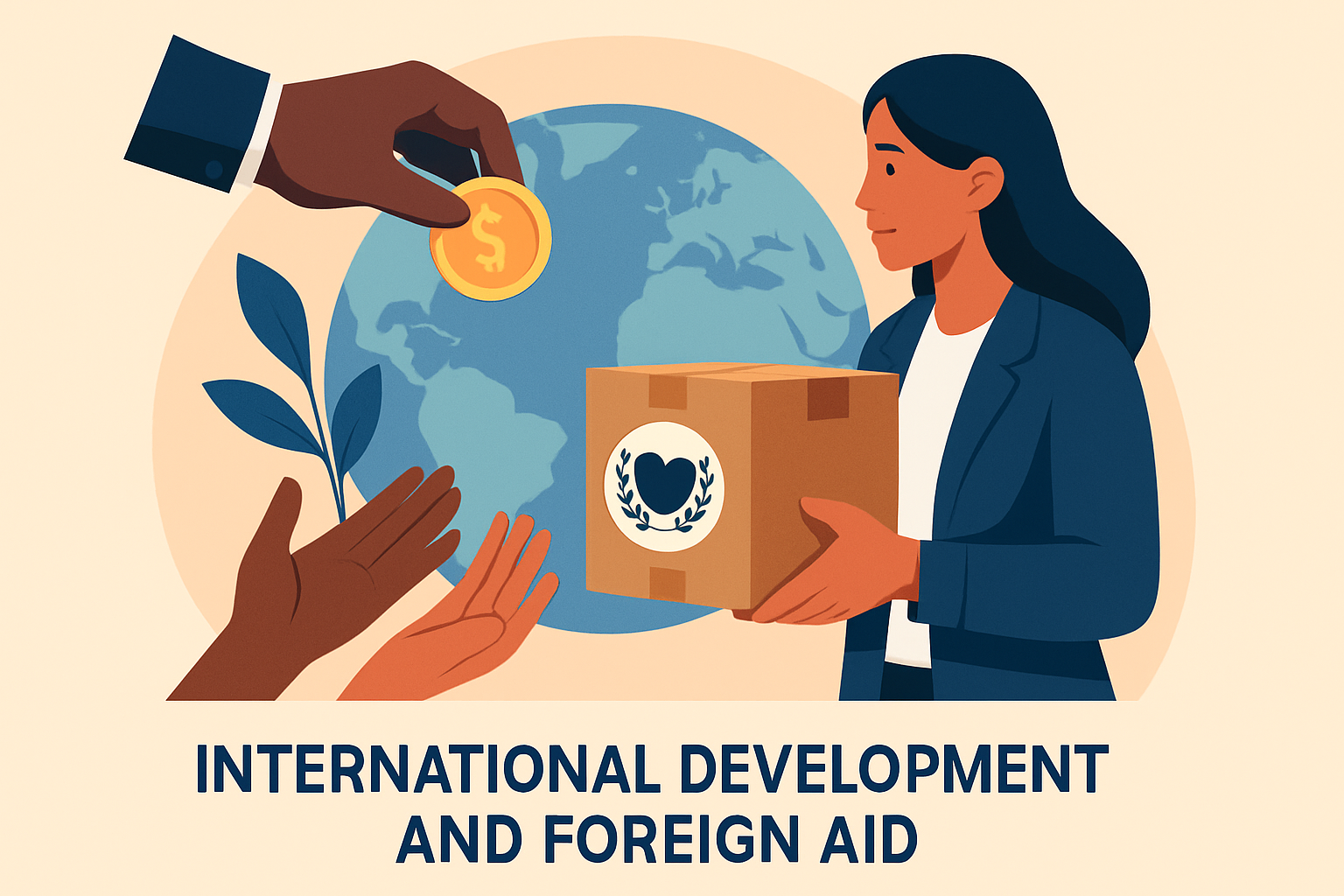
International development and foreign aid are fundamental components of global efforts to enhance economic growth, reduce poverty, and improve living conditions worldwide. International development refers to initiatives aimed at improving the economic, social, and political well-being of individuals across nations. Foreign aid, on the other hand, involves the transfer of resources from developed nations to developing nations to support these efforts. This topic is crucial as it addresses global inequality and seeks to foster a more equitable distribution of wealth and opportunities. As globalization continues to shape our world, understanding how development projects and aid contribute to progress is essential for creating sustainable futures.
The Role of Foreign Aid in Economic Development
Foreign aid plays a vital role in supporting economic development by providing the financial resources needed for infrastructure projects, education, and healthcare improvements in developing countries. These investments create multiplier effects that stimulate job creation and enhance productivity. For example, in sub-Saharan Africa, foreign aid has significantly improved access to clean water and sanitation facilities, leading to better health outcomes and increased worker productivity.
Foreign aid can be classified into various types based on purpose and form, such as humanitarian aid, military assistance, and economic development aid. Among these, economic development aid is specifically targeted at fostering economic growth in recipient countries. A prominent example of international development aid is the Marshall Plan, which was an American initiative to provide economic support to rebuild European economies after the devastation of World War II, paving the way for rapid recovery and modernization.
| Type of Aid | Purpose |
|---|---|
| Humanitarian Aid | Provides immediate relief during crises and disasters |
| Military Assistance | Supports defense capabilities of allied nations |
| Economic Development Aid | Fosters long-term economic growth and infrastructure development |
Sustainable Development Goals and Foreign Aid
The United Nations Sustainable Development Goals (SDGs) set the international agenda for addressing key global challenges by 2030. Foreign aid is critical in supporting these goals, particularly in low-income countries lacking resources to meet development needs independently. The SDGs cover areas such as no poverty, zero hunger, good health and well-being, quality education, and climate action, all of which require targeted aid interventions.
For instance, foreign aid in the form of educational programs and scholarships has empowered youth in countries like Bangladesh, resulting in significant improvements in literacy rates and overall educational outcomes. By aligning aid with specific SDGs, donor countries can ensure that their investments yield tangible, transformative impacts aligned with global priorities.
Challenges and Criticisms of Foreign Aid
Despite its potential benefits, foreign aid faces numerous challenges and criticisms. These include concerns about aid dependency, where recipient countries become reliant on external support instead of developing self-sustaining solutions. Furthermore, misallocation and misuse of aid, often hindered by corruption and bureaucratic inefficiencies, can diminish its impact.
A real-world example of these challenges is Haiti, where billions of dollars in foreign aid have been pledged following natural disasters like the 2010 earthquake, yet progress in reconstruction and economic stability remains limited. This highlights the need for improved governance, transparency, and accountability mechanisms in the planning and implementation of aid projects to maximize their efficacy.
Innovative Approaches to Foreign Aid
In response to the limitations of traditional foreign aid models, innovative approaches are emerging to enhance effectiveness and sustainability. These include public-private partnerships, where private sector expertise and resources complement public funding, and results-based financing, where aid disbursement is linked to achieving specified outcomes.
One innovative model is the use of impact investment funds, which allocate capital to projects that generate social or environmental benefits alongside financial returns. The Global Innovation Fund, for example, provides flexible financing to scalable social innovations, enabling impactful solutions to development challenges in sectors such as agriculture, health, and technology.
- Public-private partnerships
- Results-based financing
- Impact investment funds
The Future of Foreign Aid and International Development
As the international landscape evolves, foreign aid and development strategies must also adapt to address emerging challenges, such as climate change, pandemics, and digital transformation. Embracing technology can enhance development efforts through improved data collection, analysis, and transparency, enabling more targeted interventions.
Consequently, the future of foreign aid lies in embracing innovation, fostering collaboration among stakeholders, and aligning investments with cross-sectoral priorities such as sustainability and equity. For example, the recent rise in green finance initiatives underscores the growing recognition of the need to integrate environmental considerations into development agendas.
Conclusion: The Path Forward for International Development
In conclusion, international development and foreign aid remain crucial tools for promoting global prosperity and narrowing inequality gaps. By understanding their nuances, stakeholders can craft informed policies and strategies that address both immediate needs and long-term objectives. The successful integration of foreign aid into sustainable development frameworks requires a continued focus on accountability, innovation, and collaboration. As global citizens, we have a responsibility to support these endeavors, enabling transformative change for a more just and equitable world. Let us actively participate in shaping the future of international development and foreign aid by seeking opportunities to contribute, such as through advocacy, volunteering, or supporting organizations working towards these goals.
Frequently Asked Questions
1. What is international development, and why is it important?
International development is a broad term encompassing initiatives and strategies targeted at enhancing the economic, social, and political prospects of individuals and communities around the world. It focuses on fostering economic growth, improving healthcare, education, governance, and reducing poverty levels in diverse regions. The importance of international development cannot be overstated as it plays a significant role in reducing global inequalities, fostering peace and stability, and ensuring sustainable futures for all nations. By bolstering economic capabilities and infrastructures in developing nations, international development facilitates a more equitable distribution of resources, which leads to improved living conditions and opportunities for all. In today’s interconnected world, the prosperity of one nation can have far-reaching implications, accentuating the necessity for continuous and robust international development endeavors.
2. How does foreign aid contribute to international development?
Foreign aid is a critical mechanism facilitating international development. It involves the provision of financial, technical, and humanitarian assistance by developed countries to developing countries. This aid contributes towards numerous vital areas, including infrastructure development, healthcare improvement, educational advancements, and emergency relief during crises. Foreign aid supports economic growth by funding projects that create jobs and boost local economies, helping countries break out of the cycle of poverty. Moreover, by improving education and healthcare systems, foreign aid plays a direct role in enhancing the quality of life and increasing human capital in recipient countries. In disaster scenarios, it is an immediate lifeline, addressing urgent needs and enabling recovery efforts. Thus, foreign aid is not merely a financial transaction; it serves as a catalyst for profound, sustainable changes that align with broader international development goals.
3. What are the criticisms of foreign aid?
While the intentions behind foreign aid are noble, it has attracted criticisms related to its effectiveness and impact. One major criticism is that aid can sometimes foster dependency in recipient nations, undermining their incentive to develop autonomous economic and political systems. Critics argue that aid may also be misallocated or inefficiently used due to corruption, lack of proper governance structures, or misalignment with local needs. Additionally, it can perpetuate unequal power dynamics, where donor countries have substantial influence over the political and economic decisions in recipient nations. There are also concerns about aid being used for geopolitical strategy rather than genuine development goals. These criticisms highlight the need for more transparent, accountable, and locally-aligned aid programs that empower rather than dominate or burden recipient nations.
4. How is success measured in international development projects?
Measuring success in international development projects is a complex process that involves various indicators and frameworks designed to assess impact and progress. Key performance indicators typically include economic growth rates, poverty reduction statistics, health and education outcomes, and improvements in quality of life metrics. Moreover, the sustainability of developments—such as the enduring availability of educational facilities or healthcare services—and the extent to which local communities have gained capacity and autonomy are vital measures of success. Additionally, projects are often evaluated on their ability to adapt and respond to evolving local needs, incorporating community feedback and ensuring that benefits are distributed equitably. Comprehensive impact assessments, monitoring, and evaluation systems are critical in capturing both the immediate and long-term effects of development interventions, and they help in creating accountable and adaptive development strategies.
5. What are the future challenges and opportunities in international development and foreign aid?
As we look forward, international development and foreign aid are likely to face numerous challenges and opportunities. On the challenge side, increasing global conflicts, climate change impacts, and economic uncertainties represent significant hurdles. These challenges call for more integrated and robust approaches to aid and development that emphasize resilience and adaptability. Rapid technological advancements, however, present major opportunities for innovation in development strategies, making interventions more effective, scalable, and sustainable. Furthermore, growing global partnerships and collaborations afford expansive networks for resource sharing and program deployment. There are also increased opportunities to leverage data-driven decision-making processes that refine and optimize aid delivery. To navigate these future scenarios, international development needs to remain agile, leveraging both traditional and novel mechanisms to address global inequalities while seizing opportunities to support extensive global progress.