
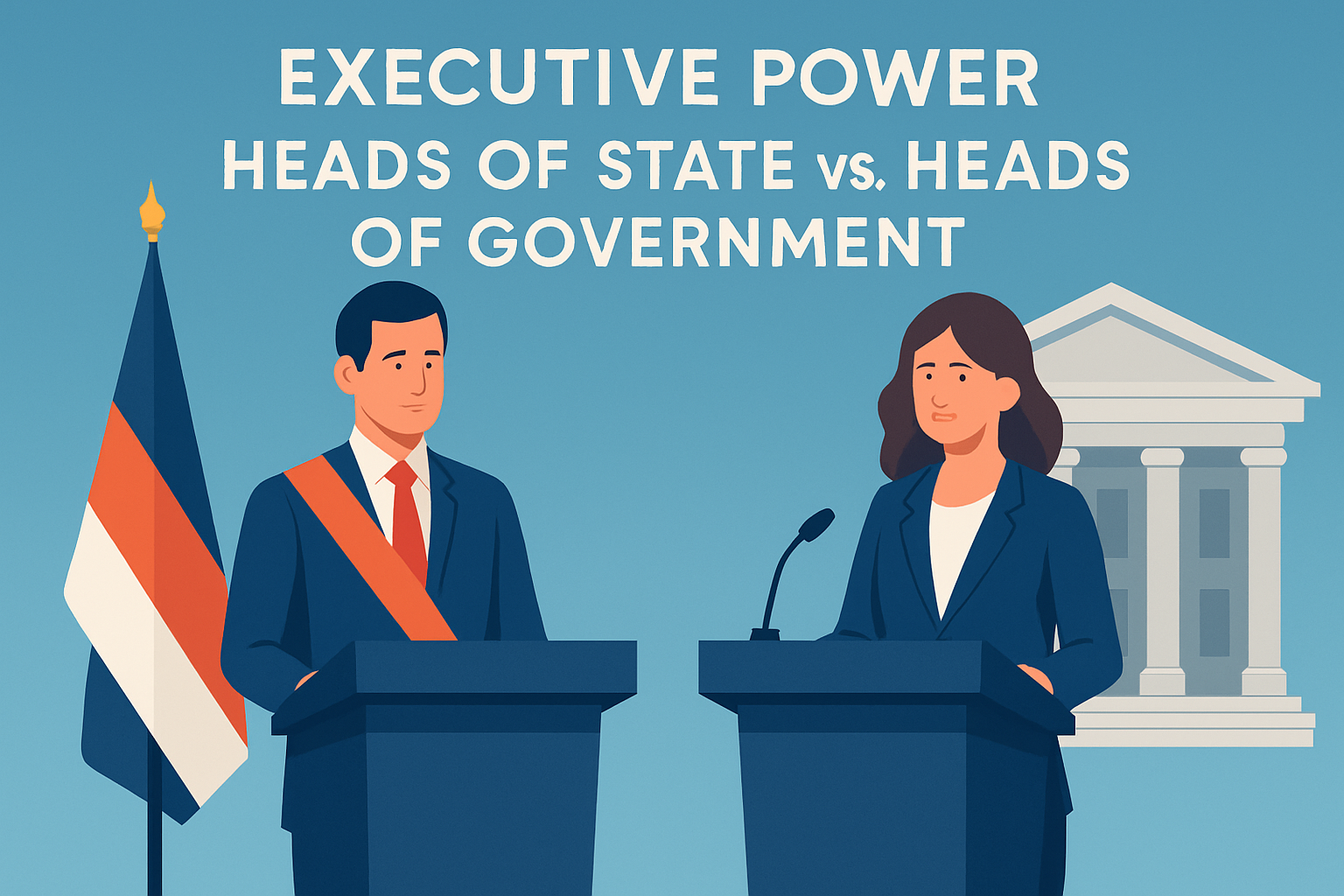
In the intricate tapestry of global governance, the distinction between heads of state and heads of government plays a pivotal role. Both positions embody leadership, yet they represent distinct functions, responsibilities, and powers within a country’s political framework. Understanding this differentiation is crucial for grasping how governments operate, influence policy, and interact with their citizens and other nations. As the world becomes increasingly interconnected, recognizing the nuance in leadership roles helps demystify international relations and governance. This article delves into these critical roles, elucidating their significance, differences, and implications.
Defining Heads of State and Heads of Government
The terms “head of state” and “head of government” are often used interchangeably, but they hold unique meanings and implications. A head of state typically symbolizes the unity and integrity of the state at a ceremonial level and may also have certain constitutional responsibilities. Common examples include monarchs in constitutional monarchies or presidents in parliamentary systems. Conversely, a head of government is the chief executive responsible for running the government and implementing policies. This role is usually filled by a prime minister or, in some cases, a president, depending on the political system. Each position brings specific powers and duties inherent to the governance structure.
The Constitutional Role of Heads of State
Sometimes viewed through a ceremonial lens, the head of state’s role can be substantially influential within a constitutional framework. In parliamentary systems, such as the United Kingdom, the monarch or president acts primarily in a ceremonial capacity, refraining from daily political operations. However, they are key in appointing the head of government, usually the leader of the majority party in parliament.
The head of state’s responsibilities can include representing the nation on the international stage, signing treaties, and safeguarding the constitution. Occasionally, they possess ‘reserve powers’ to act in exceptional circumstances, ensuring the government functions within legal boundaries. For instance, Queen Elizabeth II’s role as the UK’s head of state underlined the constitution’s integrity and continuity, performing key tasks while remaining politically neutral.
Heads of Government: The Executive Powerhouse
The head of government wields executive power, charged with the administration and operation of the government. Typically, they are the face of domestic policy implementation and have significant influence over legislative processes. Unlike the often-symbolic presence of a head of state, the head of government usually engages in day-to-day politics and policy-making.
In many countries, like Germany, the chancellor (head of government) is the central figure in political decision-making, coordinating with ministers to address national issues. Chancellor Angela Merkel’s tenure was marked by substantial legislative initiatives focused on economic reforms and international diplomacy, epitomizing the head of government’s critical role in policy formulation and execution.
Dual Roles in Presidential Systems
In presidential systems, the distinction between head of state and head of government blurs as one individual often embodies both roles. The United States is a prominent example where the President functions as both head of state and government. This dual responsibility centralizes a significant spectrum of power, from symbolic leadership to concrete policy-making capabilities.
Such a system requires a balance of power through checks and balances, allowing co-equal branches of government to limit presidential authority. While the President of the United States shapes policy and represents the nation globally, their actions are tempered by legislative bodies and judicial oversight, ensuring a separation of powers crucial for maintaining a democratic system.
Monarchies: Traditional vs. Constitutional
Monarchies further highlight the varying roles of heads of state and government, showcasing a spectrum from complete power to ceremonial roles. In traditional absolute monarchies, such as Saudi Arabia, the monarch exercises both roles, wielding extensive control over governmental affairs. However, constitutional monarchies, like Sweden, present a contrasting view. Here, the monarch’s role is largely symbolic, with political powers and government operations handled by an elected body led by a head of government.
This duality in monarchies emphasizes how historical, cultural, and legal factors shape the powers of these two administrative heads. It reflects each country’s unique governance system, affecting how national and international policies are developed and implemented.
Comparing Different Government Structures
Across the globe, countries adopt varied models reflecting their historical context, culture, and values. Understanding these structures aids in comprehending how heads of state and government are chosen, their powers, and their interactions.
| Country | Head of State | Head of Government | System Type |
|---|---|---|---|
| United States | President | President | Presidential |
| United Kingdom | Monarch | Prime Minister | Parliamentary |
| France | President | Prime Minister | Semi-Presidential |
| Japan | Emperor | Prime Minister | Constitutional Monarchy |
In presidential systems like the U.S., a single leader often represents both roles, centralizing power. Parliamentary systems distinguish between a ceremonial head of state and an operational head of government. Semi-presidential systems, evident in France, blend these approaches, with distinct yet overlapping roles for both heads, fostering a unique dynamic of governance.
Implications and Influence on Policy
The distinct roles of heads of state and government invariably affect public policy and international relations. The division of responsibilities allows for specialization, with heads of government often focusing intensely on domestic policy, while heads of state might engage in diplomacy and international affairs. For instance, during the 2008 financial crisis, it was the heads of government in most countries who spearheaded economic recovery efforts, showcasing their central role in policy execution. However, in times of significant diplomatic needs, heads of state may step into the limelight to negotiate treaties and enhance international relations. This dynamic reinforces the importance of understanding each role within the complex web of global politics.
The Challenges of Dual Roles
While combining the roles of head of state and head of government might streamline decision-making in some contexts, it can also lead to an overwhelming concentration of power. This amalgamation can challenge checks and balances, leading to potential abuses of power and democratic erosion. For instance, critics argue in countries with weak institutional safeguards, a singular leader holding both roles might sidestep legislative scrutiny, leading to unchecked authority. As seen in certain political climates, this concentration can result in policy decisions that disregard minority viewpoints, emphasizing the importance of maintaining robust civic institutions and democratic frameworks to keep power in check.
Relevance in Contemporary Politics
In today’s politically volatile environment, understanding the distinction between these roles is vital for assessing leadership strategies and their effectiveness. Recognizing how each leader operates within their framework allows for a deeper analysis of government effectiveness, international relations strategies, and domestic policy impacts. As societies evolve and new challenges arise, such adaptability and awareness are crucial. Recent global issues, such as the COVID-19 pandemic, highlighted varied leadership responses, with heads of government addressing immediate crises and heads of state reinforcing unity and resilience. These situations underscore the need for informed citizens who understand the nuanced operations within their governments, ultimately fostering accountability and engagement.
Conclusion: Embracing Civic Literacy and Engagement
In conclusion, the distinction between heads of state and heads of government is essential for understanding how different countries operate politically and how leadership roles impact broader policy and governance issues. These roles are shaped by historical precedents, legal frameworks, and cultural nuances unique to each nation. For citizens, analysts, and global observers, understanding these roles enhances civic literacy and facilitates informed discussions about governance, policy, and international affairs. By recognizing and appreciating the diverse structures of political leadership worldwide, individuals and communities can better engage in dialogues that promote democracy, transparency, and responsible governance.
As a vital next step, individuals should seek to further their understanding of these roles and responsibilities, exploring how they are executed within their countries and others. Encouraging civic education and political awareness can empower citizens to engage more effectively in their governance, promoting a more informed and participatory world.
Frequently Asked Questions
1. What is the main difference between a head of state and a head of government?
The primary difference between a head of state and a head of government lies in their roles and responsibilities within a country’s political system. The head of state serves as the symbolic representative of the country, often embodying the nation’s unity, continuity, and legitimacy. This role is largely ceremonial, although some heads of state, especially in presidential systems, also have significant political power. They may engage in functions such as ratifying laws, presiding over official state ceremonies, and representing the nation in diplomatic matters. In contrast, the head of government is responsible for running the government and implementing policies. This position involves making executive decisions, managing the day-to-day operations of the government, and often directing the legislative agenda. Heads of government typically include positions like prime ministers or chancellors in parliamentary systems, or presidents in presidential systems, where they hold both roles. Understanding these distinctions helps clarify who manages the symbolic aspects of a nation versus the practical functions of governance.
2. In which political systems are the roles of head of state and head of government separate?
The roles of head of state and head of government are often separate in parliamentary systems. In such systems, the head of state may be a monarch or a ceremonial president, while the head of government is typically the prime minister. For instance, in the United Kingdom, the monarch (currently King Charles III) acts as the head of state, fulfilling ceremonial and representative duties, whereas the prime minister is the head of government, responsible for policy-making and administration. Conversely, in republics like Germany, the president serves as the ceremonial head of state, while the chancellor carries out the duties of the head of government. The separation is designed to ensure a balance of power and to allow a clear distinction between the symbol of national unity and the chief executive officer of the government.
3. Can one person be both the head of state and head of government?
Yes, in some political systems, such as in presidential systems, one person can hold both roles as both head of state and head of government. The United States is a prominent example, where the President serves as both the ceremonial representative of the nation (head of state) and the executive leader responsible for administration and policy-making (head of government). This dual role combines symbolic duties like conducting state visits with practical responsibilities such as signing legislation and managing the executive branch of government. While this setup may streamline decision-making processes, it also places a significant burden of responsibility on one individual, necessitating a comprehensive understanding of both diplomatic and domestic governance issues.
4. How does the distinction between head of state and head of government impact international relations?
The distinction between head of state and head of government can significantly impact international relations, as each role may engage with foreign leaders and global organizations in different contexts. Heads of state generally undertake diplomatic functions, including attending state functions, welcoming foreign dignitaries, and representing the nation at international events such as the United Nations. This engagement helps to build goodwill and maintain diplomatic ties. On the other hand, heads of government are typically involved in negotiating treaties, crafting foreign policy, and attending international summits where policy decisions and cooperative agreements are made. Their interactions are often more focused on pragmatic outcomes and align with their executive responsibilities. Understanding who holds each role can help foreign leaders and diplomats navigate diplomatic engagements and negotiations effectively.
5. In terms of governance and influence, which role is more powerful: head of state or head of government?
The relative power of a head of state versus a head of government can vary greatly depending on the country’s political system and constitution. In parliamentary systems, the head of government, such as a prime minister, typically holds more substantial powers related to governance, policy-making, and legislation. This individual is usually elected by the legislature and is directly accountable to it, making them central to the country’s administrative functions. Meanwhile, the head of state often has limited powers, focusing on ceremonial roles and continuity of the state. However, in presidential systems, where the president holds both titles, the concentration of power is typically highly centralized in one individual, blending both symbolic and practical governance powers. The balance of power is thus contingent on the legal and traditional frameworks established within each country, and the influence of each role can shift with political changes and evolving governance structures.